Ram 3500 6.4L HEMI Specs: HP, Torque & Data by Year

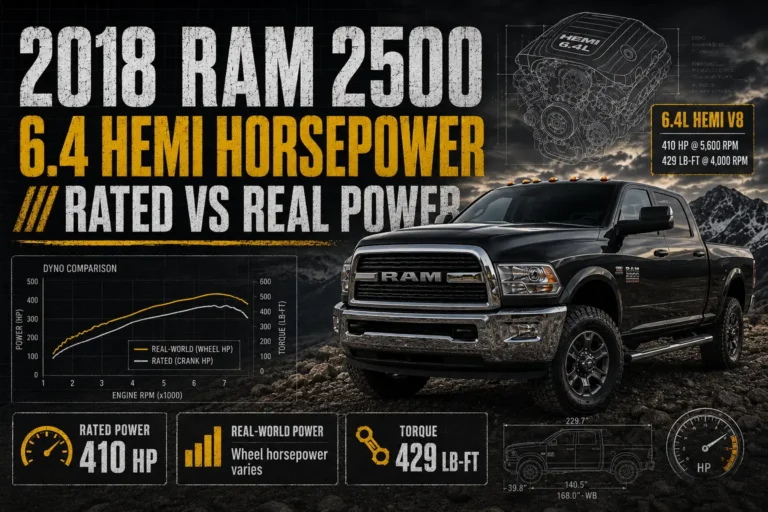
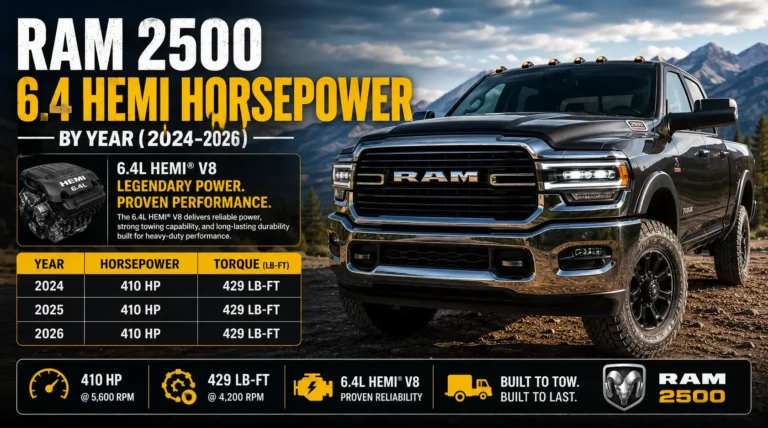
The Ram 3500’s 6.4L HEMI V8 makes 410 horsepower and 429 lb-ft of torque in pickup configurations, dropping to 370 horsepower in cab and chassis models tuned for a lower governed engine speed. Chrysler introduced the 6.4L HEMI to the Ram heavy duty lineup for the 2014 model year, and it has stayed the standard gas engine across every generation since, sitting right alongside the 6.7L Cummins Turbo Diesel option.
This guide breaks down every core Ram 3500 6.4L HEMI spec: engine architecture, transmission pairing, payload and towing numbers, and maintenance data. The figures below come from Ram’s own engine performance documentation, not estimates.

Prime for Young Adults — 6 Months Free
Students and 18–24s get six months of Prime free, then half price.
Start 6 Months FreeRam 3500 6.4L HEMI Specs
Complete engine reference, 2014 to 2026
Engine Architecture
Payload and Towing
Transmission by Generation
Oil Specification
Ram 3500 6.4L HEMI Horsepower and Torque by Year
Recommended Best Deal Products


The 6.4L HEMI’s peak output has stayed remarkably consistent since 2014. Ram’s official engine performance pages confirm 410 horsepower and 429 lb-ft of torque as the standard pickup rating through the current 2026 lineup, with only payload and towing numbers shifting slightly by year.
Cab and chassis versions of the same engine make less power. A lower governed engine speed drops output to 370 horsepower, a detail that shows up consistently in independent engine spec breakdowns even though it rarely appears in dealership marketing.
| Model Years | Configuration | Horsepower | Torque |
|---|---|---|---|
| 2014 to 2025 | Pickup, SRW and DRW | 410 hp | 429 lb-ft |
| 2014 to 2025 | Cab and Chassis | 370 hp | 429 lb-ft |
| 2026 | Pickup, SRW and DRW | 410 hp | 429 lb-ft |
Torque stays flat across both configurations. Horsepower is the variable that changes, driven by intake design, exhaust routing, and how far each version is allowed to rev.
6.4L HEMI Engine Architecture Displacement Bore and Stroke
The 6.4L HEMI displaces 6.4 liters, or 392 cubic inches (6,417cc), built on a 90 degree V8 layout with a cast iron block and aluminum cylinder heads. Stellantis’s own technical documentation lists the following core specifications:
- Bore: 103.9mm (4.09 in)
- Stroke: 94.6mm (3.72 in)
- Compression ratio: 10.0:1 in Ram truck tune, versus 10.9:1 in the SRT car version of the same engine
- Valvetrain: overhead valve pushrod design, 2 valves per cylinder
- Ignition: 16 spark plugs, 2 per cylinder, for more complete combustion
- Technology: Variable Valve Timing and the Multi Displacement System, which shuts off four cylinders under light load to save fuel
The truck tune’s lower compression ratio and revised intake manifold are the main reasons it trades outright horsepower for a flatter, more towing-friendly torque curve than the SRT version.
Internally, the 6.4L HEMI uses a forged steel crankshaft, hypereutectic aluminum pistons with oil cooling jets, and powdered metal connecting rods. The cross-bolted main bearing caps add rigidity under sustained load, which matters more in a 3500 hauling near its GVWR than it does in a Challenger. This is a work truck engine built on the same architecture as a performance car engine, tuned in the opposite direction.
The Multi Displacement System deserves a second look here, since it directly affects towing behavior. Under light load, such as cruising unloaded on the highway, the system shuts fuel and valve operation to four of the eight cylinders to save fuel. It re-engages all eight cylinders automatically the moment the truck detects a load, whether that is acceleration, a grade, or a trailer.
Why Ram 3500 Cab and Chassis Horsepower Differs
Recommended Best Deal Products


Owners often assume every Ram 3500 6.4L HEMI makes the same power. It does not.

Audible — Listen Free for 30 Days
One free credit a month and thousands of titles included.
Listen Free for 30 DaysCab and chassis builds, the ones typically upfitted with flatbeds, dump beds, or service bodies, use a lower governed engine speed than pickup configurations. The internal parts, including pistons, rods, and valve sizes, stay the same. What changes is tuning calibrated for durability and low-end torque delivery over peak horsepower, since these trucks spend more time at sustained heavy loads than at highway speed.
If you are buying used and the seller quotes 410 horsepower on a chassis cab build, confirm the configuration on the door jamb sticker before assuming that number applies.
Ram 3500 6.4L HEMI Transmission Options by Generation
Transmission pairing has changed more than the engine itself across the 6.4L HEMI’s production run.
- 2014 to 2018: 66RFE 6-speed automatic on pickup models, with the Aisin AS66RC 6-speed automatic used on higher GVWR cab and chassis builds
- 2019 to present: ZF-based 8HP75 8-speed automatic on pickup models, confirmed in Ram’s 2024 towing capacity documentation, while cab and chassis builds continue to offer the Aisin 6-speed
The 8-speed swap arrived alongside the fourth generation Ram HD redesign and improved both fuel economy and towing refinement without changing the engine’s core output.
Ram 3500 6.4L HEMI Payload and Towing Capacity
Recommended Best Deal Products


The gas engine’s biggest advantage over either diesel option is payload, not towing. A lighter engine block means more of the truck’s GVWR is available for cargo rather than engine weight.
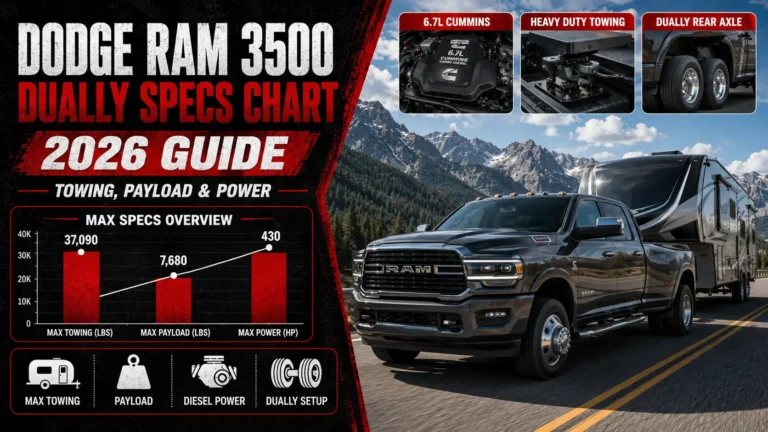
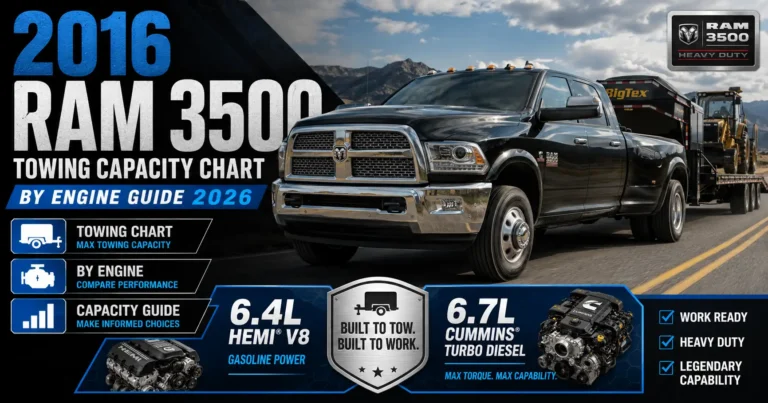
For 2023 through 2025 models, the 6.4L HEMI is rated for up to 7,680 lbs of payload and 18,210 lbs of maximum towing. The 2026 model year shows a modest adjustment to 7,590 lbs payload and 18,150 lbs towing, still class leading for a gas powertrain in this segment.
For the full year-by-year breakdown across every Ram 3500 engine option, see the Ram 3500 towing capacity charts and the Ram payload capacity chart, which cover the diesel options this article does not.
6.4L HEMI Oil Type and Capacity Explained
The 6.4L HEMI holds 7 quarts (6.6 liters) of oil with a filter change, a figure that has stayed the same since the engine’s 2014 introduction.
Audible Premium Plus — Annual Membership
12 audiobook credits up front, plus the full Audible catalogue.
See Annual PlansChrysler specifies SAE 0W-40 full synthetic oil meeting API SN certification and the manufacturer’s Material Standard, historically MS-12633 and its current successor MS-A0921 on newer builds. This is not interchangeable with the 5.7L Hemi’s 5W-20 or 0W-20 specification used in the Ram 1500. Always confirm the exact standard against your oil fill cap or owner’s manual before a change, since substituting a thinner oil has been linked to increased lifter noise in this engine.
Factory recommended oil change intervals run on Ram’s Oil Change Indicator system, which calculates remaining oil life from engine temperature, load, and driving habits rather than a fixed mileage number. Owners who tow frequently or run the truck hard tend to see the indicator trigger well before the maximum interval listed in the owner’s manual, and most independent shops recommend not exceeding roughly 8,000 miles between changes on a 6.4L HEMI regardless of what the dash says.
How Reliable Is the Ram 3500 6.4L HEMI
The 6.4L HEMI has built a reputation as one of the more dependable heavy duty gas V8s on the market, with most reported issues centered on exhaust manifolds and MDS lifter noise rather than major internal failures. The cast iron block and forged crankshaft give it a strong reputation for handling high mileage without the internal wear problems that plague lighter duty gas V8s under sustained towing loads.
That said, no engine is problem free, and the specific failure points and the mileage at which they tend to appear vary by model year. For a full breakdown of what actually goes wrong and at what mileage, see our guide to common 6.4L HEMI problems by year.
Ram 3500 6.4L HEMI Specs Frequently Asked Questions
How much horsepower does the Ram 3500 6.4L HEMI make?
The Ram 3500 6.4L HEMI makes 410 horsepower and 429 lb-ft of torque in pickup configurations. Cab and chassis models are rated at 370 horsepower due to a lower governed engine speed, with torque output unchanged.
Is the Ram 3500 6.4L HEMI the same engine as the Ram 2500?
Yes, the Ram 2500 and 3500 share the same 6.4L HEMI V8, including displacement, bore, stroke, and compression ratio. Output and transmission pairing can differ slightly based on cab and chassis configuration rather than which truck it is installed in.
What transmission comes with the Ram 3500 6.4L HEMI?
Current pickup models pair the 6.4L HEMI with a ZF-based 8HP75 8-speed automatic transmission. Higher GVWR cab and chassis builds continue to use the Aisin 6-speed automatic.
How much can a Ram 3500 6.4L HEMI tow?
The 6.4L HEMI is rated for up to 18,210 lbs of maximum towing on 2023 through 2025 models, adjusted to 18,150 lbs for 2026. Payload, not towing, is where the gas engine has its biggest advantage over the diesel options.
What year did the Ram 3500 get the 6.4L HEMI?
The 6.4L HEMI became the standard gas engine in the Ram 3500 lineup for the 2014 model year, replacing the smaller 5.7L Hemi option in Ram heavy duty trucks.
Choosing the Right Ram 3500 6.4L HEMI Configuration
The Ram 3500 6.4L HEMI specs boil down to one core tradeoff. You get 410 horsepower, 429 lb-ft of torque, and the highest payload rating in the lineup, at the cost of towing capacity compared to either Cummins diesel option.
For buyers who haul heavy cargo in the bed more often than they pull a trailer, the gas V8’s weight advantage and lower purchase price make it the practical choice. If you are cross shopping against the Ram 2500’s version of the same engine, our Ram 2500 6.4L HEMI specs guide covers where the two trucks’ ratings actually diverge.