Dodge Ram Brake Rotor Size Chart: 2026 Year & Model (1500, 2500, 3500)

Dodge Ram brake rotor size depends on which truck you drive, not just the model year on the title. A 2016 Ram 1500 and a 2016 Ram 2500 use completely different rotors, and even two 2019 Ram 1500s can need different parts depending on whether it is a Classic or the redesigned DT.
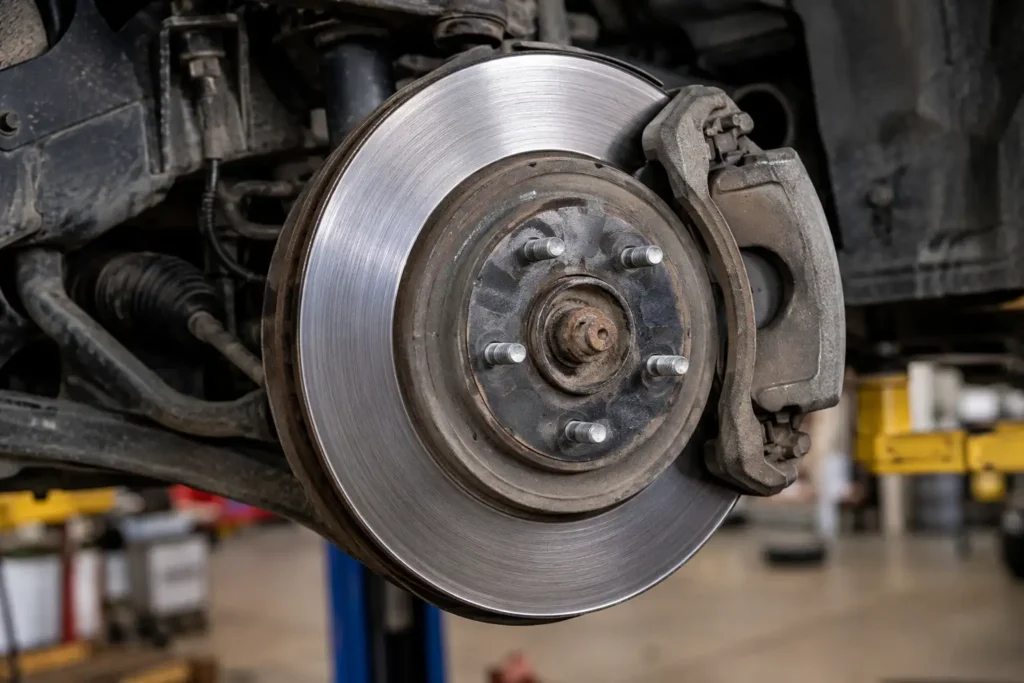
Ordering the wrong rotor means a part that will not clear the caliper bracket or hub, and a return shipment you did not plan on.


This chart breaks down front and rear rotor diameter and thickness for every Ram generation from 1994 through the current lineup, plus the minimum thickness specs that tell you when a rotor is done, not just worn. Match your generation and drivetrain below before you order.
Truck Guider Spec Reference
Dodge Ram Brake Rotor Size Chart
Front and rear rotor diameter across every Ram generation, plus the lug count and platform details that determine fitment.
Rotor spec by platform
Ram 1500, 4th Gen and Classic
2009 to 2022
Ram 1500 DT
2019 to present
Ram 2500 and 3500
2011 to present
Rotor architecture timeline
Most common ordering mistake: the 2019 to 2022 Ram 1500 Classic and Ram 1500 DT share model years but use different rotors. Count the lug holes, five for Classic and six for DT, before you order.


Confirm before you order
What Determines Your Ram Brake Rotor Size
Three factors decide which rotor fits your Ram before you even look at a specific year. The first is model. Ram 1500 half-tons use noticeably smaller rotors than the 2500 and 3500 heavy-duty trucks, which carry larger loads and need more stopping surface.
The second factor is generation, and this matters even within the same model name. The 2019-2022 Ram 1500 Classic carries over the previous generation’s rotor architecture, while the redesigned Ram 1500 DT launched for 2019 uses a larger front and rear rotor built for the new platform. Two trucks with the same model year badge can need different parts.
The third factor is lug count, which works as a fast visual check. Ram 1500s built through 2022 use a 5-lug pattern on most trims, while the 2019 and newer DT platform moved to 6 lugs across the lineup. Ram 2500 and 3500 trucks use an 8-lug pattern and correspondingly larger rotors on both ends.
Front and rear rotors are almost never the same size on a Ram. In several generations the rear rotor is actually larger in diameter than the front, a detail that surprises a lot of owners who assume the front always does more work. Check your generation, drivetrain, and axle position separately before ordering. For a quick cross-check on wheel hardware, see our Ram 1500 lug nut torque guide.
Ram 1500 Brake Rotor Sizes From 1994 to 2018
The pre-2019 Ram 1500 spans three distinct rotor generations, and the numbers below reflect the front and rear rotor dimensions documented in Mopar factory service specifications and confirmed by owner-measured data on club forums.
| Generation | Years | Front Rotor, Diameter x Thickness | Rear Rotor, Diameter x Thickness |
|---|---|---|---|
| 1st and 2nd Gen | 1994-2001 | 11.6 to 12.1 in (294 to 307.5mm), varies by trim | Drum standard on base trims, disc on higher trims |
| 3rd Gen | 2002-2008 | 13.2 x 1.1 in (336 x 28mm) | 13.77 x 0.86 in (350 x 22mm) |
| 4th Gen | 2009-2018 | 13.2 x 1.1 in (336mm) | 13.85 x 0.9 in (352mm) |
Owners who measure their own rotors regularly report the 4th generation rear rotor at roughly 13.85 inches, noticeably larger than the front’s 13.2 inches. That is not a mistake. Ram engineers sized the rear rotor larger to handle the extra weight transfer that happens under heavy braking and trailer towing, when momentum shifts backward onto the rear axle.
1994-2001 trucks vary more by trim and options than later generations, per the factory brake specification tables archived by DodgeRam.org. Confirm your exact front rotor diameter using the VIN lookup method below before ordering, especially on base-trim regular cab trucks that may have shipped with rear drum brakes.
The 2019 redesign split the Ram 1500 lineup into two separate rotor families, and mixing them up is the single most common ordering mistake on this platform.
Ram 1500 Rotor Sizes for 2019 and Newer
Two different Ram 1500s exist under the same 2019 through 2022 model years, and that overlap causes more wrong-part orders than any other detail on this list.
The Ram 1500 Classic continued building the outgoing 4th generation body style alongside the new truck through 2022, using the same 5-lug pattern and the same rotors listed in the table above. The redesigned Ram 1500 DT, sold new alongside the Classic starting in 2019, moved to a 6-lug pattern and larger rotors across the board.
| Platform | Years | Front Rotor, Diameter x Thickness | Rear Rotor, Diameter x Thickness | Lug Count |
|---|---|---|---|---|
| Ram 1500 Classic | 2019-2022 | 13.2 x 1.1 in (336mm) | 13.85 x 0.9 in (352mm) | 5-lug |
| Ram 1500 DT | 2019-present | 14.88 in (378mm) | 14.76 in (375mm) | 6-lug |
Before ordering, check your door jamb sticker or VIN for “Classic” in the trim description, or count the lug holes on your wheel. Five lugs means Classic-generation parts. Six lugs means DT-generation parts. High-output trims built on the DT platform, including the TRX, use their own upsized brake package and should be looked up separately rather than matched to standard DT specs.
Ram 2500 and 3500 owners face a related but different split, driven by axle configuration rather than a full body redesign.


Ram 2500 and 3500 Brake Rotor Sizes By Generation
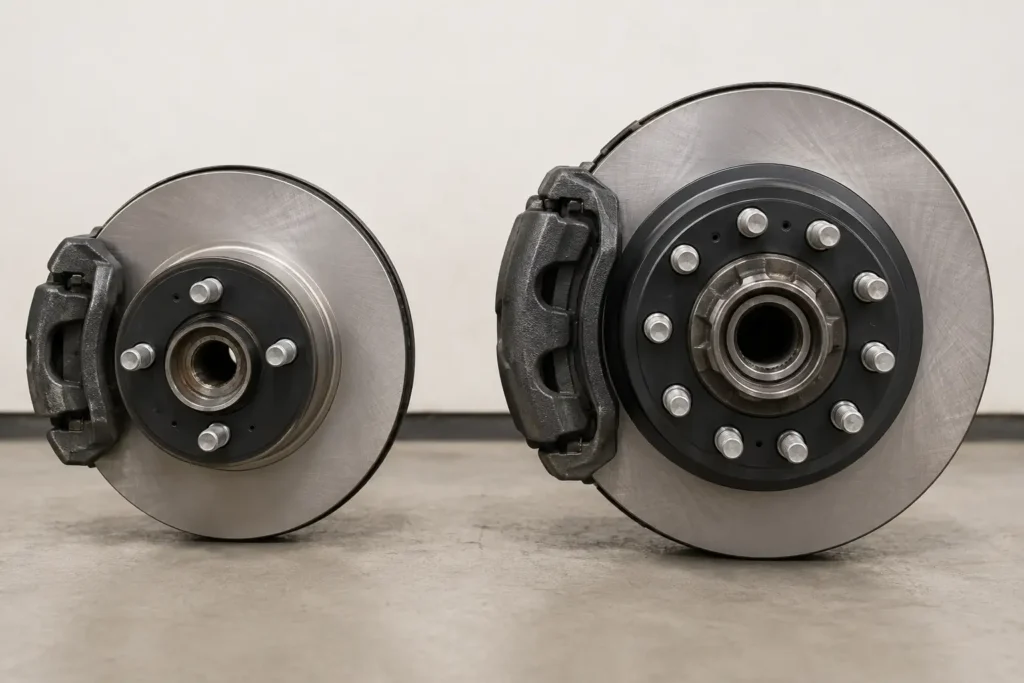
Ram 2500 and 3500 rotors run noticeably larger than any 1500, and the platform has stayed more consistent from generation to generation than the half-ton lineup.
| Generation | Years | Front Rotor, Diameter x Thickness | Rear Rotor, Diameter |
|---|---|---|---|
| 3rd Gen | 2003-2007 | 13.89 x 1.4 in (353 x 35.5mm) | 13.89 x 1.18 in (353 x 30mm) |
| 4th Gen | 2009-2018 | 14.17 x 1.35 in (360mm) | 14.09 in (358mm) |
| 5th Gen | 2019-present | 14.17 x 1.35 in (360mm) | 14.09 in (358mm) |
Unlike the Ram 1500, the 2500 and 3500 rotor architecture carried forward through the 2019 redesign without a size change. Major aftermarket suppliers list the same 14.17-inch front and 14.09-inch rear rotor as compatible across 2011 through 2023 production, and the 2009-2010 model years share the same rear rotor spec.
Dual rear wheel 3500 trucks use the same rotor diameter as single rear wheel models. The difference between SRW and DRW comes down to wheel offset and hub spacing, not rotor size, so DRW owners can use the same rotor spec listed above. For wheel-side torque figures on the HD platform, see our Ram 2500 wheel torque specs.
Diameter only tells half the story. Minimum thickness determines when you must replace, not just measure, your rotors.
Minimum Rotor Thickness Specs Ram Owners Should Know
Every Ram rotor has a minimum thickness stamped into the hub or the outer edge of the rotor, and that number determines whether a shop can safely resurface it or must replace it outright.
| Model and Generation | Min Front Thickness | Min Rear Thickness |
|---|---|---|
| Ram 1500, 1994-2001 | 1.215 to 1.269 in (30.9 to 32.2mm), varies by trim | Drum standard on base trims, disc on higher trims |
| Ram 1500, 2002-2018 | 1.02 in (26mm) | 0.80 in (20.4mm) |
| Ram 2500/3500, 2003-2007 | 1.33 in (34mm) | 1.117 in (28.4mm) |
| Ram 2500/3500, 2011-present | 1.47 in (37.4mm) | 1.27 in (32.4mm) |
These figures are cross-checked across multiple independent sources rather than a single listing: the DodgeRam.org archived factory brake specification table for the 1994-2001 trucks, a Mopar factory service manual figure discussed in a DodgeForum minimum rotor thickness thread for the 3rd generation, an EBC aftermarket spec sheet for the 2006-2019 Ram 1500 front rotor, and a MoparRepair.com-sourced spec cited directly in a RamForum.com 2500 rotor thread for the HD platform. Independent aftermarket listings for the discard thickness on 2003-2008 and 2011-2025 HD rear rotors matched these figures exactly. The minimum front thickness is typically cast or stamped on the outer diameter of the rotor, while the minimum rear thickness is usually found on the hub mounting face.
A rotor within a few thousandths of an inch of minimum thickness should be replaced, not resurfaced. Machining removes material permanently, and a rotor cut close to minimum will not survive another brake job. Measure with calipers rather than relying on visual inspection, since wear is not always even across the surface.
Knowing the spec is one thing. Confirming it on your exact truck is another.
How to Confirm Your Exact Rotor Size Before Ordering
Four ways exist to confirm rotor size without guessing from a chart alone.
- Check the stamp on the rotor itself. Minimum thickness and sometimes diameter are cast into the hub area or outer edge of the original rotor, even if it is worn.
- Look up your VIN. A dealer parts counter or an online VIN-based catalog such as RockAuto’s VIN lookup tool returns the exact rotor part number for your specific truck, including any towing or brake package options that change the spec.
- Measure what is on the truck. A tape measure across the rotor face gives you diameter, and a micrometer or caliper gives you thickness at multiple points around the surface, not just one.
- Count the lug holes. Five lugs points to a Ram 1500 Classic-era part. Six lugs points to a Ram 1500 DT part. Eight lugs means you are working with a 2500 or 3500.
Before you pull the old rotors, it is worth bleeding the system properly once new parts go in. Our Ram 1500 brake bleeding sequence guide walks through the correct order for a full flush.
Even with the right numbers, owners still make the same fitment mistakes.
Common Rotor Fitment Mistakes Ram Owners Make
Four mistakes account for most wrong-part returns on Ram rotor orders.


- Ordering Classic specs for a DT truck, or the reverse. The 5-lug versus 6-lug split on 2019-2022 Ram 1500s catches more owners than any other single issue on this list.
- Assuming front and rear rotors interchange. On several Ram 1500 generations the rear rotor is larger than the front, and the two are never sold as a single universal part.
- Machining a rotor that is already close to minimum thickness. A shop that resurfaces a worn rotor without checking the stamped minimum first can hand back a part that fails inspection within a few thousand miles.
- Ignoring drivetrain differences on older trucks. Some 2WD front rotor and hub assemblies are combined into a single unit on early Ram 1500 generations, while 4WD trucks use a separate hub and rotor. Ordering a 2WD-style combined rotor for a 4WD truck, or the reverse, will not bolt up correctly.
Buying rotors from a listing that does not separate these variables by generation and drivetrain is the fastest way to end up mid-install with the wrong box. Our best brakes and rotors for Ram 1500 guide breaks down which kits actually list fitment by generation.
Getting the Right Rotor Size the First Time
Dodge Ram brake rotor size comes down to three things: which model you drive, which generation and platform it was built on, and whether you are looking at the front or rear axle. A Ram 1500 Classic, a Ram 1500 DT, and a Ram 2500 all use different parts even when the badges look similar, and the rear rotor is often larger than the front across multiple generations.
The chart above gets you close, but the stamp on your own rotor and a VIN-specific parts lookup are the final word. Confirm lug count, measure if you are unsure, and check minimum thickness before deciding between resurfacing and replacement. Getting the Dodge Ram brake rotor size chart right the first time saves a return shipment and a second trip to the parts counter.
Frequently Asked Questions
What size are the rotors on a Ram 1500?
Ram 1500 rotor size depends on generation. Trucks built 2002-2018 and the 2019-2022 Classic use a 13.2-inch front and 13.85-inch rear rotor on a 5-lug pattern. The redesigned 2019-and-newer DT platform uses a larger 14.88-inch front and 14.76-inch rear rotor on a 6-lug pattern.
Are Ram 1500 Classic and DT rotors the same size?
No. The Classic carries over 4th generation 13.2-inch front and 13.85-inch rear rotors on 5 lugs, while the DT uses larger 14.88-inch front and 14.76-inch rear rotors on 6 lugs. Confirm your lug count before ordering either part.
How do I know my Ram 2500 rotor size?
Most 2011-present Ram 2500 trucks use a 14.17-inch front and 14.09-inch rear rotor, a spec that carried forward through the 2019 redesign. Confirm with a VIN-based parts lookup, since towing packages and dual rear wheel setups can affect other components even when rotor diameter stays the same.
What is the minimum thickness for Ram brake rotors?
Minimum thickness varies by model. Ram 1500 rotors built 2002-2018 discard at roughly 1.02 inches front and 0.80 inches rear, while 2500 and 3500 HD rotors discard between 1.33 and 1.47 inches front depending on generation. Earlier 1994-2001 trucks discard between 1.215 and 1.269 inches front depending on trim. The exact figure is stamped on your rotor.
Do Ram 1500 front and rear rotors differ in size?
Yes, and the difference surprises many owners. On several Ram 1500 generations built 2002-2018, the rear rotor measures roughly 13.85 inches, larger than the 13.2-inch front rotor, a design choice tied to rear weight transfer during towing and heavy braking.
![2018 Ram 2500 6.7 Oil Capacity: Complete Specs Guide [2026]](https://truckguider.com/wp-content/uploads/2026/03/2018-ram-2500-6-7-oil-capacity-featured.webp)
![5th Gen Ram Tail Lights [2026]](https://truckguider.com/wp-content/uploads/2026/03/5th-gen-ram-tail-lights-featured.webp)