RAM 2500 Rear Suspension: Specs & Fitment Guide [2026]

The RAM 2500 features a unique five-link coil spring rear suspension designed for superior ride quality compared to traditional leaf springs. While this setup offers unmatched comfort, heavy towing often requires aftermarket air springs or helper kits to manage rear-end squat and maintain stability.
🎯 Key Takeaways
- The five-link coil system provides better ride comfort than traditional leaf springs.
- Factory rear air suspension allows for automatic load leveling while towing.
- Aftermarket airbags are the most popular solution for reducing towing-related squat.
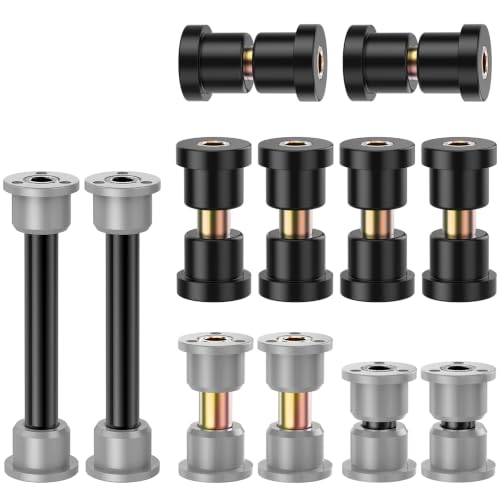
- Regularly inspect track bar bushings and control arms for play to avoid vibration.
- Upgrading to heavy-duty shocks significantly improves damping during high-payload transport.
The RAM 2500 stands alone in the heavy-duty truck market because of its rear suspension architecture. While its competitors stick to stiff leaf springs, the RAM 2500 utilizes a sophisticated five-link coil system designed to balance heavy-duty capability with ride quality. This design choice means your truck handles bumps and highway expansions far more smoothly than a Ford or Chevy, but it also creates a unique set of challenges when you drop a heavy fifth-wheel onto the hitch.


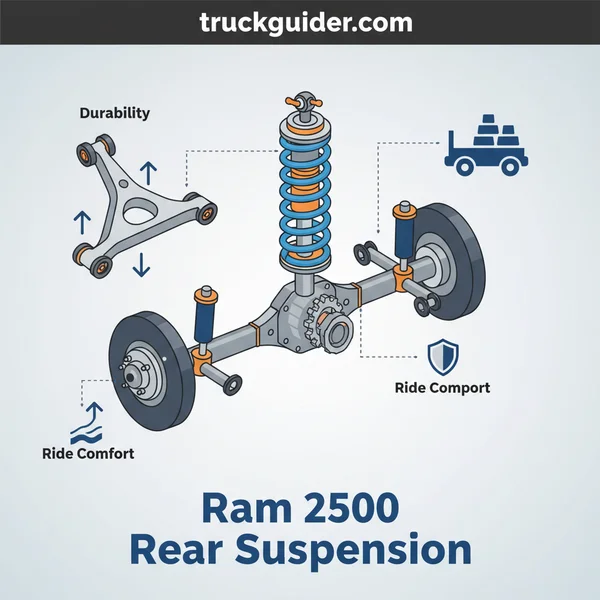
Understanding this system is critical for any owner looking to maximize their towing performance. Because coils are more linear in their compression than leaf springs, “rear-end squat” is a common complaint among 2500 owners. By mastering the mechanics of your five-link setup, you can make informed decisions about air bags, leveling kits, and shock upgrades that keep your truck level and your steering responsive.
The Engineering Behind the RAM 2500 Five-Link Coil System
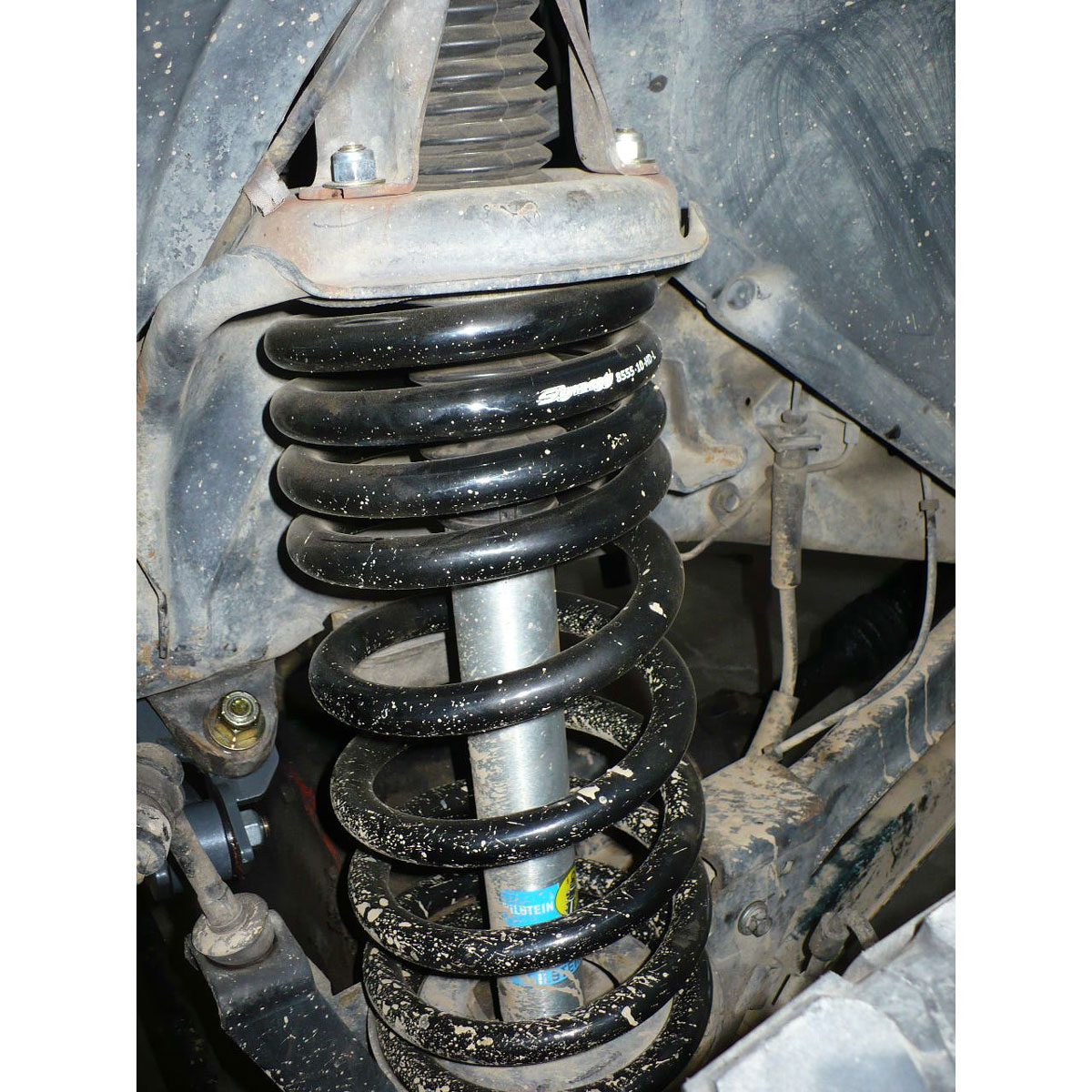
The core of the RAM 2500’s rear end is the five-link coil suspension, a design typically reserved for SUVs or half-ton trucks. Instead of a stack of steel leaves supporting the axle, two massive coil springs handle the weight. The “five links” refer to the four control arms (two upper, two lower) and a track bar that locate the axle and prevent it from shifting side-to-side or rotating during acceleration and braking.
Why the Five-Link Design Changes Everything
In a traditional leaf spring setup, the springs perform two jobs: they support the weight and they hold the axle in place. In the RAM 2500, these jobs are separated. The control arms manage the axle’s geometry, while the coils focus solely on vertical load. This separation significantly reduces “axle hop” and provides much better articulation when driving over uneven terrain or off-road. Because the axle is physically tethered to the frame by solid arms rather than flexible steel slats, the truck feels more “planted” on the road.
Specific technical benefits of this layout include:
- Reduced Internal Friction: Leaf springs create friction as the leaves slide against each other; coils do not, leading to a more sensitive and comfortable reaction to small bumps.
- Lateral Stability: The rear track bar (panhard rod) keeps the axle centered under the frame, even during hard cornering or sudden maneuvers.
- Consistent Pinion Angle: The four control arms maintain a consistent angle for the driveshaft, which reduces vibration and wear on your U-joints.
Coil Springs vs. Traditional Leaf Springs
The trade-off for this comfort is the rate of compression. Leaf springs have a progressive nature; as you add weight, more leaves engage, making the spring stiffer. Standard RAM 2500 coils are generally more linear. When you reach the limit of the coil’s travel, the truck can feel “soft” compared to a RAM 3500. This is why many owners notice their rear bumper sitting lower than expected when hauling a heavy trailer, even if they are well within their official payload ratings. To solve this, you have to look at how the coils interact with the bump stops and shock valving.
Comparing Factory Coil vs. Supplemental Rear Air Suspension
While the standard five-link coil setup is the most common, RAM also offers a factory-installed Rear Auto-Level Air Suspension. This system replaces the coil springs entirely with large heavy-duty air bellows. It is important to distinguish this from aftermarket “helper bags” that sit alongside existing coils. The factory air system is a fully integrated solution that actively monitors the truck’s ride height and adjusts on the fly using an onboard compressor and nitrogen tank.
The Optional Factory Auto-Level Air System
If your truck is equipped with this system, you have access to two primary modes: Normal Ride Height and Alternative Trailer Height. When you hook up a trailer, the sensors detect the load and automatically fill the bags to bring the truck back to a level stance. This prevents the common “nose-high” attitude that ruins your headlight aim and lightens your front-end steering feel.
Key features of the factory air system include:
- Automatic Leveling: The truck maintains a level profile regardless of the cargo in the bed or the tongue weight of the trailer.
- Bed Lowering Function: You can lower the rear end via the key fob or dashboard to make hitching a trailer or loading heavy items into the bed much easier.
- Optimized Ride: When empty, the system lowers the air pressure to provide the softest possible ride, often exceeding the comfort of the standard coil setup.
Managing Payload with Variable Spring Rates
The main difference you will feel between the two is how they handle variable loads. A standard coil spring has one fixed spring rate. If you carry a 2,000-pound pallet of stone, the coil compresses a specific distance every time. With the air system, the “spring rate” effectively becomes variable. It can be soft for a grocery run or incredibly stiff for a gooseneck trailer, all while maintaining the exact same ride height. For owners who frequently switch between driving empty and towing at maximum capacity, the air system offers a level of versatility that standard coils cannot match without the addition of aftermarket air kits or helper springs.



Common Performance Issues: Squat, Sag, and Tracking Problems
The RAM 2500 is often praised for its “plush” ride compared to the leaf-sprung competition, but that comfort sometimes comes at a cost when the bed is fully loaded. Because coil springs are more linear in their compression than leaf stacks, they tend to give way more easily under heavy tongue weights. This results in the “squat” that many RAM owners complain about, where the rear sits significantly lower than the front.
The Impact of Rear-End Squat
Squat isn’t just an aesthetic issue; it fundamentally changes how your truck handles the road. When the rear end drops, the front end rises, shifting the center of gravity and altering the suspension geometry. You might notice the following symptoms during a heavy haul:
- Light Steering: As weight shifts off the front axle, your steering can feel “floaty” or less responsive, especially at highway speeds.
- Headlight Aim: A sagging rear pushes your headlight beams upward, potentially blinding oncoming traffic and reducing your own visibility.
- Bottoming Out: On rougher transitions or bridge expansion joints, a squatted suspension has less travel left, leading to harsh contact with the bump stops.
Lateral Stability and “Tail Wag”
Another common issue involves the five-link geometry itself. While the track bar does an excellent job of centering the axle, worn bushings or extreme loads can lead to lateral instability. Drivers often describe this as a “squishy” feeling in the rear or a “tail wagging the dog” sensation when a large trailer catches a crosswind. This side-to-side movement can be taxing during long hauls, requiring constant steering corrections to keep the truck centered in the lane.
Evaluating Aftermarket Upgrades for Towing and Load Management
If you find that your factory setup isn’t quite meeting the demands of your fifth-wheel or heavy equipment trailer, the aftermarket offers several ways to bolster the RAM 2500’s capabilities. The goal of any upgrade should be to maintain a level ride height and improve dampening without completely sacrificing the empty ride quality that makes the 2500 unique.
Air Helper Springs vs. Suspension Enhancement Systems
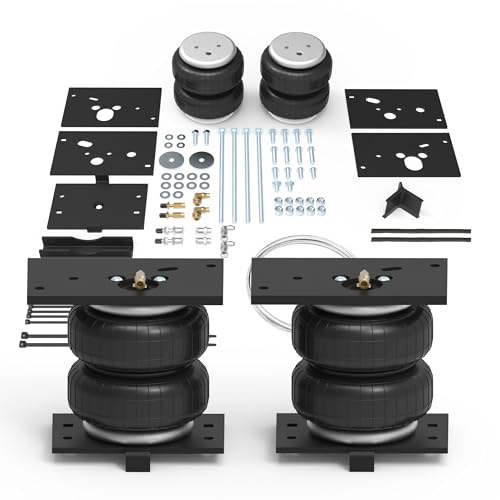
The two most popular paths for fixing sag are airbags and rubber helper springs (like Timbrens or Sumosprings). Airbags offer the most versatility, allowing you to pump them up for a heavy load and deflate them for a smooth ride on the weekend. They are the gold standard for owners who vary their loads significantly.
On the other hand, suspension enhancement systems (SES) replace the factory bump stops with high-density micro-cellular foam or rubber. These are “set it and forget it” solutions. They don’t require air lines or compressors and only engage when the truck is under load, keeping the empty ride relatively stock.
Upgrading Shocks for Better Control
Often, the coil springs aren’t the only culprit; the factory shocks may struggle to control the rebound of a heavy load. Upgrading to high-pressure nitrogen-charged shocks, such as those from Bilstein or Fox, can make a world of difference. Quality shocks help by:
- Reducing the “bounce” felt after hitting a dip in the road.
- Dissipating heat more effectively during long periods of vibration.
- Providing firmer valving to keep the truck composed during high-speed cornering.
Conclusion
The RAM 2500’s rear suspension is a masterclass in balancing utility with daily drivability. By utilizing a sophisticated five-link coil system (or the optional factory air), RAM has moved away from the “work truck” chatter of the past. However, understanding the limitations of this design is key to a safe towing experience. Whether you are dealing with rear-end squat or looking for more lateral stability, the right combination of helper springs and high-quality shocks can transform your truck into a towing powerhouse.


Next Steps: Take a look at your truck’s current stance while hitched. If you see significant sag, consider whether you want the adjustability of airbags or the simplicity of an SES kit. Investing in your suspension today ensures your RAM remains a reliable, comfortable partner for years to come. Happy hauling!
💬 Quick Questions & Answers
Does the RAM 2500 use leaf springs?
No, the RAM 2500 utilizes a five-link coil spring rear suspension, unlike the RAM 3500 which uses traditional leaf springs.
Can I add airbags to a RAM 2500?
Yes, aftermarket airbag kits are a common upgrade to help level the truck when hauling heavy trailers or carrying heavy bed loads.
What causes rear-end ‘clunking’ in a RAM 2500?
This noise is often caused by worn track bar bushings, loose control arm bolts, or failing shock absorbers.
Is the factory air suspension worth it?
It is excellent for frequent towers who want automatic leveling, but it can be more complex and expensive to repair than standard coils.
How does a leveling kit affect the rear suspension?
A front leveling kit doesn’t change rear hardware but makes rear-end squat much more noticeable when the truck is under load.
❓ Frequently Asked Questions
Why did RAM switch to coil springs for the 2500?
RAM switched to coils to provide a more refined ride quality and better axle articulation when the bed is empty. Unlike leaf springs, the five-link design controls axle movement more precisely, significantly reducing ‘bed hop’ on rough roads.
How can I fix rear-end sag when towing a heavy fifth wheel?
The most effective solution is installing an aftermarket air helper spring kit. These kits allow you to adjust the air pressure to keep the truck level, which restores steering geometry and ensures proper headlight aim while under load.
What is the primary difference between 2500 and 3500 rear suspension?
The 2500 uses a multi-link coil system optimized for comfort and daily drivability, while the 3500 uses a leaf spring setup designed for maximum payload capacity. This results in the 2500 having a much smoother unladen ride but a lower payload rating.



What are the signs of worn-out rear shocks on a RAM 2500?
Common signs include excessive bouncing after hitting bumps, visible fluid leaking from the shock body, or ‘cupping’ wear patterns on the rear tires. Upgrading to high-quality monotube shocks can greatly improve stability.
Do I need a track bar drop bracket for a rear lift?
If you lift the rear of the truck more than 2 inches, a drop bracket or an adjustable track bar is necessary to keep the axle centered. Failure to do so will cause the axle to shift toward the driver’s side, leading to tracking issues.
Can I replace the factory air suspension with standard coils?
Yes, many owners choose to use conversion kits to swap out the air bags for traditional coil springs if the factory air system fails. This is often a more cost-effective long-term solution than replacing expensive OEM air compressors or sensors.

![AMP Research PowerStep Warranty: Coverage & Claim Guide [2026]](https://truckguider.com/wp-content/uploads/2026/03/amp-research-power-step-warranty-featured.webp)