7.3 Powerstroke ICP Sensor Location – The Definitive Guide 2025

Is Your 7.3 Powerstroke Stalling, Surging, or Not Starting? Your ICP Sensor Explained
A 7.3L Powerstroke engine running at peak performance is a legend of reliability. But when it suddenly develops a rough, unstable idle , starts to surge or hesitate under acceleration, or—worst of all—presents a “crank-no-start” condition where the engine turns over but refuses to fire, the cause is often a single, small sensor.
Before you suspect your injectors or your High-Pressure Oil Pump (HPOP), you must investigate the Injection Control Pressure (ICP) Sensor. This component is a small but vital part of the engine’s management system, and its failure can bring the notoriously tough 7.3L engine to a complete halt.
To understand why this sensor is so critical, one must first understand the 7.3L’s unique HEUI (Hydraulic Electronic Unit Injection) system. Unlike conventional diesel engines that use a high-pressure fuel pump, the 7.3L Powerstroke uses high-pressure engine oil to actuate the fuel injectors.
Here is how the system works in simple terms:
- The High-Pressure Oil Pump (HPOP), a gear-driven pump in the engine’s valley, provides the “muscle” by pressurizing engine oil to extreme levels—around 500 PSI at idle and over 3,000 PSI under heavy load.
- This high-pressure oil is sent to the fuel injectors. Inside each injector, this oil pressure is used to force fuel into the combustion chamber at over 21,000 PSI.
- The Injection Pressure Regulator (IPR), an electronically controlled valve, is the “hands” of the system. It opens or closes to physically control and regulate the oil pressure created by the HPOP.
- The Injection Control Pressure (ICP) Sensor is the “eyes” or “gauge” of the system. Its sole function is to measure the exact oil pressure in the high-pressure rails at all times.
- The Powertrain Control Module (PCM), the truck’s main computer, is the “brain.” It reads the voltage signal from the ICP sensor (actual pressure) and compares it to the pressure it wants (desired pressure) based on throttle input and load. The PCM then commands the IPR to make adjustments, creating a high-speed, closed-loop feedback system.
This system is a marvel of engineering, but it has a critical dependency: the PCM must see a minimum of 500 PSI of injection control pressure, as reported by the ICP sensor, before it will even enable the fuel injectors to fire.
If the ICP sensor fails, shorts out, or sends an erratic signal, the PCM may believe there is 0 PSI of oil pressure. As a fail-safe, the PCM will immediately disable the fuel injectors. This is why a simple sensor failure doesn’t just cause a rough idle; it acts as a kill switch, leading directly to the “crank-no-start” or “engine suddenly stops running” symptoms.
Locating & Diagnosing the 7.3L Powerstroke ICP Sensor
What is the ICP Sensor? The “Eyes” of the HEUI System
The Injection Control Pressure (ICP) sensor is a vital component in the 7.3L Powerstroke’s HEUI (Hydraulically-actuated Electronically-controlled Unit Injector) system. Think of it as the “eyes” for the Powertrain Control Module (PCM). It constantly measures the high-pressure oil (up to 3,000 PSI) that is used to fire the fuel injectors. This feedback allows the PCM to precisely control injection timing and pressure for optimal power, efficiency, and emissions.
The HEUI Feedback Loop
Common Failure Symptoms
When the ICP sensor fails, the PCM receives incorrect data (or no data), leading to a host of driveability issues. A failed sensor is a very common reason for a 7.3 Powerstroke no-start (hot) condition.
Key ICP Operating Pressures
The 7.3L engine requires a minimum of 500 PSI of injection control pressure to even start. The PCM monitors this pressure via the ICP and will not fire the injectors until this threshold is met. This data is critical as confirmed by scan tool data from technicians.
Location by Model Year: The Two-Sensor Era
Ford (Navistar) changed the ICP sensor’s location mid-generation. Finding it depends entirely on your truck’s model year. This was a significant design change, moving the sensor from a very difficult-to-reach spot to a much more accessible one.
Early Models: 1994.5 – Early 1999
On early 7.3L engines, the ICP sensor is located in the engine “valley” on the high-pressure oil pump (HPOP) itself. It is at the front of the engine, behind the fuel filter housing, and is notoriously difficult to access without removing other components.
Late Models: Late 1999.5 – 2003
For late-model engines, Ford moved the sensor to a much more accessible location: the front of the **driver’s side cylinder head**. It is threaded vertically into the head, just below the valve cover and near the glow plug relay.
How to Diagnose a Bad ICP Sensor
Testing the sensor is straightforward. A common failure mode involves the internal seal breaking down, allowing high-pressure oil to leak *through* the sensor and into the electrical connector.
Carefully unplug the sensor’s electrical harness. Look inside the connector. Is it full of engine oil? If yes, the sensor is bad. This is the most common and definitive sign of failure. Replace it.
If the truck cranks but won’t start, try unplugging the ICP sensor completely. Then, try to start the engine. If it starts (it may run rough), the sensor is bad. Unplugging it forces the PCM to use a default, pre-programmed value, which is good enough to start if the sensor was sending faulty data.
With a scan tool, monitor “ICP Pressure” while cranking. It must be >500 PSI to start. If it’s too low, you may have a weak HPOP, a bad IPR valve
, or a large oil leak (like injector o-rings).Related DTCs
A failing ICP sensor will often (but not always) trigger a Check Engine Light. Common Diagnostic Trouble Codes (DTCs) include:
| Code | Description |
|---|---|
| P1211 | ICP Pressure Above/Below Desired |
| P1280 | ICP Sensor Circuit Low |
| P1281 | ICP Sensor Circuit High |
| P1210 | ICP (Inj Ctrl Press) Not Controllable |
When it’s time for a replacement, always opt for a high-quality OEM or reputable aftermarket part like those from ProSource Diesel or Ford to ensure longevity.
7.3 Powerstroke ICP Sensor Location: Why There Are TWO (And How to Find Yours)
This is the single most confusing part for many 7.3L owners and the primary reason for this guide. If you are searching for your ICP sensor, you have likely found conflicting answers. This is because Ford used two different locations for the ICP sensor, and the location depends entirely on your truck’s model year and engine generation.
The split occurs between the early “OBS” (Old Body Style) trucks and the later “Super Duty” models.
Location 1: Early 7.3L Models (1994.5 – 1997)
- Vehicle Models: F-250, F-350 “OBS” trucks.
- Where: The sensor is located on the driver’s side cylinder head, near the front of the engine. It is threaded directly into the high-pressure oil rail that runs along the head, just under the valve cover.
- How to Find It: This location is generally considered easy to access. Open the hood and stand on the driver’s side. Look at the engine, just behind the HPOP (which is at the front of the valley) and the alternator. You will see the sensor and its three-wire pigtail.
Location 2: Late 7.3L Models (1999 – 2003)
- Vehicle Models: F-250, F-350 “Super Duty” trucks and 2000-2003 Ford Excursions.
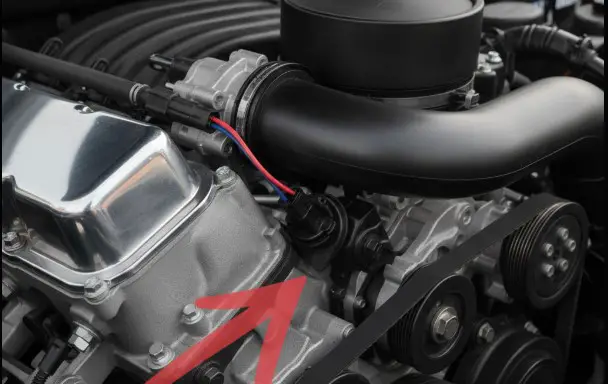
- Where: The sensor is located in the engine “valley,” mounted directly on the High-Pressure Oil Pump (HPOP) itself, toward the rear of the pump.
- How to Find It: This location is significantly more difficult to access. It is positioned beneath the turbocharger and behind the fuel filter bowl. To see it, you will need a flashlight and must look down into the engine valley from the top, peering under the turbo’s intake and compressor.
The “Missing Years” (1997-1998) and Why the Location Changed
You may have noticed a gap. The 1997 model year was a transition, and parts from 1997.5 models (as referenced in sources) began using the later-style engine. If you own a 1997 7.3L Powerstroke, you must check the “easy” location on the driver’s side head first. If it is not there, your truck has the later-style engine, and the sensor will be on the HPOP under the turbo.
This location change was not made to inconvenience mechanics; it was a deliberate engineering improvement. On the later models, Ford placed the ICP (the “sensor”) and the IPR (the “regulator”) on the same component—the HPOP. This co-location creates a much faster and more accurate feedback loop for the PCM, resulting in improved throttle response, better emissions control, and more stable cold-start performance. The trade-off was a significant increase in service difficulty.
For a quick, skimmable answer, use this table:
Table 1: 7.3L ICP Sensor Location by Engine Generation
| Engine Model | Truck Model Years | Sensor Location | Access & Difficulty |
| Early 7.3L (‘OBS’) | 1994.5 – 1997 | Driver-Side Cylinder Head, near front | Easy: Visible from driver’s side |
| Late 7.3L (‘Super Duty’) | 1999 – 2003 | On HPOP, in engine valley, under turbo | Difficult: Requires access from top of engine |
| Transition Year | 1997 | Could be either. Check head location first. | N/A |
7 Symptoms of a Bad 7.3 ICP Sensor (And One Dead Giveaway)
When the ICP sensor begins to fail, it sends erratic, incorrect, or no signal at all to the PCM. This starves the computer of the data it needs to run the engine, resulting in a clear set of severe drivability issues.
Here are the most common symptoms of a failing 7.3L ICP sensor:
- Crank-No-Start (Most Common): The engine turns over (cranks) but will not fire. This is the most prevalent and alarming symptom. This occurs because the failed sensor is reporting less than the 500 PSI required for the PCM to activate the injectors.
- Hard/Extended Starting: The engine takes much longer than usual to start, requiring extended cranking time, especially when the engine is cold.
- Rough Idle or “Whomping”: This is a classic 7.3L symptom. The idle is unstable, lopes, or has a distinct “whomp-whomp-whomp” sound. This audible “whomping” is the sound of the IPR valve rapidly opening and closing as the PCM attempts to correct for the erratic pressure signals it’s receiving from the failing sensor.
- Engine Surging or Hesitation: While driving, the truck may surge, misfire, or hesitate under acceleration.1 This is the PCM attempting to “catch up” to the sensor’s jumpy data.
- Stalling or Engine Cutting Out: The engine may stall unexpectedly when coming to a stop or, more dangerously, cut out completely while driving.
- Noticeable Loss of Power: The truck feels weak, has poor throttle response, and struggles to accelerate as the PCM cannot command the correct injection pressure for the given load.
- Check Engine Light (CEL): A failing sensor will often, but not always, trigger a Check Engine Light and store Diagnostic Trouble Codes (DTCs) in the PCM.
The “Smoking Gun”: Oil in Your ICP Connector
While the symptoms above are strong indicators, there is one definitive, 100% confirmation of a bad ICP sensor. This is the “smoking gun” test.
How to check:
- Locate your ICP sensor using the guide in Section 2.
- Carefully press the tab on the electrical connector (pigtail) and pull it off the sensor.
- Take a flashlight and inspect both the pins on the sensor itself and the inside of the connector you just removed.
If you see any trace of engine oil, the sensor is failed.
The ICP sensor’s body contains high-pressure oil (up to 3,000+ PSI) on one side and a low-voltage electrical connection on the other. A set of internal seals separates these two sides. When the sensor fails, these seals rupture, and the extreme oil pressure forces engine oil past the seals, through the sensor’s body, and into the electrical connector.
This oil not only confirms the sensor is bad, but it also contaminates and degrades the plastic and metal terminals of the pigtail connector. Therefore, if you find oil, you must replace both the ICP sensor and the pigtail connector.
How to Test Your 7.3 ICP Sensor (3-Step Diagnosis)
If your symptoms are present but you did not find oil in the connector, the sensor may be failing electrically. Here is the 3-step diagnostic process, from the easiest field test to the professional method.
Method 1: The Visual Inspection (The “Smoking Gun” Test)
This is a reiteration of the test above, as it is the most important first step.
- Locate the sensor.
- Disconnect the electrical pigtail.
- Inspect for any sign of engine oil.
- Result: If oil is present, your diagnosis is complete. The sensor is bad. Proceed to the replacement section.
Method 2: The “Unplug Test” (30-Second Diagnosis)
This is the most effective and well-known field-expedient test for a 7.3L ICP sensor. It is free, takes 30 seconds, and is extremely accurate.
The Logic:
As established, a failed ICP sensor sends a bad signal (e.g., 0 PSI), which tells the PCM not to fire the injectors.8 By unplugging the sensor, you are removing the bad signal.
When the PCM loses the signal from the ICP sensor, it knows something is wrong. As a fail-safe, it ignores the missing sensor and instead uses a pre-programmed default pressure value. This default value is approximately 725 PSI.3
Since 725 PSI is above the 500 PSI minimum required for starting, the PCM will now re-enable and fire the injectors.
Test A (For a “Crank-No-Start” Condition):
- Locate the ICP sensor.
- Disconnect the electrical pigtail.
- Get in the truck and try to start the engine.
- Result: If the truck fires up and runs (it may run rough, but it runs), you have 100% confirmed your ICP sensor is bad.
Test B (For a “Rough Idle” or “Surging” Condition):
- Start the truck and let it idle roughly.
- Carefully reach in and disconnect the ICP sensor’s electrical pigtail while the engine is running.
- Listen. You should hear an immediate and noticeable change in the engine’s sound and idle quality as the PCM switches to the 725 PSI default.
- Result 1: If the “whomping” or “surging” stops and the idle smooths out, you have confirmed the sensor is bad.
- Result 2 (Advanced): If you unplug the sensor and the idle does not change at all, this also indicates the sensor is bad. This means the sensor had already failed so completely that the PCM was already ignoring it and running on the default value.
Method 3: Using a Scan Tool (The Professional Method)
This is the only method that can diagnose a “lazy” or “out-of-range” sensor and, more importantly, differentiate a bad ICP sensor from a bad IPR valve or HPOP.
You will need a diagnostic scan tool capable of reading Ford-specific PIDs (live data), such as FORScan or AutoEnginuity.
Connect the scanner and monitor these three specific PIDs:
ICP Pressure (Actual)ICP Pressure (Desired)IPR Duty Cycle (%)
What to Look For:
- Key On, Engine Off (KOEO):
ICP (Actual)should be 0 PSI. - Cranking: You must see
ICP (Actual)climb above 500 PSI for the truck to start. - Idle (Warm):
ICP (Actual)should be steady around 500-550 PSI, andIPR Duty Cycleshould be low and stable (e.g., 10-15%).
The real diagnosis happens during a “crank-no-start” condition. If your scan tool shows ICP (Actual) is below 500 PSI during cranking, you are at a critical diagnostic fork. The next step is to look at the IPR Duty Cycle %.
This table explains how to interpret the results:
Table 2: ICP vs. IPR: Diagnosing a No-Start with a Scan Tool
| ICP (Actual) (Cranking) | IPR Duty Cycle (Cranking) | Interpretation | Likely Problem |
| > 500 PSI | 10-30% | Normal. Truck should start. | Not an ICP/IPR issue. Check CPS sensor. |
| < 500 PSI | Low (10-20%) | ICP sensor is “lying” to PCM; PCM isn’t trying. | Bad ICP Sensor |
| < 500 PSI | High (85%+) | PCM is trying to build pressure, but system can’t. | Bad IPR, HPOP, or Oil Leak 9 |
The logic in Table 2 is the single most important concept in 7.3L HEUI diagnostics.
- Scenario A (Bad ICP): If the
ICP (Actual)is 200 PSI but theIPR Duty Cycleis only 15%, the ICP sensor is lying to the PCM. It’s falsely reporting 200 PSI, so the PCM thinks everything is fine and isn’t even trying to command the IPR to build more pressure. - Scenario B (Bad IPR/HPOP): If the
ICP (Actual)is 200 PSI and theIPR Duty Cycleis maxed out at 85%, the PCM is screaming for more pressure. It has the IPR wide open, but the system cannot build pressure. In this case, the ICP sensor is working perfectly—it is correctly reporting the low pressure. The problem is a mechanical failure to build pressure (a bad IPR, a failed HPOP, or a massive high-pressure oil leak).
If your scan tool points to Scenario B, your ICP sensor is likely good. You should investigate other components. For a clear breakdown of the functional difference between these parts, see this guide from ProSource Diesel. If this is your situation, a potential next step is to check our Guide to Testing and Replacing the 7.3L IPR Valve.
7.3L Powerstroke ICP-Related Trouble Codes (DTCs)
If your Check Engine Light is on, a scan tool will retrieve Diagnostic Trouble Codes (DTCs) that can point you directly to the problem. These are the most common 7.3L-specific codes related to the ICP system.
- P1211: ICP (Injection Control Pressure) Higher/Lower Than Desired
- What it means: The PCM (computer) saw a significant and sustained difference between the pressure it wanted and the pressure the ICP sensor reported. This is a general “pressure problem” code and can be caused by a bad sensor, a bad IR, or a high-pressure oil leak.
- P1280: ICP Circuit Out of Range Low
- What it means: The PCM received a signal voltage from the ICP sensor that was too low (e.g., a short to ground).21 This code almost always points to a faulty ICP sensor or a damaged pigtail/wiring harness. The PCM will default to an unstable pressure setting when this code is active.
- P1212: ICP Pressure Not Controllable
- What it means: The PCM detected that even with maximum or minimum effort from the IPR, the actual pressure reported by the ICP did not change as expected. This often points to a mechanically stuck IPR valve or a major system leak.
A critical point of confusion for many owners is the prevalence of 6.0L Powerstroke information online. The 6.0L (which replaced the 7.3L) also has an ICP system, but it uses different DTCs. You will often see “P2285” (ICP Sensor Circuit Low) mentioned. This is the 6.0L code. The 7.3L equivalent is P1280. This distinction is critical to avoid “chasing” the wrong diagnosis.
Table 3: Common 7.3L ICP Sensor DTCs (And What They Mean)
| DTC Code | Definition | What It Means for Your 7.3L |
| P1211 | ICP Higher/Lower Than Desired | Pressure actual doesn’t match desired. Can be bad ICP, IPR, or HPOP leak. |
| P1280 | ICP Circuit Out of Range Low | Sensor signal is too low. Usually a bad sensor or wiring short. |
| P1212 | ICP Pressure Not Controllable | Pressure isn’t responding to IPR commands. Usually a stuck IPR or major leak. |
| P2285 | ICP Sensor Circuit Low | This is a 6.0L code. The 7.3L equivalent is P1280. Do not confuse them. |
Step-by-Step: How to Replace a 7.3L ICP Sensor (Early & Late Models)
If your diagnosis has confirmed a bad ICP sensor, replacement is the only fix.
Crucial Pre-Step: A Note on Parts
This is the most important advice in this section: The 7.3L Powerstroke is notoriously picky about its electronic sensors. Do not use a cheap, unbranded sensor from Amazon or eBay to save $50. These are known to fail out of the box or last only a few weeks, forcing you to do the job twice.
Use only an OEM Motorcraft sensor or a sensor from a highly reputable aftermarket diesel manufacturer like Bostech or Sinister Diesel.1 Quality-sourced parts are available from dedicated diesel suppliers like Riffraff Diesel.
If your original connector was full of oil, you must also replace the pigtail connector.
Tools & Parts Needed
- New ICP Sensor (Motorcraft recommended)
- New Pigtail (if needed)
- Wrench/Socket: This is tricky. The size varies.
- Later-model replacements often use a 1 1/16″ deep socket or wrench.
- Original “International” style sensors may use a 5/8″ (16mm) or 17mm nut.
- For Late Models (on HPOP), a crowfoot wrench set (3/8″ drive) is essential.
- 3/8″ Drive Ratchet and extensions
- Torque Wrench (low-range, ft-lbs)
- Shop rags and clean engine oil
Procedure 1: Early Models (1994.5-1997) on the Head
This is the easier of the two jobs.
- Safety First: Disconnect both negative battery cables.
- Locate Sensor: Identify the sensor on the driver-side cylinder head.
- Prepare: Place shop rags underneath the sensor to catch any oil that spills.
- Disconnect: Depress the tab and remove the electrical pigtail.
- Remove: Using the appropriate wrench or socket (1 1/16″ or 5/8″), unscrew and remove the old sensor.
- Prepare New Sensor: Lightly coat the new sensor’s O-ring with clean engine oil.
- Install: Thread the new sensor in by hand. Torque to 9 ft-lbs. Do not overtighten.
- Reconnect: Connect the new pigtail (or the old one if it was clean). Reconnect the batteries.
Procedure 2: Late Models (1999-2003) on the HPOP
This job is more difficult due to the “under-turbo” location.
- Safety First: Disconnect both negative battery cables.
- Locate Sensor: Identify the sensor on the HPOP, deep in the engine valley.
- Gain Access: You will likely need to remove the fuel filter housing lid and fuel filter to gain more room to work.
- Prepare: Carefully stuff shop rags into the valley around the sensor to catch oil and prevent a dropped tool from disappearing.
- Disconnect: Reach down and disconnect the electrical pigtail.
- Remove: This is the hard part. Use a 3/8″ drive ratchet with several extensions and the correct size crowfoot socket. Feed the tool down to the sensor and break it loose.
- Prepare New Sensor: Lightly coat the new sensor’s O-ring with clean engine oil.
- Install: Carefully thread the new sensor in by hand (this is difficult but critical to avoid cross-threading). Use the crowfoot and extensions to final-tighten to 9 ft-lbs.
- Reconnect: Connect the pigtail, reinstall the fuel filter, and reconnect the batteries.
After either procedure, the truck may take slightly longer to start as the HPOP system re-primes with oil.
7.3 ICP Sensor Replacement Cost
The total cost of the job is driven by two factors: the price of the part and the cost of labor, which varies significantly based on the sensor’s location.
Part Cost (DIY)
- Cheap Aftermarket Sensor (Not Recommended): $20 – $70.
- OEM (Motorcraft) / Premium Aftermarket Sensor: $100 – $190. This is the recommended route.
- Pigtail Connector (if needed): $40 – $60.
Shop Cost (Parts + Labor)
Labor rates at a repair shop will be based on the time required. The “easy” location on early models takes far less time than the “difficult” location on later models.
- Early Model (Head): The location is “easy to get to” and is typically a sub-1-hour job.
- Late Model (HPOP): The location is “beneath the turbo” and is a 1.5 to 2.5-hour job for an experienced technician.
Table 4: Estimated 7.3L ICP Sensor Replacement Cost
| Cost Item | 1994.5-1997 (‘OBS’) | 1999-2003 (‘Super Duty’) |
| DIY (Parts Only) | ||
| OEM Sensor | $100 – $190 | $100 – $190 |
| Pigtail (if needed) | $40 – $60 | $40 – $60 |
| Shop (Parts & Labor) | ||
| Parts (OEM) | $100 – $190 | $100 – $190 |
| Labor | $100 – $150 (~1 hr) | $200 – $350+ (~1.5-2.5 hr) |
| Total Shop Est. | $200 – $340 | $300 – $540+ |
Given the importance of quality parts for the HEUI system, this is not a repair where cutting corners on part cost is advised.
Conclusion: The Final Verdict
The Injection Control Pressure (ICP) sensor is a small part that plays an enormous role in the 7.3L Powerstroke’s operation. It acts as the “eyes” for the entire HEUI system, telling the computer how much pressure is available to fire the injectors.
- Location: Its location is model-year dependent. Early models (1994.5-1997) are on the driver’s side head, while late models (1999-2003) are on the HPOP under the turbo.
- Symptoms: A bad sensor causes severe symptoms, including a crank-no-start, rough idle, “whomping,” and stalling.
- Diagnosis: The two best field diagnostics are the “Smoking Gun” test (checking for oil in the connector) and the “Unplug Test” (which forces the PCM to a default pressure).
Do not ignore the symptoms of a failing ICP sensor. Diagnosing it correctly can save you from mistakenly replacing a much more expensive HPOP or IPR. Always use a high-quality OEM or premium replacement sensor to ensure another 300,000 miles of 7.3L reliability.
Now that your high-pressure oil system is healthy, make sure the rest of your truck is too. Check our full library of 7.3 Powerstroke common problems and solutions.
Frequently Asked Questions (FAQ)
Q: What are the signs of a bad ICP sensor on a 7.3 Powerstroke?
A: The most common signs are a crank-no-start condition, hard starting (especially when cold), a rough or “whomping” idle, engine surging, stalling or cutting out, and a significant loss of power.
Q: Where is the ICP sensor on a 1997 7.3 Powerstroke?
A: On 1994.5-1997 “OBS” models, the sensor is in an easy-to-access spot on the driver’s side cylinder head, near the front of the engine. Note that 1997 can be a transition year, but most will be in this location.
Q: Where is the ICP sensor on a 2001 7.3 Powerstroke Super Duty?
A: On 1999-2003 “Super Duty” models, the sensor is in a harder-to-reach spot on the High-Pressure Oil Pump (HPOP), located in the engine valley under the turbocharger.
Q: Can I drive with a bad ICP sensor?
A: It is not recommended. A failing ICP sensor can send erratic signals, causing the engine to stall unexpectedly, which is dangerous. In a worst-case scenario, it will fail completely and leave you stranded with a no-start condition.
Q: What’s the difference between an ICP sensor and an IPR valve?
A: They work together. The ICP is the “sensor” that measures and reports the oil pressure to the computer. The IPR is the “regulator” (a valve) that the computer uses to physically control and set the pressure.
Q: What happens if I unplug my 7.3 ICP sensor?
A: Unplugging the sensor forces the truck’s computer (PCM) to use a pre-programmed default pressure setting (around 725 PSI). If your truck has a “no-start” or “rough run” condition, and it starts or runs better with it unplugged, you have confirmed the sensor is bad.
Q: What DTC codes does a bad ICP sensor cause?
A: The most common 7.3L-specific codes are P1211 (ICP Higher/Lower Than Desired) and P1280 (ICP Circuit Out of Range Low).