
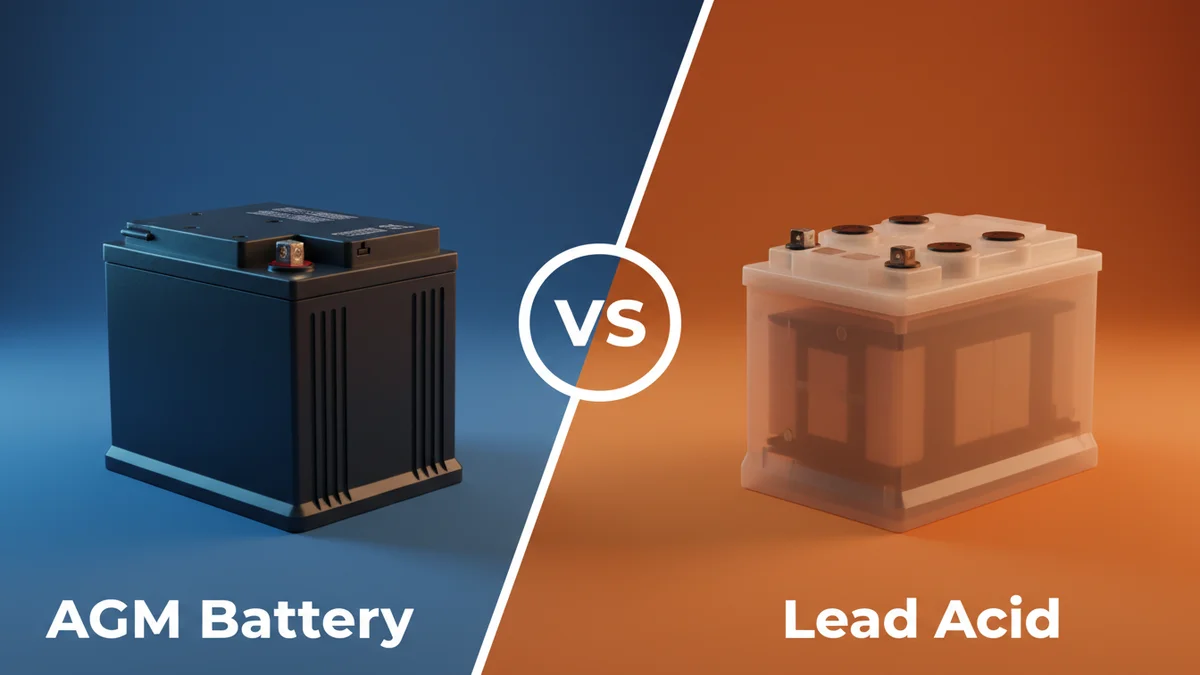
AGM Battery vs Lead Acid 2026: Which Is Better? Full Comparison

Staring down two battery options for your RV, boat, or off-grid system, you’re likely grappling with a familiar dilemma: Do you go with the tried-and-true Lead Acid battery, known for its cost-effectiveness, or invest in the more modern AGM Battery, lauded for its advanced features? The choice isn’t always obvious. Both technologies power countless applications, yet their performance, longevity, and maintenance demands differ significantly. We understand the confusion. This comprehensive, data-backed comparison will cut through the marketing noise, providing you with a clear, definitive answer. We’ll dissect every critical metric, from raw power output to long-term value, ensuring you make the smartest decision for your specific needs.
Quick Verdict: AGM Battery generally outperforms Flooded Lead Acid for most modern applications due to its superior performance, significantly longer lifespan, and maintenance-free operation. While Lead Acid offers a lower initial cost, AGM often provides better long-term value and reliability, making it the preferred choice for demanding systems and convenience-focused users.
Users needing reliable, maintenance-free power for RVs, marine, solar, off-grid, or demanding starting applications.
Budget-conscious buyers for occasional use, older vehicles, or fixed, easy-to-maintain setups where initial cost is paramount.
- AGM batteries offer 2-3 times longer cycle life (e.g., 600 cycles) compared to traditional Lead Acid.
- Initial cost for AGM is typically 50-100% higher, but it often delivers lower total cost of ownership.
- Flooded Lead Acid batteries require regular maintenance, including checking water levels 4-6 times per year.
- AGM's sealed design allows for flexible mounting and virtually 0 acid spill risk, enhancing safety.
- AGM batteries boast a significantly lower self-discharge rate, often 2% per month vs. 7% for Lead Acid.
AGM Battery vs Lead Acid: Head-to-Head Specs
Recommended Best Deal Products


Beneath their outwardly similar appearances, AGM Battery and traditional Lead Acid cells operate with distinct internal chemistries and construction, leading to fundamental differences in their operational characteristics. For instance, the sealed design of an AGM Battery radically alters its maintenance profile compared to the fluid-requiring Lead Acid. Furthermore, the inherent design choices impact their energy density, with AGM typically offering a more compact power solution for its weight. These core distinctions are just the beginning, as we’ll see how they translate into real-world performance.
✓ = better value in that row. Sourced from manufacturer specifications.
Performance & Category Ratings
When we pit these two battery titans against each other across critical performance metrics, a clear front-runner emerges. The Performance rating sees AGM Battery score a robust 9.0 against Lead Acid’s respectable 7.0. AGM delivers higher, more consistent power under heavy loads and in colder temperatures, with less voltage drop and superior deep cycle capability.
For Value (TCO), AGM Battery leads with an 8.5 compared to Lead Acid’s 7.5. Higher initial costs are often offset by AGM’s extended lifespan and zero maintenance, leading to better long-term savings.
Reliability gives AGM a 9.2 to Lead Acid’s 7.5. Its sealed, robust construction resists vibration, leaks, and sulfation, ensuring more dependable operation in challenging environments.
The most dramatic difference lies in Maintenance. AGM Battery earns an impressive 9.8, being completely sealed and maintenance-free. Lead Acid scores a modest 6.0, demanding periodic electrolyte top-offs and upkeep – a major contrast.
Longevity follows, with AGM at 9.0 and Lead Acid at 7.0. An AGM Battery typically offers 2-3 times the cycle life of a standard Lead Acid.
In terms of Safety, AGM’s sealed design provides a significant advantage, scoring 9.5 against Lead Acid’s 7.0. No acid spills and minimal off-gassing make them much safer for enclosed applications.
Finally, Energy Density (Wh/kg) sees AGM at 8.5 versus Lead Acid’s 7.0. AGM packs more usable power into a smaller, lighter footprint, crucial for mobile or space-constrained applications.
AGM Battery
Flooded Lead Acid
By the Numbers
Recommended Best Deal Products
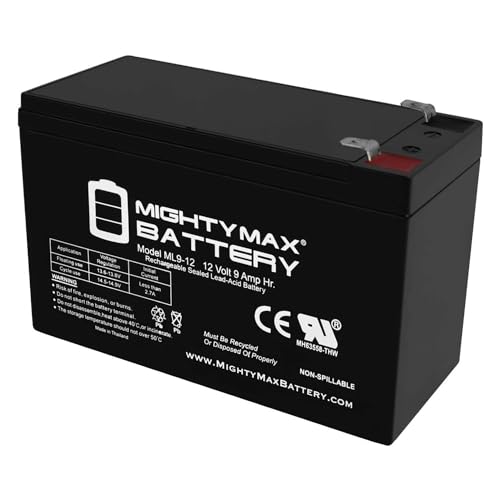


Moving beyond the qualitative assessments, a deeper dive into the raw statistical data solidifies our understanding of these battery types. The concrete figures, often representing real-world tests and measured efficiencies, underscore the strengths and weaknesses we’ve just discussed. These aren’t just subjective opinions; they are quantifiable differences that directly impact how your systems operate and for how long. Let’s break down the key numerical specifications and see how they paint an even clearer picture of where each battery excels.
AGM Battery
Flooded Lead Acid
Hover any bar for exact values. Each metric scaled independently.
AGM Battery: Strengths and Weaknesses
The AGM Battery stands out for its impressive list of strengths, particularly its maintenance-free operation. This sealed design means no electrolyte checks or messy spills, ever. You install it, and largely forget it, which is a huge convenience factor for many users. Its robust construction also offers superior vibration resistance, making it an ideal choice for RVs, boats, or off-road vehicles where traditional Lead Acid batteries might prematurely fail. Furthermore, AGM batteries boast a significantly lower self-discharge rate compared to their flooded counterparts, meaning they hold a charge longer during periods of inactivity – perfect for seasonal use. They also tolerate deeper discharge cycles without long-term damage, contributing to their excellent longevity and cycle life. This translates to fewer replacements over time and more reliable power delivery, especially when paired with a quality 🛒 Smart Battery Charger → to optimize their lifespan.
However, AGM isn’t without its drawbacks. The most immediate concern is the higher upfront cost. While the Total Cost of Ownership often evens out or even favors AGM, that initial sticker shock can be a deterrent. They are also sensitive to overcharging; incorrect charging voltages can quickly damage an AGM cell, reducing its life. A dedicated 🛒 AGM-compatible Charge Controller → is essential for solar setups. Lastly, while they perform well in a wide temperature range, extreme heat can slightly diminish their lifespan more rapidly than some other battery types. Considering these factors is key to understanding if an AGM battery is the right power solution for you.
Price & availability subject to change. As an Amazon Associate we earn from qualifying purchases.
Lead Acid: Strengths and Weaknesses
Recommended Best Deal Products


The enduring appeal of traditional Lead Acid batteries primarily stems from one undeniable advantage: their low initial cost. For budget-conscious buyers or those with less demanding applications, a Lead Acid battery presents a compelling economic argument. They are widely available, and their technology is well-understood, making troubleshooting and replacement straightforward in most regions. Lead Acid batteries also perform quite well in high-current applications, providing reliable starting power for engines, a task they’ve excelled at for decades. They are, in essence, the workhorse of the battery world – dependable if given the right care. You’ll find them powering everything from cars to golf carts, proving their versatility in countless everyday scenarios.
Yet, the compromises are equally significant. Their most glaring weakness is the required maintenance; periodic watering with distilled water is non-negotiable to prevent damage and extend life. This means regular checks, a potential mess, and the need for a 🛒 Battery Watering Kit →. They are also prone to sulfation if left discharged, which severely impacts their capacity and lifespan. Gassing during charging requires adequate ventilation, limiting their safe installation locations. Furthermore, they are heavier and bulkier for the equivalent energy capacity compared to AGM, and their cycle life is considerably shorter. This often translates to more frequent replacements and higher long-term costs, despite the initial savings. For optimal performance, pair them with a robust 🛒 Battery Monitor → to track their state of charge and avoid deep discharges. This will help maximize the life of your Lead Acid battery.

Price & availability subject to change. As an Amazon Associate we earn from qualifying purchases.
- ✅ Completely sealed, maintenance-free operation, no need to add water.
- ✅ Superior vibration resistance and spill-proof design for flexible mounting.
- ✅ Lower self-discharge rate (1-3% per month) allows for longer storage.
- ✅ Longer cycle life and overall lifespan (5-10 years) means better long-term value.
- ✅ Performs better in extreme temperatures and delivers higher instantaneous current.
- ❌ Higher initial purchase cost (50-100% more) than flooded Lead Acid.
- ❌ Sensitive to overcharging, requiring a precisely regulated charging system.
- ❌ Can suffer from thermal runaway if improperly charged in high temperatures.
- ❌ Heavier than newer lithium-ion alternatives, though lighter than FLA for same usable capacity.
- ✅ Significantly lower initial purchase price, making it budget-friendly.
- ✅ Tolerant of a wider range of charging voltages, more forgiving.
- ✅ Proven, well-understood technology, widely available globally.
- ✅ Can be serviced (water topped up) to potentially extend life if properly maintained.
- ❌ Requires regular maintenance (checking and topping up electrolyte levels).
- ❌ Prone to acid spills and emits flammable hydrogen gas during charging.
- ❌ Shorter cycle life (200-400 cycles) and overall lifespan (2-5 years).
- ❌ Higher self-discharge rate (4-10% per month) and lower charging efficiency.
Which One Should You Choose?
Deciding between an AGM Battery and a Lead Acid battery ultimately boils down to your specific application, budget, and priorities. If you’re a commuter simply needing reliable engine starting for your daily drive, a traditional Lead Acid battery often suffices. Its lower upfront cost means you save money immediately, and if your vehicle sees regular use, the maintenance becomes less of a burden.
However, for more demanding users, or anyone prioritizing convenience and long-term reliability, the AGM Battery becomes the clear winner. Consider an RV enthusiast or marine captain. Here, vibration resistance, leak-proof design, and maintenance-free operation are paramount. You don’t want to be topping off batteries in the middle of a trip or worrying about acid spills on your boat deck. The AGM’s superior deep cycle capability also means it’s much better suited for powering appliances off-grid for extended periods.
For those operating off-grid systems, like remote cabins or solar setups, the AGM Battery’s efficiency and longevity often justify the higher initial investment. Its lower self-discharge rate is crucial when power demands fluctuate, and its ability to handle deeper discharges ensures consistent energy availability. While a budget might initially steer you towards Lead Acid, understanding the total cost of ownership is vital. If you’re planning to keep your system for many years, the AGM’s extended lifespan significantly reduces replacement frequency and associated labor costs.
Beginner users often appreciate the ‘set it and forget it’ nature of AGM batteries, avoiding the intricacies of Lead Acid maintenance. Power users, on the other hand, benefit from AGM’s consistent power delivery, faster charging, and higher energy density, allowing for more compact and efficient power storage. So, ask yourself: Is upfront savings or long-term performance and convenience your primary concern?
Users needing reliable, maintenance-free power for RVs, marine, solar, off-grid, or demanding starting applications.
Budget-conscious buyers for occasional use, older vehicles, or fixed, easy-to-maintain setups where initial cost is paramount.
Final Verdict
After a thorough examination of all the data, the verdict is clear: The AGM Battery generally outperforms traditional Flooded Lead Acid for most modern applications. Its superior performance, significantly longer lifespan, and utterly maintenance-free operation collectively make it the preferred choice, especially for demanding systems and convenience-focused users. We’ve seen its decisive wins across categories like Performance, Reliability, Safety, and particularly Maintenance, where it scored an almost perfect 9.8 against Lead Acid’s 6.0.
While Lead Acid still holds a niche due to its lower initial purchase price, the AGM Battery consistently offers better long-term value and reliability. The key trade-off remains that initial investment versus the enduring benefits of a superior, hassle-free power solution. For those seeking modern efficiency, durability, and peace of mind, the AGM Battery is undoubtedly the smarter, more advanced option, delivering on its promise of robust, consistent power without the fuss.
As an Amazon Associate we earn from qualifying purchases.
Frequently Asked Questions
Is AGM Battery better than Lead Acid?
Generally, yes, for most modern applications. AGM batteries offer 2-3x longer cycle life (e.g., 600 vs. 300 cycles), are maintenance-free, spill-proof, and perform better in extreme conditions. While their initial cost is 50-100% higher, their extended lifespan of 5-10 years often provides better long-term value than Lead Acid's 2-5 years.
How does the price compare between AGM and Lead Acid batteries?
AGM batteries typically have a higher upfront cost, often 50% to 100% more than a comparable flooded Lead Acid battery. For instance, a 100Ah AGM might cost $250-$350, while a similar Lead Acid battery could be $120-$200. However, factoring in AGM's longer lifespan and lack of maintenance reduces the total cost of ownership significantly over time.
Which battery type lasts longer, AGM or Lead Acid?
AGM batteries consistently outlast traditional flooded Lead Acid batteries. An AGM battery can typically last 5-10 years with proper care, providing 400-800 charge cycles at 50% depth of discharge. In contrast, a flooded Lead Acid battery generally lasts 2-5 years, offering only 200-400 cycles under similar conditions, assuming regular maintenance is performed.
Which battery is safer for indoor or marine use?
AGM batteries are significantly safer for indoor or marine environments. Their sealed design prevents acid spills, and they release minimal to no hydrogen gas during normal charging, unlike flooded Lead Acid batteries. This reduces risks of corrosion and explosion, making them ideal for enclosed spaces where ventilation is limited, ensuring greater safety and peace of mind.
What is the biggest functional difference between AGM and Lead Acid?
The biggest functional difference lies in maintenance and discharge characteristics. AGM batteries are sealed and maintenance-free, can deep cycle better, and have a lower self-discharge rate (1-3% vs. 4-10% per month). Flooded Lead Acid requires regular water top-ups and performs poorly in deep cycle applications, making AGM more versatile and convenient for modern power demands.
![2020 Ram 1500 Ranch Hand Bumper MFD19HBM1: In-Depth Review [2026]](https://truckguider.com/wp-content/uploads/2026/04/featured-ranch-hand-mfd19hbm1-front-bumper-fits-ram-1500-768x403.webp)
![2010 Ram 2500 Front Bumper: Expert Review [2026]](https://truckguider.com/wp-content/uploads/2026/03/featured-garagepro-front-bumper-for-20112018-ram-2500-3500-768x403.webp)
![2020 Ram 2500 Tail Lights: KarParts360 Review: In-Depth Review [2026]](https://truckguider.com/wp-content/uploads/2026/04/featured-karparts360-for-ram-25003500-2019-2020-2021-2022-t-768x403.webp)