Are Ram Trucks Made in America? US vs Mexico Plant Locations [2026]

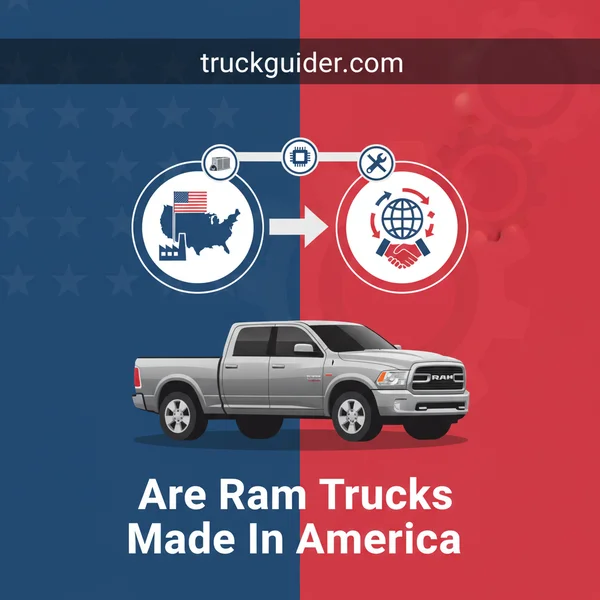
Most Ram 1500 pickup trucks are made in America at the Sterling Heights and Warren assembly plants in Michigan. However, the Ram Heavy Duty (2500/3500) models and certain 1500 Classic units are manufactured at the Saltillo plant in Mexico.
🎯 Key Takeaways
- The Ram 1500 is primarily assembled in Sterling Heights, Michigan.
- Ram Heavy Duty models (2500/3500) are built in Saltillo, Mexico.
- Warren Truck Assembly in Michigan produces the Ram 1500 Classic.
- Check your VIN:‘1’, ‘4’, or ‘5’ means USA-built.
- Ram is owned by Stellantis but remains headquartered in Michigan.
If you are looking for a short answer: yes, Ram trucks are proudly assembled in America, but the specific location depends entirely on which model you choose. Most light-duty Ram 1500 pickups are built in Michigan, while the Heavy Duty 2500 and 3500 models are currently imported from Mexico. Understanding which factory produced your vehicle is more than just a matter of “Buy American” pride; it tells you about the supply chain and logistics behind one of the most popular vehicles on the road today.


For truck buyers, knowing the origin of their vehicle is a practical concern. It impacts everything from domestic content labels on the window sticker to the local economies of the Rust Belt. While the brand has undergone several ownership changes—transitioning from Dodge to its own entity under Chrysler, then FCA, and now Stellantis—the heart of its manufacturing remains rooted in the United States. In this guide, we will break down exactly which trucks roll off the lines in Michigan and which ones make the long trip from south of the border.
US Assembly Plants: Sterling Heights and Warren Truck Assembly
The vast majority of Ram 1500 trucks you see on the road are born in the suburbs of Detroit, Michigan. Stellantis operates two primary facilities in this region that are dedicated to truck production. These plants represent billions of dollars in investment and employ thousands of American autoworkers. If you are driving a late-model Ram 1500, there is a very high probability it was assembled in one of these two locations.
Sterling Heights Assembly Plant (SHAP)
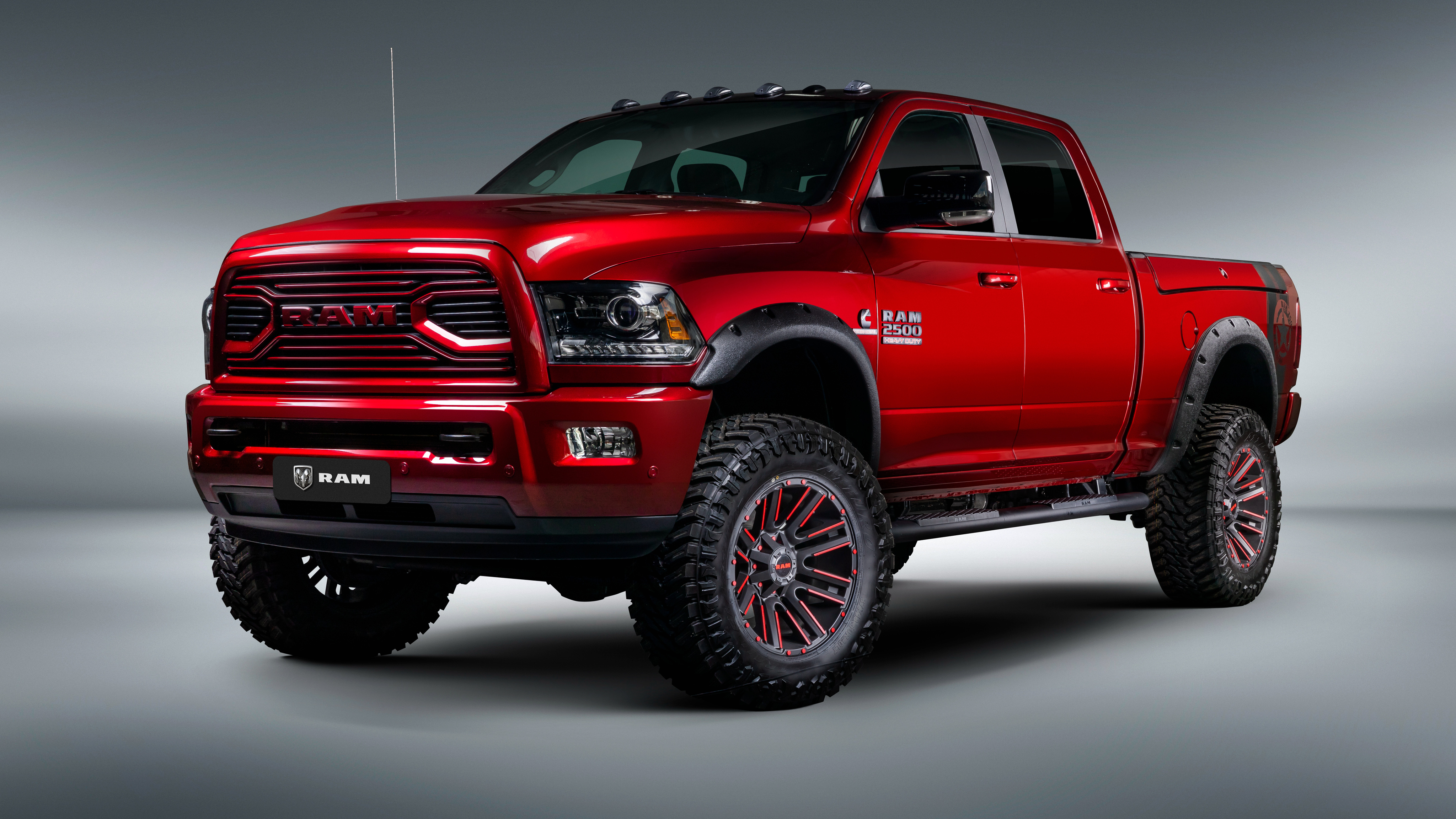
The Sterling Heights Assembly Plant, often referred to as SHAP, is the flagship facility for the modern Ram 1500. Located in Sterling Heights, Michigan, this massive complex spans over 5 million square feet. It was once a facility for passenger cars, but a massive $1.49 billion investment converted it into a state-of-the-art truck plant. This facility is the exclusive home of the “DT” platform, which is the current generation Ram 1500.
- Models Produced: New-generation Ram 1500 (Quad Cab and Crew Cab).
- Trim Levels: High-end trims like the Limited, Laramie, and the off-road focused Rebel.
- Production Scope: This plant operates with high-tech robotics and a refined assembly process to handle the complex electronics and interior finishes of the modern truck.
Warren Truck Assembly Plant
Just a few miles away from Sterling Heights is the Warren Truck Assembly Plant. This facility has a legendary history, having built trucks since 1938. While SHAP handles the newest designs, Warren has traditionally been the home of the Ram 1500 Classic (known as the “DS” model). Even as the newer “DT” models dominate the market, the Warren plant keeps the older, more affordable body style in production to satisfy fleet buyers and budget-conscious consumers.
- Models Produced: Ram 1500 Classic and the Jeep Wagoneer/Grand Wagoneer.
- Significance: It serves as a vital secondary hub that allows Ram to offer two different generations of the 1500 simultaneously.
- Legacy: Thousands of families in Macomb County have spent generations working the lines at this specific factory.
Heavy Duty Production: Why Ram 2500 and 3500 Come from Mexico
While the light-duty 1500 is a Michigan native, the Ram Heavy Duty (HD) lineup tells a different story. If you own a Ram 2500, 3500, or a larger Chassis Cab truck, your vehicle was assembled in Mexico. This has been the standard operating procedure for the brand for many years, as the infrastructure for the larger, more industrial truck frames is centralized in the Saltillo region.
The Saltillo Truck Assembly Plant
The Saltillo Truck Assembly Plant is located in Coahuila, Mexico. This facility is responsible for the global production of Ram’s heavy-hitting workhorses. Since its opening in 1995, it has become one of the most productive and award-winning plants in the Stellantis portfolio. The facility is designed to handle the larger dimensions and heavier components required for the 2500 and 3500 series trucks.
- Models Produced: Ram 2500, Ram 3500, and the 4500/5500 Chassis Cab models.
- Specialty Production: Some 1500 Classic regular cab models are also built here to supplement the Warren plant.
- Global Export: Trucks built in Saltillo are exported to over 30 countries, making it a critical hub for the brand’s international presence.
Understanding the “3” in Your VIN
You can easily verify if your truck was made in Mexico by looking at your Vehicle Identification Number (VIN). The first character of the VIN indicates the country of origin. If the first digit is a 3, your truck was assembled in Mexico. If the first digit is a 1, 4, or 5, it was assembled in the United States. While the engines (like the Cummins diesel) and transmissions often come from various global suppliers, the final assembly point for these heavy-duty models remains the Saltillo facility.


Many buyers ask why production isn’t moved to the US. While there were rumors in 2018 about moving HD production back to Michigan, the company eventually decided to keep the Heavy Duty line in Mexico to maintain production capacity for the growing Jeep and light-duty Ram lines in the United States. This allows the Michigan plants to focus entirely on the high-volume 1500 models without the logistical hurdles of mixing light-duty and heavy-duty chassis on the same lines.
The Stellantis Ownership: Is Ram Still an American Brand?
The question of whether Ram is “American” often gets complicated when we look at the corporate family tree. Currently, Ram is a division of Stellantis, a multinational automotive giant formed by the merger of Fiat Chrysler Automobiles (FCA) and the French PSA Group. While the parent company is headquartered in the Netherlands, the “soul” of the brand remains deeply rooted in Michigan soil.
A Global Parent with Local Roots
Despite the international ownership, Ram operates its core design and engineering out of Auburn Hills, Michigan. This is where the heavy lifting happens—everything from the aerodynamic styling of the 1500 to the high-torque capabilities of the Heavy Duty line. The brand maintains a massive footprint in the United States, employing thousands of American workers in manufacturing, logistics, and corporate roles.
The “American” Identity in a Global Market
In today’s economy, almost every automotive brand is global. However, Ram’s identity is inextricably linked to the American truck culture. Here are a few reasons why most enthusiasts still consider it a domestic brand:
- Design Heritage: The aesthetic and functional design is tailored specifically for the North American market.
- R&D Investment: Billions of dollars are funneled into U.S.-based research and development facilities.
- Economic Impact: The production of the Ram 1500 in Sterling Heights, Michigan, supports an entire ecosystem of local suppliers and secondary businesses.
Determining Origin: How to Use the VIN and Domestic Parts Content
If you are standing on a dealership lot and want to know exactly where a specific truck was born, you don’t have to guess. Every vehicle carries a “birth certificate” in the form of its Vehicle Identification Number (VIN) and the mandatory window sticker. These tools provide 100% transparency regarding the assembly location and the source of the components.
Decoding the First Digit of the VIN
The first character of the VIN is the most reliable way to identify the country of assembly. You can find this number on the driver’s side dashboard (visible through the windshield) or on the sticker inside the driver’s side door jamb. For Ram trucks, you are looking for specific numbers:


- 1, 4, or 5: These digits indicate the truck was assembled in the United States.
- 2: This indicates the vehicle was assembled in Canada.
- 3: This indicates the vehicle was assembled in Mexico (common for the Classic and Heavy Duty models).
Reading the Monroney Sticker (Window Sticker)
Beyond just the final assembly point, the American Automobile Labeling Act (AALA) requires manufacturers to disclose the “Domestic Parts Content” on the window sticker. This section is eye-opening for many buyers. It breaks down the percentage of parts that originated in the U.S. or Canada versus other countries. For example, a Ram 1500 might be “Made in the USA” but feature an engine or transmission sourced from a specialized plant in Mexico or Europe. Checking this sticker gives you a holistic view of how much of your truck’s value actually stays within North American borders.
Conclusion
So, are Ram trucks made in America? The answer is a resounding “yes,” but with a few caveats. While the flagship Ram 1500 is a staple of Michigan manufacturing, the Heavy Duty 2500 and 3500 models currently rely on Mexican production. Identifying the origin of your truck is as simple as checking the first digit of the VIN or reviewing the domestic parts content on the window sticker.
As you shop for your next pickup, take a moment to look at the door jamb sticker. Whether it comes from Sterling Heights or Saltillo, you are getting a truck engineered with American grit. Ready to find yours? Head down to your local dealer and see these machines in person today!
❓ Frequently Asked Questions
Which specific Michigan plants produce Ram trucks?
The Sterling Heights Assembly Plant (SHAP) is the primary site for the new Ram 1500, while the Warren Truck Assembly Plant handles the Ram 1500 Classic. These facilities represent a significant portion of Ram’s American manufacturing footprint.
Why are Ram Heavy Duty trucks made in Mexico?
The Saltillo Truck Assembly plant in Mexico has been the specialized hub for Heavy Duty production for decades. It offers the specific infrastructure needed for the 2500, 3500, and chassis cab configurations.
How can I tell if my Ram was made in the USA using the VIN?
The first character of the Vehicle Identification Number (VIN) indicates the country of origin. A ‘1’, ‘4’, or ‘5’ signifies the United States, while a ‘3’ indicates the vehicle was assembled in Mexico.
What percentage of Ram parts are made in America?
While it varies by model, the Ram 1500 often features over 60% domestic parts content from the US and Canada. This high percentage frequently places it on the ‘American-Made Index’ lists.




Did Stellantis move all Ram production overseas?
No, Stellantis continues to invest billions of dollars into its Michigan manufacturing facilities. The company maintains a strong commitment to US production for its high-volume light-duty trucks and upcoming electric models.
Is Ram still considered an American brand under Stellantis?
Yes, Ram is still considered one of the ‘Big Three’ American truck brands. Although owned by a global entity, its design, engineering, and headquarters remain based in Auburn Hills, Michigan.

![4×4 Truck Tire Rotation Patterns [2026]](https://truckguider.com/wp-content/uploads/2026/03/4x4-truck-tire-rotation-pattern-featured.webp)