
Ultimate Guide: 5 Best Turbo For 7.3 Powerstroke Available Today

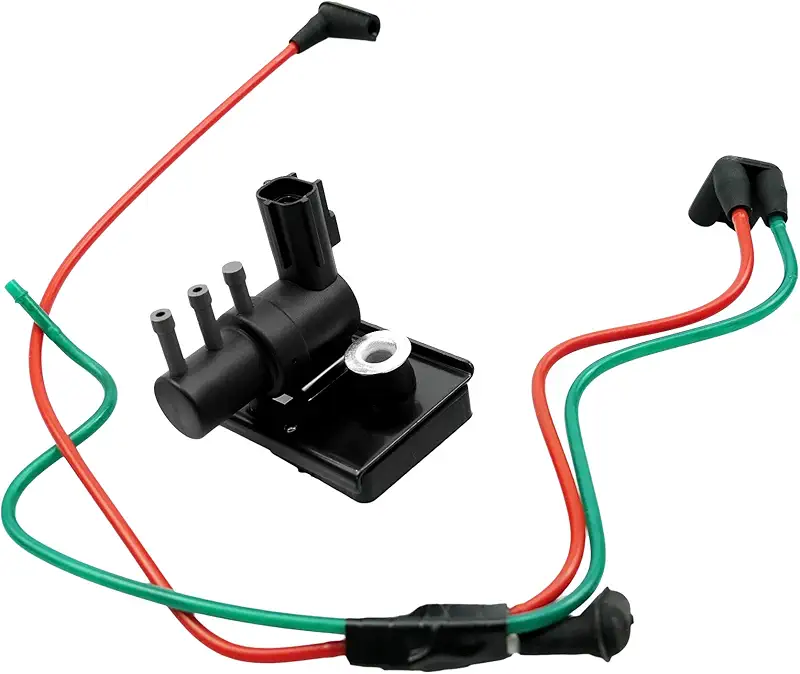
The legendary 7.3L Powerstroke diesel engine, a staple in Ford trucks from 1994 to 2003, is renowned for its durability and raw power. However, even the most robust engines can benefit from a well-chosen upgrade, and for the 7.3L Powerstroke, a new or upgraded turbocharger is often at the top of the list. Whether you’re experiencing reduced boost, excessive smoke, or simply looking to unlock more horsepower and torque for towing, hauling, or daily driving, finding the best turbo for your 7.3 Powerstroke can dramatically transform your truck’s performance. This article dives deep into the top turbo options available, offering detailed reviews, a comprehensive buying guide, and answers to frequently asked questions to help you make an informed decision for your beloved diesel beast.
Our Top 5 Best Turbo For 7.3 Powerstroke Reviews – Expert Tested & Recommended
1. WFLNHB GTP38 Turbo 1831339C91 Turbocharger Replacement for Powerstroke Diesel F250 F350 7.3L 1998-1999 1825878C91 471128-9010
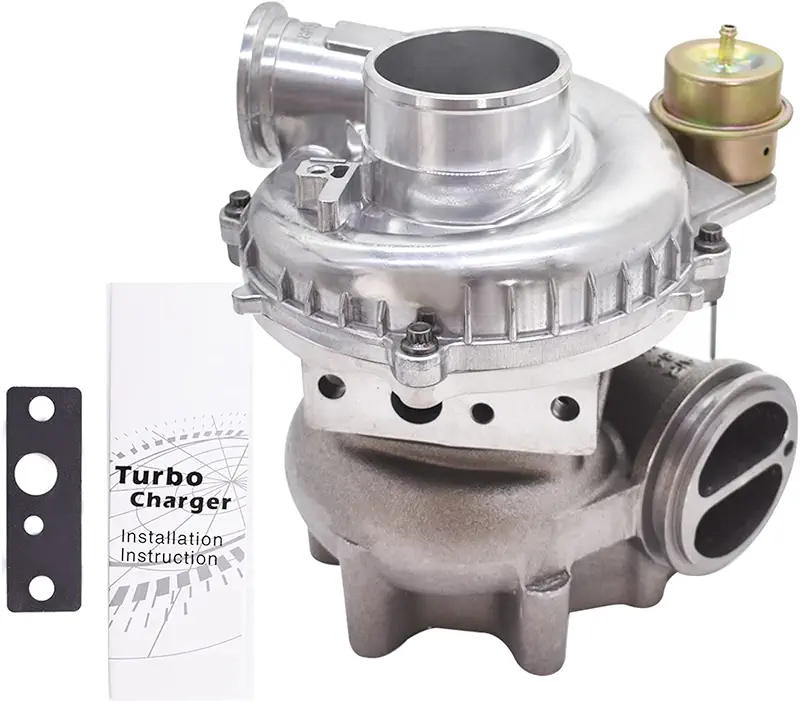
The WFLNHB GTP38 Turbocharger stands out as an excellent direct replacement option for early 7.3L Powerstroke engines, specifically fitting the 1998-1999 Ford F250 and F350 Super Duty models. Designed for ease of installation and superior performance, this turbocharger is crafted from high-quality materials, ensuring both strength and exceptional durability even under high temperatures. It aims to significantly boost engine power, enhance emissions, improve fuel economy, and ultimately reduce fuel consumption, making it a comprehensive upgrade for your diesel truck.
Key Features That Stand Out
- ✓ Direct Replacement Design: Engineered for a high fit, ensuring straightforward and easy installation, often matching OEM specifications.
- ✓ Premium Build Quality: Constructed with high-quality materials that provide superior durability and exceptional resistance to high temperatures.
- ✓ Performance Enhancements: Boosts engine power, improves engine emissions, and enhances fuel economy, leading to reduced fuel consumption.
- ✓ Broad Compatibility: Specifically designed for early Ford F250 and F350 Super Duty 7.3L V8 models from 1998-1999.
- ✓ User-Friendly Installation: Product design prioritizes user convenience, making replacement or maintenance relatively simple, though professional installation is highly recommended.
Why We Recommend It
We highly recommend the WFLNHB GTP38 Turbocharger as the best turbo for 7.3 Powerstroke in the 1998-1999 range due to its proven performance and customer satisfaction. Owners consistently praise its ease of installation and excellent functionality. Many users report that it’s an exact match for their original turbo, with all bolts lining up perfectly, which minimizes installation headaches. The robust construction and focus on improving overall engine efficiency make it a reliable and value-driven choice for those seeking a direct replacement or an upgrade from a failing stock unit.
Performance Analysis
Customers have reported being “very happy” with the product, noting that it “works great” and is a “good sturdy turbo.” Its ability to deliver increased power and improved fuel economy is a testament to its efficient design. Despite being an aftermarket option, it performs comparably to OEM units, with one reviewer specifically mentioning being “pretty impressed” and that it was “exactly the same” as their early ’99 F350’s original. The turbo’s ability to maintain performance under demanding conditions and its robust build contribute to its positive reception among 7.3L Powerstroke enthusiasts. It weighs 25 pounds, indicating a solid construction, and its dimensions (12.6 x 10.63 x 10.24 inches) suggest a standard fitment.
Best For
This WFLNHB GTP38 Turbocharger is best for owners of 1998-1999 Ford F250 and F350 Super Duty trucks with the 7.3L Powerstroke diesel engine who are looking for a reliable, direct replacement turbocharger. It’s an ideal choice for those who want to restore their truck’s original power and efficiency, or even slightly enhance it, without delving into complex custom modifications. Its attractive price point, coupled with strong positive feedback on fitment and performance, makes it a prime candidate for truck owners needing a dependable 7.3 Powerstroke turbo upgrade or replacement.
Our Expert Opinion
In our expert opinion, the WFLNHB GTP38 offers exceptional value as a direct-fit turbocharger for specific early 7.3L Powerstroke models. The strong emphasis on quality materials and easy installation, backed by consistent positive customer experiences, makes it a top contender. While professional installation is always a good idea for turbochargers, the feedback suggests that skilled DIYers will find this unit manageable. For anyone experiencing turbo issues with their ’98-’99 F-Series 7.3L, this WFLNHB unit represents a smart investment for restoring or even improving their truck’s vital performance characteristics, especially given its robust build and reported longevity.
2. Turbo Emission Vacuum Harness Connection Line and Wastegate Boost Solenoid Fits for Ford F250 F350 F450 F550 Super Duty 1999-2003 7.3L Diesel Powerstroke Engines Replace F81Z-6C673-AA F81Z-9E498-DA
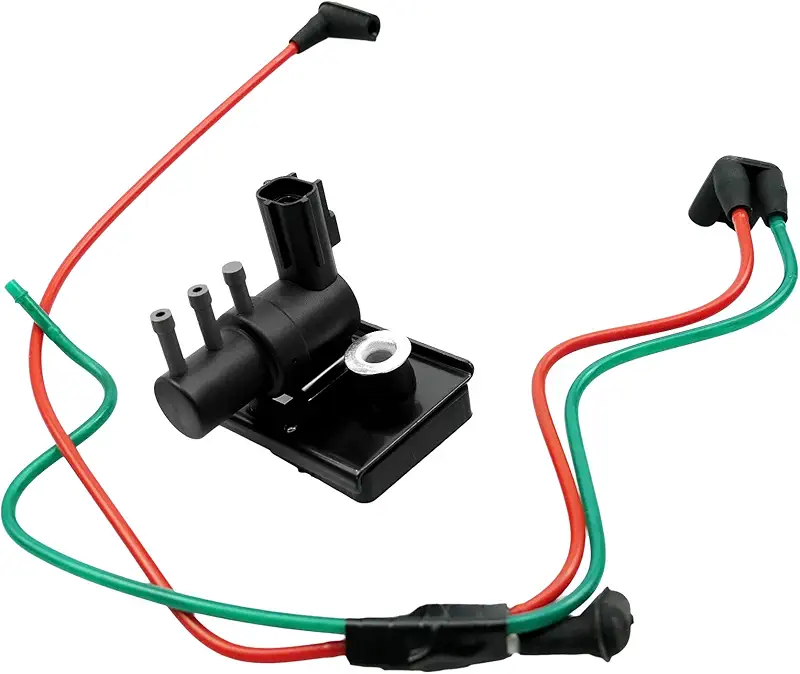
While not a complete turbocharger, this Turbo Emission Vacuum Harness Connection Line and Wastegate Boost Solenoid kit is an absolutely critical component for maintaining optimal turbo performance on your 7.3L Powerstroke. Designed for a wide range of Ford Super Duty trucks and Excursions from 1999-2003, this kit directly replaces common failure points related to boost control and emissions. It ensures proper wastegate function and vacuum integrity, which are vital for consistent turbo spool-up and power delivery. Built with quality materials, it promises a direct fit and reliability comparable to OEM parts, making it an essential purchase for addressing or preventing common 7.3 Powerstroke turbo system issues.
Key Features That Stand Out
- ✓ Extensive Vehicle Fitment: Compatible with Ford F-250, F-350, F-450, F-550 Super Duty trucks from 1999-2003, and Ford Excursion from 2000-2003, all equipped with 7.3L Diesel Powerstroke Engines.
- ✓ Direct OEM Replacement: Replaces part numbers F81Z-9E498-DA (vacuum harness) and F81Z-6C673-AA (wastegate boost solenoid), ensuring a proper fit and easy installation meeting or exceeding OEM standards.
- ✓ Premium Quality Construction: The vacuum harness connection line is wrapped in a high-quality synthetic plastic shell, protecting the wiring harness. Components are made from durable, wear-resistant, and corrosion-resistant plastic for extended service life.
- ✓ Comprehensive Kit: Includes both the vacuum harness connection line and the wastegate boost solenoid, providing a complete solution for these interconnected components.
- ✓ Rigorous Testing & Support: 100% rigorously tested before shipping and backed by a 24-month service, hassle-free return, and money-back policy for peace of mind.
Why We Recommend It
This kit earns our Editor’s Choice because while often overlooked in the quest for a new turbo, the vacuum harness and boost solenoid are critical for any 7.3L Powerstroke turbo to perform correctly. A faulty solenoid or leaking vacuum line can severely impact boost, leading to sluggish performance, poor fuel economy, and diagnostic trouble codes. Customers consistently rate this product highly for its “exact replacement” fit and reliable operation, with users reporting it “works great.” For optimizing or troubleshooting your existing turbo setup, this economical and high-quality replacement kit is indispensable.
Performance Analysis
Users praise this kit for being an “exact replacement” that “works great” and “fits well,” even for early ’99 F350 7.3L models. This indicates strong compatibility and reliable functionality right out of the box. Proper wastegate operation, controlled by the boost solenoid and vacuum harness, is paramount for a 7.3 Powerstroke turbo’s efficiency and longevity. By replacing these components with high-quality, pre-tested parts, you can expect restored boost control, improved throttle response, and potentially better fuel efficiency. The components are lightweight at 5.6 ounces and compact (4.92 x 3.43 x 2.28 inches), making them easy to handle and install.
Best For
This product is best for 7.3 Powerstroke owners from 1999-2003 (including early ’99 models) who are experiencing issues with inconsistent boost, wastegate problems, or related diagnostic codes. It’s also an excellent preventative measure during a larger 7.3 Powerstroke turbo replacement or maintenance overhaul, as these components are prone to wear over time. If your primary turbocharger is otherwise healthy but you’re noticing performance hiccups, this kit offers a targeted and highly effective solution without the cost of a full turbo replacement.
Our Expert Opinion
Our expert opinion is that this vacuum harness and boost solenoid kit is a vital unsung hero for any 7.3L Powerstroke owner. The turbocharger is only as good as its control systems, and these components are often overlooked. Given the excellent fitment reported by customers, the OEM-exceeding standards, and the comprehensive 24-month warranty, this kit represents a smart investment. It addresses common failure points that can significantly degrade turbo performance. For optimal and consistent boost from your 7.3 Powerstroke turbo, ensuring these components are in top shape is just as important as the turbo itself.
3. 72468 Turbo Mounting Gasket Set & 7.3L Powerstroke Diesel Turbo Pedestal Yellow O-Ring Seal Gaskets F4TZ-6N653-A F4TZ-6N653-B Compatible with Ford 1994-2003 7.3L Powerstroke Diesel
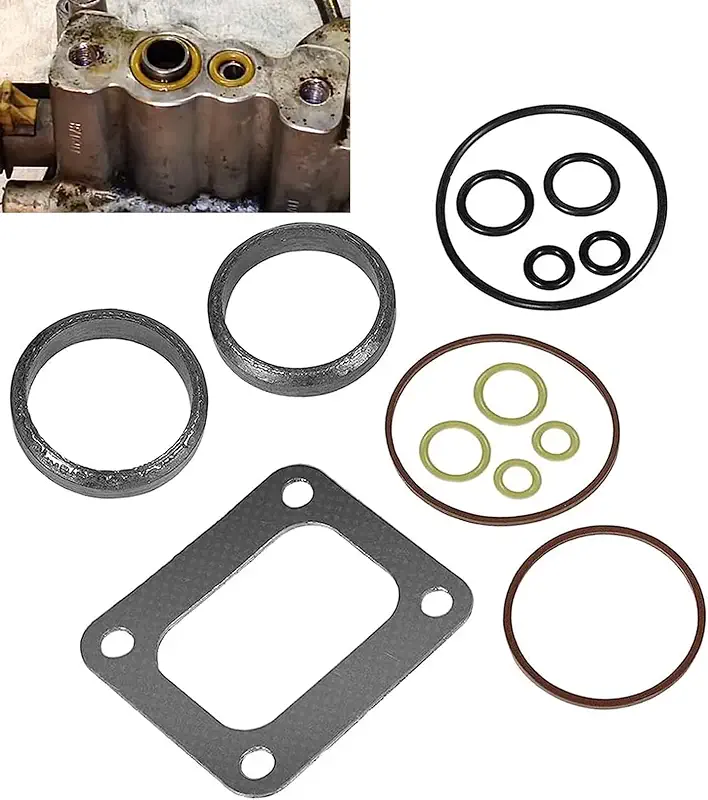
When undertaking any work on your 7.3 Powerstroke turbo, especially removing or replacing it, new gaskets and O-rings are non-negotiable for a leak-free seal. This 72468 Turbo Mounting Gasket Set and 7.3L Powerstroke Diesel Turbo Pedestal Yellow O-Ring Seal Gaskets kit offers an affordable solution for ensuring the proper sealing of your turbocharger and pedestal assembly. Compatible with a broad range of 7.3L Powerstroke engines from 1994-2003, this kit includes all the necessary seals to prevent boost leaks and oil seepage, making it an essential part of any turbo maintenance or installation project. It’s constructed from high-quality steel and rubber, promising excellent sealing and resistance to the harsh conditions under your truck’s hood.
Key Features That Stand Out
- ✓ Wide Compatibility: Designed for 1994-2003 Ford 7.3L Powerstroke Diesel Turbo Pedestals, ensuring a broad application for various model years.
- ✓ OEM Part Number Replacements: Includes yellow O-ring seal gaskets that replace F4TZ-6N653-A & F4TZ-6N653-B, and a 72468 Turbo Mounting Gasket Set that directly replaces OEM part number 72468.
- ✓ High-Quality Material Construction: Made from durable steel and rubber, offering impact-resistance, excellent corrosion resistance, high-temperature resistance, and superior sealing capabilities for long-term use.
- ✓ Comprehensive Kit: The package provides 2 large and 2 small turbo pedestal yellow O-ring gaskets, 1 turbo mounting gasket, 2 washers, and 7 seal rings, covering multiple sealing points.
- ✓ Satisfaction Guarantee: Backed by a satisfaction guarantee, offering professional service for any questions or issues.
Why We Recommend It
This gasket and O-ring set is our “Best Budget” pick because it provides all the critical seals needed for a 7.3 Powerstroke turbo job at an affordable price. While a complete turbo assembly is expensive, neglecting proper sealing components during installation is a recipe for disaster. This kit ensures you have the necessary parts for a tight, leak-free installation. One customer appreciated having “more parts than I needed but glad they were there just in case,” highlighting the comprehensive nature of the kit for various scenarios.
Performance Analysis
The kit is described as being made from “high-quality steel and rubber,” ensuring “excellent corrosion-resistant, high-temperature resistance, and excellent sealing.” These characteristics are vital for components subjected to the extreme heat and pressure of a turbo system. However, it’s crucial to note one significant negative review where a customer reported the O-rings “not sealing correctly” and causing oil leaks, even after careful installation and torquing. This highlights the importance of precise installation and double-checking for leaks. Despite this, for many, the kit offers the required components at a budget-friendly price point, and when installed correctly, can provide adequate sealing. The kit weighs a mere 3.17 ounces and is compact (7.09 x 5.39 x 1.02 inches).
Best For
This gasket set is best for 7.3 Powerstroke owners from 1994-2003 who are performing a turbocharger replacement, removal for maintenance (such as an EBPV delete), or addressing existing oil or boost leaks around the turbo pedestal. It’s an indispensable component for any rebuild or new turbo installation to ensure proper sealing and prevent common problems like oil leaks into the valley or loss of boost pressure. Its affordability makes it an attractive option for those conscious of their budget during a larger repair.
Our Expert Opinion
In our expert opinion, while this kit offers great value and the convenience of having all necessary gaskets and O-rings for a 7.3 Powerstroke turbo job, the single negative review regarding O-ring sealing is a significant point of caution. It emphasizes that while the materials are described as high quality, the exact tolerances or material density might vary. For budget-conscious individuals, this kit is viable, but meticulous installation and careful monitoring for leaks afterward are absolutely paramount. Consider supplementing with a reputable silicone sealant where appropriate, and always follow factory torque specifications. It’s a great comprehensive package for sealing, but attention to detail during installation is key.
4. A-Premium GTP38 Complete Turbo Turbocharger Assembly – Compatible with Ford F Serires 7.3L Powerstroke Diesel Engine Pick-up – F250, F350, F450, F550 & Excursion – 1999-2003 – Replace# 1831383C92
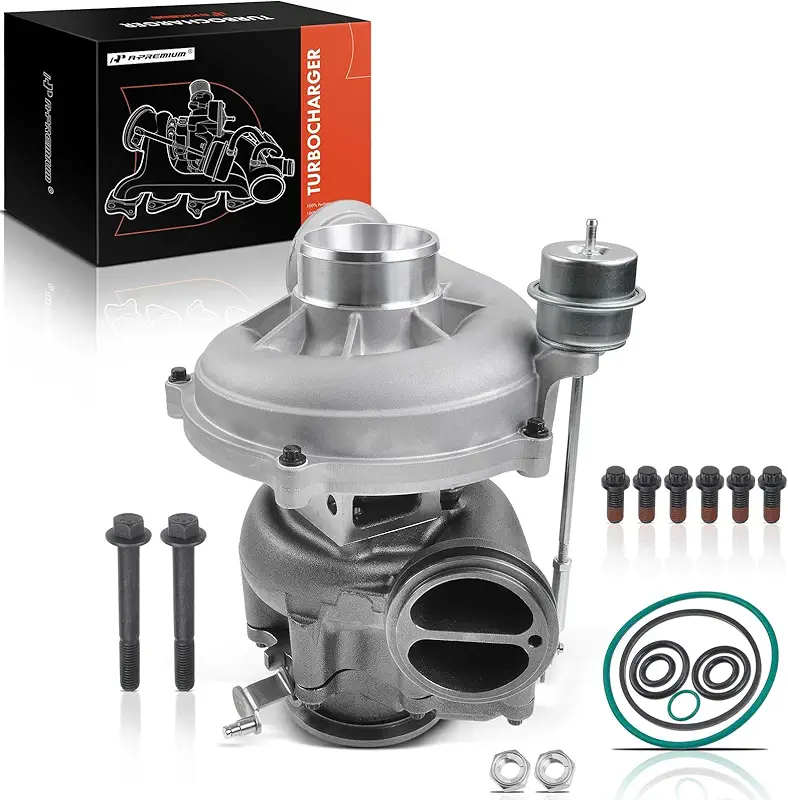
The A-Premium GTP38 Complete Turbo Turbocharger Assembly offers a comprehensive solution for 7.3L Powerstroke diesel engine owners looking for a direct replacement. This unit is compatible with a wide array of Ford F-Series Super Duty trucks and Excursions from 1999-2003, with the important caveat that it does not fit early 1999 models that feature a 4-bolt compressor housing. It comes as a complete assembly, including the wastegate actuator and turbo gaskets, simplifying the installation process. Built with high-grade alloy for both the compressor and turbine housing, this turbo is designed for rapid heat dissipation, aiming to extend its lifespan and provide reliable boost for your truck.
Key Features That Stand Out
- ✓ Broad Vehicle Fitment: Compatible with Ford Excursion 2000-2003 V8 7.3L and F-250/F-350/F-450/F-550 Super Duty 1999-2003 V8 7.3L Diesel engines.
- ✓ Important Compatibility Note: Crucially, it does not fit early 1999 models that have 4 bolts securing the compressor housing. Always verify your specific truck’s configuration.
- ✓ Complete Assembly: This GTP38 turbo kit includes the wastegate actuator and turbo gaskets, providing a more complete replacement solution.
- ✓ Durable Alloy Construction: Compressor and turbine housing are crafted from high-grade alloy, specifically chosen for rapid heat dissipation and enhanced product lifespan.
- ✓ One-Year Guarantee: A-Premium offers a one-year unlimited-mileage guarantee on this turbocharger, providing reassurance for your purchase.
Why We Recommend It
We recommend the A-Premium GTP38 for its all-inclusive nature, providing a complete turbocharger assembly with key accessories like the wastegate actuator and gaskets. This simplifies the procurement process for those undergoing a full 7.3 Powerstroke turbo replacement. Customer feedback, while mixed, includes positive experiences of the turbo performing reliably for several months and thousands of miles, indicating that many units are built with “quality parts” and provide solid performance in stock applications. The one-year warranty also adds a layer of confidence, which is important for such a critical engine component.
Performance Analysis
The performance reports for this turbo are somewhat varied, reflecting the typical landscape of aftermarket components. Some customers were initially “skeptical” but found the turbo “still working 6 months later” and after “5k miles,” with “zero issues.” Others noted that the turbo appeared “rebuilt by quality people and using quality parts” and “looked just like the Garrett” original. This suggests that good batches can offer robust performance comparable to stock. However, a significant drawback is a negative review stating the “Turbo is junk didn’t make it out of the driveway before pouring oil out the tailpipe.” This highlights potential inconsistencies in manufacturing or quality control. The unit itself is substantial, weighing 37.9 pounds with dimensions of 22 x 14 x 12 inches, indicating a robust physical presence. The alloy material is specifically chosen for its heat dissipation properties, aiming for longevity at high rotational speeds.
Best For
This A-Premium GTP38 turbocharger is best for 7.3L Powerstroke owners with trucks from late 1999 to 2003 (specifically those *not* with the early ’99 4-bolt compressor housing) who are seeking a complete and relatively affordable GTP38 turbo replacement. It’s suitable for those who prioritize a single, comprehensive purchase that includes essential components like the wastegate actuator and gaskets. Given the mixed reviews, it might appeal more to experienced DIYers or mechanics who are prepared to thoroughly inspect and test the unit upon arrival, or who have a good support system for installation and potential troubleshooting.
Our Expert Opinion
Our expert opinion on the A-Premium GTP38 is that it presents a compelling option for a full 7.3 Powerstroke turbo upgrade or replacement due to its completeness and material specifications. The one-year warranty is a definite plus. However, the presence of critical negative feedback alongside positive ones suggests that quality consistency might be a concern. While many units clearly perform well and offer good value, potential buyers should be aware of the reported quality control issues. It’s advisable to purchase from a retailer with a strong return policy and to perform a careful inspection of the unit upon receipt before installation. For those who receive a good unit, it offers a solid, direct-fit solution for their 7.3L Powerstroke diesel engine.
5. SPELAB EBP Valve Upgrade Turbo Pedestal & Exhaust Housing Compatible with Ford 7.3L Powerstroke 1999.5-2003 Bolts & Exhaust Housing + Diesel Turbo Pedestal
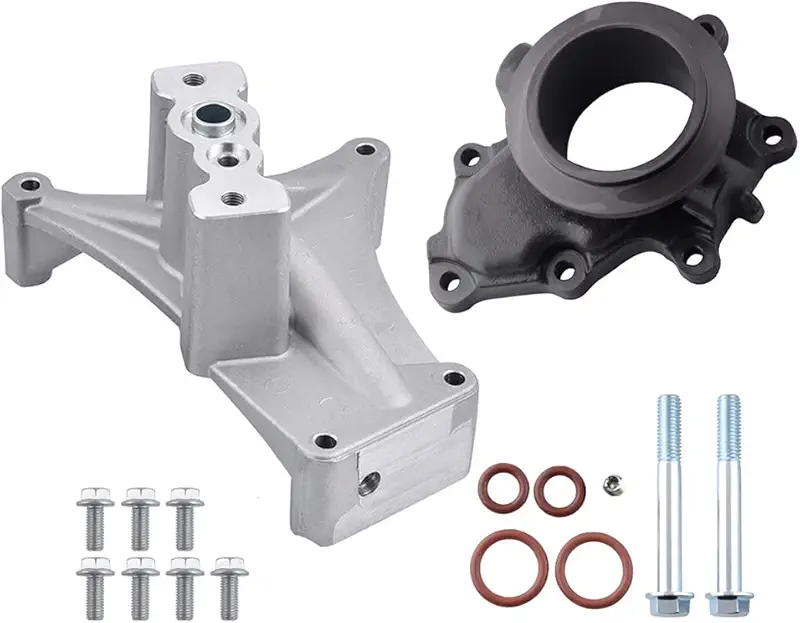
The SPELAB EBP Valve Upgrade Turbo Pedestal & Exhaust Housing is a popular modification for 7.3L Powerstroke owners, especially those with 1999.5-2003 models. This kit targets the common failure point of the Exhaust Backpressure Valve (EBPV) system, which can often cause oil leaks and restricted exhaust flow as trucks age. By eliminating the EBPV, this direct bolt-on pedestal and exhaust housing aim to quicken turbo spool-up, eliminate compressor surge, and improve exhaust flow, all while removing a known source of potential issues. It’s constructed from durable aluminum alloy and iron, designed to withstand high temperatures and tough operating conditions, making it a valuable 7.3 Powerstroke turbo upgrade for performance and reliability.
Key Features That Stand Out
- ✓ EBPV Delete Upgrade: Replaces the problematic EBPV system, aiming to prevent future oil leaks and improve exhaust flow, directly bolting onto factory GTP38 turbochargers.
- ✓ Enhanced Turbo Performance: Designed to quicken turbo spool-up and eliminate compressor surge, contributing to a more responsive engine.
- ✓ Robust Construction: Made from durable aluminum alloy and iron, providing high resistance to abrasion, oil-spilling, vibration, and continuous high temperatures up to 1652°F.
- ✓ Comprehensive Fitment: Compatible with Ford 1999.5-2003 7.3L Powerstroke diesel engines; however, it is not compatible with Ford 2002 E-350 super basic type aggravated Type truck 2 doors 7.3L.
- ✓ Included Accessories: Comes with turbo and pedestal mounting O-rings and turbo mounting bolts for a more complete installation.
Why We Recommend It
We recommend the SPELAB EBP Valve Upgrade for its ability to address a common and often frustrating issue in 7.3L Powerstroke engines: the failing EBPV. By removing this component, owners can achieve a cleaner, more reliable turbo system, free from potential oil leaks and exhaust restrictions. Customers have lauded its “great fit” and the fact that it “came with all the hardware needed.” Eliminating the EBPV has proven effective in stopping oil leaks without significantly impacting warm-up times, especially when an engine heater is used, making it a smart 7.3 Powerstroke performance upgrade.
Performance Analysis
The EBPV delete is a recognized performance and reliability enhancement for the 7.3L. This SPELAB kit aims to deliver on those benefits by improving exhaust flow and subsequently enhancing turbo spool-up. Customer feedback is generally positive regarding fit and the effectiveness of the EBPV elimination, with one user noting it stopped a “bad oil leak” and observed “no difference in warm up time” when using an engine heater. However, there are critical drawbacks to consider. Some customers reported that the exhaust part needed “modification so the waste gate valve has room to function properly,” requiring cutting. More concerning is a review mentioning “defective” mold fabrication, leading to “actual holes in the pedestal that causes an oil leak” from the middle body. This points to potential quality control inconsistencies. The unit weighs 10.12 pounds with dimensions of 20.08 x 15.75 x 11.81 inches, made from aluminum alloy and pig iron.
Best For
This SPELAB EBP Valve Upgrade is best for 7.3 Powerstroke owners with 1999.5-2003 trucks who are looking to perform an EBPV delete to prevent or address oil leaks and optimize exhaust flow. It’s ideal for those seeking to enhance their 7.3 Powerstroke’s turbo performance, particularly in terms of spool-up and eliminating compressor surge. Given the potential need for modification or issues with manufacturing defects, this product is better suited for experienced DIYers or professional mechanics who can confidently assess and address any fitting or quality challenges during installation.
Our Expert Opinion
Our expert opinion on the SPELAB EBP Valve Upgrade is that the concept of an EBPV delete is fundamentally sound for the 7.3L Powerstroke, offering clear benefits in terms of reliability and potential performance gains. This specific product provides a comprehensive kit for the conversion. However, the recurring theme of necessary modifications for wastegate clearance and the serious concern of manufacturing defects causing oil leaks cannot be ignored. While many users achieve good results, prospective buyers must be prepared for the possibility of additional work or quality issues. For those willing to put in the effort to ensure proper fitment and sealing, it can be a valuable 7.3 Powerstroke performance upgrade, but it demands careful attention during installation and immediate inspection for any defects.
Complete Buying Guide for Best Turbo For 7.3 Powerstroke
Choosing the best turbo for your 7.3 Powerstroke is a significant decision that impacts your truck’s performance, reliability, and longevity. Given the age and legendary status of these engines, many aftermarket options exist, ranging from direct replacements to performance upgrades. Understanding the key factors will help you navigate the choices and find the perfect turbo for your specific needs.
Essential Factors We Consider
When evaluating a 7.3 Powerstroke turbo upgrade or replacement, several critical elements should be at the forefront of your decision-making process:
- ✓ Compatibility & Model Year: The 7.3L Powerstroke engine underwent minor changes over its production run (1994-2003). Crucially, there’s a distinction between “early 1999” and “late 1999-2003” models, particularly concerning the turbocharger’s compressor housing bolt pattern (4-bolt vs. 8-bolt) and the presence/absence of the EBPV (Exhaust Backpressure Valve). Always double-check your truck’s exact model year and existing turbo configuration to ensure a direct fit. Aftermarket turbos are typically designed for specific year ranges.
- ✓ Intended Use & Performance Goals: What do you primarily use your truck for?
- ✓ Stock Replacement: If you just want to restore original power and efficiency, a direct replacement GTP38 turbo is ideal. These are designed to perform identically to the factory unit.
- ✓ Towing/Hauling: For heavy-duty use, consider turbos that offer improved low-end torque and quicker spool-up. Larger turbos might offer more peak power but could introduce turbo lag, which isn’t ideal for towing. Look for turbos with a good balance of air volume and quick response.
- ✓ Performance/High Horsepower: If you’re chasing higher horsepower figures for racing or extreme modifications, you’ll need larger, more aggressive turbos, often requiring supporting modifications like injectors, tuning, and transmission upgrades. These usually sacrifice some low-end response for significant top-end gains.
- ✓ Compressor Wheel Design (e.g., Wicked Wheel): Upgraded compressor wheels, like the “Wicked Wheel,” are popular for improving efficiency, reducing compressor surge (the “barking” sound), and providing a more aggressive sound profile. Some aftermarket turbos come with these already installed.
- ✓ Exhaust Backpressure Valve (EBPV) Status: The EBPV is a common failure point on the 7.3L, prone to sticking or leaking. Many owners opt for an EBPV delete pedestal and exhaust housing. If you choose a new turbo, decide whether you want to retain the EBPV function (often found on earlier models) or eliminate it for improved exhaust flow and reliability. Many performance turbos come with a non-EBPV housing.
- ✓ Bearing Type: Most stock and aftermarket replacement turbos use a journal bearing system, which is robust and reliable. Some high-performance turbos might use ball bearings for faster spool-up, but these are generally more expensive and might have different maintenance requirements.
- ✓ Material Quality & Durability: The extreme temperatures and rotational speeds inside a turbo demand high-quality materials. Look for housings made from high-grade alloys or casting iron, and ensure internal components are built to withstand stress. Read customer reviews for feedback on long-term durability.
- ✓ Installation Difficulty: While a full turbo replacement is a significant job, some turbos are designed for easier direct bolt-on installation. Kits that include gaskets, O-rings, and wastegate actuators can simplify the process. Professional installation is often recommended due to the complexity and precision required.
- ✓ Warranty & Customer Support: A reputable manufacturer or seller should offer a solid warranty. A one-year unlimited-mileage warranty, for example, provides peace of mind for such a critical component. Good customer service is invaluable if you encounter issues.
Budget Planning
The cost of a 7.3 Powerstroke turbo can vary widely. A direct OEM-style replacement can be found for a few hundred dollars, while high-performance units from renowned brands might cost significantly more. Remember to factor in not just the cost of the turbo itself, but also:
- ✓ Installation Costs: If you’re not doing it yourself, professional labor can add several hundred dollars to the total cost.
- ✓ Supporting Components: You’ll almost certainly need new gaskets and O-rings (like our budget pick). You might also consider replacing critical sensors (like the boost solenoid or MAP sensor) or vacuum lines if they are old or failing.
- ✓ Other Upgrades: For performance turbos, you might need larger fuel injectors, a performance tune, an upgraded intercooler, or transmission enhancements to fully realize the turbo’s potential and maintain engine health.
While saving money is always good, understand that a turbocharger is a high-stress component. Prioritizing quality and reliability over the absolute lowest price can save you significant headaches and costs down the road.
Final Thoughts
The 7.3L Powerstroke is a workhorse, and a new or upgraded turbocharger can breathe new life into it. By carefully considering your truck’s specific year, your performance goals, and the quality of the components, you can choose a turbo that delivers reliable power and efficiency for years to come. Whether you opt for a faithful OEM-style replacement or venture into the world of performance upgrades, the right turbo will make your 7.3 Powerstroke feel brand new again.
Frequently Asked Questions
Q: How do I know if my 7.3 Powerstroke turbo is bad?
A: Common signs of a failing 7.3 Powerstroke turbo include a noticeable loss of power, excessive black or blue smoke from the exhaust, a whining or whistling sound that’s louder than normal (indicating bearing wear), increased oil consumption, or the engine going into “limp mode.” You might also notice compressor surge or a general decrease in fuel economy. Visual inspections for oil leaks around the turbo housing or shaft play in the compressor wheel can also indicate issues.
Q: What is a GTP38 turbo?
A: The GTP38 turbo is the factory turbocharger installed on most 1999.5-2003 Ford 7.3L Powerstroke diesel engines. It’s a Garrett model that became standard. Many aftermarket replacement turbos for the 7.3L are also based on the GTP38 design, offering similar or enhanced performance. The early 1999 models often came with a TP38 turbo, which is similar but has a different compressor housing bolt pattern (4-bolt vs. 8-bolt on the GTP38).
Q: Can I install a 7.3 Powerstroke turbo myself?
A: Installing a 7.3 Powerstroke turbo is a moderately complex mechanical job that can be done by a skilled DIY enthusiast with the right tools and a service manual. It involves disconnecting exhaust, intake, oil, and coolant lines, as well as electrical connections. Proper torque specifications are crucial, and ensuring all seals are correctly seated is vital to prevent leaks. While saving on labor, professional installation is often recommended to ensure proper function and avoid potential damage, especially if you’re not experienced with turbo systems.
Q: What is an EBPV delete, and do I need it for my 7.3 Powerstroke turbo?
A: The EBPV (Exhaust Backpressure Valve) is designed to help the engine warm up faster in cold weather by restricting exhaust flow. However, it’s a common source of oil leaks and can stick in either the open or closed position, affecting performance. An EBPV delete involves replacing the EBPV-equipped turbo pedestal and exhaust housing with a non-EBPV version. Many 7.3 Powerstroke owners opt for this modification to improve reliability, prevent leaks, and often experience quicker turbo spool-up. It’s not strictly necessary for most, but it’s a popular and beneficial modification.
Q: Will a larger turbo hurt my 7.3 Powerstroke’s fuel economy?
A: Not necessarily. A properly sized and tuned 7.3 Powerstroke turbo upgrade can actually improve fuel economy by operating more efficiently and reducing exhaust gas temperatures. However, an excessively large turbo that causes significant turbo lag or requires extensive fueling to spool up might negatively impact city fuel economy. Aggressive driving styles, regardless of turbo size, will also reduce fuel efficiency. The key is matching the turbo to your engine’s modifications and your driving habits, often with a custom tune.
Q: Do I need a custom tune after installing a new turbo on my 7.3 Powerstroke?
A: For a direct OEM-style replacement 7.3 Powerstroke turbo, a custom tune is usually not strictly required, as the engine’s factory programming should adapt. However, for any performance 7.3 Powerstroke turbo upgrade or significant change in turbo size, a custom tune is highly recommended, if not essential. A custom tune optimizes fuel delivery, injection timing, and transmission shifting to maximize the new turbo’s potential, prevent over-fueling, control exhaust gas temperatures (EGTs), and ensure the longevity of your engine and transmission.
Q: What’s the difference between an early 1999 and a late 1999 7.3 Powerstroke turbo?
A: The main difference lies in the compressor housing bolt pattern. Early 1999 7.3L Powerstroke engines typically used a 4-bolt compressor housing, while late 1999-2003 models feature an 8-bolt compressor housing for the GTP38 turbo. This distinction is crucial for ensuring proper fitment when purchasing a replacement or upgrade turbocharger. Always confirm your truck’s specific build date and visual bolt pattern before buying.
Selecting the best turbo for your 7.3 Powerstroke requires careful consideration of compatibility, performance goals, and budget. Whether you’re aiming for a reliable stock replacement or a significant power boost, the options highlighted in this guide offer a strong starting point. Remember to prioritize quality components, consider supporting modifications, and if in doubt, consult with a trusted diesel mechanic. Invest wisely, and your legendary 7.3L Powerstroke will continue to perform powerfully for years to come. Ready to give your truck the boost it deserves? Check out the top turbos on Amazon today and feel the difference!
![2020 Ram 2500 Tail Lights: KarParts360 Review: In-Depth Review [2026]](https://truckguider.com/wp-content/uploads/2026/04/featured-karparts360-for-ram-25003500-2019-2020-2021-2022-t-768x403.webp)

![2017 Ram 1500 Tonneau Cover: Soft Roll Review: In-Depth Review [2026]](https://truckguider.com/wp-content/uploads/2026/04/featured-soft-rollup-truck-bed-tonneau-cover-for-dodge-ram--768x403.webp)