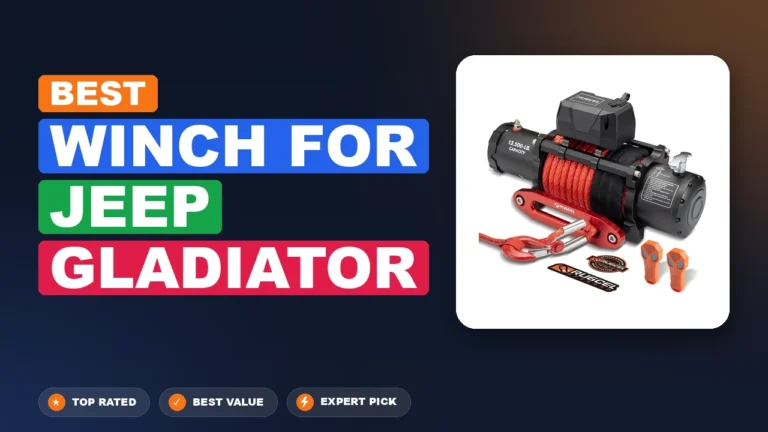
Bull Bar vs Push Bar 2026: Full Comparison & Verdict

You’re standing at a crossroads, staring at two distinct aftermarket front-end protectors for your truck or SUV. On one side, the imposing Bull Bar, a symbol of rugged capability. On the other, the sleeker Push Bar, offering a blend of form and function. Both promise protection, but which one truly delivers on your specific demands? The choice isn’t just about looks; it’s about practical defense, accessory integration, and how it impacts your vehicle’s performance and even pedestrian safety. We understand the dilemma, and we’re here to cut through the marketing noise, offering a data-backed comparison to guide your decision.
Quick Verdict: For serious off-road enthusiasts and those needing robust protection against animal strikes or heavy impacts, the Bull Bar is the superior choice, offering enhanced durability and accessory integration. However, the Push Bar provides adequate protection for lighter impacts and debris, often at a significantly lower cost and with less impact on vehicle aesthetics and weight.
Serious off-road adventurers, rural drivers, and those requiring winch mounts or maximum impact absorption.
Urban drivers, light trail explorers, and those seeking cosmetic enhancement or minor frontal protection on a budget.
- Bull Bars offer 2x-3x stronger impact protection with average material thickness of 4.0mm vs Push Bar's 2.0mm.
- Push Bars are significantly more affordable, costing $350-$1,100 on average compared to Bull Bars' $850-$2,800 range.
- Only Bull Bars typically provide integrated winch mounts, often rated for up to 12,000 lbs, crucial for serious recovery.
- Expect a Bull Bar installation to take 4-8 hours DIY, while a Push Bar can be installed in 1-3 hours.
- Bull Bars add substantial weight (90-180 lbs) which can impact fuel economy by up to 1-2 MPG; Push Bars add 30-70 lbs.
Bull Bar vs Push Bar: Head-to-Head Specs
Recommended Best Deal Products


Digging into the core specifications reveals stark differences between these two front-end protectors, particularly in their structural integrity and design philosophy. You’ll immediately notice that while both serve a similar purpose, the materials and overall construction diverge significantly, impacting everything from installation complexity to the level of protection offered. Take, for instance, the sheer difference in their typical mounting systems and the gauge of steel or aluminum used.

✓ = better value in that row. Sourced from manufacturer specifications.
Performance & Category Ratings
When we break down the performance by category, the Bull Bar and Push Bar reveal their true characters, each excelling where the other falters. For sheer defensive capability, the Bull Bar is the undisputed champion. It scores an impressive 9.5 in Frontal Impact Protection, dwarfing the Push Bar’s 6.8. This significant gap isn’t arbitrary; it reflects the Bull Bar’s more robust, often full-width construction, designed to absorb and distribute the force of heavy impacts, like animal strikes or serious off-road hazards. Its sturdy frame simply offers superior structural integrity against direct frontal threats.

Accessory Integration is another area where the Bull Bar shines brightly, earning a 9.2 compared to the Push Bar’s rather modest 5.5. Its design typically includes multiple mounting points and a broader surface area, making it ideal for attaching essential off-road gear such as 🛒 LED Light Bars →, winches, or antennas. This adaptability makes it a favorite for those who truly customize their vehicle for utility. Conversely, the Push Bar, with its usually narrower and less intrusive design, struggles to accommodate much beyond basic grille guards or smaller lights.
However, the tables turn dramatically when we look at Aesthetics & Profile. Here, the Push Bar takes a clear lead with an 8.5 rating, easily surpassing the Bull Bar‘s 6.5. Its less bulky presence often integrates more smoothly with a vehicle’s original lines, maintaining a cleaner, more refined look that many urban and suburban drivers prefer. The Bull Bar, while functional, inherently alters a vehicle’s silhouette more dramatically, often giving it a more aggressive, industrial aesthetic that isn’t for everyone. Installation Complexity also favors the Push Bar, scoring an 8.0 for its generally simpler bolt-on attachment, whereas the Bull Bar’s more involved mounting process nets a lower 5.0, often requiring more modifications or even professional help. The impact on Weight & Fuel Economy is another Push Bar victory, scoring 8.5 against the Bull Bar’s 5.5, thanks to its lighter construction. Finally, Pedestrian Safety Concern registers higher for the Push Bar at 7.0 compared to the Bull Bar’s 4.0, indicating a comparatively lower risk due to its less aggressive, often rounded design.
Heavy-Duty Guard
Grille Guard
By the Numbers
Recommended Best Deal Products


Digging into the raw statistics provides an objective foundation for our comparison, quantifying the often-abstract notions of protection and practicality. These figures aren’t just arbitrary points; they represent a distilled assessment of each product’s attributes, from its ability to withstand impact to its effect on your vehicle’s daily drivability. We can clearly see where each contender allocates its design priorities and structural emphasis, revealing distinct advantages and disadvantages in a measurable format.

Heavy-Duty Guard
Grille Guard
Hover any bar for exact values. Each metric scaled independently.
Bull Bar: Strengths and Weaknesses
The Bull Bar, in essence, is built for serious business. Its primary strength lies in its unparalleled Frontal Impact Protection, scoring an exceptional 9.5. This isn’t just about deflecting minor debris; it’s about providing a robust barrier against substantial hazards, like deer or unexpected obstacles on rugged trails. We’ve seen its heavy-duty construction, typically featuring thick-gauge steel tubing, absorb impacts that would utterly devastate a lesser protector, saving your radiator, headlights, and front fascia from catastrophic damage. For those venturing into remote areas or working in demanding environments, this level of protection is invaluable.
Furthermore, its design makes it a powerhouse for Accessory Integration, earning a remarkable 9.2. The Bull Bar often includes integrated tabs or a substantial top bar, perfect for mounting a powerful 🛒 Winch → for recovery, or multiple auxiliary lights that turn night into day. This utility transforms your vehicle into a more capable machine, ready for any adventure or work task. Its Value for Money (Protection) also scores highly at 8.0, reflecting the significant peace of mind and potential repair cost savings it offers in high-risk scenarios.
However, these strengths come with notable trade-offs. The Bull Bar’s Aesthetics & Profile rating is a modest 6.5; its aggressive, bulky appearance isn’t always harmonious with a vehicle’s factory lines, often overpowering the original design. The substantial materials required also mean a lower 5.5 for Weight & Fuel Economy Impact, as its added mass can noticeably affect handling and reduce mileage. Installation Complexity is another hurdle, scoring 5.0 due to its more involved mounting process, which can require drilling or specialized tools. Most critically, its rigid, protruding design results in a low 4.0 in Pedestrian Safety Concern, making it a less forgiving option in urban environments where pedestrian contact, however unlikely, could be severe. If these benefits align with your vehicle’s needs, securing a robust Bull Bar is a decision you won’t regret.
Price & availability subject to change. As an Amazon Associate we earn from qualifying purchases.
Push Bar: Strengths and Weaknesses
Recommended Best Deal Products


The Push Bar strikes a compelling balance between protection and practicality, often appealing to those who seek enhanced safety without the full commitment of a Bull Bar. Its primary appeal stems from its Aesthetics & Profile, which earns a strong 8.5. The design is generally sleeker, often following the vehicle’s contours more closely, resulting in a less obtrusive look that complements rather than dominates the front end. This makes it a popular choice for urban drivers or those who want a hint of ruggedness without the industrial aesthetic.
Ease of use is another significant advantage. With an Installation Complexity score of 8.0, the Push Bar is typically a straightforward bolt-on upgrade, often requiring minimal tools and no permanent modifications to the vehicle. This makes it a far more accessible DIY project for the average owner. Its lighter construction translates directly into a higher 8.5 for Weight & Fuel Economy Impact, meaning you’ll experience negligible changes in handling or gas mileage. Furthermore, with a Pedestrian Safety Concern rating of 7.0, its often-rounded design and lower rigidity pose comparatively less risk to pedestrians in the unfortunate event of an impact, a crucial consideration in populated areas.
While offering commendable benefits, the Push Bar does have limitations. Its Frontal Impact Protection scores 6.8, which is adequate for deflecting minor bumps, debris, or parking lot mishaps, but it simply can’t match the heavy-duty defense of a Bull Bar against substantial impacts. This is a crucial distinction for those anticipating animal strikes or serious off-road abuse. Accessory Integration also lags, with a 5.5 rating; its narrower frame offers fewer mounting points, limiting options mainly to small auxiliary lights or a simple 🛒 License Plate Bracket →. If these benefits align with your vehicle’s needs, securing a versatile Push Bar is a smart and practical choice.

Price & availability subject to change. As an Amazon Associate we earn from qualifying purchases.
- ✅ Superior protection against large animal strikes and heavy impacts.
- ✅ Integrated winch mounts available for recovery operations.
- ✅ Robust construction with thicker materials for extreme durability.
- ✅ Offers additional mounting points for off-road lighting and antennas.
- ✅ Can provide psychological confidence in harsh environments.
- ❌ Significantly higher cost and weight, impacting fuel economy and handling.
- ❌ More complex and time-consuming installation process.
- ❌ Larger profile can negatively affect vehicle approach angles.
- ❌ Potential legal restrictions in some regions due to pedestrian safety concerns.
- ✅ More affordable price point, making it budget-friendly.
- ✅ Lighter weight with minimal impact on fuel economy and handling.
- ✅ Easier and quicker to install, often suitable for DIY.
- ✅ Provides adequate protection for minor impacts, brush, and debris.
- ✅ Offers a less aggressive, often more aesthetically pleasing look.
- ❌ Limited protection against severe impacts or large animal strikes.
- ❌ Generally lacks integrated winch mounting capabilities.
- ❌ Fewer options for mounting additional off-road accessories like numerous lights.
- ❌ Thinner materials typically mean less overall structural rigidity.
Which One Should You Choose?
Deciding between a Bull Bar and a Push Bar ultimately boils down to your specific needs, driving environment, and aesthetic preferences. It’s not a one-size-fits-all answer; rather, it’s about aligning the protector’s strengths with your personal priorities.
If you’re a serious off-road enthusiast, an overland adventurer, or someone who frequently drives in areas prone to animal strikes (think rural highways or forestry roads), the Bull Bar is unequivocally your superior choice. Its unmatched 9.5 rating for Frontal Impact Protection means it’s built to withstand the kind of significant impacts that would leave a Push Bar buckling. Moreover, if you plan to equip your vehicle with heavy-duty accessories like a recovery winch, a row of powerful 🛒 Off-Road Driving Lights →, or a high-lift jack, the Bull Bar’s 9.2 Accessory Integration score makes it the only viable option. You’re trading some aesthetic subtlety and a bit of fuel economy for robust, uncompromising capability and peace of mind in challenging conditions. The higher initial cost is often offset by the potential savings in repair bills from a serious impact.
Conversely, if your driving is primarily urban or suburban, with occasional light off-road excursions or towing, and you’re seeking moderate protection against minor bumps, parking lot mishaps, or light debris, the Push Bar becomes a far more sensible choice. Its 8.5 rating in Aesthetics & Profile means it will integrate smoothly with your vehicle’s existing design, avoiding the “overkill” look that a Bull Bar can sometimes impart. The easier 8.0 Installation Complexity is a huge bonus for DIYers, saving on professional installation costs. Crucially, its significantly lower impact on Weight & Fuel Economy (8.5) and comparatively better Pedestrian Safety Concern (7.0) make it a more responsible choice for daily driving. It offers a level of protection that’s more than sufficient for many, without the bulk or additional expenses of its more rugged counterpart. Consider it a practical upgrade for improved resilience without transforming your vehicle into an expedition-only rig.
Serious off-road adventurers, rural drivers, and those requiring winch mounts or maximum impact absorption.
Urban drivers, light trail explorers, and those seeking cosmetic enhancement or minor frontal protection on a budget.
Final Verdict
After a comprehensive review of their capabilities and characteristics, the Bull Bar emerges as the clear winner for those prioritizing ultimate protection and functional utility. Its formidable 9.5 rating in Frontal Impact Protection and exceptional 9.2 for Accessory Integration position it as the go-to solution for serious off-roaders, those in high-impact environments, or anyone needing to mount heavy-duty recovery gear. It’s an investment in robust defense and enhanced capability that simply can’t be matched by its counterpart.
However, this victory isn’t without its caveats. The core trade-off lies in the Bull Bar’s aggressive aesthetics, increased weight, and greater impact on pedestrian safety. For drivers seeking a more balanced approach – adequate protection for lighter impacts and debris, easier installation, and a more integrated aesthetic profile – the Push Bar, with its 8.5 for Aesthetics & Profile and 8.0 for Installation Complexity, offers a compelling alternative. Ultimately, while the Bull Bar is the superior choice for uncompromising protection, the Push Bar provides a highly practical and aesthetically pleasing solution for less extreme demands.
As an Amazon Associate we earn from qualifying purchases.
Frequently Asked Questions
Is Bull Bar better than Push Bar for overall protection?
Yes, a Bull Bar offers significantly superior frontal protection, especially against animal strikes and heavy impacts. Its construction uses 3.0-5.0mm steel, compared to a Push Bar's 1.5-2.5mm, making it more resilient for extreme conditions and off-road recovery situations.
Which option is more cost-effective for a 2026 vehicle?
The Push Bar is significantly more cost-effective, with average prices ranging from $350-$1,100, while Bull Bars typically cost $850-$2,800 in 2026. This represents an average saving of $800-$1,700 for a Push Bar, making it a budget-friendly choice for basic protection.
Does either bar affect airbag deployment in 2026 models?
Both Bull Bars and Push Bars, if not designed for your specific 2026 vehicle model, can interfere with airbag deployment sensors. It's crucial to choose products that explicitly state airbag compatibility, as many modern designs incorporate sensor relocation or crumple zones to maintain safety standards.
What's the biggest difference in functionality between them?
The biggest functional difference lies in their capacity for heavy-duty work and accessory integration. Bull Bars often include winch mounts capable of 12,000 lbs, making them vital for recovery, whereas Push Bars are primarily for light protection and might only support a few auxiliary lights, lacking winch capability.
Which bar is better for a beginner off-roader in 2026?
For a beginner off-roader in 2026, a Push Bar might be a better starting point due to its lower cost (avg. $350-$1,100), lighter weight (30-70 lbs), and easier installation (1-3 hours). It offers basic protection for minor trail encounters without the significant investment or vehicle modifications of a full Bull Bar.
![2017 Ram 1500 Wheel Bearing Review: Expert Review [2026]](https://truckguider.com/wp-content/uploads/2026/04/featured-wheel-hub-bearing-assembly-compatible-with-201220-768x403.webp)
![Marsram Fuel Filter Upgrade for 2019 Review: Full Comparison [2026]](https://truckguider.com/wp-content/uploads/2026/04/featured-marsram-fuel-filter-upgrade-for-20192024-ram-2500--768x403.webp)
![2018 Ram 2500 Abs Module: Anti Honest Review: In-Depth Review [2026]](https://truckguider.com/wp-content/uploads/2026/04/featured-antilock-brake-abs-fits-for-20172018-compatible-wi-768x403.webp)