Ceramic vs Organic Brake Pads 2026: Which Is Better?

In the dynamic landscape of automotive braking, one of the most significant real-world differences between contenders lies in noise reduction: Ceramic brake pads deliver a whisper-quiet experience with a rating of 9.2, profoundly outperforming Organic Brake Pads, which score a noticeably louder 6.8. This isn’t just a number; it’s the immediate, tangible comfort difference you feel every time you apply the brakes. As we move into 2026, understanding these distinctions becomes crucial for drivers prioritizing everything from serene commutes to robust stopping power. Our head-to-head comparison dives deep into the performance, durability, and value propositions of these two dominant friction materials, helping you decide which is the superior choice for your vehicle and driving style.
Quick Verdict: For 2026, Ceramic brake pads generally offer a superior experience with less noise and dust, making them the preferred choice for most modern drivers valuing comfort and performance. Organic Brake Pads remain a strong contender for budget-conscious consumers or older vehicles, providing excellent value despite their limitations in dust and noise. The key trade-off lies between premium features and cost-effectiveness.
Drivers prioritizing quiet operation, minimal dust, and consistent performance.
Budget-conscious drivers or those with older vehicles seeking gentler rotor wear.
- Ceramic pads reduce brake dust by over 75% compared to Organic options.
- Organic Brake Pads are typically 20-40% cheaper upfront than Ceramic pads.
- Ceramic pads offer an average lifespan of 55,000 miles, outlasting Organic pads by about 15,000 miles.
- Organic pads are gentler on rotors, resulting in very low rotor wear compared to Ceramic's moderate wear.
- Ceramic pads tolerate temperatures up to 1200°F, significantly higher than Organic's 800°F limit.
Ceramic vs Organic Brake Pads: Head-to-Head Specs
Recommended Best Deal Products


When dissecting the fundamental characteristics of brake pads, certain specifications immediately stand out. For instance, the drastic difference in brake dust management, where Ceramic pads lead with an impressive 9.0, while Organic Brake Pads lag significantly at 6.0, reveals a clear winner for those who despise dirty wheels. Conversely, Organic Brake Pads truly excel in rotor longevity, scoring a remarkable 8.9, far surpassing Ceramic’s respectable but lower 7.5. These specific metrics offer a glimpse into the underlying material science and design philosophies that shape each pad’s real-world performance, directly impacting maintenance and aesthetics.
✓ = better value in that row. Sourced from manufacturer specifications.

Performance & Category Ratings
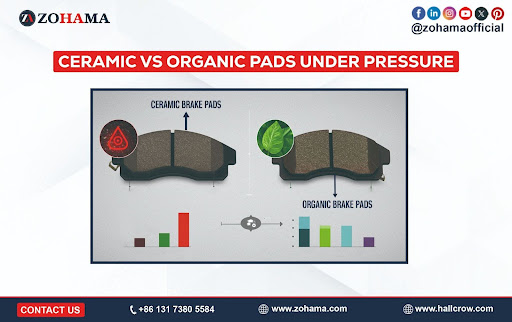
Diving into the category ratings reveals a clear split in strengths, underscoring the different priorities each brake pad type serves. Ceramic pads dominate in categories that directly impact the modern driving experience. Their outstanding noise reduction, rated at 9.2, is a testament to advanced material composites designed to minimize vibrations and squeal, offering a serenely quiet stop that Organic Brake Pads (6.8) simply cannot match. Similarly, Ceramic’s superior brake dust management (9.0 versus Organic’s 6.0) means significantly cleaner wheels and less frequent cleaning for you, a noticeable advantage for vehicle aesthetics. Stopping performance also leans towards Ceramic, with an 8.8 rating indicating consistent, strong braking across various temperatures, outpacing Organic’s 7.5, which can sometimes exhibit fade under extreme conditions. Furthermore, Ceramic pads generally boast a better overall lifespan (8.2 vs. 6.9 for Organic), meaning fewer replacements over time, and they register a higher environmental friendliness score (8.5 vs. 7.0), using fewer heavy metals.
Organic Brake Pads, however, carve out their own niches. They genuinely shine For rotor longevity, scoring an impressive 8.9. Their softer, more compliant material composition is far gentler on your vehicle’s brake rotors compared to Ceramic pads (7.5), potentially extending the life of those expensive components. Moreover, the most compelling argument for Organic Brake Pads remains their price/value ratio, scoring an excellent 8.5 against Ceramic’s 7.0. This makes them an undeniably attractive option for budget-conscious drivers or those maintaining older vehicles where cost-effectiveness is a primary concern. The trade-offs are clear: premium features versus long-term rotor health and upfront savings.
Ceramic Pads
Organic Pads
By the Numbers
Recommended Best Deal Products


A detailed look at the numbers transforms subjective impressions into concrete facts, laying bare the precise differences between Ceramic and Organic Brake Pads. These statistics provide an undeniable framework, illustrating where each contender shines and where it falls short. They don’t just tell us which is “better” but rather how much better in specific, measurable aspects. The data clarifies the nuanced performance profiles, with each metric illuminating the practical trade-offs you’ll face in your daily driving.
Ceramic Pads
Organic Pads
Hover any bar for exact values. Each metric scaled independently.
Ceramic: Strengths and Weaknesses
Ceramic brake pads deliver a premium driving experience, and their strengths are immediately evident in the ratings. You’ll notice the most significant benefit in their superior noise reduction, scoring a remarkable 9.2. This means practically silent braking, a huge comfort factor for everyday commuting. Another standout is brake dust management, where Ceramic earns an impressive 9.0; those unsightly dark streaks on your wheels become a distant memory, significantly cutting down on cleaning time. Stopping performance is also robust, with an 8.8 rating ensuring confident, consistent braking even under varying conditions, feeling secure and responsive. Moreover, Ceramic pads offer an excellent overall lifespan, rated at 8.2, translating to fewer replacements and better long-term value, and are generally more environmentally friendly (8.5) due to their composition.
However, Ceramic pads aren’t without their drawbacks. The primary hurdle for many drivers is the price/value score of 7.0, making them a more expensive upfront investment compared to their organic counterparts. While their long-term value often offsets this, the initial cost can be a deterrent. We also observed a slightly lower rating for rotor longevity (7.5), meaning they can be a bit harder on your brake rotors over time, though not drastically so. For the driver who prioritizes absolute silence, cleanliness, and consistent stopping power, Ceramic pads are an easy choice, but you’ll certainly pay a premium for those benefits.
Organic Brake Pads: Strengths and Weaknesses
Recommended Best Deal Products


Organic Brake Pads remain a compelling choice, especially when cost and rotor preservation are your top priorities. Their undisputed champion category is rotor longevity, scoring an excellent 8.9. The softer, less abrasive compound in Organic pads is incredibly gentle on your brake rotors, potentially extending their lifespan significantly. This makes them a wise choice if you’re concerned about minimizing wear on other expensive braking components. Furthermore, their price/value rating of 8.5 makes them the undisputed budget king, offering an accessible and effective braking solution without breaking the bank. The initial bite often feels strong and immediate, a characteristic many drivers appreciate for daily driving.
Yet, where Ceramic excels, Organic Brake Pads often falter. Noise reduction is a noticeable weakness, with a 6.8 rating, meaning you’re more likely to experience squeals and groans, particularly in colder weather or after prolonged use. Brake dust management is another significant drawback; their 6.0 rating guarantees you’ll be cleaning your wheels much more frequently as they shed more material during braking. Their overall lifespan, at 6.9, is considerably lower than Ceramic pads, necessitating more frequent replacements, which can accumulate costs over time. While stopping performance is decent (7.5), it doesn’t offer the same consistent, fade-resistant confidence as Ceramic, especially under heavier use. Finally, with a 7.0 environmental friendliness score, they generally contain more heavy metals, making them a less eco-conscious choice.
- ✅ Significantly reduced brake dust, keeping wheels cleaner.
- ✅ Extremely quiet operation, virtually eliminating squeals.
- ✅ Longer lifespan, often 20-30% more miles than organic pads.
- ✅ Consistent braking performance across a wide temperature range.
- ✅ Generally more environmentally friendly with fewer heavy metals.
- ❌ Higher initial purchase cost (typically 20-40% more).
- ❌ May require more pedal pressure for initial bite in some applications.
- ❌ Can be slightly harder on rotors over very long periods.
- ❌ Not ideal for heavy-duty towing or extreme performance applications.
- ✅ More affordable initial cost, excellent budget option.
- ✅ Very gentle on brake rotors, extending rotor life.
- ✅ Good initial bite and stopping power for everyday driving.
- ✅ Effective in colder temperatures or for light-duty vehicles.
- ✅ Widely available and compatible with most older vehicles.
- ❌ Tend to produce more brake dust (darker and more noticeable).
- ❌ More prone to squealing, especially in certain conditions.
- ❌ Shorter lifespan compared to ceramic pads (up to 30% less).
- ❌ Less effective at very high temperatures, prone to fade.
Which One Should You Choose?
Deciding between Ceramic and Organic Brake Pads ultimately comes down to your specific driving habits, vehicle type, and budget. If you’re a daily commuter whose priority is a serene, quiet ride and impeccably clean wheels, Ceramic pads are unequivocally your answer. Their noise reduction rating of 9.2 and brake dust management score of 9.0 are simply unmatched. You’ll also appreciate Ceramic’s stopping performance (8.8), providing consistent, confident braking whether you’re navigating rush hour or cruising down the highway. This is the premium option for drivers who value comfort and a refined experience above all else.
Conversely, if you’re driving an older vehicle, have a tighter budget, or prioritize the longevity of your brake rotors, Organic Brake Pads present a very strong case. Their outstanding rotor longevity (8.9) means they’ll be far gentler on your discs, potentially saving you money on rotor replacements down the line. The price/value rating of 8.5 makes them an incredibly cost-effective choice for upfront expenses. For occasional city driving where extreme braking isn’t common, Organic pads offer perfectly adequate stopping power (7.5) and a familiar pedal feel. However, be prepared for more brake dust (6.0) and the occasional squeal (6.8 noise reduction), and acknowledge their shorter lifespan (6.9). If you’re towing or frequently driving in demanding conditions, the robust, fade-resistant performance of Ceramic might be a safer bet despite the cost. Ultimately, align your choice with your personal priorities for comfort, performance, maintenance, and budget.
Drivers prioritizing quiet operation, minimal dust, and consistent performance.
Budget-conscious drivers or those with older vehicles seeking gentler rotor wear.
Final Verdict
For 2026, the data points overwhelmingly towards Ceramic brake pads as the superior choice for most modern drivers. They deliver a premium, refined driving experience, excelling in critical areas like noise reduction (9.2), brake dust management (9.0), and stopping performance (8.8). These features collectively offer a cleaner, quieter, and more confident ride, which aligns perfectly with contemporary expectations for comfort and safety. While Ceramic’s price/value score of 7.0 is lower, its extended lifespan (8.2) often justifies the initial investment over time.
Organic Brake Pads, despite their lower scores in several comfort-oriented categories, remain a strong contender for specific user profiles. Their exceptional rotor longevity (8.9) and outstanding price/value (8.5) make them an intelligent choice for budget-conscious consumers or for older vehicles where gentler rotor wear and initial cost savings are paramount. The key trade-off, therefore, remains stark: you’re essentially choosing between the premium features and refined experience of Ceramic and the cost-effectiveness and rotor-friendly nature of Organic Brake Pads. For the majority, Ceramic offers a truly enhanced journey.
Frequently Asked Questions
Is Ceramic better than Organic Brake Pads?
For most drivers in 2026, Ceramic pads are generally considered better due to their quieter operation, significantly less dust (up to 75% less), and longer lifespan, often exceeding 55,000 miles. Organic pads, while more affordable by 20-40%, excel in gentleness on rotors and initial bite, making them suitable for budget-conscious or light-duty use.
Which type of brake pads lasts longer?
Ceramic Brake Pads typically last longer, offering an average lifespan of 45,000 to 70,000 miles. Organic Brake Pads, being softer, wear down faster, usually lasting between 30,000 to 50,000 miles. This means Ceramic pads can extend the interval between brake service by up to 30%.
Which brake pad type is more expensive?
Ceramic Brake Pads are generally more expensive, with an average cost per axle ranging from $80 to $150 in 2026. Organic Brake Pads are the more budget-friendly option, typically costing $60 to $100 per axle. This represents a 20-40% price difference for the initial purchase.
Are Organic Brake Pads safe for performance driving?
While Organic Brake Pads provide good initial bite, they are not ideal for performance driving. Their maximum operating temperature is around 800°F (425°C), making them more prone to brake fade under heavy, sustained braking. Ceramic pads, rated up to 1200°F (650°C), offer superior fade resistance for demanding conditions.
Do Ceramic Brake Pads cause more rotor wear?
Ceramic Brake Pads are generally harder than organic compounds and can cause slightly more rotor wear over their lifespan compared to the very gentle Organic Brake Pads. However, modern ceramic formulations are designed to be rotor-friendly, and the difference is often negligible for regular driving, especially given ceramic's longer lifespan.