5.3 Vortec Problems: Symptoms and Fixes 1999–2026

The most common 5.3 Vortec problems depend heavily on whether your truck has a Gen III or Gen IV 5.3L Vortec V8. Earlier engines are more associated with intake leaks, ignition faults, fuel-delivery issues, and specific cylinder-head concerns. AFM-equipped Gen IV engines add oil-consumption and lifter failures to the list.
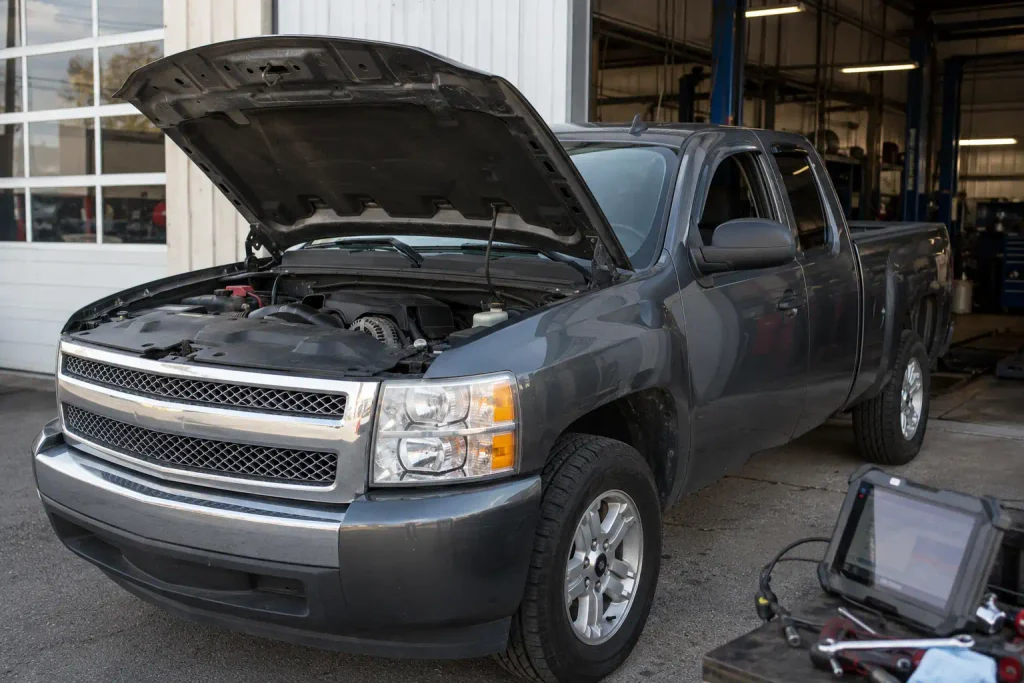
That distinction matters because an LM7 does not share every failure mode with an LC9, LMG, or LY5. Before buying parts, identify the engine RPO, read the trouble codes, and match the symptoms to the correct generation.

Prime for Young Adults — 6 Months Free
Students and 18–24s get six months of Prime free, then half price.
Start 6 Months Free5.3 Vortec Problem Diagnostic Flow
Identify the engine generation first, match the main symptom, then confirm the suspected fault before replacing parts.
Gen III 5.3L Vortec
Common RPOs include LM7, L59, LM4, and L33. These engines do not use the later AFM system.
Gen IV 5.3L Vortec
Common AFM-equipped RPOs include LC9, LH6, LMG, and LY5 in applicable GM trucks and SUVs.
Use the test that matches the symptom: smoke test, fuel-pressure test, compression test, leak-down test, cooling-system pressure test, or mechanical oil-pressure test.
Low compression, internal coolant loss, metal in the oil, persistent low mechanical oil pressure, or confirmed lifter and camshaft damage should move the truck to professional diagnosis.
Which 5.3L Vortec Generation Do You Have
Start any 5.3L Vortec diagnosis by identifying the engine RPO code. Year alone can be misleading because GM used several 5.3L variants across Chevrolet and GMC trucks and SUVs.
| Generation | Common 5.3L RPOs | Typical Years | AFM | Main Trouble Areas |
|---|---|---|---|---|
| Gen III | LM7 | 1999–2007 | No | Intake leaks, ignition, fuel delivery, coolant loss |
| Gen III | L59 | 2002–2007 | No | Similar to LM7, plus flex-fuel-specific hardware |
| Gen III | LM4 | 2003–2005 | No | Conventional Gen III faults |
| Gen III | L33 | 2005–2007 | No | Conventional Gen III faults |
| Gen IV | LH6 | 2000s applications | Yes in applicable versions | AFM, oil consumption, lifters |
| Gen IV | LY5 | 2007-era onward | Yes | AFM, oil consumption, lifters |
| Gen IV | LMG | 2007–2013 applications | Yes | AFM, oil consumption, lifters |
| Gen IV | LC9 | 2007–2013 applications | Yes | AFM, oil consumption, lifters |
GM documentation for 2008 models identifies LC9, LY5, and LH6 as 5.3L engines in Chevrolet and GMC applications. GM later listed LMG, LC9, LY5, and LH6 among Vortec Gen IV engines equipped with Active Fuel Management, or AFM.
The LM7 is the familiar iron-block Gen III Vortec 5300 used from 1999 through 2007. L59 is its flex-fuel relative, while LM4 and L33 are aluminum-block variants used in more limited applications.
Once you know which family you have, the symptom pattern becomes much more useful.

Audible — Listen Free for 30 Days
One free credit a month and thousands of titles included.
Listen Free for 30 Days7 Symptoms That Narrow Down 5.3 Vortec Problems
A single trouble code rarely proves which component failed. Combine the code with engine generation, operating conditions, oil use, coolant level, and mechanical test results.
| Main Symptom | Likely Diagnostic Path | First Check |
|---|---|---|
| Oil level falls quickly | PCV, AFM oil control, piston deposits | Measure oil consumption and inspect intake |
| Tick plus misfire | Ignition or valvetrain | Identify the misfiring cylinder |
| P0171 and P0174 | Unmetered air or fuel delivery | Inspect for intake leaks |
| P0300 | Ignition, fuel, compression, or AFM | Check cylinder misfire data |
| Coolant disappears | External leak or cylinder-head leak | Cooling-system pressure test |
| Long crank | Fuel-pressure loss | Test fuel pressure and pressure retention |
| Rough cold idle | Intake sealing or fueling | Compare cold and warm fuel trims |
The important rule is simple: diagnose the symptom before replacing the expensive part.
For example, a tick does not automatically mean a failed AFM lifter. An exhaust leak, injector noise, loose valvetrain component, or oil-pressure problem can produce similar clues.
If Your Gen III 5.3 Vortec Runs Rough
Gen III LM7, L59, LM4, and L33 engines do not use the AFM system found on later engines. Start with conventional air, fuel, ignition, and mechanical checks.
If It Runs Rough When Cold
GM Preliminary Information PIP3232B addressed Gen III truck engines that could develop a rough cold idle, random idle misfires, P0300, P0171, or P0174. The condition could improve as the engine warmed up.
The documented diagnostic path points to leaking intake manifold seals around the intake ports. These leaks can create an unmetered-air condition that pushes fuel trims lean.
If both banks show lean codes, do not start by replacing both oxygen sensors. Check the intake sealing, vacuum system, mass-airflow data, and fuel pressure first.
Current RepairPal data places an average Silverado 1500 intake manifold gasket replacement around $862 to $1,006, although the actual bill changes by year, location, parts used, and related repairs.
Audible Premium Plus — Annual Membership
12 audiobook credits up front, plus the full Audible catalogue.
See Annual PlansIf It Cranks Too Long
A long crank after the truck sits points toward fuel pressure bleeding down, weak pump output, leaking injectors, or another fuel-system problem.
Connect a pressure gauge and watch both initial pressure and how quickly it drops after shutdown. A pressure test gives you much more information than installing a fuel pump based only on a hard-start complaint.
If One Cylinder Misfires
Start with the inexpensive checks before opening the engine.
Swap the suspect spark plug with another cylinder. If the misfire stays on the same cylinder, swap the ignition coil. Then verify injector operation and compression before blaming a valve, lifter, or camshaft.
For plug inspection and correct installation setup, Truck Guider’s 5.3 Vortec spark plug gap guide covers the dedicated spark-plug specification topic.
If Coolant Slowly Disappears
GM has a specific bulletin for gradual coolant loss on certain 2001–2006 GM applications equipped with 4.8L, 5.3L, and other V8 engines. It identifies a low percentage of cylinder heads manufactured by Castech that may develop a porosity crack in a specific area.
Affected 5.3L RPOs listed in the bulletin include LM7, L59, L33, and LH6 in applicable vehicles. GM instructs technicians to identify the Castech logo before concluding that this specific condition applies.
That means unexplained coolant loss does not automatically equal a cracked Castech head. Pressure-test the system and check normal leak points first.
If you need the component layout while tracing coolant loss, use the 5.3 Vortec cooling system diagram alongside the pressure test.
RepairPal’s August 2026 estimate puts average Silverado 1500 cylinder-head replacement at roughly $3,043 to $3,555. That figure is a model-wide estimate, not a guaranteed price for every Vortec configuration.
If Your Gen IV 5.3 Vortec Burns Oil
Oil consumption is one of the most important differences between early non-AFM Vortec engines and later AFM-equipped 5.3L Gen IV engines.
GM Service Bulletin 10-06-01-008J covers specified 2007–2011 Chevrolet Avalanche, Silverado 1500, Suburban and Tahoe models, plus equivalent GMC applications. The affected 5.3L AFM RPO list includes LC9, LH6, LMG, and LY5.
GM described complaints on higher-mileage vehicles around 30,000 to 40,000 miles and considered consumption greater than roughly one quart per 2,000 to 3,000 miles sufficient to follow the bulletin’s service procedure.
GM identified two important paths.
If Oil Is Entering Through the PCV System
The Positive Crankcase Ventilation system can pull oil into the intake. GM’s bulletin includes inspection and an updated valve-cover path for applicable engines.
Remove the intake duct and inspect for abnormal oil accumulation before assuming piston rings are the only cause.
If AFM Is Spraying Oil Into the Crankcase
GM also documented oil spray from the AFM pressure-relief valve. Under some operating conditions, that oil could contribute to deposits in piston-ring grooves and increased oil consumption.
The service procedure included an AFM oil deflector for applicable engines and production periods.
If Cylinders 1 or 7 Keep Fouling Plugs
GM specifically connected increased oil consumption and deposits with cracked or fouled spark plugs on cylinders 1 and 7 in the bulletin’s diagnostic context.
Replacing the plug may restore the cylinder temporarily. It does not correct the oil-control condition if that is what caused the fouling.
If Your 5.3 Vortec Ticks or Misfires
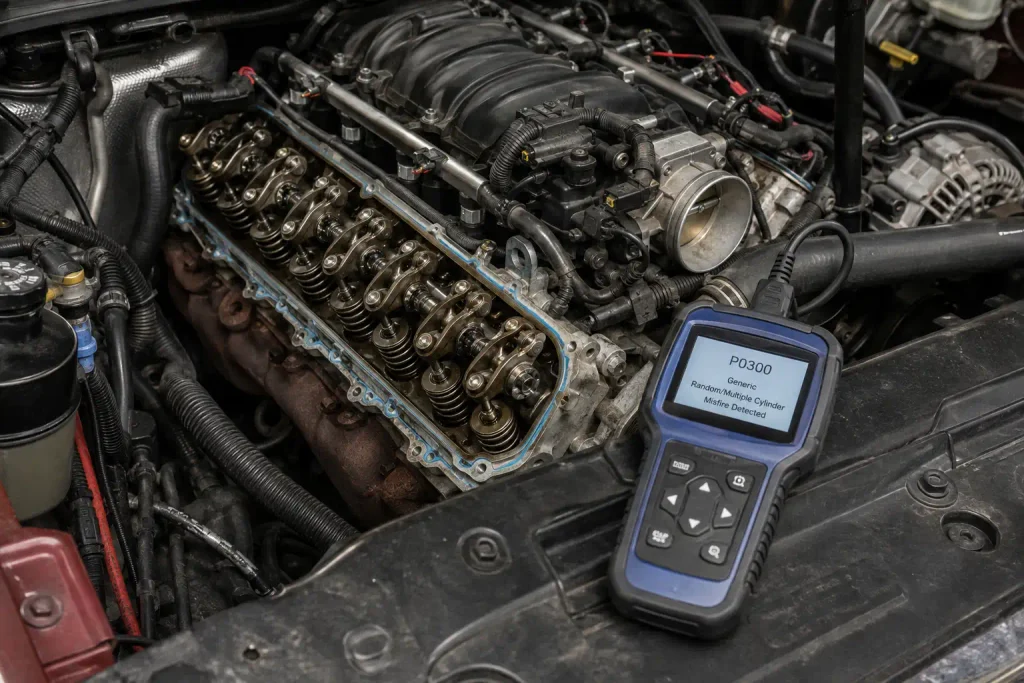
A persistent tick combined with a cylinder misfire deserves more attention than ordinary injector noise.
GM Preliminary Information PIP4568P covers AFM-equipped V8 applications including 2007–2013 Chevrolet Silverado and GMC Sierra models. It identifies misfires on AFM cylinders 1, 4, 6, or 7, sometimes accompanied by a tick.
If the Engine Misfires Without a Tick
GM states that an AFM lifter that unlocks immediately after startup can produce low compression on the affected cylinder, P0300, and a cylinder misfire without necessarily producing valvetrain noise.
So silence does not automatically rule out an AFM lifter problem.
If It Misfires and Ticks Consistently
A mechanically collapsed or stuck AFM lifter can produce low compression, consistent valvetrain ticking, P0300, and a misfire on the affected AFM cylinder.
GM lists possible contributors including low oil pressure, oil aeration, sludge, lifter damage, the valve lifter oil manifold, lifter guides, lifter bore problems, or cam-lobe wear.
If You Only Have P0300
Do not jump directly to a lifter replacement.
Use cylinder-specific misfire data. Inspect plugs and coils, verify injector operation, then run compression testing if the misfire stays on one cylinder.
A low-compression AFM cylinder combined with the documented symptom pattern moves the valvetrain much higher on the suspect list.
4 Edge Cases That Change the Diagnosis
Several cheaper faults can imitate a major 5.3L Vortec engine problem.
Exhaust Leak vs Lifter Tick
An exhaust manifold leak can sound like a mechanical tick, especially when the engine is cold.
Listen near the manifold and inspect fasteners and sealing surfaces. If the noise changes as the manifold warms, rule out an exhaust leak before opening the valvetrain.
Bad Sender vs Low Oil Pressure
Never assume an oil-pressure warning is only a sensor problem.
Confirm actual mechanical oil pressure when the readings are abnormally low or inconsistent. AFM operation depends heavily on correct oil control, so genuine low pressure can matter to the diagnosis.
Plug Misfire vs Mechanical Failure
If a plug or coil swap moves the misfire to another cylinder, you have useful evidence that the engine itself may not be the root cause.
If the misfire stays on the original cylinder after basic ignition and injector checks, move to compression and leak-down testing.
External Leak vs Cracked Head
Visible hose, radiator, water-pump, reservoir, or fitting leaks should be addressed before blaming a cylinder head.
The Castech bulletin is specific. GM tells technicians to verify the casting before applying that diagnosis.
How To Diagnose 5.3 Vortec Problems in 5 Steps
Use the same order whether the complaint is a misfire, oil consumption, coolant loss, or hard starting.
1. Identify the Engine RPO
Check the RPO information for your truck and determine whether you have a Gen III non-AFM engine or Gen IV AFM-equipped version.
This one step prevents you from following an AFM diagnosis on an engine that does not use AFM.
2. Scan Every Stored Code
Read stored, pending, and permanent Diagnostic Trouble Codes with a capable OBD-II scanner.
Do not erase codes before recording freeze-frame information. Engine speed, coolant temperature, load, and fuel trims can show exactly when the problem occurred.
3. Check Fluids and Visible Evidence
Check engine-oil level and condition, coolant level, vacuum hoses, wiring connectors, spark-plug condition, and obvious fluid leaks.
For oil-consumption complaints, record mileage and oil added instead of estimating consumption from memory.
4. Follow the Symptom Path
Use the engine generation to choose the diagnostic branch.
- Gen III plus cold lean idle: investigate intake sealing and air/fuel control.
- Gen IV AFM plus high oil consumption: inspect PCV and the GM-documented AFM oil-control path.
- Tick plus AFM-cylinder misfire: check ignition first, then compression and valvetrain operation.
- Unexplained coolant loss: pressure-test externally, then investigate the documented cylinder-head condition if applicable.
- Long crank: verify fuel pressure and pressure retention.
5. Confirm Before Buying Parts
Use a smoke test, fuel-pressure test, compression test, leak-down test, mechanical oil-pressure test, or cooling-system pressure test as appropriate.
A diagnostic test costs less than replacing several good components because a symptom looked familiar.
Which 5.3 Vortec Problem Matches Your Symptoms
Use this table as a starting point, not as proof that a component has failed.
| Your Situation | Best Diagnostic Path | First Confirmation Test | Severity |
|---|---|---|---|
| Gen III with P0171 and P0174 cold | Intake leak path | Smoke and fuel-trim testing | Low to Medium |
| Gen III with long crank | Fuel-delivery path | Fuel-pressure test | Medium |
| Gen IV AFM with high oil use | PCV and AFM oil path | Measured consumption and intake inspection | Medium to High |
| Tick plus cylinder 1, 4, 6, or 7 misfire | Ignition then AFM valvetrain | Swap tests and compression | High if lifter confirmed |
| Repeated plug fouling | Oil-control or combustion path | Plug and cylinder inspection | Medium to High |
| Gradual coolant loss with no visible leak | Internal cooling-system path | Pressure test and head inspection | High if head repair required |
The best rule is to diagnose the condition, not the reputation of the engine.
When 5.3 Vortec Problems Need Professional Diagnosis
Stop swapping parts once testing points toward an internal mechanical problem.
Professional diagnosis makes sense when you find:
- persistent low mechanical oil pressure
- one cylinder with confirmed low compression
- a valve that is not moving correctly
- metal debris in the engine oil
- a severe tick combined with an AFM-cylinder misfire
- internal coolant loss
- coolant contamination
- repeated overheating
- oil consumption that remains excessive after basic PCV inspection
GM’s AFM bulletin instructs technicians to perform compression and valvetrain diagnosis before condemning components. It also warns that bulletins describe conditions that may occur, not proof that every listed truck has that failure.
That is a good rule for DIY diagnosis as well. Confirm the mechanical fault before ordering an expensive camshaft, cylinder head, or lifter set.
Are 5.3 Vortec Engines Reliable Despite These Problems
Yes. The 5.3L Vortec V8 can still be a strong truck engine, but the reliability picture changes by generation and maintenance history.
Gen III engines such as the LM7 and L59 avoid the AFM lifter and AFM oil-control system found on later engines. Their common diagnostic paths tend to involve intake sealing, ignition, fueling, cooling-system concerns, and normal high-mileage wear.
AFM-equipped Gen IV engines add documented oil-consumption and lifter concerns. GM’s own service information confirms both issues on specified applications, so they deserve extra attention during a used-truck inspection.
Do not judge a used 5.3L by odometer mileage alone. Check cold-start noise, oil consumption history, coolant level, scan data, maintenance records, and compression when the symptoms justify it.
5 Common Questions About 5.3 Vortec Problems
What Years Did the 5.3 Vortec Have the Most Problems?
There is no single worst year that applies to every 5.3L Vortec. Gen III 1999–2007 engines have different failure patterns from AFM-equipped Gen IV engines, while GM issued specific AFM oil-consumption guidance for certain 2007–2011 applications.
Identify the RPO before judging reliability by model year.
Which 5.3 Vortec Engines Have AFM?
Common AFM-equipped Gen IV 5.3L RPOs include LC9, LH6, LMG, and LY5 in applicable GM models. GM lists these engines in its AFM service documentation.
Earlier LM7, L59, LM4, and L33 Gen III engines do not use this AFM system.
Why Does My 5.3 Vortec Tick at Idle?
A tick can come from an exhaust leak, normal injector operation, low oil pressure, valvetrain wear, or an AFM lifter on applicable Gen IV engines.
If the tick occurs with P0300 and a misfire on cylinder 1, 4, 6, or 7, GM’s AFM lifter diagnostic path becomes particularly relevant.
Why Is My 5.3 Vortec Burning Oil?
AFM-equipped Gen IV engines may consume oil through the PCV system or through conditions involving AFM pressure-relief oil spray and piston-ring deposits. GM documented both paths in Bulletin 10-06-01-008J.
External leaks and ordinary engine wear should still be checked before assuming AFM is responsible.
Can a 5.3 Vortec Last 200,000 Miles?
A 5.3L Vortec can reach 200,000 miles, but mileage alone cannot predict remaining engine life. Maintenance history, oil use, compression, coolant loss, oil pressure, and valvetrain condition give you much better information.
A well-maintained high-mileage engine can be a better purchase than a lower-mileage engine with unresolved oil consumption or misfires.
The Practical 5.3 Vortec Reliability Verdict
The biggest mistake with 5.3 Vortec problems is treating every 1999–2013 engine as if it has the same weaknesses.
For an LM7 or other Gen III engine, start with intake leaks, fuel and ignition faults, coolant-loss diagnosis, and normal mechanical testing. For an AFM-equipped LC9, LMG, LY5, or LH6, add oil consumption and AFM lifters to the diagnostic tree.
Pull the RPO code first, scan the engine second, and confirm the suspected failure with a real test. That approach keeps a $30 ignition problem from turning into an unnecessary internal-engine repair.