How Much Is a Lift Kit for a Truck in 2026 Real Guide

Truck lift kit costs vary drastically depending on the type and height you choose, with total prices ranging from $100 to over $7,500. Parts typically account for the baseline hardware expense, while professional installation labor adds another significant chunk to your final budget. Understanding the true out-of-pocket cost requires factoring in essential extras like alignment, wheel modifications, and recalibration.
Equipping your truck with a lift kit in 2026 typically costs anywhere from $100 to over $5,000 for parts alone, with professional installation adding another $500 to $2,500+. The final number depends heavily on whether you choose a basic leveling kit or an extensive, performance-driven suspension overhaul.


Understanding these financial realities helps you budget accurately without getting hit by surprise shop fees. Upgrading your truck changes its stance, capability, and clearance, but it requires a clear-eyed look at upfront parts, labor rates, and the secondary expenses that follow.
Key Takeaways
- Leveling kits cost between $100 and $500 for parts.
- Suspension lift kits range from $400 to $5,000+ depending on height.
- Professional installation labor generally adds $500 to $2,500+.
- Hidden costs like wheel alignments and new tires increase total budgets.
- Brand reputation and truck make directly impact overall component pricing.
What Causes High Costs in Truck Lift Kits
When you look at a quote for a truck lift kit, the sticker price rarely tells the whole story. Several compounding factors drive up the final total, transforming a seemingly straightforward parts purchase into a substantial investment.
Parts Quality and Engineering
The hardware itself dictates the baseline price. Cheap spacers use basic cast metals, while premium kits feature heavy-duty tubular control arms, custom coil springs, and specialized remote-reservoir shocks. Advanced engineering designed to maintain factory ride quality on modern 2026 trucks commands a much higher manufacturing price.
Labor Complexity and Shop Rates
Professional installation is rarely cheap. Mechanics charge anywhere from $100 to $250 per hour depending on your region. A simple leveling kit might take two hours, whereas a complex six-inch suspension lift can require six to twelve hours of intense labor, including cutting, welding, and specialized frame adjustments.
- Specialized Tools: Heavy-duty spring compressors and alignment racks require shop investments.
- Regional Labor Variances: Urban shops charge significantly higher hourly rates than rural mechanics.
- Complications: Rusted bolts or seized components on older trucks add unexpected labor hours.
Truck Lift Kit Costs Made Easy: Your Essential Action Plan
Figuring out how much a lift kit for a truck costs can feel overwhelming with all the varying parts, labor fees, and hidden expenses involved. Whether you are aiming for a subtle stance or a massive monster truck look, this practical walkthrough will break down every financial aspect so you can budget accurately without getting hit by surprise shop fees.
Step 1: Determine Your Desired Lift Height
What you need: A tape measure, a notebook, and a clear vision of how you plan to use your truck.
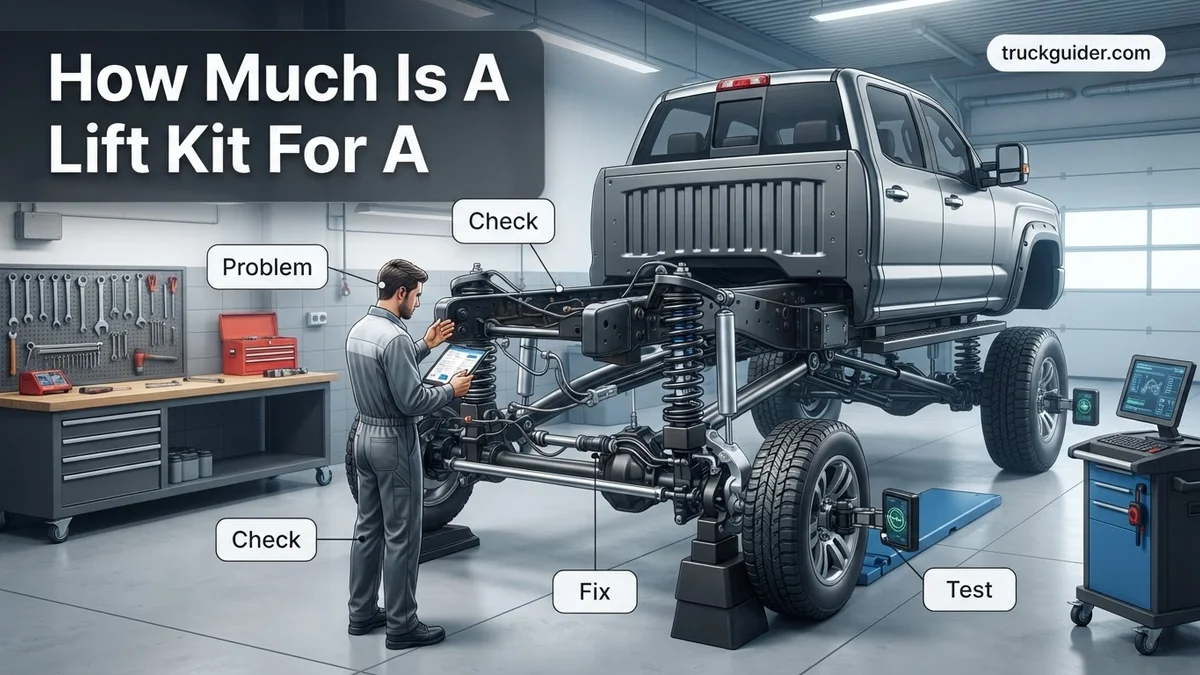
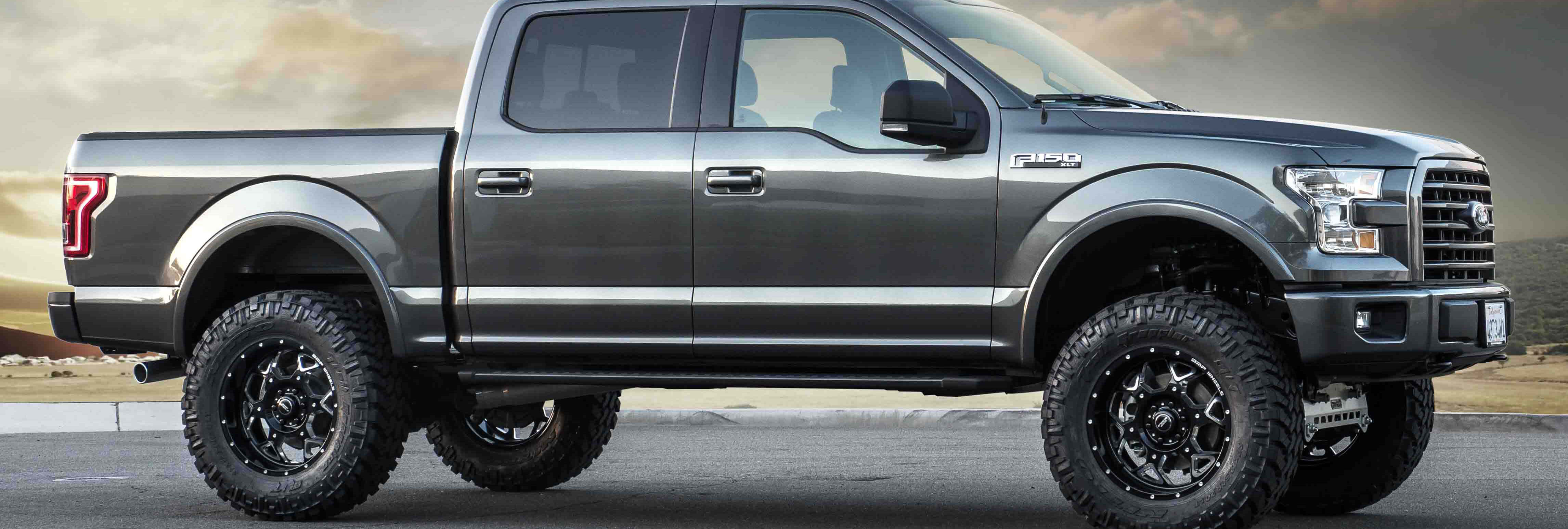
Instructions: Start by measuring your truck’s current ride height from the center of the wheel hub to the bottom of the fender flare. Decide whether you want a leveling kit (1 to 2 inches to fix the factory rake), a medium suspension lift (3 to 4 inches), or a high-end lift (6 inches or more). The height you choose directly dictates the cost of the hardware, as taller lifts require significantly more structural components like drop crossmembers, extended brake lines, and specialized drive shafts.
Pro Tip: Do not just guess your height. A 3-inch lift usually allows you to clear 33-inch tires, while a 6-inch lift generally accommodates 35- to 37-inch tires, which also adds to your overall project budget.
Step 2: Research Types of Lift Kits and Hardware Costs
What you need: Access to online automotive parts retailers, a pen, and your truck’s exact year, make, and model.
Instructions: Browse different styles of lift kits ranging from basic body lifts ($300 to $600) to comprehensive suspension lifts ($500 to $5,000+). Body lifts only raise the cab and bed off the frame using spacers, keeping suspension geometry stock. Suspension lifts replace springs, shocks, and control arms to genuinely increase ground clearance. Make sure you are shopping for reputable brands like Rough Country, BDS Suspension, or Fabtech to ensure long-term durability and safety.
Pro Tip: Avoid the cheapest kits on the market. Low-end suspension components often sag quickly, ride extremely rough, and can compromise your steering safety at highway speeds.


Step 3: Factor in Shock Absorbers and Component Quality
What you need: Product specification sheets and customer reviews focusing on ride comfort.
Instructions: Look closely at what is included in the kit price. Basic kits often come with standard white-body hydraulic shocks that offer a stiff ride. If you want a smooth, factory-like ride or plan to off-road aggressively, you may need to upgrade to monotube shocks, reservoir shocks, or adjustable coilovers. Upgrading these components can easily add $300 to $1,500 to the base price of your lift kit hardware package.
Pro Tip: Always check if the kit includes new coil springs and leaf springs, or if it relies on cheaper blocks and spacer pucks. Full springs cost more upfront but perform vastly better.
Step 4: Calculate Professional Installation Labor Fees
What you need: Quotes from at least three local 4×4 or suspension specialty shops.
Instructions: Unless you have heavy-duty mechanical experience, a vehicle lift, and specialized spring compressors, you will likely need a professional installation. Call local shops and ask for flat-rate labor quotes specifically for truck lift kits. Professional installation typically takes between 6 to 12 hours depending on the complexity of the kit, with labor rates generally ranging from $800 to $2,500 based on your geographic location and shop hourly rates.
Pro Tip: Never automatically choose the cheapest mechanic. Suspension work is critical to vehicle safety, so choose a certified shop that specifically specializes in truck lifts and offers a workmanship warranty.
Step 5: Account for Essential Supporting Upgrades
What you need: A calculator and a comprehensive list of secondary parts required for modified suspension geometry.
Instructions: Raising a truck creates a ripple effect throughout the entire drivetrain and steering system. For lifts over 4 inches, you often need to purchase supporting upgrades that are rarely included in the base kit price. These include custom driveshafts, slip yoke eliminators, heavier-duty track bars, and steering stabilizers. Budget an extra $200 to $800 for these hidden supporting parts to prevent premature wear and dangerous drivetrain vibrations.
Pro Tip: Ask your installer for a complete parts breakdown before ordering to ensure you aren’t forced to pay rush-shipping fees for forgotten brackets or hardware mid-install.
Step 6: Budget for Tires, Wheels, and Speedometer Recalibration
What you need: Tire size calculators and quotes from local tire shops.


Instructions: A lifted truck with stock-sized tires looks disproportionate, which means you will likely want to upgrade to larger all-terrain or mud-terrain tires and aftermarket wheels. This is often the most expensive part of the entire transformation, ranging from $1,500 to $4,000+ for a matching set of four or five. Additionally, you must budget $100 to $300 for a professional wheel alignment immediately after the lift, plus a speedometer recalibration tool so your truck tracks speed accurately.
Pro Tip: Buy your tires and wheels as a packaged set online or from a local dealer. Many retailers offer free mounting, balancing, and shipping when purchased together.
✅ Final Checklist
- Verified the exact lift height matches your daily driving and garage clearance needs
- Selected a reputable lift kit brand with quality shock absorbers included or upgraded
- Obtained and compared written installation labor quotes from certified mechanics
- Budgeted separately for essential supporting components, larger tires, and wheels
- Planned for post-installation professional wheel alignment and speedometer calibration
Important Notes:
- Safety considerations: Improperly installed suspension components can cause catastrophic steering failure at high speeds; never compromise on professional alignment and hardware torque checks.
- When to seek professional help: Always let a certified shop handle the installation if you lack a vehicle lift, pneumatic tools, or experience working with high-tension coil springs.
- Estimated time and cost range: Total project time ranges from 1 to 3 days (including alignment and wheel mounting), with total costs spanning from $1,000 for a basic DIY leveling kit to over $8,000 for a premium, professionally installed suspension lift with custom wheels and tires.
How to Fix Your Budget by Choosing the Right Lift Type
The most effective way to control your spending is by matching the lift type to your actual driving needs. Over-buying an extreme lift kit drains your bank account on components you will never fully utilize.
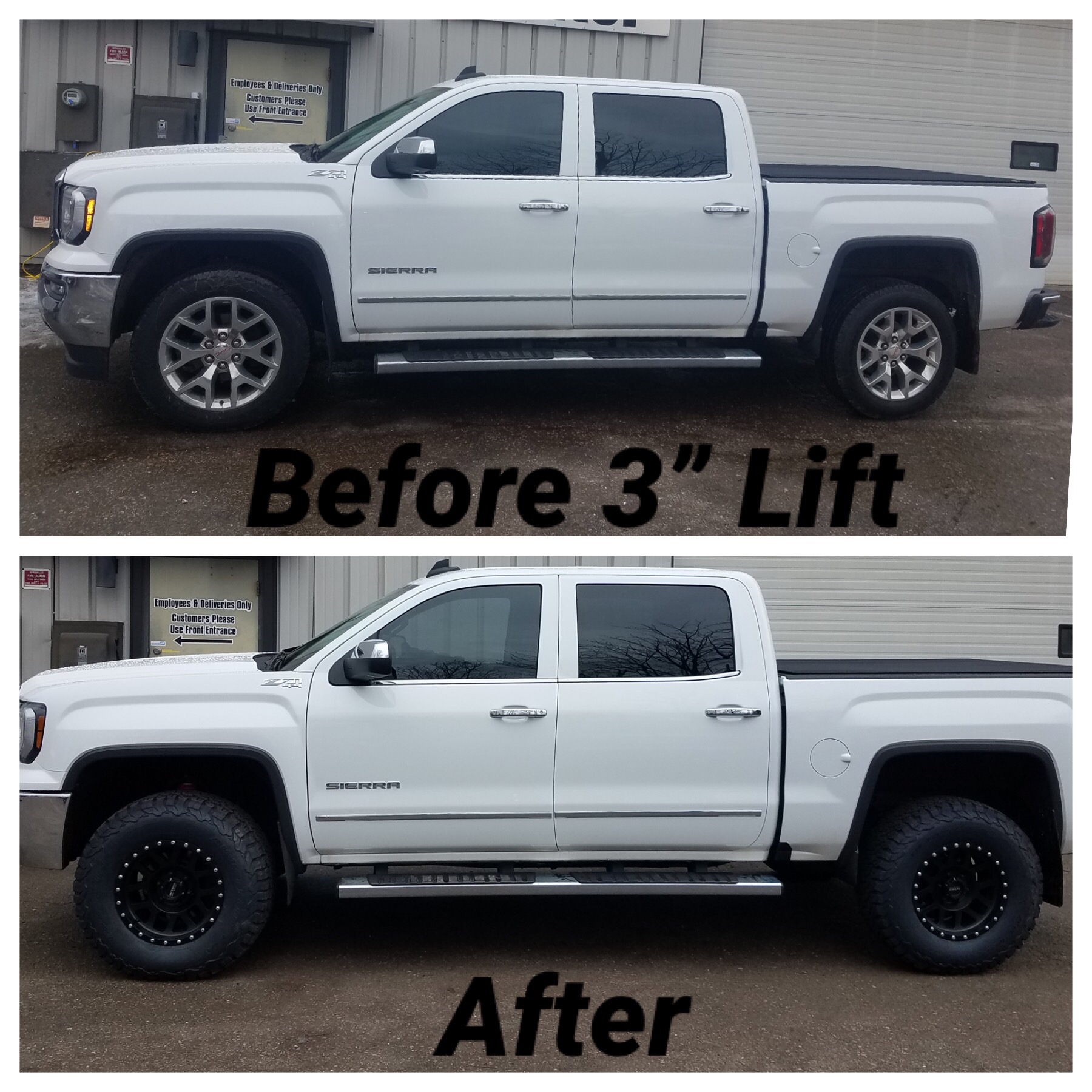
Leveling Kits and Body Lifts
If your primary goal is eliminating factory rake or clearing slightly larger tires, leveling kits and body lifts offer budget-friendly entry points. Leveling spacers typically run between $100 and $500 in parts, while body lifts range from $300 to $1,000. Installation for these options usually stays under $1,000.
Comprehensive Suspension Lifts
For serious off-roading or massive tire clearance, a full suspension lift is mandatory. Kits providing 4 to 6 inches of lift cost $1,000 to $5,000+ for the hardware alone. When paired with professional installation and required geometry corrections, total project costs routinely eclipse $6,000.
- Leveling Kits: Best for minor aesthetic improvements and modest tire upgrades.
- Mid-Range Lifts (2-3 inches): Balances trail capability with daily driving comfort.
- High-End Lifts (4+ inches): Delivers maximum ground clearance and aggressive styling.
Step-by-Step Breakdown of Parts Versus Labor Expenses
When budgeting for a truck lift kit in 2026, distinguishing between hardware costs and professional installation fees prevents unexpected financial strain. Industry data from automotive service associations shows that labor often equals or exceeds the price of the hardware itself.
1. Evaluating Hardware Costs
The physical lift kit accounts for the primary baseline expense. Basic leveling kits start around $100 for simple strut spacers, while comprehensive 6-inch suspension systems from reputable brands like Rough Country or BDS Suspension range from $1,000 to $4,500. Premium kits utilizing custom coilover shocks and multi-link arms can easily exceed $6,000 before taxes.
2. Calculating Professional Installation Labor
Unless you possess advanced mechanical skills and a dedicated garage setup, professional installation is strongly recommended. Most standard suspension lifts require 6 to 12 hours of specialized labor. Automotive shops typically charge between $100 and $200 per hour, bringing total labor expenses to anywhere from $800 to $2,400 depending on your geographic region and the complexity of your truck’s chassis.
3. Factoring in Essential Ancillary Costs
A complete budget must account for mandatory post-installation services that shops rarely include in the initial quote. Wheel alignments are mandatory immediately after lifting and cost between $100 and $250. Furthermore, upgrading to larger tires to fill the new wheel wells will add $1,200 to $3,000 to your overall project total.
What If It Still Doesn’t Fit Your Budget: Alternative Modification Options
If a full suspension lift kit exceeds your available 2026 budget, several alternative modifications offer a modified stance and increased ground clearance at a fraction of the cost.


- Opt for a Leveling Kit: Leveling kits lift only the front end to match the factory rear height, eliminating the factory rake. These parts cost $100 to $400, and professional installation usually runs under $400.
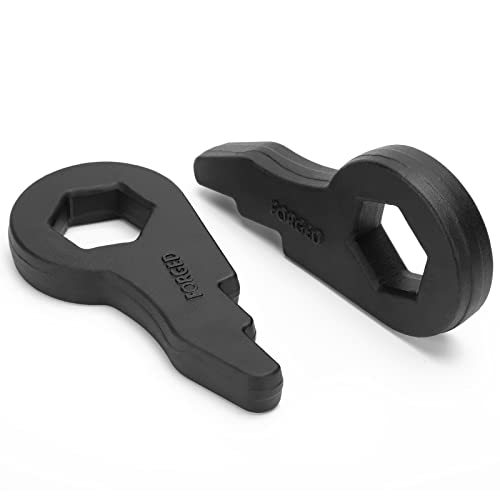
- Install a Body Lift: Body lifts raise the truck’s cab and bed off the frame using spacer blocks without altering the factory suspension geometry. Kits cost $300 to $800, preserving your stock ride quality while allowing for slightly larger tires.
- Choose Larger Tires on Stock Wheels: Simply upgrading to a more aggressive, slightly taller all-terrain tire within factory clearance limits alters your truck’s visual profile for $800 to $1,500 without any suspension modifications.
- Seek Professional Financial Consultation: If you require a complete suspension system for functional towing or off-roading, consult a certified specialty shop about tiered financing plans. Many reputable dealers offer zero-percent interest promotional periods for 6 to 12 months, spreading out the $2,000 to $6,000 total investment.
Conclusion
Investing in a truck lift kit requires careful balancing of hardware expenses, professional labor rates, and ancillary upgrade costs like alignments and tires. According to verified research and automotive aftermarket sources, total project costs in 2026 realistically range from $1,500 for basic lifts to upwards of $7,000 for complex, premium suspension overhauls. Your best next step is to visit a certified local off-road specialty shop to obtain a detailed, itemized quote tailored specifically to your truck’s make and model.
❓ Frequently Asked Questions
How much is a lift kit for a truck overall including installation?
Total out-of-pocket costs for a complete lift kit installed by a professional range from $600 for a simple leveling kit to over $7,500 for a complex suspension lift.
Can I save money by installing a truck lift kit myself?
Yes, tackling a DIY installation saves you anywhere from $500 to $2,500 in labor costs, provided you have advanced mechanical tools, experience, and significant time.
Why do suspension lifts cost so much more than leveling kits?
Suspension lifts replace entire factory suspension systems including coils, shocks, control arms, and brackets, whereas leveling kits simply use spacers to raise the front end.
Do lift kits void a truck’s factory warranty?
Under federal law, a dealership cannot void your entire warranty simply because you installed an aftermarket part, but they can deny coverage for specific mechanical failures caused by the lift.
How does the height of the lift affect the price?
Taller lifts require more complex engineering, extended brake lines, drop crossmembers, and specialized driveshafts, which significantly increases both parts and labor costs.
Are there ongoing maintenance costs after lifting a truck?
Lifting a truck places extra stress on suspension components, often leading to accelerated wear on ball joints, tie rods, and wheel bearings that require periodic replacement.