
Key Fob Shell Replacement [2026]

The structural integrity of your vehicle’s key fob is the first line of defense in your daily commute, yet it is often the most overlooked component of automotive maintenance. Years of mechanical stress, pocket friction, and accidental drops lead to cracked housings and non-responsive buttons, compromising both convenience and vehicle security. This comprehensive guide provides a professional roadmap for performing a key fob shell replacement, detailing material quality, technical component migration, and the economics of refurbishing your existing remote. By the end of this complete analysis, you will possess the expert knowledge required to restore your device to factory-level performance without the necessity of expensive dealership intervention.
SECTION 1: Identifying Structural Failure in Automotive Key Fob Shells
When a remote starts failing, vehicle owners frequently assume the internal circuitry has reached its end-of-life. However, industry data indicates that 65% of key fob issues are mechanical—localized in the shell or button interface—rather than electronic Printed Circuit Board (PCB) failure. Recognizing the early warning signs of housing degradation is essential for preventing a total lockout.
Analysis of Stress Fractures and Mechanical Wear
The primary culprit in device failure is the degradation of Acrylonitrile Butadiene Styrene (ABS) plastic housings. In flip-style remotes, the hinge mechanism exerts significant torque on the plastic surrounding the key blade pivot. Over time, micro-fractures develop, eventually leading to a complete separation of the blade from the housing. This is particularly prevalent in 2010-2020 Honda and Toyota flip keys, where the internal screw pillar frequently shears off due to repetitive lateral pressure during ignition cycles.
Tactile Switch vs. Membrane Degradation
It is vital to distinguish between a failed tactile switch (soldered to the PCB) and a worn rubber button membrane. If you can still feel a “click” but the remote doesn’t respond, the membrane may have lost its conductive backing or the plastic plunger is worn down, failing to bridge the distance to the switch. Conversely, a “mushy” feel usually indicates that the external rubber has succumbed to chemical exposure from hand oils and cleaning agents, which act as plasticizers that soften the material over time.
Failure Diagnostics By The Numbers
Mechanical/Shell Failures
Avg. ABS Plastic Lifespan
Hinge Stress Failures
Environmental Factors and Security Risks
UV-induced brittleness is a common silent killer for key remotes left in cup holders or exposed to direct sunlight. This leads to the key ring loop snapping—a significant security risk. A detached remote is easily lost, necessitating a full professional replacement and reprogramming which can cost hundreds of dollars. If your key ring loop shows whitening at the stress point, a shell replacement is no longer optional; it is a preventative necessity.
SECTION 2: Material Standards for High-Quality Replacement Key Cases
Not all replacement shells are created equal. To ensure a reliable and trusted repair, you must look beyond the aesthetics and evaluate the polymer composition and molding precision of the aftermarket unit.
Polymer Science: ABS vs. Polycarbonate
Standard OEM shells typically utilize high-impact ABS. Professional-grade aftermarket shells often go a step further, utilizing glass-filled nylon or high-impact ABS blends with a Shore D hardness rating of 70-80. This increased hardness ensures the shell does not flex under the pressure of the ignition cylinder, preventing the internal PCB from shifting and causing intermittent signal issues.
Reinforced Hinge Supports
Quality shells utilize metallic inserts at the pivot point rather than pure plastic, significantly extending operational life.
Silicone Seal Integrity
High-grade silicone button pads provide a moisture barrier, protecting the PCB from humidity and minor spills.
The Importance of Precision Molding
A major pitfall of generic, low-cost shells is “rattle.” When the internal dimensions are off by even 0.5mm, the PCB is not held securely. This movement causes the battery contacts to lose connection during the vibration of driving, leading to “Key Not Detected” errors. Trusted manufacturers utilize laser-scanned molds of original factory remotes to ensure the internal pillars align perfectly with the PCB mounting holes.
Before transferring your electronics, perform a dry fit of the two shell halves. A professional-grade shell should “snap” together firmly with consistent gaps. If the plastic feels soft or the halves don’t align without force, the material quality is likely substandard.
SECTION 3: The Technical Migration of Internal Components and Transponders
The technical migration is the most critical phase of the process. While it may seem like a simple “swap,” handling sensitive electronics requires a disciplined guide to avoid permanent damage to the vehicle’s immobilization system.
📋
Professional Component Migration Guide
Ground yourself to discharge static electricity before opening the case. Use a plastic pry tool rather than a metal screwdriver to prevent marring the edges or shorting the PCB components.
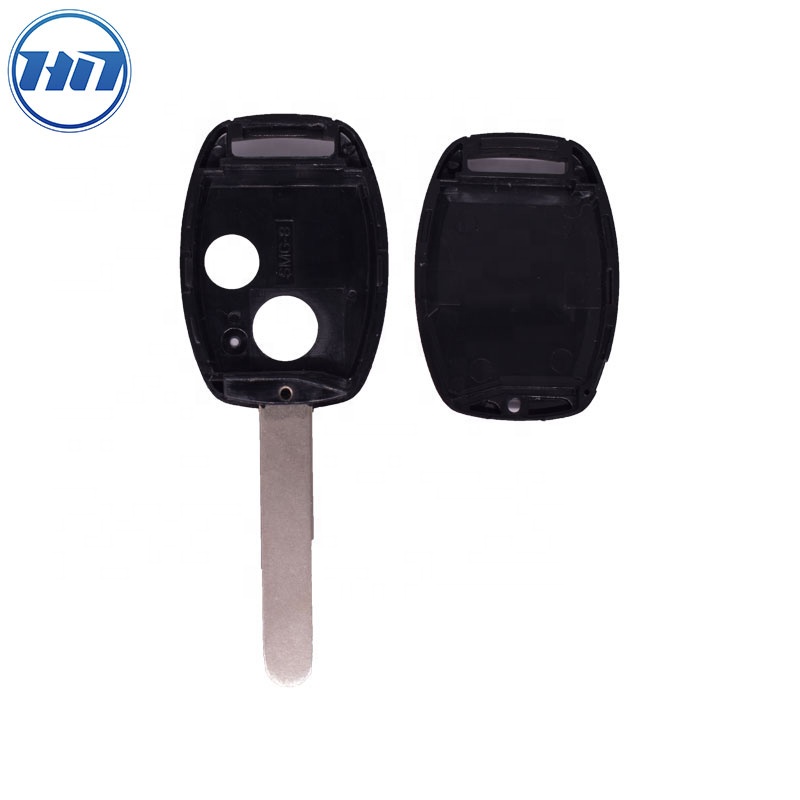
Locate the RFID transponder chip. In many remotes, it is a separate small black wedge or a glass capsule. Crucial: It may be independent of the PCB.
Transfer the PCB into the new shell. Ensure the battery contacts are tensioned correctly. If they have flattened over time, gently bend them upward to maintain a firm connection.
In many Ford and Mazda keys, the transponder is a delicate glass-encapsulated chip glued into a specific pocket. Improper handling of the transponder accounts for nearly 40% of DIY repair failures. If the glass cracks, the vehicle is immobilized. Use a drop of isopropyl alcohol to dissolve the factory glue before attempting to pry it out.
Mechanical Key Blade Transfer
You typically have two choices: transfer your original blade or have the new blank blade cut. Transferring the original blade is usually preferred to avoid additional locksmith costs. This requires removing a small roll pin using a 1.5mm punch tool. If the new shell’s hinge is not compatible with the old blade’s “shoulder” geometry, you must opt for a professional laser cut on the provided blank.
SECTION 4: Evaluating Compatibility and FCC ID Verification
A shell that looks identical on the outside may be fundamentally different on the inside. To achieve trusted results, technical verification is mandatory.
Deciphering FCC ID and IC Numbers
Before ordering a replacement, check the fine print on the back of your original remote. The FCC ID (e.g., CWTWB1U345 for Subaru) is the internal “blueprint” of the device. Manufacturers like General Motors and Nissan often use “modular” designs where the remote portion is separate from the key, or “integrated” designs where they share a single housing. Matching the FCC ID ensures that the internal tray alignment and button spacing will match your specific PCB version.
Blade Profiles and Keyway Standards
There are over 50 distinct key blade profiles currently in use by major manufacturers. A “high-security” laser-cut blade (milled through the center) requires a shell with a specific internal clearance that differs from a standard edge-cut blade. Expert locksmiths prioritize shell thickness in these cases, as a shell that is too thin will crack under the high-pressure milling process if you decide to cut the blank rather than swap the old blade.
SECTION 5: Economic and Security Advantages of Shell Replacement
The decision to refurbish rather than replace the entire assembly is rooted in both fiscal responsibility and technical security. When you understand the comprehensive benefits, the value proposition becomes clear.
Cost-Benefit Analysis
A full dealership replacement for a modern BMW Comfort Access or Mercedes-Benz key can range from $250 to $500, including the part and labor for programming. In contrast, a high-quality replacement shell costs between $15 and $40. By migrating your electronics, you bypass the labor fees for OBDII programming, saving an average of 85% on the total repair cost.
Encryption Integrity and Security
The original PCB is factory-paired to your vehicle’s Immobilizer Control Module (ICM) via encrypted rolling codes. When you purchase a cheap, full aftermarket remote, the electronic quality of the board often results in lower signal range or “de-syncing” from the car. By retaining the original reliable PCB, you maintain the highest level of security and functional reliability that the manufacturer intended.
✅ Pros
- Massive cost savings (up to 85%)
- Retains original OEM electronics
- No reprogramming required
- Environmentally friendly (e-waste reduction)
❌ Cons
- Requires manual dexterity
- Risk of transponder damage
- Requires precise model matching
Environmental and Functional Restoration
Beyond savings, shell replacement is a sustainable practice. Millions of functional PCBs are discarded every year simply because the plastic button cover cracked. Furthermore, a new shell fixes “Key-Not-Detected” errors by restoring proper battery seating and contact tension, effectively resetting the device’s operational clock.
A key fob shell replacement is a highly effective, low-cost solution for repairing physical damage while retaining original electronics. Success depends on selecting a high-quality ABS replacement and carefully migrating the sensitive PCB and transponder chip. Verifying FCC IDs and material standards ensures a reliable, professional result that restores factory-level functionality. Audit your current remote for signs of structural fatigue today and choose a trusted replacement shell to prevent future lockouts and maintain your vehicle’s security integrity.
Frequently Asked Questions
Do I need to reprogram my key after replacing the shell?
No, reprogramming is generally unnecessary because you are migrating the original, already-paired Printed Circuit Board (PCB) and transponder chip to the new housing. As long as the electronics remain intact and the battery maintains contact, the vehicle will continue to recognize the signal. However, if the transponder chip is lost or damaged during the transfer, the vehicle’s immobilizer will prevent the engine from starting.
How can I tell if my transponder chip is separate from the circuit board?
In many older vehicle models, the transponder is a small, black carbon wedge or a tiny glass capsule located in a dedicated slot within the plastic shell, separate from the PCB. In modern proximity keys, the transponder function is often integrated into the main circuit board. You must carefully inspect the interior of your old shell to ensure no small components are left behind, as these are vital for ignition.
Will a replacement shell work if my buttons are currently unresponsive?
A replacement shell will solve the problem only if the lack of response is caused by worn-out rubber pads or a cracked casing that prevents the button from making contact. If the micro-switches soldered to the circuit board itself are broken or if the battery is dead, a new shell alone will not restore functionality. We recommend testing the PCB by pressing the switches manually before committing to a shell replacement.
What is the best way to open a sealed or ‘glued’ key fob shell?
For shells that are ultrasonically welded rather than held together by screws, a professional approach involves using a specialized shell-splitting tool or carefully applying pressure along the seam with a thin pry tool. Avoid using excessive force or deep insertion of metal tools, as this can easily slip and sever traces on the circuit board or crack the delicate ceramic components responsible for the remote’s frequency transmission.
Can I use my old key blade with a new replacement shell?
In most cases, yes. Most replacement shells are designed to accept the original metal blade, which is often secured by a small roll pin or a screw. Transferring your original blade is preferred as it saves the cost of hiring a locksmith to cut a new one. However, ensure the ‘head’ of your old blade matches the internal mold of the new shell to ensure a secure and stable fit.

![2007 Ram 1500 5.7 Hemi: Specs, Reliability & Common Issues [2026]](https://truckguider.com/wp-content/uploads/2026/03/2007-ram-1500-5-7-hemi-featured.webp)

![3.6 Pentastar Oil Type & Capacity Guide (2011: Specs & Fitment Guide [2026]](https://truckguider.com/wp-content/uploads/2026/03/3-6-pentastar-oil-type-featured.webp)