
Ram 1500 Fuse Box Location: Identification And Service Guide For All Generations

A dead circuit in your Ram 1500 can be as frustrating as a mechanical breakdown, especially when it suddenly affects critical systems like headlights, the fuel pump, or your trailer brake controller. Finding the specific Ram 1500 fuse box location is often the first hurdle for owners dealing with electrical gremlins across different trim levels and generations, as these locations have shifted significantly between the “Classic” DS models and the fifth-generation DT trucks. This guide provides exact locations for both the under-hood and interior fuse panels, along with professional tips for identifying and replacing blown fuses safely to get your truck back on the road.
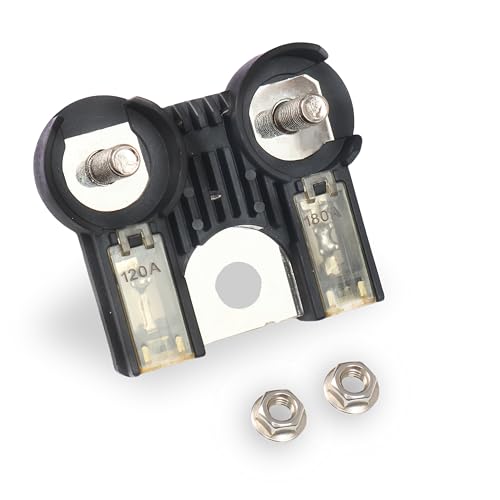


Identifying the Ram 1500 Under-Hood Power Distribution Center Location
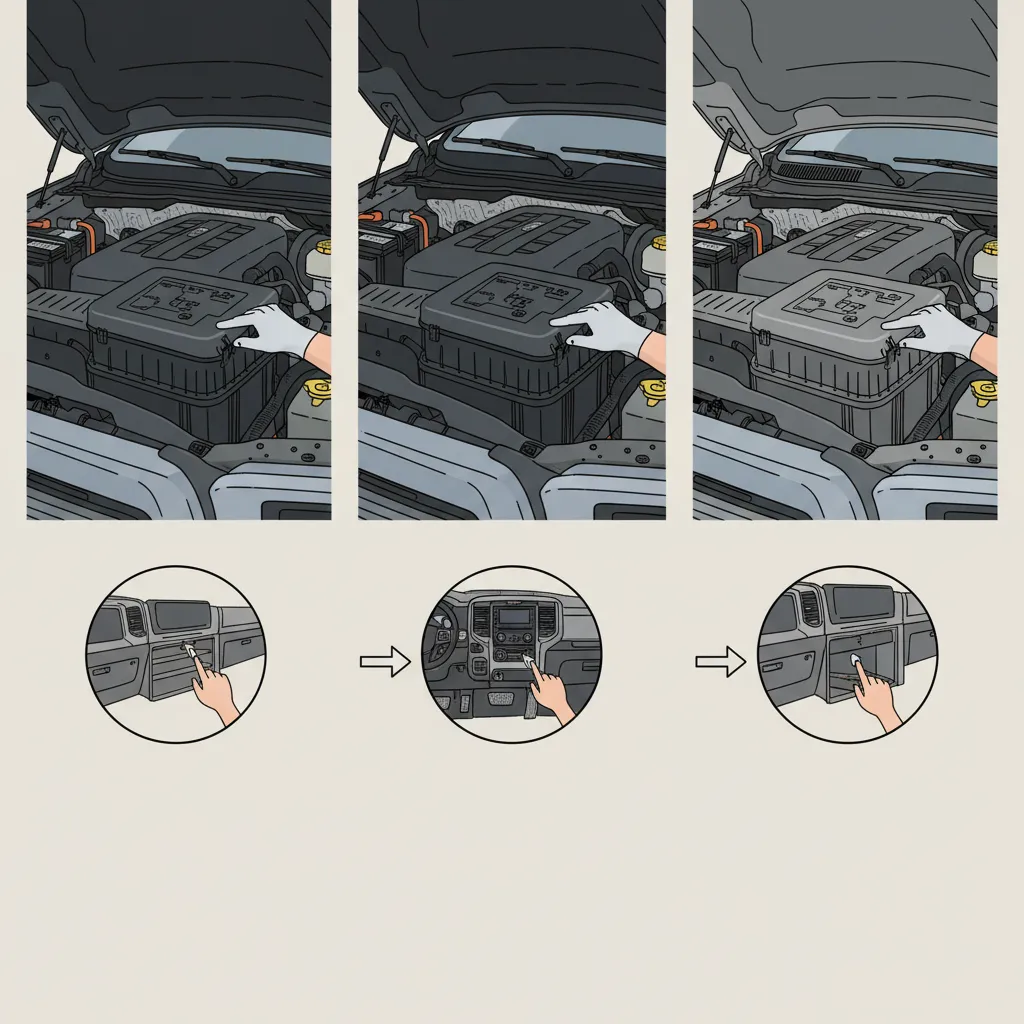
The primary electrical hub of your truck is the Power Distribution Center (PDC). In almost every generation of the Ram 1500, this unit is conveniently positioned on the driver’s side of the engine compartment, usually nestled between the battery and the fender well. This accessible location allows the PDC to manage high-amperage “serving” fuses that protect the most energy-intensive components of the vehicle, such as the cooling fan, starter motor, and the anti-lock brake system (ABS).
Accessing the PDC is straightforward but requires attention to detail. The unit is housed in a heavy-duty plastic casing designed to withstand engine heat. You must release the plastic locking tabs on the outer housing cover—usually two or three clips—to pivot the lid upward and reveal the integrated fuse and relay layout. It is vital to ensure the weather-sealed gasket on the lid remains intact; moisture ingress in the under-hood environment is a leading cause of terminal corrosion and intermittent electrical failure.
Generation Layout Variations: DS vs. DT
While the general nearby location remains consistent, there are nuances between generations. For example, a 2014 Ram 1500 (DS/Classic) features a fairly traditional rectangular PDC with clear, large-format relays. In contrast, the 2019 and newer Ram 1500 (DT) layout is more compact and integrated, reflecting the increased complexity of the truck’s modern architecture. Research from Ram community forums like Ramforum.com indicates that over 60% of owners first check the PDC when troubleshooting non-starting issues, as it houses the critical ignition and fuel pump relays.
Always disconnect the negative battery terminal before performing significant work on the PDC. Accidentally grounding a high-amperage circuit with a tool can cause severe electrical shock or permanent damage to the vehicle’s electronic control modules.
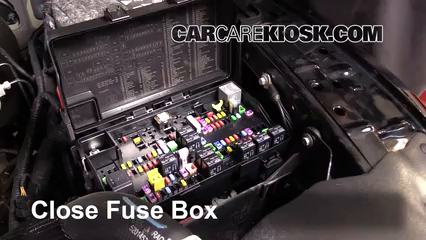
Finding the Interior Cabin Fuse Panel and Body Control Module
While the under-hood PDC handles the “heavy lifting,” the interior cabin fuse panel is the nerve center for your comfort and convenience features. Navigating to the driver’s side interior location is the next step for issues involving interior lighting, power windows, or infotainment. Usually, this panel is accessible behind a removable plastic cover near the left knee bolster, directly underneath the steering column.
This interior panel is often part of the Body Control Module (BCM). Unlike the engine bay box, the cabin panel utilizes compact blade fuse designs—specifically mini and micro fuses—to save space while protecting delicate electronics. Technical variations in access depend on your trim level; some entry-level Tradesman models feature simple finger-pull recesses, while premium trims like the Limited or Laramie might require a plastic trim tool or a flat-head screwdriver to gently pop the panel without marring the dashboard materials.
According to industry data from RepairPal, interior fuse replacements for accessories like 12V outlets and USB ports are among the most frequent electrical tasks for pickup owners. For example, if you are driving a 2021 Ram 1500 Laramie and your phone stops charging, the 20W cigar lighter fuse located in this panel is the most likely culprit. To identify it quickly, always consult the internal sticker found on the back of the access panel; it provides an immediate circuit map that is available to the user without needing to find the full manual.


By The Numbers
Owners check PDC first
Fire risk increase with wrong fuse
Service reason: Electrical issues
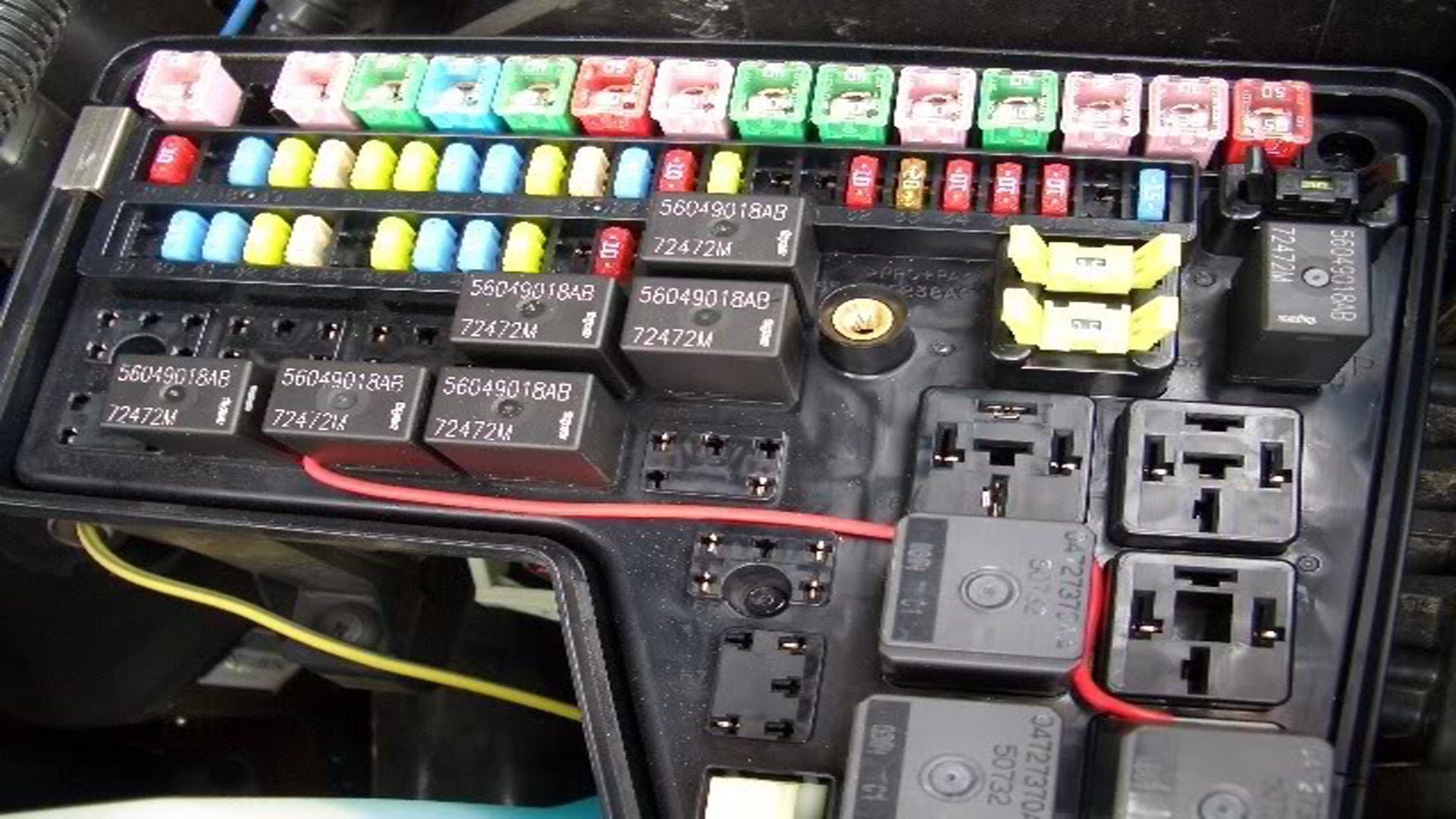
Interpreting the Ram 1500 Fuse Box Diagram and Symbols
Understanding the map of your electrical system is just as important as finding the box itself. Ram uses a combination of numerical grids and industry-standard symbols to help owners navigate the dozens of circuits. For instance, you will likely see a gas pump icon for the fuel pump, a key icon for ignition circuits, and the “SRS” label for the airbag system. Cross-referencing the numerical grid on the lid with the detailed index in the official guide is the most reliable way to ensure you are pulling the correct fuse.
It is critical to distinguish between the different types of fuses available in a Ram truck:
- J-Case Fuses: These are larger, square-shaped high-current fuses usually found in the PDC. They protect heavy-duty systems like the radiator fan.
- ATO/ATC Blade Fuses: The standard “flat” fuses used for most general automotive circuits.
- Mini/Micro Fuses: Small-footprint fuses found primarily in the interior cabin panel to save space.
Color-coding is your best friend during this process. The industry follows a strict standard: Red is 10A, Blue is 15A, Yellow is 20A, and Clear/White is 25A. If you are matching ‘F22’ on the diagram to the ‘Horns’ circuit in a 5th Gen Ram, ensure the 25A fuse you pull out is replaced by another 25A fuse. Mopar manuals explicitly state that using a fuse with a higher amperage rating than recommended increases the risk of fire by 300% during a local circuit overload because the wiring will melt before the fuse blows.
Don’t use your fingernails or pliers, which can crack the plastic fuse housing. Ram typically hides a dedicated white plastic fuse puller tool inside the lid of the under-hood PDC. It makes extraction convenient and prevents damage to the terminals.
Step-by-Step Procedure for Safely Replacing a Blown Ram Fuse
Performing a fuse replacement is one of the most basic but essential skills for any truck owner. RepairPal indicates that electrical problems are a top-3 reason for Ram 1500 service visits, yet many of these issues can be solved in minutes with a simple fuse swap. Follow this authoritative workflow to ensure a safe and successful repair.
📋
Step-by-Step Guide
Turn off the engine and ensure all electrical loads (lights, radio, climate control) are off to prevent arcing when the new fuse completes the circuit.
Use a multimeter or a simple test light. Touch the probes to the two small metal contact points on top of the fuse. If the test light doesn’t glow on both sides, the fuse is blown.


Using the factory puller tool, extract the suspect fuse with a firm, straight-up motion. Look through the translucent body; a broken metal bridge or scorch marks confirm a failure.
Seat the new fuse firmly into the terminal. If you don’t have a spare, a nearby auto parts store will stock “EasyID” fuses that light up when they blow, making future troubleshooting even easier.
Troubleshooting Persistent Fuse Failure and Professional Assistance
Sometimes, a fuse is just the messenger. If you replace a fuse and it immediately blows again upon turning on the ignition, you are dealing with a “short circuit.” This indicates that electricity is finding a path to the ground before it reaches the intended component. This is common in trailer wiring; a frayed wire on a trailer can cause the tow-lighting fuse in the PDC to fail repeatedly.
In older Ram trucks, specifically the 3rd and 4th generations, the community often discusses issues with the TIPM (Totally Integrated Power Module). The TIPM is more than just a fuse box; it is a computer that controls power distribution. If your PDC shows signs of melting, corrosion, or if certain circuits fail even with good fuses, the TIPM itself may have internal relay failure. These issues are often misdiagnosed as simple blown fuses by inexperienced owners.
✅ DIY Pros
- Cost-effective repair
- Immediate resolution
- Minimal tools required
- Greater vehicle knowledge
❌ Pro Cons (When to Seek Help)
- Deep wiring shorts
- Internal TIPM failures
- Intermittent parasitic drains
- Risks to sensitive ECU/BCM
When DIY efforts fail, it is time to consult a trusted local certified technician. They have the advanced diagnostic equipment to trace “shorts to ground” without wasting a box of fuses. Furthermore, maintaining a kit of spare fuses in your glove box is a best practice that can prevent you from being stranded by a minor fault in a remote location. Being prepared is the hallmark of an expert owner.
In summary, the primary fuses for your Ram 1500 are located in the Power Distribution Center under the hood near the battery, while secondary fuses for cabin electronics are found behind a panel on the driver’s side dashboard. Always match amperage ratings exactly and consult your owner’s manual for specific circuit diagrams to prevent electrical hazards. If a fuse continues to blow after replacement, visit a nearby authorized Ram service center to diagnose potential short circuits in your vehicle’s wiring and ensure your truck’s sophisticated electrical grid remains “serving” you reliably for years to come.
Frequently Asked Questions
Where is the fuse box located in my Ram 1500?
Your Ram 1500 features two main locations. The primary Power Distribution Center (PDC) is located under the hood, usually on the driver’s side near the battery. The interior fuse panel, which controls cabin electronics, is located inside the truck, typically under the driver’s side dashboard or behind a removable plastic panel near the steering column.


How do I read a Ram 1500 fuse box diagram?
To read the diagram, look at the underside of the fuse box cover where a printed layout map is available. Each slot is numbered or labeled (e.g., F12, R04). Cross-reference these identifiers with the index in your owner’s manual to determine which component each fuse is serving, such as the fuel pump or radio.
What size fuse do I need for my Ram 1500?
The fuse size depends entirely on the specific circuit being protected. Common sizes range from 5A (Tan) to 30A (Green) for standard blade fuses, and up to 60A for J-Case fuses. You must always replace a blown fuse with one of the exact same amperage rating to prevent electrical fires or component damage.
What does each fuse control in a Ram 1500?
Individual fuses control specific electrical ‘communities’ within the truck. For example, the under-hood PDC generally controls high-draw items like the starter, alternator, and ABS. The interior panel typically manages lower-draw accessories like the infotainment system, power windows, interior lighting, and the 12V auxiliary power outlets found in the center console.
How do I replace a blown fuse safely?
First, ensure the ignition is off. Use the fuse puller tool (located in the PDC) to remove the suspect fuse. Inspect the metal filament inside; if it is broken, the fuse is blown. Insert a new fuse of the identical rating into the slot. If the new fuse blows immediately, a short circuit is likely present nearby.
![1997 Dodge Ram 1500 Dashboard Replacement: Complete Fix Guide [2026]](https://truckguider.com/wp-content/uploads/2026/03/1997-dodge-ram-1500-dashboard-featured.webp)