Replacement Seats For Dodge Ram 1500 [2026]

For the professional driver, the cabin of a Dodge Ram 1500 serves as a mobile office, where the integrity of the seating directly impacts both comfort and safety. Years of heavy-duty use often lead to collapsed foam bolsters, torn upholstery, and compromised mechanical tracks that diminish the vehicle’s utility and resale value. Replacing these components is not merely a matter of aesthetics; it is a critical maintenance task that requires a deep understanding of structural standards and electronic integration. This comprehensive guide provides an expert analysis of the technical standards, material qualities, and compatibility requirements necessary to select and install reliable replacement seats for your trusted truck.
Identifying Quality Replacement Seats for Dodge Ram 1500 Models
Selecting a replacement seat for a Ram 1500 requires distinguishing between professional-grade components and substandard aftermarket imitations. The foundation of any reliable seat is its structural integrity. Original Equipment Manufacturer (OEM) specifications for the Ram 1500 are stringent because the seat frame serves as a primary safety component during a collision. A complete replacement must feature a frame constructed from heavy-duty stamped steel. Unlike lighter alloy alternatives found in budget-tier seats, stamped steel provides the necessary rigidity to manage the energy transfer during high-impact events.
Structural Integrity and FMVSS Standards
The Ram 1500 seat frame must withstand specific G-force ratings as per Federal Motor Vehicle Safety Standard (FMVSS) 207. This standard governs seating systems and ensures they remain anchored under extreme stress. When sourcing a professional replacement, always verify that the manufacturer adheres to these ratings. Mopar factory replacements are the gold standard here, as they are identical to the units installed on the assembly line. However, trusted aftermarket brands like Katzkin or Procar often exceed these standards by reinforcing high-stress pivot points.
✅ Full Seat Replacement
- Comprehensive solution for frame damage
- Includes new tracks and motors
- Restores original factory safety ratings
- Easiest installation for DIY users
❌ Component-Based Repairs
- Does not address frame fatigue
- Requires specialized upholstery tools
- Can leave old, worn motors in place
- Higher labor time for installation
For trucks that have suffered from the common “Ram foam collapse” on the driver’s side bolster, a full seat replacement is often more cost-effective than piece-meal repairs. While a foam bun and cover kit can refresh the surface, it does not address potential fatigue in the seat’s internal spring suspension or the 8-way power adjustment mechanism. Expert installers typically recommend a complete assembly if the vehicle has exceeded 150,000 miles or has been used in a heavy-duty commercial capacity.
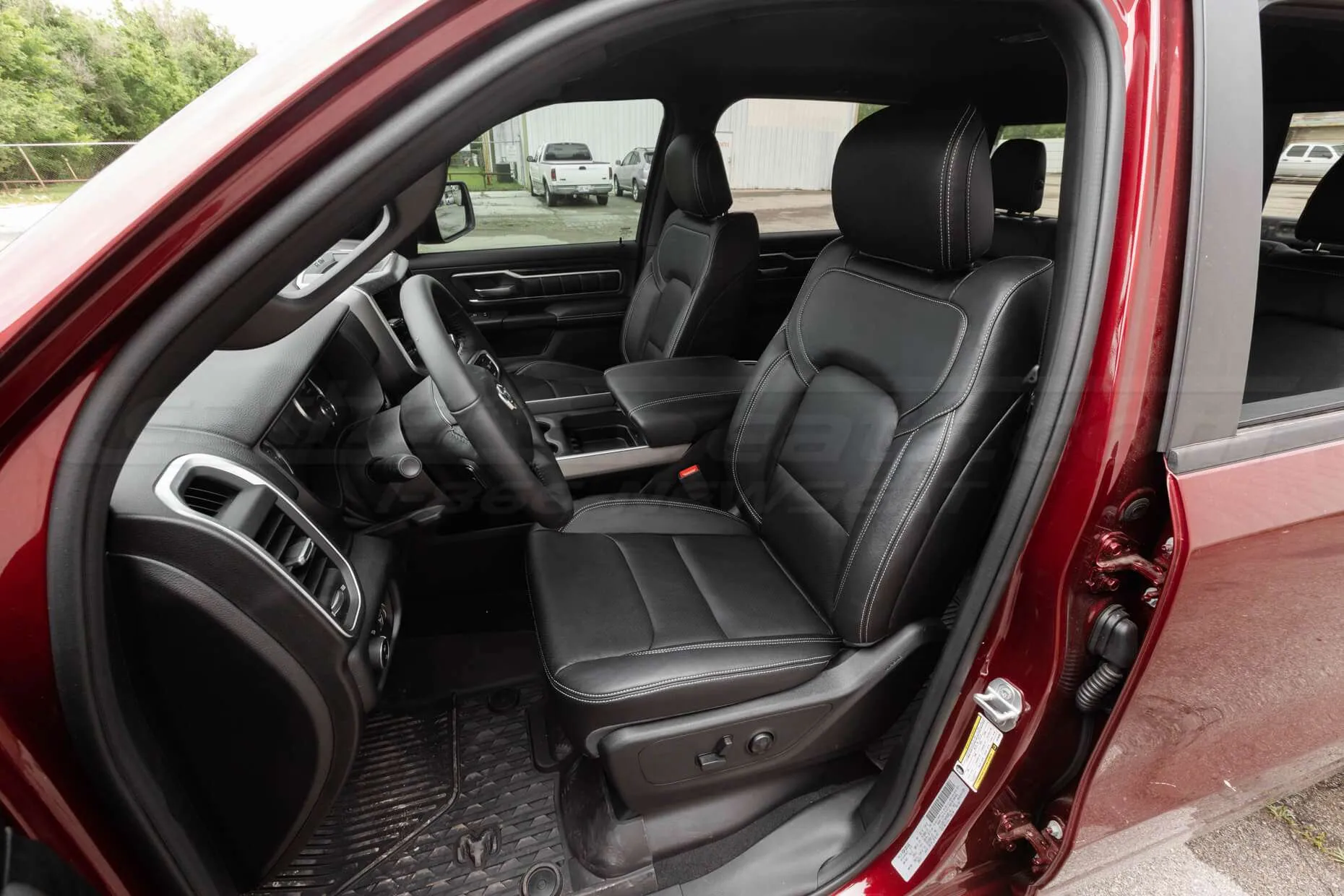
Material Specifications and Durability Standards for Reliable Truck Interiors
The durability of a truck interior is dictated by the technical specifications of its upholstery and padding. In the Ram 1500, the demands on these materials are extreme, ranging from temperature fluctuations to high-friction ingress and egress. A quality replacement must utilize automotive-grade materials designed for a 10-to-15-year lifecycle.
Upholstery: Leather vs. Vinyl
Professional replacements for higher trims like the Laramie or Limited typically feature 100% top-grain leather. For maximum wear resistance, look for leather thickness ranging from 1.0mm to 1.4mm. This thickness ensures that the material can withstand the constant stretching and compression of daily use without developing “spider-web” cracks or surface peeling. In contrast, the Tradesman model relies on heavy-duty 30oz vinyl. This synthetic leather is engineered for chemical and moisture resistance, making it the reliable choice for work-truck configurations where spills and dirt are frequent.
Durability Metrics
Foam Density (kg/m3)
Double Rub Cycles
Leather Thickness
Ergonomic Support and Foam Density
The primary cause of discomfort in older Ram trucks is foam degradation. Premium replacement foam usually features a density of 50-60 kg/m3. This high-density polyurethane is critical for preventing ‘bottoming out’—a condition where the occupant’s weight compresses the foam entirely, leading to direct contact with the steel frame. High-density foam maintains its ergonomic shape retention over 100,000+ miles. When evaluating a trusted replacement, the “Double Rub count” (Martindale test) should also be considered. For a heavy-use truck, a fabric or vinyl should withstand at least 100,000 cycles to be considered complete and reliable.

Compatibility Standards Across Ram 1500 DS and DT Generations
Navigating the technical landscape of Dodge Ram generations is perhaps the most difficult aspect of seat replacement. A comprehensive understanding of the transition from the 4th Generation (DS) to the 5th Generation (DT) is essential to avoid purchasing expensive components that will not fit the vehicle’s floor pan.
Chassis and Cab Dimensions
The 2019 model year redesign (DT) fundamentally changed the interior architecture. Notably, the redesign increased rear legroom by nearly 4 inches in Crew Cab models. This change altered the rear bench seat dimensions and mounting points, making them incompatible with 4th Gen (DS) trucks. Furthermore, floor pan geometry differs significantly between Regular Cab, Quad Cab, and Crew Cab models. A seat track designed for a Quad Cab may have different rear mounting feet than one designed for a Crew Cab, even within the same generation.
Power Adjustment and Harness Verification
Harness compatibility is a common pitfall. Ram 1500 trucks can be equipped with 4-way manual, 8-way power, or 12-way power seats with memory settings. If you are retrofitting 5th Gen seats into a 4th Gen ‘Classic’ model, you will face significant wiring hurdles. The pins in the main yellow SRS/Power harness do not align between generations, and the logic for the memory seat module is handled differently by the truck’s Body Control Module (BCM). Always verify your harness pin-out before attempting an installation.
When upgrading from manual to power seats, look for the ‘unused’ harness tucked under the carpet. Many Ram 1500 Tradesman models are pre-wired for 8-way power, allowing for a professional “plug-and-play” upgrade without running new power lines to the fuse box.
Safety Integration and Electronic System Connectivity
Modern Ram trucks use a complex CAN-bus network for seat diagnostics, making safety integration the most critical step of a reliable seat replacement. The seat is no longer just a place to sit; it is a hub for the Supplemental Restraint System (SRS).
Occupant Classification System (OCS)
The passenger seat contains an Occupant Classification System (OCS) sensor, which determines the weight of the passenger to decide whether to deploy the airbag and at what force. If you install a new foam cushion or a completely different seat, this sensor must be recalibrated. Failure to do so can lead to an SRS warning light or, more dangerously, an airbag that fails to deploy in an accident. A professional scan tool (like the WiTECH system used by dealers) is often required to perform a “zero-point calibration” after the installation is complete.
Never disconnect seat harnesses without first disconnecting the vehicle battery and waiting at least 10 minutes. This allows the SRS capacitors to discharge, preventing accidental Side Impact Airbag (SABIC) deployment.
Climate Control and Side Airbags
Integration requirements for Side Impact Airbags (SABIC) contained within the seat bolster structure are paramount. Ensure your replacement seats are “airbag compatible” if you are using aftermarket covers. Furthermore, for trucks equipped with heated and ventilated seats, the circuitry must maintain factory functionality through the Uconnect interface. Using a non-compatible replacement seat will trigger Diagnostic Trouble Codes (DTCs), often disabling the entire climate control system’s ability to communicate with the seat modules.
Professional Installation Procedures and Hardware Requirements
A trusted installation is only as good as the hardware used to secure it. The vibrations inherent in truck operations—especially in diesel variants or those used off-road—can loosen standard bolts over time, leading to structural fatigue.
📋
Step-by-Step Installation Protocol
Use a T45 or T50 Torx bit (depending on year) to remove the four floor bolts. Inspect for floor pan rust or stress cracks around the mounting holes.
Connect the main yellow harness. Ensure the locking tab clicks into place. Route the wiring to avoid the seat tracks to prevent “pinching” during adjustment.
Apply blue thread-locking compound to Grade 8 high-tensile bolts. Torque to 35-45 lb-ft as per factory professional specs to ensure structural anchoring.
Post-Installation Testing
Once the installation is physically complete, run through a full diagnostic protocol. Test every direction of the power tracks (forward, back, up, down, tilt, recline, and lumbar). Check the dashboard for any SRS or “Airbag Off” lights. If the truck features memory seats, cycle through the presets to ensure the module has retained its positioning data. A comprehensive test drive is also recommended to ensure no “squeaks or rattles” originate from the seat tracks, which usually indicates uneven torque on the mounting bolts.
Conclusion
Upgrading or replacing the seats in a Dodge Ram 1500 is a significant investment in the vehicle’s longevity and your own physical well-being. By prioritizing OEM-spec materials like high-density foam and automotive-grade leather, you ensure the interior remains reliable for another 100,000 miles. Always maintain strict adherence to compatibility standards between DS and DT generations to avoid mounting errors, and never compromise on safety by neglecting the professional integration of OCS sensors and airbag systems. For the best results, consult with a trusted interior specialist to source the specific components required for your exact Ram 1500 model year and cab configuration.
Selection Guide
Verify FMVSS 207 compliance and opt for 1.2mm leather or 30oz vinyl for maximum quality.
Expert Tip
Always use a torque wrench to reach 40 lb-ft on seat bolts to prevent long-term vibration damage.
Frequently Asked Questions
Can I install 5th Generation Ram seats into a 4th Generation model?
While physically possible, it is not a direct bolt-in procedure. The floor pan bolt patterns and electrical connectors differ significantly between the DS and DT generations. A professional installation requires custom-fabricated brackets and harness adapters to ensure the power functions and safety sensors operate correctly within the older vehicle’s electrical architecture.
How do I know if I need a full replacement seat or just new foam?
If the seat frame is structurally sound and the adjustment tracks operate smoothly, a high-quality foam and cover kit is often sufficient. However, if there is lateral movement in the seat, broken welds on the frame, or failed electronic motors, a full replacement is required to maintain professional safety and comfort standards.
Will aftermarket replacement seats affect my truck’s airbag system?
Yes, if not handled correctly. The Ram 1500 utilizes seat-mounted airbags and occupant sensors. You must ensure the replacement seats are either designed to house these components or that your existing sensors are professionally transferred. Failure to do so will trigger an SRS warning light and disable the vehicle’s airbag deployment system.
What are the benefits of choosing leather over vinyl for a replacement?
Leather offers superior breathability and a higher resistance to punctures, making it a professional choice for comfort. However, high-quality automotive vinyl is exceptionally reliable for work trucks due to its moisture resistance and ease of cleaning. The choice should be based on the vehicle’s primary use-case and the desired level of interior refinement.
Are heated and cooled seat features preserved during replacement?
These features can be preserved if you select replacement seats with compatible heating elements and ventilation fans. You must verify that the resistance (ohms) of the new heating pads matches the input requirements of your Ram’s control module to prevent overheating or system errors in the Uconnect interface.
![Ram 2500 Cab Light Bulb Guide: Sizes & LED Upgrades [2026]](https://truckguider.com/wp-content/uploads/2026/03/ram-2500-cab-lights-bulb-featured.webp)