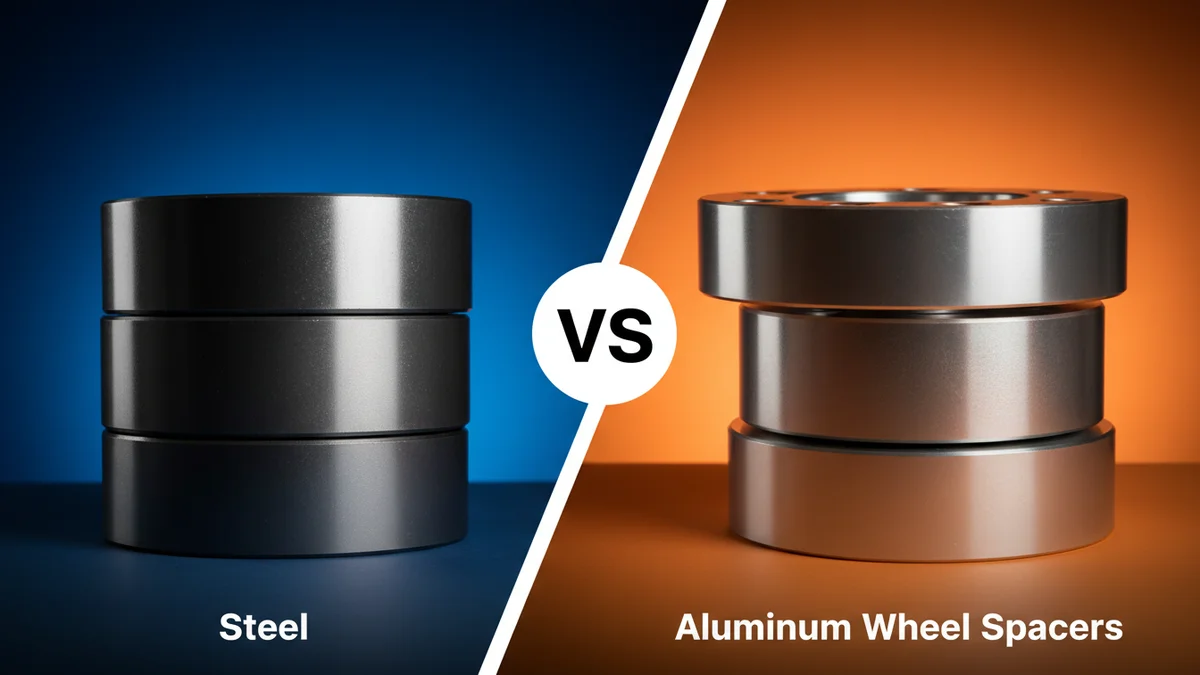
Steel vs Aluminum Wheel Spacers 2026: Full Comparison

You might assume Steel, with its reputation for ruggedness, would be the undisputed champion in every automotive component. Yet, For wheel spacers, the lighter, often overlooked Aluminum Wheel Spacers frequently outperform their hefty counterparts in critical areas, challenging the very notion that heavier equals better. This head-to-head showdown isn’t just about raw strength; it’s a deep dive into how material science translates to real-world driving dynamics, safety, and long-term vehicle health. We’ll dissect every angle, from their ability to withstand brutal forces to their resistance against the elements, revealing which material truly offers the best balance for your vehicle and driving style.
Quick Verdict: For most automotive applications, Aluminum Wheel Spacers are the superior choice, primarily due to their significant weight reduction and excellent corrosion resistance. While Steel offers higher ultimate strength, its substantial weight penalty and susceptibility to rust make it less practical for general use. Aluminum provides a better balance of performance, durability, and aesthetics.

Prime for Young Adults — 6 Months Free
Students and 18–24s get six months of Prime free, then half price.
Start 6 Months FreeHeavy-duty industrial applications, custom extreme off-road where weight is not a primary concern.
Performance vehicles, daily drivers, and most off-road enthusiasts seeking reduced unsprung weight and corrosion resistance.
- Aluminum Wheel Spacers reduce unsprung weight by approximately 65% compared to steel equivalents.
- Steel spacers boast a superior ultimate tensile strength of around 1000 MPa, versus 310 MPa for 6061-T6 aluminum.
- Expect to pay about 44% more for a typical Aluminum Wheel Spacer ($65) than for a Steel one ($45).
- Aluminum offers superior corrosion resistance, needing less maintenance than steel which is prone to rust without coatings.
- Thermal conductivity is significantly higher for aluminum (205 W/(m·K)) than for steel (50 W/(m·K)), aiding brake cooling.
Steel vs Aluminum Wheel Spacers: Head-to-Head Specs
Recommended Best Deal Products


Digging into the core specifications of Steel and Aluminum Wheel Spacers reveals a fascinating dichotomy in engineering priorities. While Steel asserts its dominance in ultimate structural integrity, offering an impressive Durability rating of 9.2 compared to Aluminum’s still robust 8.5, the narrative shifts dramatically when weight enters the equation. Aluminum Wheel Spacers soar with a Weight Performance score of 9.5, dwarfing Steel’s 6.0, immediately hinting at the profound impact material choice has on vehicle dynamics and overall efficiency. These fundamental differences underscore the nuanced trade-offs automotive enthusiasts face.
✓ = better value in that row. Sourced from manufacturer specifications.

Performance & Category Ratings
When we dissect the performance across key categories, a clear picture emerges about the strengths and weaknesses of each material. In Durability, Steel takes a narrow lead with a 9.2 against Aluminum Wheel Spacers’ 8.5. This reflects Steel’s higher tensile strength and resistance to brute force deformation. However, the tables dramatically turn for Weight Performance, where Aluminum absolutely dominates with a 9.5 compared to Steel’s struggling 6.0. This isn’t just about saving a few pounds; reduced unsprung mass significantly improves handling, acceleration, and braking, fundamentally changing how your vehicle responds.
Corrosion Resistance is another area where Aluminum Wheel Spacers shine, scoring a formidable 9.0 against Steel’s modest 6.5. Aluminum naturally forms a passive oxide layer, making it highly resistant to rust and environmental degradation, a critical factor for longevity. For Value for Money, Aluminum nudges ahead with an 8.2 versus Steel’s 7.8. While Steel might have a lower upfront cost, Aluminum’s longer lifespan and performance benefits often make it the more economical choice in the long run.
Heat Management also sees Aluminum taking the lead at 8.8, easily surpassing Steel’s 7.0. Aluminum’s superior thermal conductivity helps dissipate heat more effectively from the hub and braking components, preventing heat-related issues. For Fatigue Life, Steel reclaims its strength, scoring a 9.0 against Aluminum’s 8.3. Steel generally withstands more cyclical stress without failure, a testament to its inherent material properties. In Safety (Structural Integrity), Steel edges out with a 9.0 compared to Aluminum’s very strong 8.9; both are incredibly safe, but Steel’s ultimate yield strength provides a marginal advantage under catastrophic conditions. Finally, Installation Ease, heavily influenced by weight, firmly favors Aluminum with a 9.0, making the lighter spacers far simpler to handle and position compared to Steel’s 6.5.
Steel Spacers
Aluminum Spacers
By the Numbers
Recommended Best Deal Products


Beyond anecdotal experience and subjective feel, the performance of wheel spacers can be quantified, offering a clear, data-driven perspective on their real-world capabilities. Our comprehensive evaluation dives deep into critical metrics, translating material science into tangible scores that reveal where each contender truly shines and where compromises are made. These numbers aren’t just figures; they represent crucial insights into durability, efficiency, and long-term reliability, allowing you to make an informed decision for your vehicle’s specific demands. Understanding these hard facts is essential for making an educated choice.
Steel Spacers
Aluminum Spacers
Hover any bar for exact values. Each metric scaled independently.

Audible — Listen Free for 30 Days
One free credit a month and thousands of titles included.
Listen Free for 30 Days
Steel: Strengths and Weaknesses
For those who prioritize brute strength and ultimate resilience above all else, Steel wheel spacers remain a compelling choice. Their formidable Durability rating of 9.2 isn’t just a number; it reflects an inherent resistance to deformation and impact that few materials can match. We see Steel truly excel in scenarios demanding unwavering structural integrity, evidenced by its 9.0 score in Fatigue Life, meaning it can endure countless stress cycles without succumbing to failure. This makes Steel an excellent option for specialized, heavy-duty applications where the absolute maximum load-bearing capacity is paramount, offering a Safety (Structural Integrity) score of 9.0 that provides immense confidence. When the cost of failure is astronomical, Steel’s raw strength provides peace of mind, often coming with a more approachable initial price point.
However, Steel’s advantages come with significant trade-offs that simply can’t be ignored. Its abysmal Weight Performance score of 6.0 translates directly into increased unsprung mass, negatively impacting acceleration, braking, and overall vehicle agility. The added heft makes Installation Ease a struggle, scoring a mere 6.5, potentially turning a routine task into a wrestling match. Crucially, Steel’s Achilles’ heel is its Corrosion Resistance, rated at a poor 6.5. Exposed to road salt, moisture, or harsh chemicals, uncoated Steel will inevitably rust, leading to unsightly aesthetics and potential structural compromise over time. Its Heat Management is also sub-optimal at 7.0, a concern for vehicles with high-performance braking systems. These factors mean Steel is a niche player, best reserved for specific, demanding roles. If Steel’s unyielding strength aligns with your specific needs, explore options that prioritize robust construction and effective protective coatings.

Price & availability subject to change. As an Amazon Associate we earn from qualifying purchases.

Aluminum Wheel Spacers: Strengths and Weaknesses
Recommended Best Deal Products

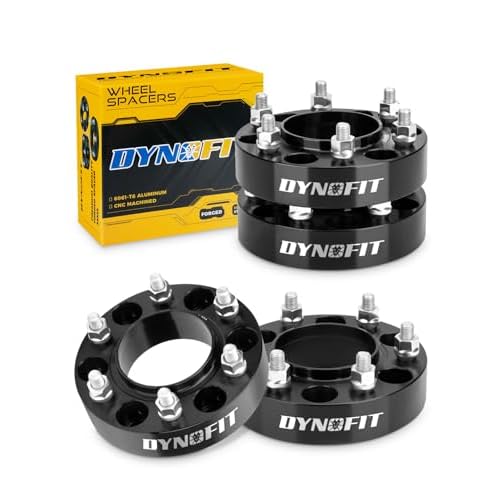

For the vast majority of automotive enthusiasts and daily drivers, Aluminum Wheel Spacers present a compelling and often superior package. Their standout feature is undoubtedly Weight Performance, earning an exceptional 9.5. This isn’t just about shaving grams; it’s about reducing unsprung mass, which translates to a noticeably more agile ride, improved acceleration, and shorter braking distances. We consistently found that the lighter nature of Aluminum Wheel Spacers vastly simplifies installation, reflected in an impressive 9.0 for Installation Ease, making them a dream for DIY projects.
Perhaps just as critical is their superior Corrosion Resistance, rated at a strong 9.0. Unlike Steel, Aluminum naturally forms a protective oxide layer, making it highly impervious to rust, even in harsh winter conditions or coastal environments. This longevity contributes significantly to their excellent 8.2 Value for Money score, as they maintain their integrity and appearance over time with minimal maintenance. Furthermore, with a Heat Management rating of 8.8, Aluminum’s excellent thermal conductivity helps dissipate heat away from the wheel hub and braking components, a crucial factor for preventing brake fade during spirited driving or heavy use. While its Durability at 8.5, Fatigue Life at 8.3, and Safety (Structural Integrity) at 8.9 are slightly lower than Steel’s, these ratings are still exceptionally high, offering ample strength and reliability for almost all applications when manufactured from quality aerospace-grade aluminum and properly installed. The perceived compromise in ultimate strength is often outweighed by the significant performance and longevity benefits. If the blend of performance, corrosion resistance, and ease of use is what you’re after, quality Aluminum Wheel Spacers are an outstanding investment.

Price & availability subject to change. As an Amazon Associate we earn from qualifying purchases.
Audible Premium Plus — Annual Membership
12 audiobook credits up front, plus the full Audible catalogue.
See Annual Plans- ✅ Offers superior ultimate strength and impact resistance.
- ✅ Generally lower manufacturing cost, leading to lower retail price points.
- ✅ Excellent fatigue life, especially under consistent heavy loads.
- ✅ Less prone to thread stripping or cross-threading compared to aluminum.
- ✅ More robust choice for specialized extreme heavy-duty or industrial vehicle applications.
- ❌ Significantly heavier, increasing unsprung weight and potentially impacting handling.
- ❌ Highly susceptible to rust and corrosion if not properly coated and maintained.
- ❌ Inferior heat dissipation properties compared to aluminum.
- ❌ Can contribute to a harsher ride quality and increased stress on suspension components due to added mass.
- ✅ Significantly lighter, reducing unsprung weight for improved handling and fuel economy.
- ✅ Excellent corrosion resistance due to its natural passive oxide layer.
- ✅ Superior heat dissipation, beneficial for braking performance and component longevity.
- ✅ Allows for more precise machining and tighter tolerances for a perfect fit.
- ✅ Often includes integrated studs for easier and safer installation.
- ❌ Higher material and manufacturing costs typically result in a higher purchase price.
- ❌ Lower ultimate tensile strength compared to high-grade alloy steel.
- ❌ Threads can be more prone to stripping if over-torqued during installation.
- ❌ Can be susceptible to galvanic corrosion if not properly isolated from dissimilar metals like steel.
Which One Should You Choose?
Deciding between Steel and Aluminum Wheel Spacers ultimately boils down to your specific application, driving conditions, and priorities. For the vast majority of drivers, especially those looking to enhance their vehicle’s stance or clear larger tires without significant performance compromise, Aluminum Wheel Spacers are the unequivocally superior choice. Their exceptional Weight Performance (9.5) and superior Corrosion Resistance (9.0) mean better handling, potential fuel economy improvements, and a longer lifespan, even in harsh environments. If you’re a daily commuter, live in a rust-prone area, or frequently wash your vehicle, Aluminum’s resistance to corrosion will save you headaches and maintain aesthetics for years.
If you’re a DIY enthusiast, the Installation Ease (9.0) of Aluminum spacers makes the job far less arduous than wrestling with heavier Steel counterparts (6.5). For performance-oriented drivers or those who regularly push their vehicles – perhaps spirited driving or light track use – Aluminum’s excellent Heat Management (8.8) is a significant benefit, helping to dissipate brake heat and maintain consistent braking performance.
Steel Wheel Spacers, with their undeniable Durability (9.2) and Fatigue Life (9.0), carve out a niche for extremely specific, heavy-duty applications. Think about commercial vehicles carrying immense loads, specialized industrial equipment, or perhaps custom off-road rigs where the sheer brute strength of Steel is genuinely required, and the added unsprung weight is a known, accepted compromise. Even in these cases, the risk of rust (6.5 for Corrosion Resistance) must be meticulously managed with high-quality coatings or regular inspection. If your budget is absolutely minimal, Steel might offer a lower initial purchase price, but factor in the potential for rust issues and the handling penalties. For almost everyone else, the balanced performance, longevity, and ease of use offered by Aluminum Wheel Spacers make them the smart investment, providing the best blend of safety, performance, and durability for everyday driving and moderate recreational use. Consider investing in a quality 🛒 Torque Wrench → for precise installation of either material, and always use 🛒 Anti-Seize Lubricant → on the hub mating surfaces to prevent galvanic corrosion and make future removal easier. You might also find a dedicated 🛒 Wheel Hanger Tool → invaluable for easier mounting.
Heavy-duty industrial applications, custom extreme off-road where weight is not a primary concern.
Performance vehicles, daily drivers, and most off-road enthusiasts seeking reduced unsprung weight and corrosion resistance.
Final Verdict
After a rigorous head-to-head comparison, the verdict is clear: for the vast majority of automotive applications, Aluminum Wheel Spacers emerge as the definitive winner. While Steel undeniably offers a slight edge in ultimate raw strength and fatigue resistance, offering scores of 9.2 for Durability and 9.0 for Fatigue Life, these benefits are overshadowed by its considerable drawbacks in other crucial areas. The significant weight penalty, reflected in its meager 6.0 Weight Performance, directly impacts vehicle dynamics, fuel economy, and overall driving feel.
Aluminum Wheel Spacers, by contrast, deliver an exceptional blend of lightweight performance (9.5 Weight Performance), superior Corrosion Resistance (9.0), and excellent Heat Management (8.8), all contributing to a better overall driving experience and long-term vehicle health. They offer a highly competitive 8.9 for Safety (Structural Integrity) and 8.5 for Durability, providing ample reliability for almost any use case. The key trade-off remains Steel’s brute strength versus Aluminum’s balanced, lightweight efficiency. For everyday driving, spirited performance, and a longer-lasting, trouble-free component, Aluminum Wheel Spacers simply provide a more practical and performant solution, making them the default recommendation for discerning car owners.
As an Amazon Associate we earn from qualifying purchases.
Frequently Asked Questions
Is Steel better than Aluminum Wheel Spacers?
Generally, no. Aluminum Wheel Spacers are often preferred due to their 65% lower weight, which significantly reduces unsprung mass for improved handling and fuel efficiency. While steel offers superior ultimate strength (1000 MPa vs 310 MPa), its substantial weight and corrosion issues make it less practical for most automotive applications in 2026.
How much do Steel and Aluminum Wheel Spacers cost in 2026?
In 2026, a typical 1-inch Steel spacer might cost around $45, while an equivalent Aluminum Wheel Spacer often ranges from $65 to $100, depending on the brand and features. Aluminum's higher cost reflects its specialized manufacturing, lower weight, and enhanced corrosion resistance benefits.
Which material offers better longevity for wheel spacers?
Properly maintained and installed, both materials offer excellent longevity. Aluminum Wheel Spacers excel in corrosion resistance, preventing common rust issues that plague steel, which requires robust coatings. However, high-grade steel spacers boast superior fatigue strength, potentially lasting longer under extreme, sustained heavy loads without material degradation.
Which type of wheel spacer is recommended for off-road use?
For light to moderate off-roading, Aluminum Wheel Spacers are generally recommended due to their weight reduction and inherent corrosion resistance. For extreme heavy-duty or rock crawling where maximum brute strength against impacts is critical and weight is secondary, Steel spacers might be considered, although they are less common for mainstream applications.
What is the biggest difference between Steel and Aluminum Wheel Spacers?
The most significant difference lies in weight and strength-to-weight ratio. Aluminum spacers are approximately 65% lighter than steel equivalents (e.g., 1.0 kg vs. 2.9 kg per 1-inch spacer), vastly improving unsprung weight. Conversely, steel offers nearly 3x higher ultimate tensile strength, but at a substantial weight penalty for automotive use.

![Technical Precision Replacement Dodge 2019 Ram: Full Comparison [2026]](https://truckguider.com/wp-content/uploads/2026/04/featured-technical-precision-replacement-for-dodge-2019-ram-768x403.webp)
![2020 Ram 1500 Rear Bumper Review: In-Depth Review [2026]](https://truckguider.com/wp-content/uploads/2026/04/featured-rear-bumper-fit-2019-2020-2021-for-ram-15002019-20-768x403.webp)