Toyota Tacoma Power Steering Diagram: 2026 Component Breakdown

The Toyota Tacoma power steering system utilizes a belt-driven pump pressurized to approximately 1,200 PSI. The circuit includes a high-pressure line from the pump to the rack-and-pinion, a low-pressure return line connected to the reservoir, and integrated sensors that interface with the engine ECU to adjust idle speeds during steering load.
📌 Key Takeaways
- The steering pump operates at a peak pressure range of 1,150–1,250 PSI under load.
- Ensure the high-pressure hose union utilizes new copper crush washers to prevent leaks.
- Torque the steering rack mounting bolts to 140 ft-lbs; never reuse old cotter pins on tie rods.
- Air trapped in the system often presents as a whining compressor-like noise or erratic rack movement.
- Seek professional diagnostic assistance if the steering rack requires internal seal replacement or valve body adjustment.
Understanding the hydraulic architecture of your vehicle is critical for long-term reliability, particularly when diagnosing steering input feedback or fluid loss. The Toyota Tacoma power steering diagram serves as the definitive roadmap for navigating the high-pressure lines, steering rack assembly, and pump internal bypass circuits. Whether you are maintaining a first-generation work truck or a late-model off-road build, identifying the intersection between mechanical linkage and hydraulic assist is vital. While the steering system is separate from your HVAC assembly—specifically the compressor, condenser, and evaporator loop—understanding system routing prevents accidental damage during routine maintenance of your air handler or blower motor housing.

Prime for Young Adults — 6 Months Free
Students and 18–24s get six months of Prime free, then half price.
Start 6 Months Free[DIAGRAM_PLACEHOLDER: Toyota Tacoma Hydraulic Power Steering Circuit Schematic]
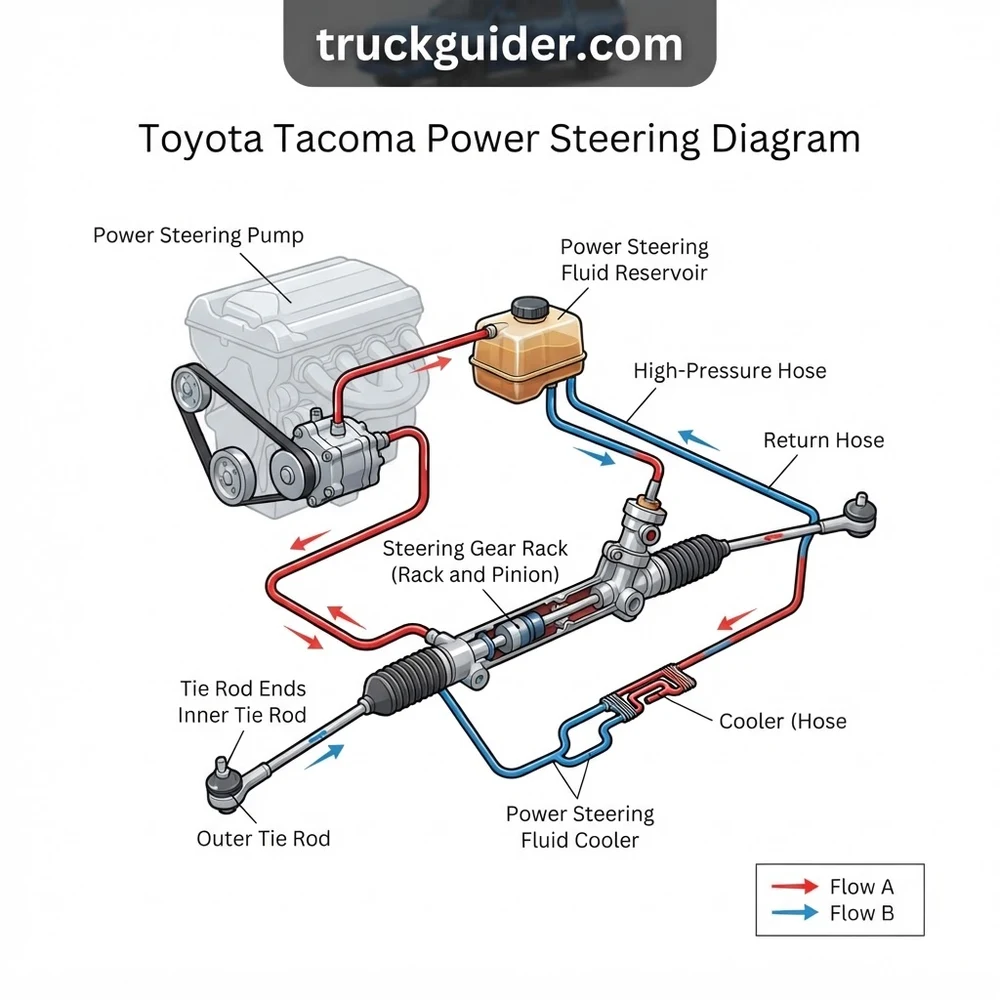
Toyota Tacoma Power Steering Diagram: Key Components Explained
Recommended Best Deal Products



Navigating the Toyota Tacoma power steering diagram requires a granular understanding of the hydraulic loop’s primary load-bearing components. The system operates via a belt-driven vane pump that pressurizes ATF (Automatic Transmission Fluid) to assist rack-and-pinion movement. Misidentifying a high-pressure hose for a return line can lead to premature failure of seals or excessive cavitation within the pump.
| Component | Function | Maintenance Priority |
|---|---|---|
| Power Steering Pump | Generates system pressure | High (check for whining) |
| Steering Rack | Translates force to wheels | Medium (monitor for leaks) |
| High-Pressure Hose | Delivers pressurized fluid | Critical (burst potential) |
| Return Hose | Circulates fluid back to reservoir | Low (check for cracking) |
The steering rack is the core actuator, containing rotary valves that direct fluid to the appropriate side of the piston. When the steering wheel rotates, the valve opens, allowing the pump to force fluid into the cylinder, effectively lightening the steering effort. Pay close attention to the return hose; unlike the high-pressure line, this component serves as a heat exchanger for the fluid. If the return line is pinched or partially obstructed, the fluid temperature will spike, leading to accelerated degradation of the internal rack seals and the pump’s internal vanes.
On models equipped with a secondary steering cooler, ensure the flow path matches the orientation shown in the factory Toyota Tacoma power steering diagram to avoid reverse-flow cavitation, which can destroy the pump in under 500 miles.
Troubleshooting Common Toyota Tacoma Power Steering Diagram Issues
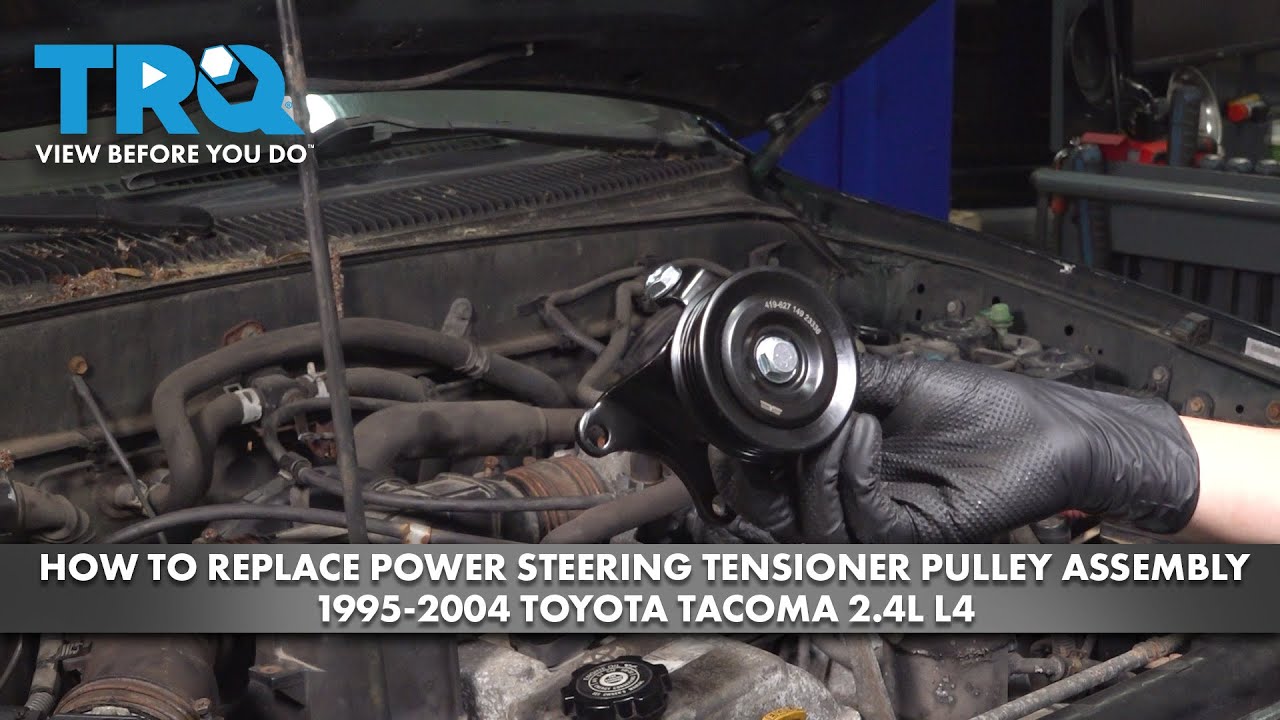
Degradation in steering performance is rarely instantaneous. By cross-referencing your symptoms with the Toyota Tacoma power steering diagram, you can distinguish between a mechanical binding issue and a hydraulic pressure drop.
Pump Whine: Typically indicates aeration in the fluid, often caused by an O-ring leak at the pump inlet fitting or a low fluid level in the reservoir.
Heavy Steering at Idle: Suggests the pump is failing to maintain the required PSI at lower RPMs or the pressure relief valve is stuck.
Erratic Assistance: Usually points to a blockage within the return circuit or a failed rotary valve inside the steering rack assembly.
Fluid Leaks at Boots: Indicates an internal failure of the rack seals. If fluid is found inside the tie-rod bellows, the rack must be rebuilt or replaced entirely.
While focusing on the steering, do not confuse these symptoms with HVAC malfunctions. For example, if you notice a burning smell, ensure it is not related to the compressor clutch or the belt tensioner before assuming a power steering leak. The blower motor is located deep within the dash, and the refrigerant circuit—containing the condenser and evaporator—is a closed system entirely separate from your hydraulic steering loop.
Never top off your power steering reservoir with refrigerant or compressor oil. Contamination will instantly swell rubber internal seals and cause catastrophic rack-and-pinion failure.
How to Service the Toyota Tacoma Power Steering Diagram Layout
Recommended Best Deal Products


Servicing the hydraulic system requires precision. When replacing the pump or hoses, adhere strictly to the following sequence to prevent air entrapment, which is the primary cause of post-service component failure.

Audible — Listen Free for 30 Days
One free credit a month and thousands of titles included.
Listen Free for 30 Days1. Preparation and Drainage: Lift the front end of the vehicle using jack stands. Locate the return hose at the bottom of the reservoir. Place a catch pan beneath the vehicle and disconnect the hose, draining the entire system.
2. Component Removal: If replacing the pump, remove the serpentine belt. Note that the belt also drives the AC compressor; ensure you keep the belt clean of any hydraulic fluid, as oil will degrade the rubber compound rapidly.
3. Flush the Lines: Before installing the new pump or rack, use low-pressure compressed air or a flushing solvent to clear debris from the lines. Blockages in the high-pressure line are common in vehicles that have experienced long-term fluid breakdown.
4. Installation: Apply a thin coat of clean power steering fluid to all O-rings and flare nuts. Tighten all high-pressure fittings to the manufacturer’s specification of 33 ft-lbs (verify for your specific model year).
5. System Bleeding: This is the most critical step. Fill the reservoir to the “Cold” line. With the engine off, rotate the steering wheel from lock to lock approximately 20 times. This forces the fluid through the rack and purges trapped air.
6. Final Verification: Start the engine and briefly monitor for leaks. If the fluid turns “foamy” or “milky,” air is still present. Continue the lock-to-lock procedure while the engine is idling at 1,000 RPM.
Use only DEXRON-II or III ATF as specified by Toyota. Using generic “power steering fluid” often results in lower viscosity, causing premature wear in the pump vanes and inconsistent steering weight in high-heat conditions.
After service, it is highly recommended to perform a professional four-wheel alignment. Replacing a steering rack or even tie-rod ends will shift the geometry of the front suspension, affecting toe-in and camber, which significantly alters tire wear patterns and handling stability on the highway.
Toyota Tacoma Power Steering Diagram Questions Answered
Is the power steering system connected to the vehicle’s HVAC evaporator or compressor?
No, the two systems are entirely independent. The Toyota Tacoma power steering diagram illustrates a hydraulic loop for steering assistance, while the HVAC system is a closed refrigerant loop containing the compressor, condenser, and evaporator. These systems occupy different physical locations in the engine bay and share no fluid or mechanical linkage.
Why does my steering grow louder when I operate the blower motor or adjust the air handler?
This is typically a coincidental electrical load issue. When the blower motor draws high current, the alternator increases its load on the engine, slightly altering the RPM. If your power steering pump has internal wear, this slight fluctuation in engine speed can change the pitch of the pump’s whine, making it more audible during HVAC adjustments.
Can I use the return duct or cooling lines from the HVAC system for my power steering?
Absolutely not. The return ducting in an HVAC system is designed for low-pressure air, whereas the return hose in your power steering circuit must withstand surge pressures and thermal cycling of ATF. Always use OEM-grade high-pressure hydraulic hoses specified for your Toyota Tacoma.
How often should I consult the Toyota Tacoma power steering diagram for preventative maintenance?
You should inspect the hydraulic lines for seepage every 30,000 miles. By visually comparing your current setup to the diagram, you can identify if a hose is beginning to bulge or if a heat exchanger (if equipped) is suffering from external corrosion, allowing you to perform proactive maintenance before a total system failure occurs.
Step-by-Step Guide to Understanding the Toyota Tacoma Power Steering Diagram
Recommended Best Deal Products


Identify – Locate the pump reservoir and high-pressure line fitting using the diagram reference.
Audible Premium Plus — Annual Membership
12 audiobook credits up front, plus the full Audible catalogue.
See Annual PlansLocate – Verify clearance between the power steering hoses, the evaporator lines, and the blower motor assembly.
Reference – Use the diagram to cross-reference bolt hole positions on the pump bracket.
Connect/Route – Route the return line back to the reservoir, ensuring no kinks occur near the condenser.
Verify – Fill fluid and cycle the wheel lock-to-lock with the engine off to bleed air, checking for leaks.
Troubleshoot – If whining persists, check the compressor belt tension and ensure no debris is touching the lines.