What Year Tacoma Parts Are Interchangeable? 1995 to 2026

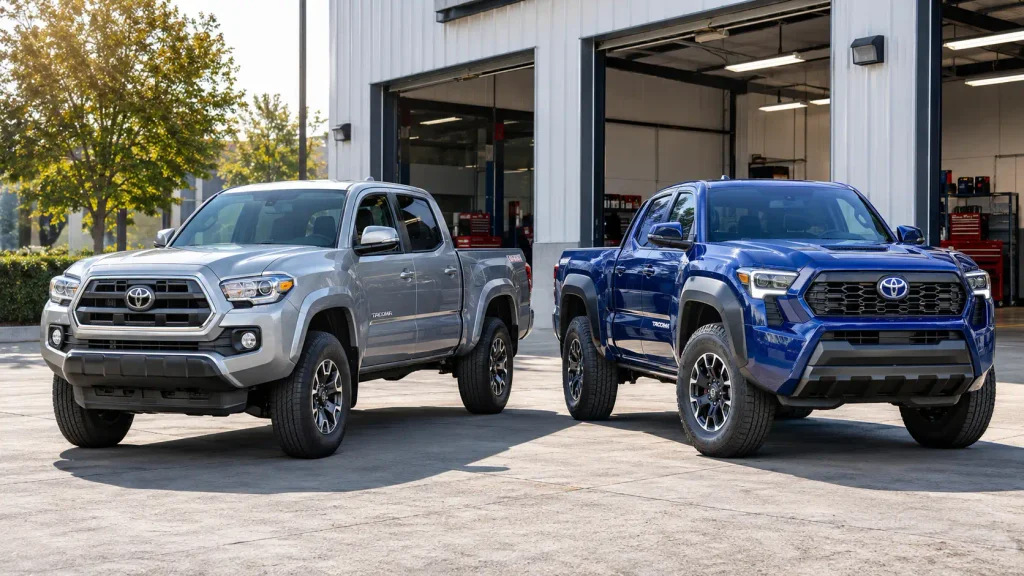
Toyota Tacoma parts are most likely to interchange within the same generation: 1995–2004, 2005–2015, 2016–2023, or 2024–2026. Those ranges identify promising donor trucks, not a guarantee that every component will bolt on or operate correctly.
The answer changes with the part. A hood may be affected by a mid-generation facelift, a transmission by the engine and drivetrain, and a seat by its airbag wiring. Even two Tacomas built in the same year can require different replacement parts.


Use the year-by-year guide below to narrow your search, then verify the exact part application before paying for a used or aftermarket replacement.
Tacoma Parts Interchange Guide
Find the right donor-year starting point, then verify the exact part. A matching generation does not guarantee direct fit.
Step A · Start with your Tacoma generation
Check engine family, body style, drivetrain and individual year changes.
2012 facelift: Front-end panels and lamps need extra scrutiny.
Match 2.7L or 3.5L powertrain, cab, trim and electronics.
New platform; verify turbo/hybrid and coil- or leaf-spring setup.
Step B · Follow the four-check fitment path
-
Match the donor-year range Start with the same generation; treat cross-gen swaps as exceptions.
-
Match the truck configuration Engine, transmission, 2WD/4WD, cab, bed, trim and suspension.
-
Compare exact part applications Check Toyota OEM numbers, documented supersessions or maker listings.
-
Verify hardware and safety Mounts, wiring, sensors, calibration, condition and recall status.
What does your check mean?
Exact OEM or manufacturer fitment covers the recipient truck. Inspect condition and follow installation requirements.
Equipment-specific restrictions or documented changes apply. Confirm the requirements before purchase.
Do not assume direct fit based on appearance or shared generation. Ask Toyota or the part manufacturer.
Before you buy: Use the recipient VIN and complete OEM service part number. The four year bands above are donor-search candidates, not universal interchangeable-parts guarantees.
What Factors Determine Tacoma Parts Compatibility by Year



Model year is only the first compatibility check.
Model Year and Generation


Tacoma generations provide useful starting ranges, but Toyota also made changes within generations. The 2012 second-generation front-end redesign is an important example. If a donor part comes from a different generation or facelift period, require specific manufacturer fitment evidence rather than assuming it fits.
Engine and Drivetrain Configuration
Match engine family, transmission type, 2WD or 4WD, and related transfer-case or axle equipment. A part from a V6 4WD Tacoma may not match a four-cylinder 2WD version from the same model year. Identical engine displacement alone does not prove that complete engine assemblies, sensors, or electronics interchange.


Cab and Bed Dimensions
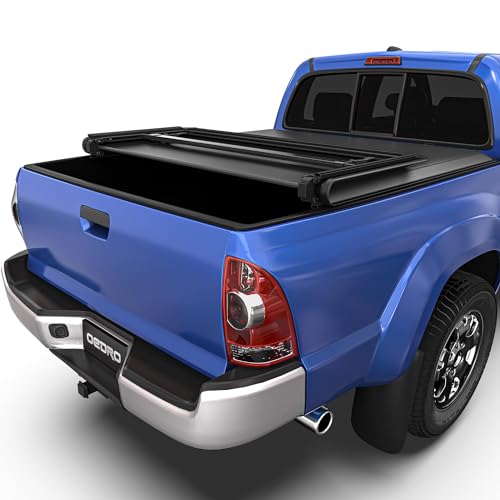
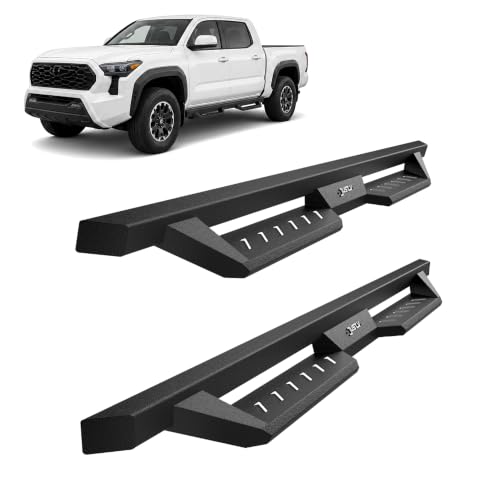
Check Regular Cab, Access Cab, Double Cab, or fourth-generation XtraCab configurations where applicable. Bed length and mounting design matter for tailgates, bed accessories, running boards, interior trim, and some body parts. Never choose a tonneau cover from the model year alone.
Factory Equipment and OEM Numbers


Compare the full Toyota original equipment manufacturer (OEM) service part number, its application notes, and any documented supersession. Check connectors, brackets, sensors, and production-date restrictions. Missing information means unverified fitment.
Which 1995 to 2004 Tacoma Parts Can Interchange


First-generation Tacoma trucks span the 1995 through 2004 model years. This range is a useful starting point when searching for used body, interior, engine, and chassis parts, but it is not a universal interchangeable-parts list.


The trucks used 2.4L and 2.7L four-cylinder engines and a 3.4L V6. Engine mounts, sensors, and transmissions require engine-specific verification.
For body parts, compare cab, styling, mounting points, and 2WD, PreRunner, or 4WD configuration.
If your truck is a 2002 Tacoma, start with first-generation donor vehicles, then compare the exact part number and configuration. Do not buy a 1998 component solely because both trucks belong to the same generation.
Which 2005 to 2015 Tacoma Parts Can Interchange


Second-generation Tacomas cover 2005 through 2015. Their common platform makes these years sensible donor candidates for many replacement-part searches, especially when engine, cab, bed, and drivetrain match.
A major exception is the 2012 front-end update. Toyota’s 2012 Tacoma announcement confirms changes to the hood, grille, headlights, front bumper, and interior controls. That means an earlier hood or headlamp should not be presented as a direct-fit replacement for a 2012–2015 truck without checking the full assembly and mounting requirements.


The second generation offered a 2.7L 2TR-FE four-cylinder and 4.0L 1GR-FE V6. Their engine-specific components and transmissions require separate verification.
For example, if you own a 2013 Tacoma and find a 2010 donor, first identify the part category. The earlier truck may be a reasonable lead for certain mechanical or chassis items, while its front-end styling parts fall across the documented 2012 redesign boundary. Confirm the Toyota service number before purchasing.
Suspension upgrades require separate application checks. TruckGuider’s Toyota Tacoma leveling kit guide covers aftermarket options; follow each kit manufacturer’s year, lug-count, and drivetrain restrictions rather than treating an entire generation as one fitment.
Which 2016 to 2023 Tacoma Parts Can Interchange


The third-generation Tacoma runs from 2016 through 2023. These years form the first donor-search group for third-generation trucks, but trim equipment and powertrain still determine whether a specific part fits.
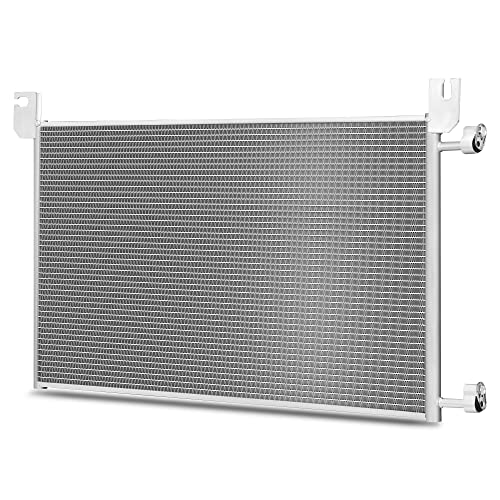
Toyota kept a 2.7L four-cylinder option and introduced a new 3.5L V6 for 2016. That change matters when shopping for engines, intake and exhaust components, ignition parts, transmissions, wiring harnesses, and engine-control modules. A second-generation 4.0L V6 is not a direct replacement for the third-generation 3.5L V6.
For a 2018 V6 and 2022 donor, confirm the actual Toyota application. Transmissions and modules need especially close matching.
Check Toyota Safety Sense equipment, cameras, sensors, and wiring. Similar-looking seats, switches, and lamps can use different connectors.
For wheels, verify bolt pattern, offset, center bore, load rating, and brake clearance.
Which 2024 to 2026 Tacoma Parts Can Interchange
The 2024 Tacoma started the fourth generation, so 2024–2026 trucks belong in a separate donor-search group from 2016–2023 models. Toyota moved the redesigned pickup to its TNGA-F truck platform and introduced a different powertrain lineup.
The fourth generation uses the 2.4L turbocharged i-FORCE engine, with an i-FORCE MAX hybrid option. Its engine, transmission, electrical architecture, body, and many chassis components should not be treated as direct swaps for the previous 3.5L V6 generation. TruckGuider’s 2024–2026 Tacoma 2.4L turbo specifications explain the engine changes in more detail.
Rear suspension is an especially important exception within this generation. Toyota’s official 2024 Tacoma launch information documents available coil-spring multi-link rear suspension while certain grades retain leaf springs. Toyota also introduced four-wheel disc brakes, with brake hardware differing by grade and powertrain.
For example, a 2025 Tacoma rear suspension component cannot be selected for a 2024 truck simply by matching the generation. Determine whether each truck has a leaf-spring or coil-spring setup, then verify the part and grade application.
If your Tacoma is a 2026 model, begin with fourth-generation listings, but verify that the component explicitly covers your 2026 trim and powertrain.
Which Tacoma Part Categories Need Additional Fitment Checks
A Tacoma hood, transmission, seat, and shock absorber do not use the same interchange rules. Begin with the component category before deciding which donor years to investigate.
Body Panels and Front Bumpers
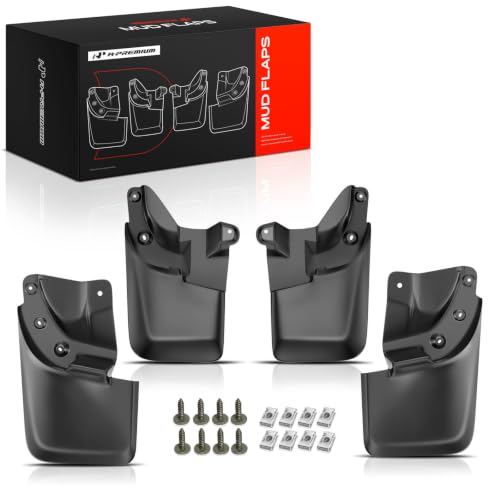
Match panel shape, mounts, and equipment, especially around the 2012, 2016, and 2024 redesigns. Cameras, fog lights, and brackets can change fitment.
Decision: Across redesigns, require exact application proof. A front-end conversion is not a direct panel swap.
Engines and Transmissions
Tacoma V6 engine families changed from 3.4L to 4.0L to 3.5L across the first three generations. The 2024 turbo engine adds another boundary.
Verify engine code, emissions, transmission, wiring, mounts, and controls. A modified conversion is not direct OEM interchange.
Suspension and Steering Components
Shocks, springs, control arms, and axles depend on drivetrain and suspension package. Fourth-generation rear suspension varies by grade.
Decision: Different drivetrain, suspension, or grade requires manufacturer confirmation. Verify safety-critical components professionally.
Wheels and Brake Hardware


Verify wheel bolt pattern, bore, offset, load rating, tire fit, and brake clearance.
Brake parts need even more exact matching. Calipers, rotors, pads, mounting brackets, and parking-brake hardware can differ by model and grade. The fourth-generation shift to rear disc brakes is a clear reason not to assume older rear brake assemblies fit.
Seats and Electrical Modules
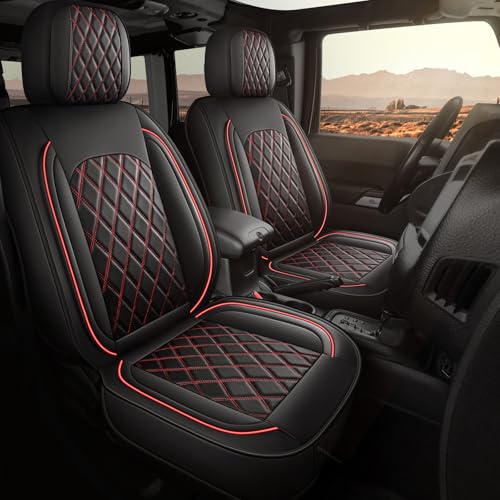
Seat fitment includes tracks, airbag and occupancy sensors, seatbelt hardware, and power wiring.
Modules and cameras may need programming or calibration. Matching connectors alone prove little.
Beds and Exterior Accessories
Check bed length, rail geometry, mounts, cab, and manufacturer exclusions for bed covers, racks, and running boards.
Manufacturer-approved accessories can span generations even when OEM engines or body panels cannot.
Can Second Gen Tacoma Parts Fit Third Gen
Sometimes, but only when the exact part or accessory has documented cross-generation fitment. The 2015-to-2016 changeover separates the second and third Tacoma generations. Most factory replacement-part decisions must be evaluated individually.
A useful documented example is the Prinsu Pro Toyota Tacoma Cab Rack listed for 2005–2023. That manufacturer-listed application spans both the second and third generations. It supports the fitment of that specific rack product in the configurations covered by its installation instructions. It does not establish that OEM roofs, factory roof hardware, hoods, engines, or suspension parts interchange across those years.
Use this decision test for any proposed second-to-third-generation swap:
- Manufacturer lists both generations: Check the exact product variation, cab, installation hardware, and exclusions. If all match, follow its instructions.
- Only one generation is listed: Treat the other as unverified, even if photos suggest similar mounting points.
- Modification is required: Classify it as a custom conversion, not a direct-fit replacement. Review safety and legal implications before starting.
- No reliable fitment evidence exists: Choose a correctly listed replacement instead of gambling on a used part.
A documented custom conversion is not Toyota-approved OEM interchange.
How to Verify Toyota Tacoma Parts Using VIN
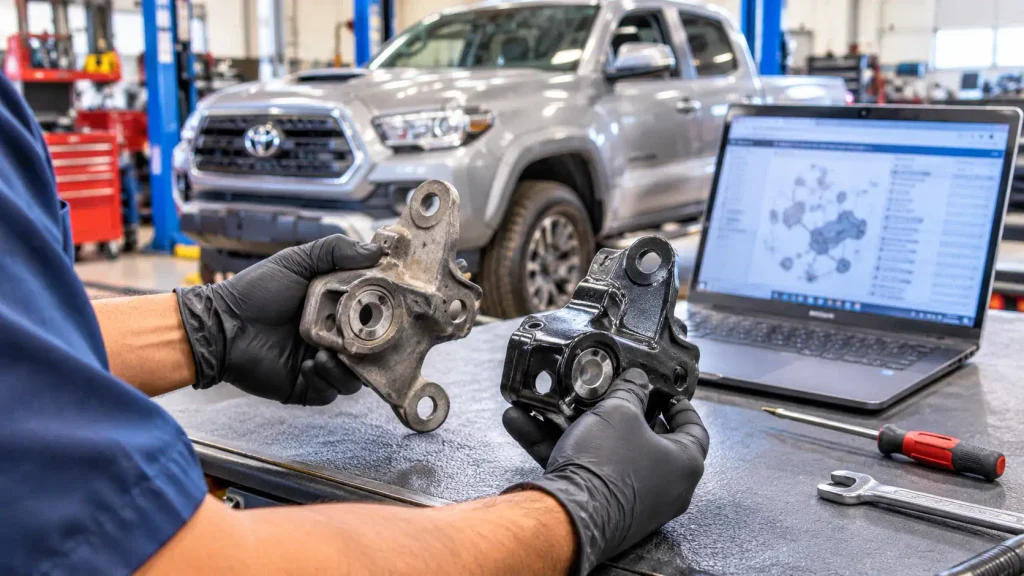
Toyota’s official Tacoma parts catalog offers vehicle selection by year, trim, and driveline, with a VIN-based lookup option. Use it to confirm that a replacement is listed for your actual truck rather than a similar-looking Tacoma.
- Identify the recipient truck. Record the 17-character VIN, model year, engine, transmission, drivetrain, cab, bed, and trim.
- Locate the original service part. Search the Toyota catalog for your vehicle and the component you need. Write down the complete OEM service number, including its suffix and application notes.
- Identify the donor component. Request the donor VIN or full vehicle configuration, the part’s label or service number, and clear photographs of its connectors and mounting surfaces.
- Compare the application listings. Confirm that the same service part, or a formally documented replacement number, covers both vehicles. If Toyota lists a superseded number, check its stated application rather than assuming the new number fits every older truck.
- Check physical and electronic requirements. Compare left/right orientation, brackets, connector pins, sensors, calibration needs, and emissions equipment. For brakes, steering, restraint systems, or high-value electronics, ask a qualified parts specialist to confirm compatibility.
For example, a 2010 headlamp offered for a 2013 Tacoma crosses Toyota’s 2012 redesign. Reject the direct-fit claim without catalog confirmation.
If you find two different Toyota numbers in an online listing, TruckGuider’s OEM part number cross-reference guide explains how to distinguish true replacements from merely related numbers.
When Should You Reject Used Tacoma Replacement Parts
Reject or defer a used part when the seller cannot identify its original application, when its service number conflicts with your vehicle, or when required mounts, wiring, or safety details do not match.
Be especially cautious with airbags, seatbelt pretensioners, steering racks, brake components, fuel-system parts, immobilizers, and programmed control modules. Cosmetic similarity cannot establish safe operation. Parts linked to an open safety recall may require a specified dealer remedy rather than another used component.
Reject collision-damaged mounts, cut wiring, altered connectors, and unknown modifications. Have critical systems checked professionally.
Decision: If the evidence does not establish the correct application, do not label the part interchangeable. A verified replacement is usually a better outcome than a cheap component that cannot be safely installed.
What Year Tacoma Parts Are Interchangeable at a Glance
Use this table as a donor-search starting point, not a guaranteed interchange chart. A part is confirmed only when its documented application matches both vehicles.
| Your Tacoma Model Year | Start With These Donor Years | Major Compatibility Check | Status |
|---|---|---|---|
| 1995–2004 | 1995–2004 | Engine family, cab, styling, drivetrain | Candidate only |
| 2005–2015 | 2005–2015 | 2012 front-end redesign, 2.7L vs 4.0L | Candidate only |
| 2016–2023 | 2016–2023 | 2.7L vs 3.5L, electronics, trim | Candidate only |
| 2024–2026 | 2024–2026 | Turbo or hybrid, rear suspension, brake grade | Candidate only |
| Any cross-generation swap | Only explicitly documented applications | Exact product, installation and exclusions | Verify individually |
Matching a row invites research, not immediate purchase. Documented aftermarket applications can span generations.
For broader donor leads, use TruckGuider’s truck parts interchange database. Its platform suggestions still need the same VIN and OEM-number confirmation described here.
How to Choose the Right Tacoma Donor Year
The safest answer to what year Tacoma parts are interchangeable starts with the truck’s generation and ends with the exact component application. First-generation owners should screen 1995–2004 donors, second-generation owners 2005–2015, third-generation owners 2016–2023, and fourth-generation owners 2024–2026.
Those ranges are not universal fitment promises. The 2012 front-end changes, 2016 powertrain redesign, and 2024 platform change all demonstrate why an apparently suitable donor can still provide the wrong part. Engine, transmission, drivetrain, cab, bed, trim, and electronic equipment further narrow the match.
Before buying, collect both vehicle configurations and compare the full service part number against Toyota’s application information. If that verification fails, keep searching for a correctly specified replacement.
Frequently Asked Questions About Toyota Tacoma Parts
What Years of Toyota Tacoma Have Interchangeable Parts?
The main donor-search groups are 1995–2004, 2005–2015, 2016–2023, and 2024–2026. Some individual parts or aftermarket accessories can cross those boundaries, but no entire generation is universally interchangeable. Confirm the exact part application before buying.
Will 2005 Tacoma Parts Fit a 2015 Tacoma?


Some may, because both trucks belong to the second generation. However, Toyota redesigned major front-end parts for 2012, and engine, drivetrain, cab, and equipment differences can affect many other components. Verify the 2005 donor part against the 2015 recipient using Toyota’s catalog.
Can Second Generation Tacoma Parts Fit Third Generation Trucks?
Certain manufacturer-approved aftermarket accessories can fit both generations. The Prinsu Pro cab rack listed for 2005–2023 is one documented example, subject to its product-specific instructions. It does not mean factory body panels, engines, transmissions, or electronics interchange as direct replacements.
Are 2023 and 2024 Tacoma Parts Interchangeable?
Do not assume they are. The 2024 Tacoma is a redesigned fourth-generation truck with a different platform, turbocharged powertrains, and revised suspension and brake systems. Only an exact part or accessory application covering both model years establishes a valid interchange.
How Do I Know If a Used Tacoma Part Will Fit?
Start with the recipient VIN and exact configuration. Compare the donor’s full OEM service number, Toyota application notes, installation requirements, connectors, and mounting points. If an application is unclear, get confirmation from a Toyota parts department or qualified specialist before purchasing.