1St Gen Dodge For Sale [2026]

The first-generation Dodge Ram stands as a testament to American engineering, specifically the era when the legendary Cummins diesel engine transformed the light-truck market. Between 1981 and 1993, these trucks evolved from basic workhorses into the foundation of the modern heavy-duty diesel segment. However, finding a 1st gen Dodge for sale that hasn’t succumbed to heavy rot or mechanical neglect is a significant challenge for collectors and enthusiasts. Decades of work-site abuse and salt-belt exposure have thinned the herd, leaving only a fraction of high-quality survivors. This article provides a professional guide to identifying high-quality listings, inspecting critical mechanical components, and understanding the current market landscape for these iconic trucks.
Evaluating the Mechanical Integrity of 1st Gen Dodge Trucks for Sale
📤 Share Image
When searching for a professional-grade 1st Gen Dodge, the heart of the vehicle—the 5.9L Cummins 12-Valve engine—requires the most scrutiny. In models ranging from 1989 to 1993, this engine utilized the Bosch VE rotary injection pump. Unlike the later P7100 “P-pump,” the VE pump relies heavily on fuel lubrication and is sensitive to modern ultra-low sulfur diesel. An expert inspection must confirm the pump is dry and the engine starts instantly from cold; a “heat-soaked” VE pump that struggles to restart often indicates internal wear or a failing head and rotor.
A small steel locating pin inside the timing gear housing can vibrate loose and fall into the gear train. This results in catastrophic engine failure. Always ask a seller for documentation of a “tab kit” installation. If undocumented, factor this trusted preventative repair into your purchase price immediately.
Drivetrain and Axle Configuration
The transmission is the primary weak link in these trucks. The Getrag 360 5-speed manual is a robust unit if maintained, but it suffered from factory oiling issues. Experts look for signs of “fifth gear nut” issues or input shaft play. Conversely, the A518 four-speed automatic (introduced in 1991) provided overdrive but often struggles with the Cummins’ torque without aftermarket valve body upgrades. 4WD models (W-series) utilize the NP205 gear-driven transfer case, arguably the most reliable unit ever put in a light truck. Inspect the output shaft seals for leaks, as a dry NP205 is a rare and welcome sight.
By The Numbers: Engine Performance
1989-1991 Output
Peak Torque (Non-Intercooled)
Rear Axle Standard (W350)
Example: Consider a high-mileage 1992 W250. During an inspection, the presence of oil spray around the front gear cover suggests the KDP may have already moved, potentially cracking the housing. Compare this to a vehicle where the owner can produce a receipt for a professional tab kit and a resealed front end; the latter commands a 20% premium for peace of mind.
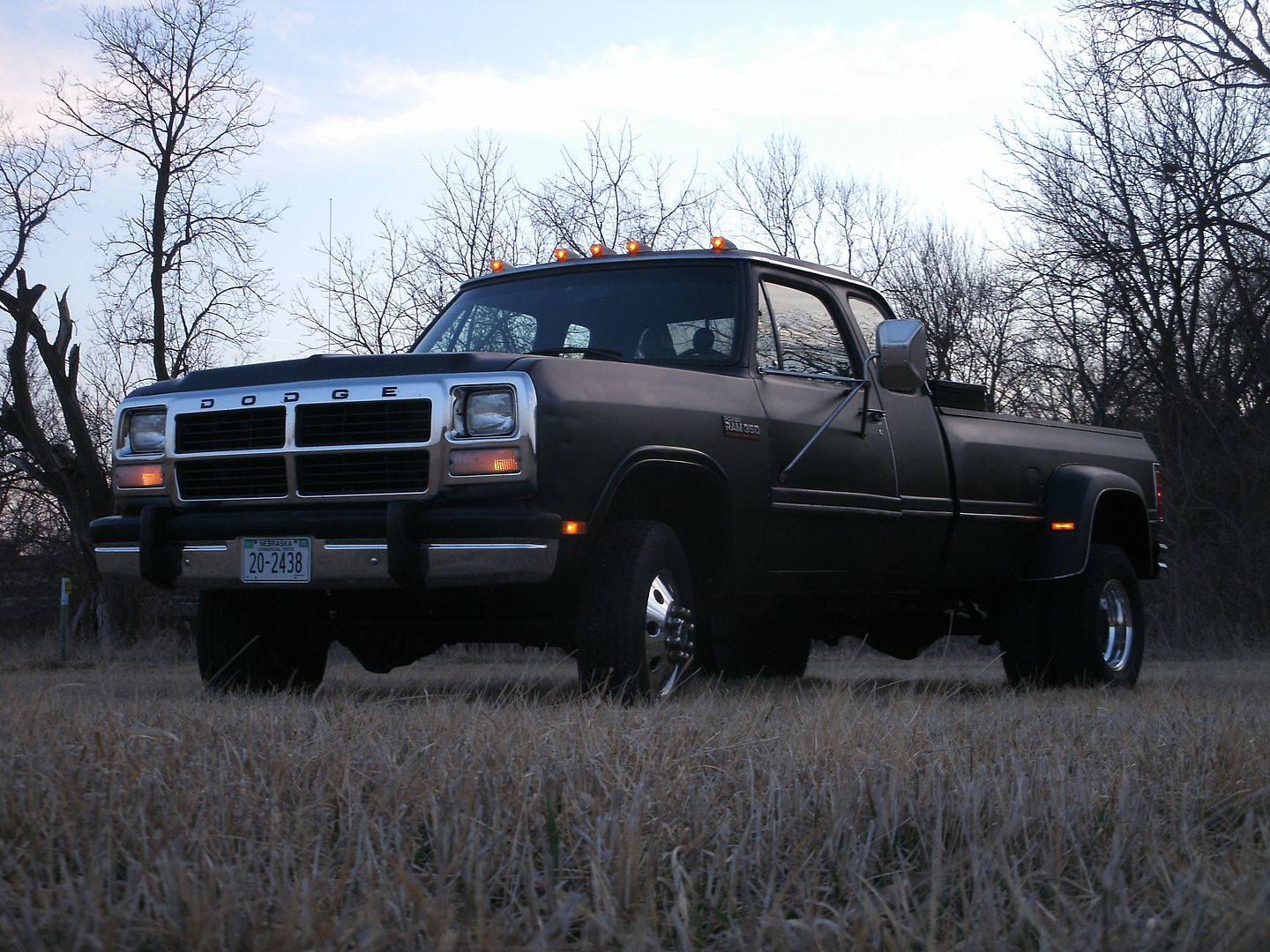
Identifying Structural Quality and Common Rust Locations in 1st Gen Ram Chassis
The “Dodge Diet” is a real phenomenon where these trucks slowly lose their structural mass to oxidation. A comprehensive inspection must go beyond a quick look at the fenders. The most critical areas are the cab mounts and floorboards. Chrysler used a sandwich-style floor design in certain years that traps moisture between the insulation and the metal, leading to rot that is often invisible from the exterior until it is terminal.
Drip Rail Integrity
Check the seam above the doors. Perforation here leads to water in the dash and electrical gremlins.
Steering Box Mount
The frame near the steering box on 4WD trucks is prone to stress cracks from oversized tires.
In the expert community, frame health is the ultimate deal-breaker. Standard frame thickness for W250 and W350 models was approximately 0.25 inches. While this sounds substantial, heavy scale in salt-belt trucks can reduce structural capacity by 30% or more. Focus your attention on the bed cross-members; if they are thin or crumbling, the bed is likely a lost cause, even if the wheel arches look clean.
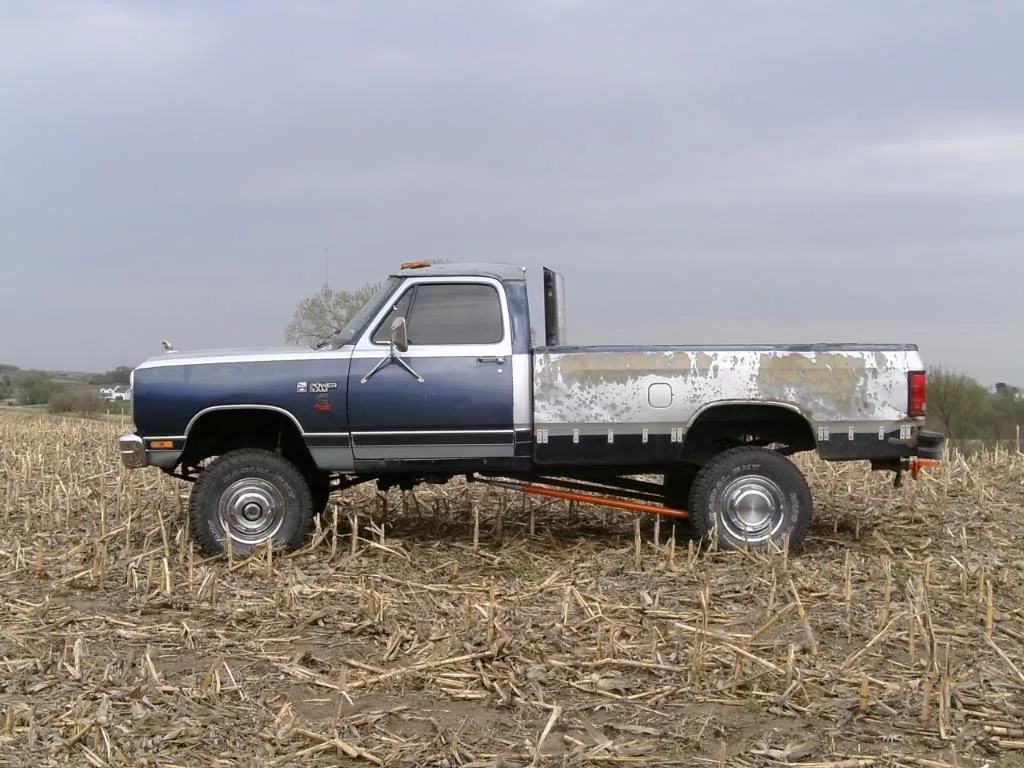
The “Desert-Find” Contrast: An Arizona-sourced truck with sun-faded “Clear-Coat Failure” paint and a cracked dashboard is often a far better investment than a Northern truck with a shiny, recent Maaco paint job. Sun damage is cosmetic; rocker panel rot is structural. A trusted guide always prioritizes “dry” sheet metal over aesthetic perfection.
Understanding Market Value for Trusted 1st Gen Dodge Listings
The market for 1st Gen Dodge trucks has bifurcated. On one end, you have high-mileage “farm trucks” that serve as entry-level projects. On the other, “survivor” status trucks are fetching astronomical prices at professional auctions. To navigate this, you must understand the intercooler premium. Trucks built from 1991.5 to 1993 featured a factory charge-air cooler and better overdrive transmissions, making them the most desirable for modern highway use.
Scarcity drives these numbers. With only about 100,000 Cummins-equipped units produced during the entire five-year run, they are significantly rarer than the subsequent 2nd gen models. Club Cab configurations are particularly scarce, as Chrysler struggled to meet the sudden demand for extended cabs in the early ’90s. Recent results from Bring a Trailer or Mecum have shown pristine, low-mileage examples exceeding $50,000, cementing their status as blue-chip collectibles.
Professional Upgrades and Preventative Maintenance Post-Purchase
Once you have secured a quality 1st Gen, the work shifts to preservation and modernization. The factory electrical system is the truck’s second greatest weakness after rust. The “fusible links”—small wires designed to melt during a short—are outdated and unreliable. A professional upgrade involves replacing these with a modern blade-style fuse box to prevent intermittent power loss or fire hazards.
📋
Step-by-Step Modernization Guide
Mount Fuel Pressure and Exhaust Gas Temperature (EGT) gauges. Monitoring the VE pump’s inlet pressure is the only way to ensure the lift pump is functioning before it kills the expensive injection pump.
Add a steering box brace and a Borgeson heavy-duty steering shaft. These trucks are notorious for “wandering” on the highway; this kit eliminates the dangerous dead spot in the steering wheel.
The Getrag 360 requires 5W-30 synthetic motor oil, NOT gear oil. Experts recommend “overfilling” the transmission by one quart through the shifter hole. This ensures the top input shaft bearing receives adequate cooling and lubrication, preventing premature failure.
Interior Restoration
The 1st Gen interior is spartan but functional. To maintain investment value, avoid “modernizing” with cheap aftermarket racing seats. Instead, use OEM-style seat upholstery and replacement dashboard caps. High-quality sound deadening installed under the new carpet will significantly reduce the “tin-can” resonance of the cab, making the truck much more comfortable for long-distance towing.
✅ Pros
- Unmatched mechanical simplicity
- Exceptional fuel economy (20+ MPG possible)
- NP205 and Dana 60/70 are bulletproof
- Appreciating asset / collector value
❌ Cons
By adhering to these professional standards—verifying mechanical health through the KDP and transmission checks, scrutinizing structural integrity at the cab mounts and frame, and understanding the nuances of the intercooled era—you can confidently navigate the market. A trusted 1st Gen Dodge is more than just a truck; it is a piece of diesel history that, with the right maintenance, will easily outlast its modern counterparts.
Sourcing a quality 1st gen Dodge for sale requires patience and a discerning eye. Prioritize mechanical health by verifying KDP repairs and transmission maintenance, and focus heavily on structural integrity, specifically cab mounts and frame strength near the steering box. Recognize the investment value of late-model intercooled versions and well-documented survivors as they continue to rise in demand. Begin your search by filtering for trusted sellers and always perform a professional on-site inspection before finalizing your purchase of a 1st gen Dodge.
Frequently Asked Questions
What is the most reliable engine found in a 1st gen Dodge?
The 5.9L 12-valve Cummins turbodiesel is widely considered the most reliable engine offered. Expert mechanics praise its simplistic design, lack of complex electronics, and the robust Bosch VE injection pump. When properly maintained, these engines frequently exceed 400,000 miles, making them a trusted choice for those seeking longevity in a vintage pickup platform.
What should I look for regarding rust on a 1st gen Dodge for sale?
Potential buyers should conduct a professional inspection of the cab mounts, floorboards, and the roof drip rails. These areas are prone to oxidation due to moisture trapping. Additionally, check the frame rails near the steering box and the rear spring hangers. A quality truck will have minimal scale and no structural thinning of the steel in these critical zones.
Is the Getrag 360 manual transmission reliable?
The Getrag 360 is a professional-grade 5-speed manual, but it has a known lubrication quirk. To ensure it remains a reliable component, industry experts recommend overfilling the transmission by one quart of 5W-30 synthetic oil. This ensures the input shaft bearings receive adequate cooling and lubrication, preventing the common ‘fifth gear’ failures associated with these units.
Why are the 1991.5 to 1993 models more expensive?
These ‘late-model’ 1st gens command a premium because they introduced factory intercoolers and the A518 four-speed automatic transmission with overdrive. The intercooler allows for lower exhaust gas temperatures and better tuning potential, while the overdrive transmission provides significantly better fuel economy and lower highway RPMs compared to the older three-speed 727 units.
Can I use a 1st gen Dodge as a daily driver?
Yes, provided the vehicle has undergone a professional mechanical baseline. These trucks are remarkably simple to repair and parts are widely available through specialized vendors. While they lack modern safety features like airbags and ABS, their mechanical reliability and excellent fuel economy from the Cummins diesel make them a viable, albeit utilitarian, option for daily use.