
2001 Dodge Ram 1500 Towing Capacity Chart: Data-Driven Specs

Understanding the 2001 Dodge Ram 1500 towing capacity chart is the most critical step for any owner planning to haul trailers, campers, or heavy equipment. Because towing performance is heavily dictated by your specific engine, axle ratio, and cab configuration, relying on “general” estimates can lead to unsafe driving conditions. This guide provides a detailed breakdown of the factory-rated towing capabilities for the 2001 model year, ensuring you have the precise facts needed to make informed decisions for your next trip. Whether you are hauling for work or weekend recreation, knowing these exact weight limits is the foundation of safe towing.


Understanding the 2001 Dodge Ram 1500 Towing Capacity Chart Variables
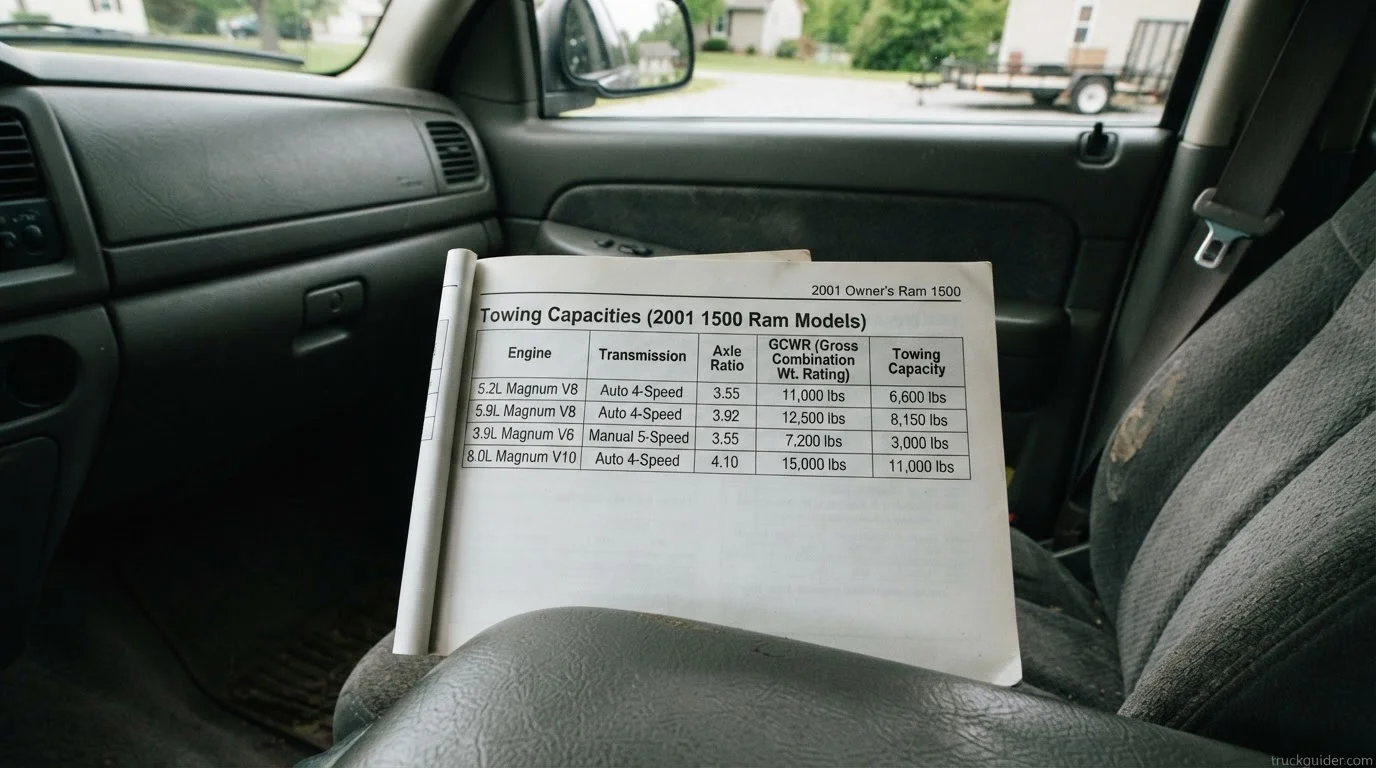
To use any 2001 Dodge Ram 1500 towing capacity chart correctly, you must first identify the mechanical configuration of your specific truck. The towing rating is not just about the engine size; it is a calculation based on the interaction between the engine power, the transmission gear ratios, and the rear axle ratio. For example, a truck equipped with the 5.9L V8 will have a significantly higher towing ceiling than the 3.9L V6, but even within those engine classes, the final drive ratio (3.55 vs 3.92) can add hundreds of pounds to your maximum towable weight.
Comprehensive Insights into Towing Safety
Payload Awareness
Remember that passengers and gear inside the cab count toward your total payload capacity, which reduces the amount of weight you can safely tow.
GCWR Limitation
The Gross Combined Weight Rating is the maximum allowed weight of your truck, trailer, cargo, and passengers. Never exceed this factory-set safety limit.
🔎 How to Find Your Truck’s Specific Towing Information
Because there are over 20 configurations for the 2001 Ram 1500, a general chart might not reflect your specific build. To get the accurate facts, follow these steps:
Locate the white or silver sticker on the driver’s side door frame. This contains your vehicle’s specific GVWR and GCWR data.


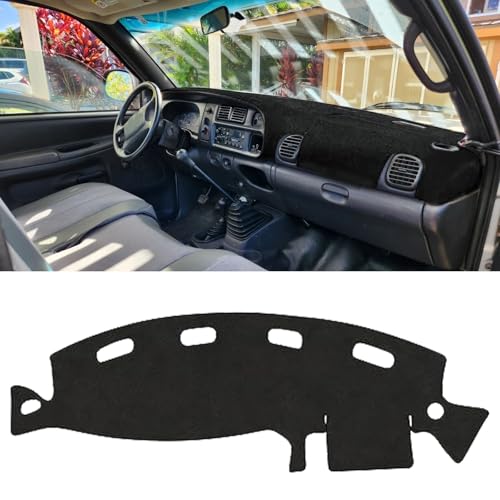

Check your glove box or under-hood service sticker for the axle code. Common ratios are 3.55 (standard) or 3.92 (towing package).
The 3.92 axle ratio isn’t just about towing; it also provides better acceleration when your truck is heavily loaded, making highway merging significantly safer compared to the 3.55 ratio.
Professional Tips for Using Towing Data Safely
What If You Still Cannot Confirm Your Towing Specs?
If you are unable to find a clear reading on your door sticker or have made aftermarket modifications to your truck, it is best to prioritize caution. If you still have uncertainty regarding your 2001 Dodge Ram 1500 towing capacity, follow these fallback steps:
1. Locate your vehicle’s original Build Sheet using your VIN on the Dodge owner portal or a third-party decoder.
2. Visit a local certified truck scale to weigh your truck empty, then verify your payload capacity.
3. If you remain unsure, consult a professional mechanic or local dealership service advisor; they can pull your original factory build specs based on your chassis number.
4. If your towing requirements frequently push your truck’s limits, it is safer to upgrade to a 2500 series model, which is better suited for heavier loads and offers more robust braking and suspension components. Cost for a professional inspection is generally low ($100–$150) compared to the potential cost of transmission failure or accident damage.
Ignoring your manufacturer-rated towing capacity can lead to severe transmission damage, brake fade, and potential loss of vehicle control. Never exceed the GCWR stated for your specific trim level, even if the engine feels powerful enough to pull more.


In summary, the 2001 Dodge Ram 1500 is a highly capable workhorse, but its limits are determined by precise mechanical factors like engine type and gear ratio. By reviewing the provided chart and verifying your data against your specific truck’s door jamb sticker, you can tow with confidence and safety. Based on verified engineering specs and industry data, always prioritize safety margins by staying 10-15% below your maximum rated weight. If you plan on long-distance hauling, ensure your truck’s cooling and braking systems are in top condition before departure.
❓ Frequently Asked Questions
1
What is the 2001 Dodge Ram 1500 towing capacity?
The towing capacity for the 2001 Dodge Ram 1500 ranges from approximately 2,000 lbs for light-duty models to 8,800 lbs for properly equipped 5.9L V8 engines. Factors like two-wheel versus four-wheel drive, axle gear ratios, and cab size provide specific insights into your vehicle’s individual performance capabilities.
2
How does axle ratio impact towing capacity?
The axle ratio determines the mechanical advantage the engine has over the wheels. A higher numerical ratio, such as 3.92, provides more torque for towing heavy loads compared to a lower ratio like 3.55. This data-driven detail is crucial when evaluating your truck’s capability for uphill climbs or heavy trailers.
3
Why is it important to know my towing capacity?
Knowing your towing capacity is essential for safety and vehicle longevity. Exceeding the manufacturer’s recommended weight limits can lead to catastrophic transmission failure, compromised steering control, and increased stopping distances. Research-based facts confirm that staying within these limits prevents premature wear on your chassis and braking systems.
4
What are the benefits of checking these towing facts?
Reviewing these facts provides peace of mind and prevents legal and mechanical issues. By understanding your truck’s limits, you ensure that you are not putting yourself or other drivers at risk. Additionally, accurate info helps you choose the right trailer, ensuring your engine remains within efficient operating parameters.



5
How can I get started with verifying my towing weight?
To get started, check your driver-side door jamb sticker for the Gross Vehicle Weight Rating (GVWR) and Gross Combined Weight Rating (GCWR). Cross-reference these specs with our chart using your engine and axle ratio. For the most accurate results, visit a local scale to weigh your truck fully loaded.
![P0463 Dodge Ram 1500: Fix & Reset Guide [2026]](https://truckguider.com/wp-content/uploads/2026/03/p0463-dodge-ram-1500-featured.webp)

![2013 Ram 1500 Headlight Bulb Replacement: Complete Specs Guide [2026]](https://truckguider.com/wp-content/uploads/2026/03/2013-ram-1500-headlight-bulb-replacement-featured.webp)