2002 Chevy Silverado Front Suspension Diagram: Component Breakdown 2026

The 2002 Chevy Silverado front suspension features an independent torsion bar design. It consists of upper and lower control arms, torsion bars, stabilizer links, and shock absorbers. When servicing, refer to the OEM torque spec (typically 120-150 lb-ft for lug nuts and 100 lb-ft for control arm bushings) to ensure proper structural integrity.
📌 Key Takeaways
- Upper control arm ball joint nut torque spec is approximately 74 lb-ft.
- Torsion bar adjustment bolts dictate vehicle ride height; measure before turning.
- Ensure the vehicle is supported by jack stands on the frame, not the lower control arms, before starting work.
- Check tie rod ends for excessive play; this is the most common failure point causing steering vibration.
- If the check engine light illuminates with suspension codes (e.g., electronic ride control), verify ECU communication via the OBD-II port.
The 2002 Chevrolet Silverado utilizes a sophisticated torsion bar-based Independent Front Suspension (IFS) system, engineered to provide a balance between load-carrying capacity and handling precision. Mastering this architecture requires a deep understanding of how individual components—from the torsion bars to the control arm bushings—coordinate to maintain alignment and ride quality. Whether you are addressing uneven tire wear or performing a full overhaul, the 2002 Chevy Silverado front suspension diagram serves as the primary technical reference for ensuring safety and mechanical integrity. Unlike systems involving a timing chain or complex ECU-controlled adaptive dampers, this mechanical assembly relies on proper torque sequences and periodic lubrication of Zerk fittings to prevent premature fatigue.

Prime for Young Adults — 6 Months Free
Students and 18–24s get six months of Prime free, then half price.
Start 6 Months Free[DIAGRAM_PLACEHOLDER: Insert Detailed Exploded View of 2002 Silverado IFS System Here]
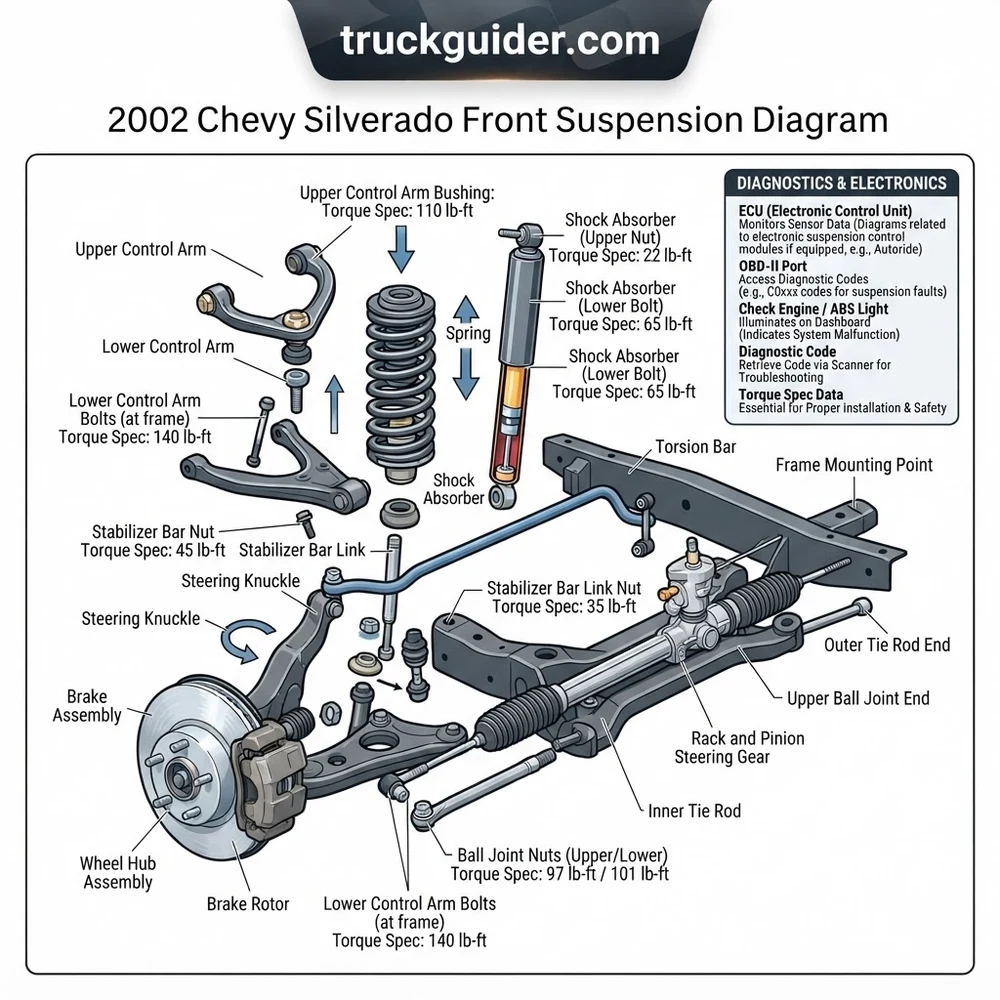
2002 Chevy Silverado Front Suspension Diagram: Component Identification
Recommended Best Deal Products



When servicing the front end of a 1500 or 2500 series truck, identifying parts correctly via the 2002 Chevy Silverado front suspension diagram is the first step toward a successful repair. The IFS system is modular, allowing for the independent replacement of wear-prone items. The core of this system rests on the torsion bars, which replace the traditional coil springs found in passenger vehicles, providing adjustable ride height and spring rates.
| Component | Primary Function | Service Interval/Note |
|---|---|---|
| Torsion Bar | Provides primary load support. | Check for oxidation/fatigue. |
| Upper Control Arm | Controls camber and caster geometry. | Inspect bushings for rot. |
| Lower Control Arm | Supports strut/shock base and ball joint. | Critical for alignment. |
| Steering Knuckle | Connects hub to steering linkage. | Inspect for hairline cracks. |
The upper control arms in the 2002 model are equipped with ball joints that may or may not be pressed in, depending on the manufacturing source. Replacing these requires a high-capacity press. As you reference the 2002 Chevy Silverado front suspension diagram, pay close attention to the steering knuckle assembly. This cast component serves as the interface between the tie rod ends and the wheel bearing housing. If your vehicle shows a diagnostic code related to ABS sensor input—often triggered by debris or improper installation of the wheel hub—ensure that the sensor wiring harness routed through the steering knuckle is not pinched. While this system does not involve an ECU-managed suspension, the ABS sensors are vital for the vehicle’s stability systems. Always verify that your replacement parts meet or exceed OEM hardness ratings, as sub-standard components can lead to premature failure under heavy towing loads.
Common Symptoms of 2002 Chevy Silverado Front Suspension Wear
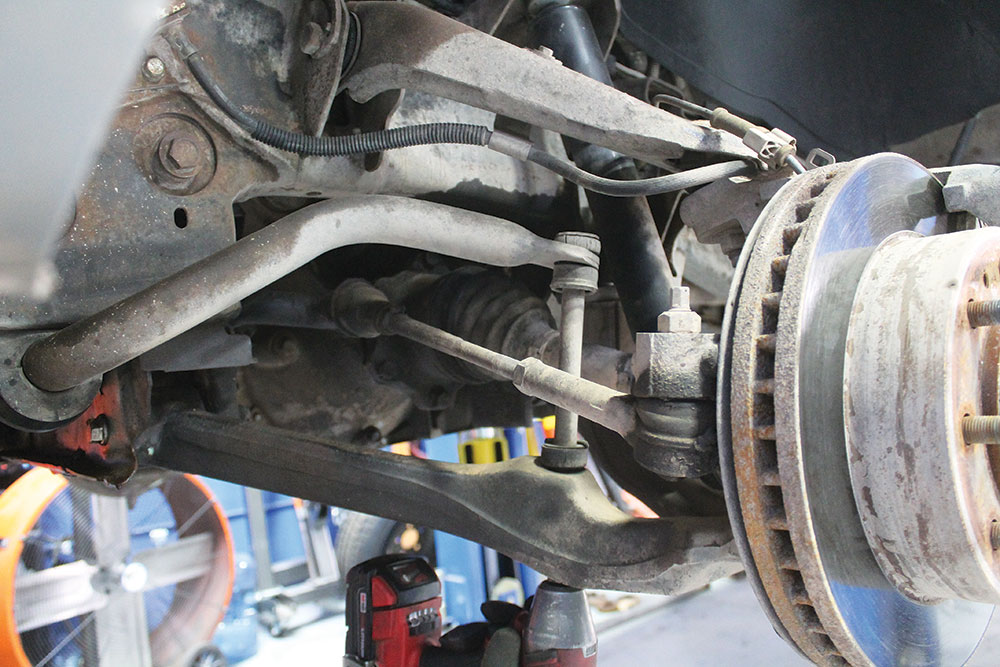
Identifying mechanical failure before it leads to catastrophic damage is essential for equipment longevity. In the 2002 platform, wear often presents as subtle vibrations or acoustic feedback that operators may overlook until handling becomes erratic. While you might be accustomed to checking oil pressure or monitoring the check engine light for engine performance, monitoring suspension health is equally critical for steering control.
- Control Arm Bushing Degradation: Excessive “clunking” sounds when traversing speed bumps or uneven terrain are indicative of cracked rubber bushings. These components are essential for isolating cabin noise and maintaining geometry under load.
- Tie Rod End Play: A loose steering feel or “wandering” on the highway often traces back to the inner or outer tie rod ends. These linkages translate steering rack movement to the knuckle; play here creates inconsistent steering response.
- Zerk Fitting Failure: The 2002 Silverado features several grease points, or Zerk fittings, located on the ball joints and idler arms. If these are neglected, debris ingress destroys the internal race, leading to binding or complete separation.
- Ball Joint Play: Vertical movement in the control arm while the tire is jacked off the ground is a classic sign of ball joint failure. Severe play can lead to wheel detachment if neglected.
In addition to these mechanical indicators, observe the internal tread patterns on your tires. Rapid or “cupping” wear indicates that the front suspension is failing to maintain consistent tire contact with the road. While you might worry about coolant flow issues or potential timing chain noise in the engine bay, ignoring a worn-out front end will accelerate damage to the steering rack and CV axles. If you detect a check engine light or any OBD-II diagnostic code related to vehicle speed sensors, inspect the suspension near the wheel hub, as vibrations from loose components can inadvertently cause sensor contact issues.
Step-by-Step Diagnosis for 2002 Chevy Silverado Front Suspension
Recommended Best Deal Products


A methodical inspection is mandatory when utilizing a 2002 Chevy Silverado front suspension diagram for troubleshooting. Do not rely on visual inspection alone; tactile verification is required to confirm component integrity.
Before beginning, verify your torque spec chart. Many 2002 Silverado components are stretch-bolts. Always clean the threads of the lower ball joint nuts and apply fresh thread-locker as specified by the service manual to prevent loosening under heavy vibration.
1. Stabilize and Lift: Secure the vehicle on professional-grade jack stands placed on the frame rails. The suspension must be at full droop to test for play in the ball joints.
2. Inspect Torsion Keys: Examine the torsion keys for excessive rust or structural deformation. Use the 2002 Chevy Silverado front suspension diagram to verify that the adjuster bolts are seated correctly within the crossmember.
3. Examine CV Axles: Check the rubber CV boots for tears. Leaking grease inside the boot indicates an impending joint failure. Any clicking noise during low-speed turns confirms the need for replacement.
4. Test Tie Rod Ends: With a partner, move the tire at the 3 and 9 o’clock positions. Any detectable movement indicates wear in the tie rod ends or the rack-and-pinion assembly.
5. Lubricate Zerk Fittings: Use a high-pressure grease gun to flush out old contaminants from every Zerk fitting identified in the schematic. If a fitting will not accept grease, replace it immediately to prevent internal metal-on-metal wear.
Following these steps ensures that you are not just masking symptoms but addressing the root cause. Remember that if you replace the rack-and-pinion, you may need an OBD-II scan tool to clear residual error codes if the steering sensor was disconnected during the procedure.

Audible — Listen Free for 30 Days
One free credit a month and thousands of titles included.
Listen Free for 30 DaysOptimizing Ride Height with 2002 Chevy Silverado Torsion Key
Adjusting the torsion bars is the standard method for leveling or lifting the front end of a 2002 Silverado. However, this is not a task to be taken lightly. The torsion keys house the energy required to support the weight of the engine and chassis, and incorrect adjustments will significantly degrade suspension geometry.
| Adjustment Metric | High Impact Risk | Recommended Range |
|---|---|---|
| Camber | Extreme positive/negative | 0.0° to -0.5° |
| Caster | Steering instability | +2.0° to +4.0° |
| Toe-in | Rapid tire wear | 0.05° to 0.15° |
When you increase the ride height by tightening the torsion key bolts, the angle of the CV axles and control arms changes. If you exceed the manufacturer-specified range, the CV joints will bind, and the ball joints will operate outside their intended pivot range, leading to premature boot failure and snap-ring damage. After any adjustment, a professional alignment is non-negotiable. Neglecting the alignment after torsion bar modification will result in severe toe-in or toe-out, which can shred a set of tires in less than 500 miles.
Never attempt to release tension from the torsion bars without a proper unloading tool. The stored energy in these bars is sufficient to cause severe bodily harm or damage the vehicle frame if the crossmember support fails.
2002 Chevy Silverado Front Suspension Diagram Questions Answered
Recommended Best Deal Products

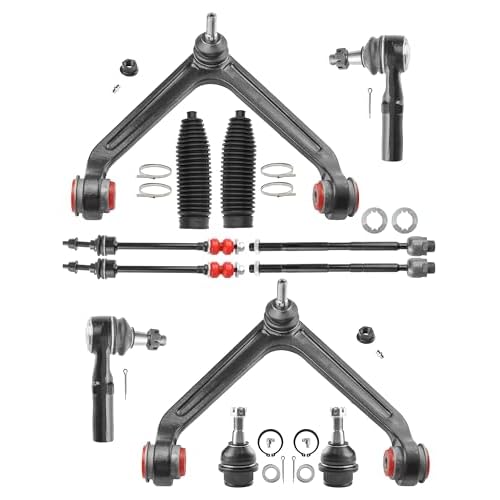

Do I need to realign the truck after replacing the idler arm?
Yes. Replacing the idler arm or any component that affects steering linkage geometry necessitates a full four-wheel alignment. Even minor deviations in tie rod length can cause significant toe misalignment, which will compromise handling and fuel efficiency.
How do I know if the torsion bars are sagging?
Measure the distance from the wheel center to the fender arch on both sides. If the truck is noticeably lower on one side, or if you have reached the maximum adjustment on the torsion key bolt without achieving level height, the torsion bars have lost their spring rate and require replacement.
Can a suspension fault trigger a check engine light or diagnostic code?
Generally, no. However, if a suspension repair involves removing or damaging wheel speed sensors (ABS sensors), the ECU will log an OBD-II diagnostic code. Additionally, severe front-end vibrations can occasionally trigger false knock sensor readings, which may lead to engine performance issues logged by the ECU.
What is the most critical torque spec in this suspension system?
The lower ball joint castle nut and the control arm pivot bolts are critical. Refer to your service manual for the exact torque spec, as these components endure the highest dynamic loads. Failure to hit the torque spec can result in bolt fatigue and mechanical separation while driving.
How often should I service the Zerk fittings?
If your vehicle is subjected to off-road use, water crossings, or heavy salt exposure, grease these fittings at every oil change. Using high-quality chassis grease ensures the internal seals remain pliable and prevents the ingress of grit that causes internal race scarring.
Audible Premium Plus — Annual Membership
12 audiobook credits up front, plus the full Audible catalogue.
See Annual Plans