2006 Toyota Tacoma Serpentine Belt Diagram: Routing Mapped Out for 4.0L V6 Engines

The serpentine belt for a 2006 Toyota Tacoma follows a specific winding path around the crankshaft, alternator, water pump, and tensioner pulley. To ensure correct installation, the ribbed side of the belt must face the grooved pulleys while the smooth side contacts the idler pulleys. This guide provides the visual routing configuration, technical safety checks, and common failure signs to help you successfully replace your belt without errors.



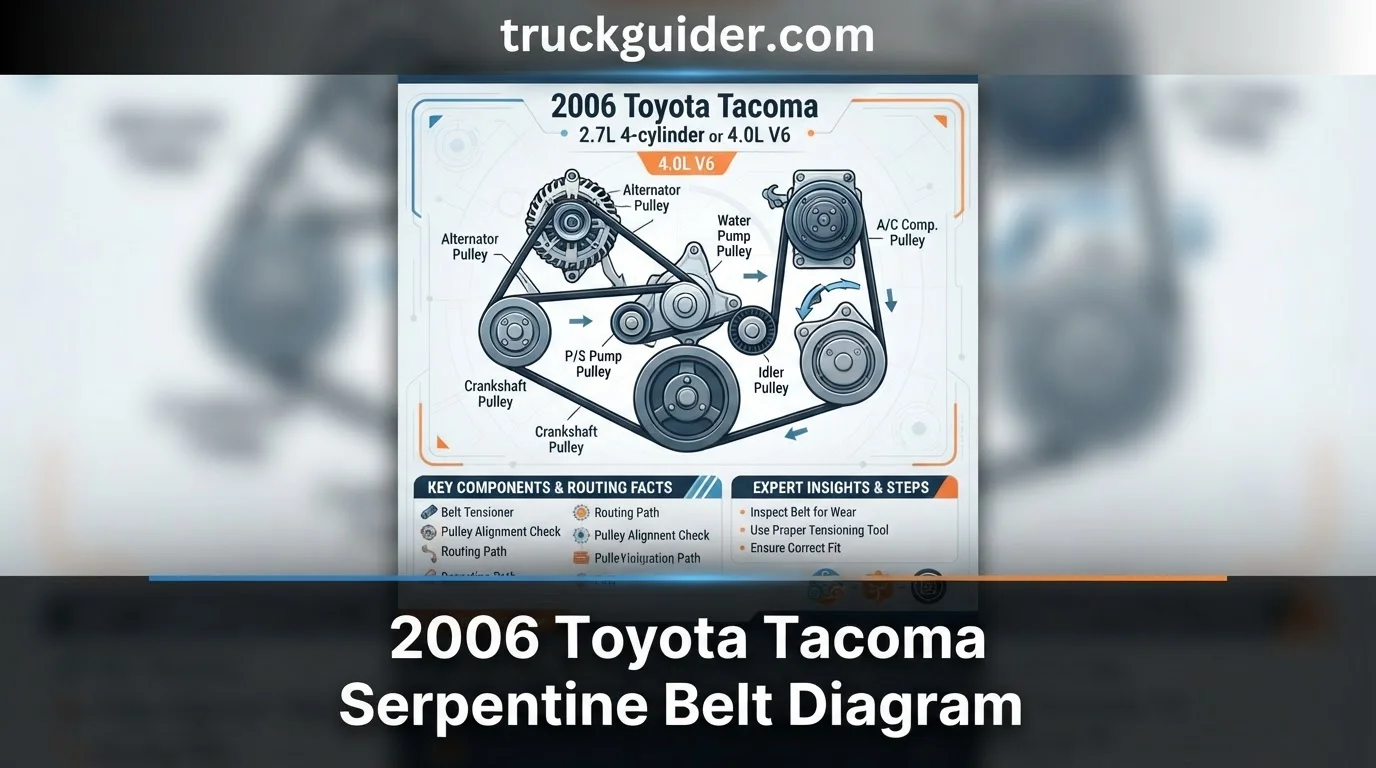
2006 Toyota Tacoma Serpentine Belt Diagram: The Complete Routing Guide
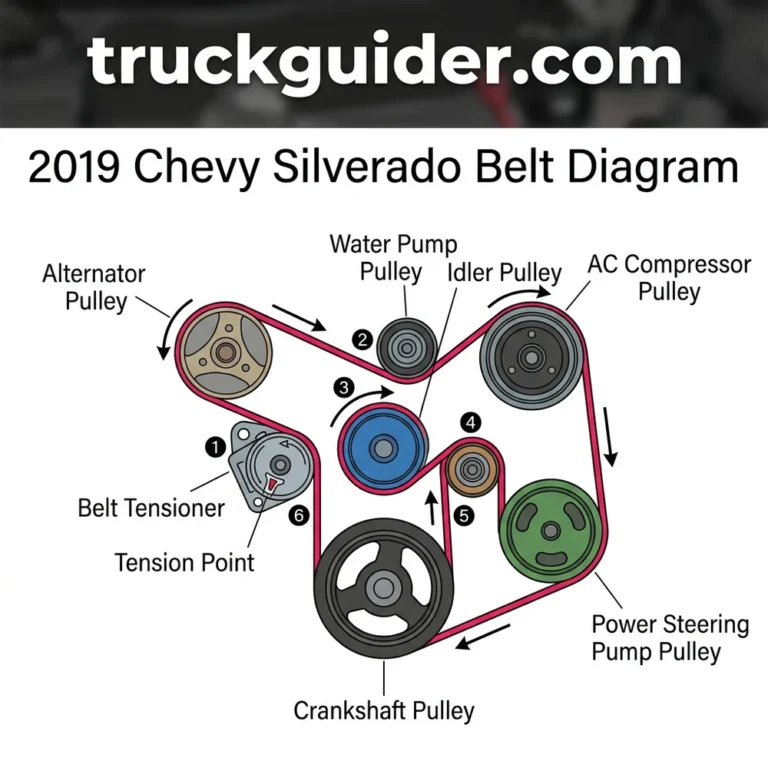
How to Read the Diagram
The provided reference table identifies the primary accessory pulleys utilized in the 2006 Toyota Tacoma serpentine system. The “Ref Number” corresponds to specific contact points along the belt’s path. When visualizing the routing, follow the belt starting from the crankshaft pulley, which acts as the drive source.

The routing path must wrap around these pulleys in a specific sequence to ensure adequate tension. Incorrect routing, where the belt might bypass an idler or cross against itself, will result in immediate accessory failure, such as the alternator failing to charge the battery or the water pump overheating the engine.

Note that the ribbed side of the belt must face the grooved pulleys, while the smooth side of the belt must contact the smooth idler pulleys. Always ensure your configuration matches the engine type—specifically the 4.0L V6—as different engine options in the Tacoma line may have slight variations in pulley arrangement.
Visual Warning: The serpentine belt is a single-loop system. If the belt does not follow this exact path, it will likely cause slippage, leading to burnt pulleys or total belt shredding. If you notice any components missing from your current setup, verify your engine’s specific build sheet, as aftermarket modifications can sometimes alter accessory locations.
Understanding Your 2006 Toyota Tacoma Serpentine Belt System
| Component | Primary Function |
|---|---|
| Crankshaft Pulley | Converts combustion energy into rotational force to drive the belt. |
| Alternator | Generates electrical current to power systems and charge the battery. |
| Water Pump | Circulates coolant through the engine block to maintain temperature. |
| Power Steering Pump | Provides hydraulic pressure for smooth steering assist. |
| A/C Compressor | Compresses refrigerant for the vehicle’s air conditioning system. |
| Tensioner/Idler | Maintains constant belt tension and guides the belt path. |
How to Read This Chart
The chart above outlines the specific engine accessories driven by the serpentine belt system on the 2006 Toyota Tacoma. The “Component” column identifies the hardware mounted to the engine front cover, while the “Primary Function” column details the specific mechanical task performed by that unit.
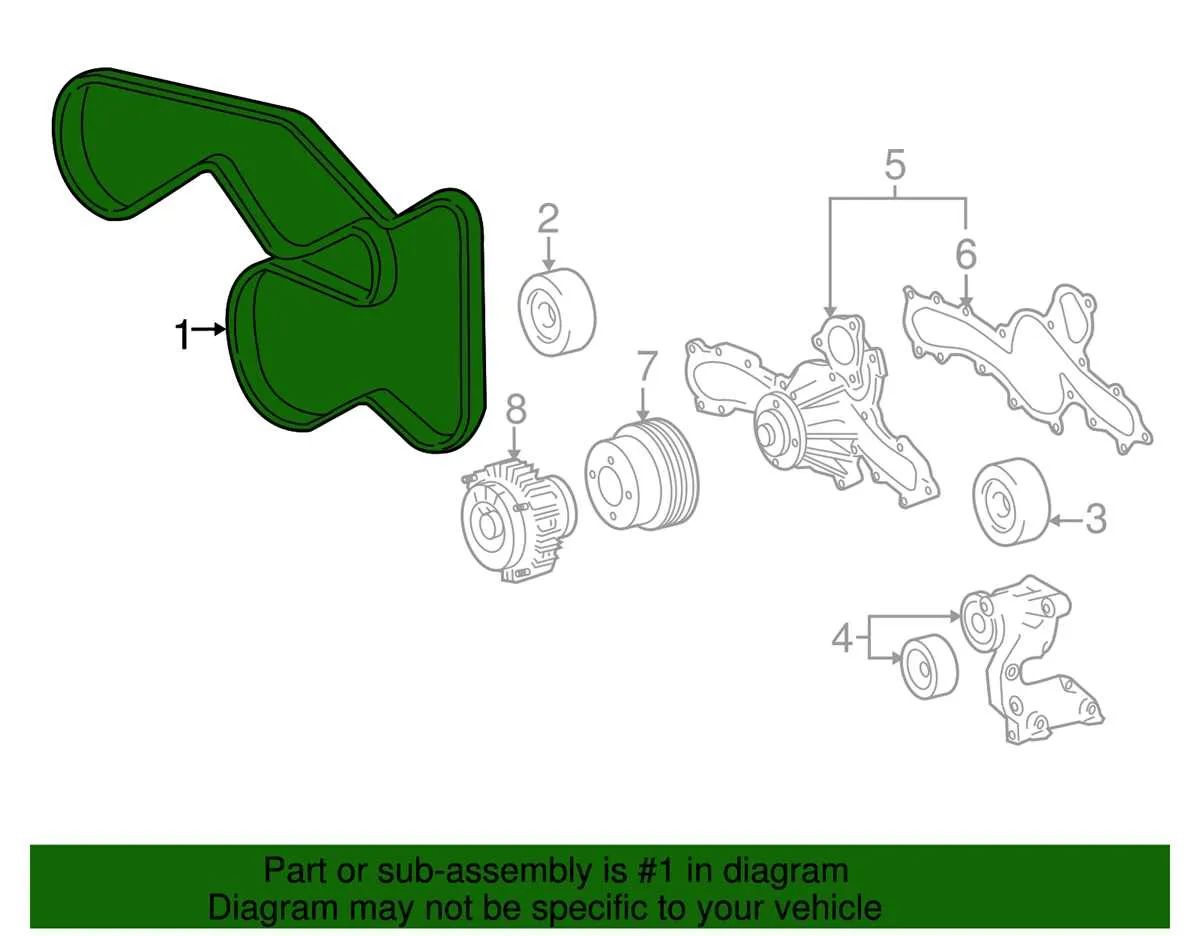
This data applies to both the 2.7L 4-cylinder (2TR-FE) and the 4.0L V6 (1GR-FE) engine configurations found in the 2006 model year. Note that while the layout varies between engines, these six core components are universal across all trim levels of this specific production year.
The crankshaft pulley acts as the foundation of the entire system. Bolted directly to the engine crankshaft, it rotates as the pistons move, providing the kinetic energy required to turn the serpentine belt. Without this initial rotation, no other accessories connected to the belt would receive power.
The alternator serves as the primary electrical generator. As the belt spins the alternator pulley, it converts mechanical energy into electricity. This current is vital for powering the truck’s headlights, ignition system, and interior electronics, while simultaneously keeping the 12-volt starter battery fully charged during operation.
The water pump is essential for thermal management. Driven by the serpentine belt, its internal impeller forces coolant to circulate through the engine block and radiator. This consistent flow prevents the engine from overheating by moving heat away from critical internal components into the cooling system.
The power steering pump uses hydraulic pressure to make steering the vehicle effortless. The belt spins the pump, which pressurizes steering fluid and delivers it to the steering gear. This reduces the manual force the driver must exert on the steering wheel during tight maneuvers or parking.
The A/C compressor is responsible for cooling the vehicle interior. When the air conditioning is engaged, the electromagnetic clutch on the compressor pulley locks, allowing the serpentine belt to turn the compressor. This action cycles refrigerant through the system to facilitate heat exchange.
The 2006 Toyota Tacoma features an automatic belt tensioner. This spring-loaded device is designed to exert constant, calibrated pressure against the belt. It eliminates the need for manual tension adjustments and compensates for minor belt stretching as the rubber material ages over time.
Finally, the system utilizes idler and tensioner pulleys to guide the belt’s path. Idler pulleys are strictly for routing, ensuring the belt maintains contact with specific accessory pulleys. The automatic tensioner is a specialized pulley that pivots to provide the exact tension required to prevent slippage.
Together, these components ensure that all critical vehicle systems remain operational. Because all items are connected to the same belt, the failure of a single pulley or the belt itself will disrupt multiple vehicle functions, including engine cooling, electrical generation, and steering assistance.


Key Differences: 2006 Toyota Tacoma 4.0L V6 Serpentine Belt Routing
This diagram specifically applies to the 4.0L V6 engine in your 2006 Tacoma. The 1GR-FE V6 engine utilizes a unique belt path designed to accommodate its specific accessory drive configuration, including the alternator, water pump, power steering pump, and air conditioning compressor.
It is critical to understand that different engine configurations will have different routing requirements. The 2006 Tacoma was also produced with a 2.7L 4-cylinder engine, which features a completely different layout, pulley arrangement, and belt length compared to the V6 model.
Attempting to use a V6 diagram for a 4-cylinder truck, or vice versa, will result in an incorrect installation. A misrouted belt will cause accessory failure, improper component rotation, or belt breakage, which can quickly lead to engine overheating or total loss of power steering and electrical charging.
Before beginning your maintenance, verify your engine type by checking your vehicle’s VIN or the emissions sticker located under the hood. The 4.0L V6 engine features a distinct intake manifold and engine cover that clearly separates it from the 2.7L 4-cylinder inline engine layout.
Always verify your engine type against the diagram before proceeding with installation. If you are uncertain about which engine is under your hood, consult your owner’s manual or the specific service specifications for your trim level. Relying on the correct technical data ensures that your cooling and charging systems function as intended.
Variations may also exist based on the presence of optional equipment, such as specific alternator outputs or heavy-duty cooling packages. While the core belt path for the 4.0L V6 remains consistent, always cross-reference the visual cues in the diagram with the actual pulleys present on the front of your specific engine block.
Take a moment to map the path of your existing belt before removal if you have any doubts. Use the diagram provided as your primary guide, but ensure the belt seats correctly within the grooves of every pulley. Double-check the path against the 4.0L V6 routing pattern provided to ensure each accessory is engaged in the correct sequence.
Following the manufacturer’s specified routing path is essential for the longevity of your components. A belt that does not follow the factory-specified tensioner and pulley sequence will experience uneven wear and potential failure, regardless of the quality of the replacement part you install.
Recognizing a Failing Serpentine Belt on Your 2006 Toyota Tacoma
The serpentine belt is a critical component for vehicle operation, responsible for driving essential accessories such as the alternator, power steering pump, and air conditioning compressor. Because it is a rubber-based part, it naturally degrades over time due to heat, friction, and constant tension.
| Symptom | Technical Significance |
|---|---|
| High-pitched squealing | Belt slippage due to wear or lack of tension. |
| Visible cracks/fraying | Structural fatigue of the rubber material. |
| Power steering loss | Belt failure prevents the pump from building pressure. |
| A/C failure | Belt is not driving the compressor pulley. |
How to Read This Chart
This table outlines the primary indicators of a belt reaching the end of its service life. The “Symptom” column identifies the audible or physical behavior you may experience while driving your 2006 Tacoma, while the “Technical Significance” column explains how the belt failure correlates to mechanical loss within the accessory system.
A high-pitched squealing sound during cold starts or rapid acceleration often indicates that the belt has stretched or the ribbed side has become glazed and lost its grip on the pulleys. If you hear this, inspect the belt immediately for visible signs of damage, such as chunks of rubber missing or lateral cracks running across the ribs.
Physical fraying along the edges is a clear indicator that the belt is misaligned or tracking incorrectly against one of the idler pulleys. If left unaddressed, the belt may snap entirely. A snapped belt results in an immediate loss of power steering assist, which makes the steering wheel feel suddenly heavy, and a charging system failure that will cause the battery light to illuminate on your dash.
Visual inspection of the belt and pulleys should be a mandatory part of your routine maintenance schedule. Check the belt at least every 30,000 miles, or more frequently if you drive in extremely hot or dusty conditions. If you notice signs of glazing, deep cracks, or uneven edge wear, replace the belt before it fails on the road. A prophylactic replacement is always cheaper and more convenient than a roadside repair caused by a total system shutdown.
Essential Tips for Working with Your 2006 Tacoma’s Serpentine Belt
Replacing the serpentine belt on your 2006 Toyota Tacoma requires careful attention to the automatic belt tensioner. This component keeps the belt tight during engine operation, but it exerts significant spring force that must be neutralized before you can slide the old belt off the pulleys.
To release the tensioner, attach a long-handled socket wrench or a dedicated serpentine belt tool to the tensioner pulley bolt. Slowly rotate the tool in the direction that compresses the internal spring—typically clockwise for the 4.0L V6 models. Moving deliberately ensures you do not snap the tensioner arm or cause the tool to slip.



While the belt is removed, take the time to physically inspect every pulley in the system. Use your hand to spin the idler pulleys and the alternator pulley; they should rotate smoothly and quietly. If you feel any grinding, resistance, or lateral play in the bearings, those pulleys are nearing the end of their service life.
Listen closely for “crunchy” or metallic clicking sounds while spinning the pulleys. A seized pulley bearing will cause immediate friction and heat, leading to premature failure of your brand-new belt. If a pulley shows signs of wobble or visible scoring on the track where the belt sits, it should be replaced immediately.
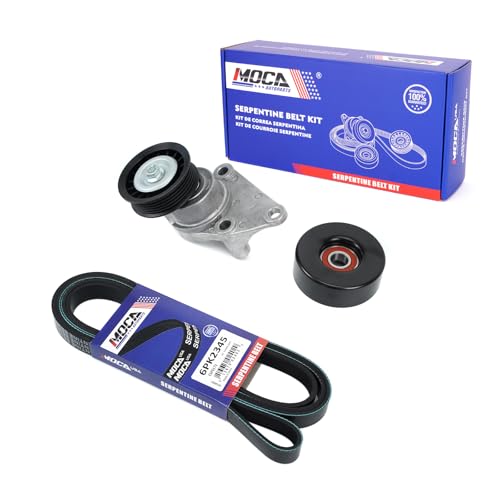
Always verify that you are using a belt that meets exact OEM (Original Equipment Manufacturer) specifications. Using the wrong belt size—even by a few millimeters—can result in improper tension, causing the belt to slip or squeal. Confirm the part number matches your specific engine configuration, whether you have the 2.7L I4 or the 4.0L V6.
Check the packaging for the correct length and rib count. A modern EPDM rubber belt is the industry standard for your Tacoma, as it resists cracking and material degradation far better than older neoprene formulations. Avoid aftermarket “universal fit” belts that claim to cover a wide range of vehicles, as these often fail prematurely.
Before installing the new belt, ensure the ribs on the underside of the belt are perfectly seated into the grooves of the harmonic balancer and water pump pulleys. Misalignment by just one groove can cause the belt to shred within minutes of starting the engine. Double-check the routing pattern against your reference diagram.
Once the belt is in place, release the tensioner slowly. Never let the tensioner arm “snap” back into position, as this can shock the internal spring mechanism or damage the mounting point. After the initial start, let the engine run for a minute and check that the belt remains centered on all pulleys.
✨ Key Benefits
System Longevity
Proactive pulley inspection prevents collateral damage to your alternator and water pump.
Optimal Performance
Using OEM-spec belts guarantees consistent accessory drive speed and reliable cooling.
Avoid These Pitfalls When Routing Your 2006 Toyota Tacoma Serpentine
The most dangerous error during a serpentine belt replacement is improper routing. A belt that is routed incorrectly can cause essential engine accessories, such as the water pump or power steering pump, to rotate in the wrong direction. This can lead to immediate mechanical failure or engine overheating within minutes of starting the vehicle.
Always verify that the belt’s ribbed side is seated perfectly within the grooves of the pulleys, while the smooth back side makes contact with the idler pulleys. A misaligned belt, even if it seems secure, will quickly fray or snap under the high torque generated by the 2006 Tacoma engine, leaving you stranded.
Never install a new belt without spinning every pulley by hand. A seized or gritty idler pulley or tensioner bearing will act like a knife against your new belt, destroying it within a few hundred miles. Listen for grinding noises or resistance; these are red flags that demand an immediate component replacement.
Understand the function of your automatic tensioner before you begin. It is designed to maintain constant, optimal pressure on the belt throughout its lifespan. When routing the belt, you must rotate the tensioner arm against its spring pressure to create enough slack to slip the belt over the final pulley.
Failure to release the tensioner arm gently can result in crushed fingers or damage to the tensioner’s internal spring mechanism. If the tensioner is rusted or feels “sticky” when you compress it, it cannot maintain the correct force. A weak tensioner will cause the belt to vibrate excessively or slip, which accelerates wear on all driven components.
Lastly, do not rely on your memory during the installation process. The routing path for the 2006 Tacoma can be complex, especially with the A/C compressor and power steering pump configurations. Cross-reference your progress with a physical diagram or the routing sticker located under the hood. Taking these precautions ensures that your charging system, cooling system, and steering remain fully operational and reliable.



Key Takeaways
-
✓
Correct routing is essential to prevent engine overheating and charging failure. -
✓
The 4.0L V6 belt system uses a specific tensioner pulley mechanism for release. -
✓
Always verify belt rib alignment within the pulley grooves before final tensioning. -
✓
Failing belts exhibit visible cracking, fraying, or persistent squealing noises. -
✓
Routine inspections should occur every 30,000 miles to prevent sudden roadside failure.
❓ Frequently Asked Questions
1
What is the 2006 Toyota Tacoma serpentine belt diagram?
This diagram is a technical schematic illustrating the precise path a single belt follows around the various engine accessories on a 2006 Tacoma 4.0L V6. It serves as your primary reference guide to ensure each component receives power and that the belt maintains proper tension during vehicle operation.
2
How does the serpentine belt system function?
The serpentine belt uses a spring-loaded tensioner to maintain firm contact with the engine’s drive pulleys. As the crankshaft rotates, the belt transfers kinetic energy to essential accessories like the alternator and power steering pump, keeping your electrical and hydraulic systems functioning while driving.
3
Why is correct belt routing important for my Tacoma?
Incorrect routing can lead to reverse pulley rotation, which destroys water pumps and alternators instantly. Following the factory-approved routing provides the necessary belt-to-pulley surface area to prevent slippage and ensures that your engine cooling and charging systems operate within their specified performance parameters.
4
What are the benefits of checking my belt regularly?
Regular inspections provide valuable insights into your vehicle’s health. By identifying wear patterns, glazing, or micro-cracking early, you can perform preventative maintenance rather than dealing with an emergency breakdown. Replacing a belt on schedule preserves the longevity of your accessory bearings and prevents costly mechanical repairs.
5
How can I get started with a belt replacement?
Start by gathering the necessary tools, including a 14mm wrench or a specialized serpentine belt tool. Locate your diagram, cool the engine, and safely release tension on the tensioner pulley. Remove the old belt, compare it to the new one, and thread the new belt according to your routing guide.
6
How do I replace the serpentine belt on a 2006 Tacoma?
Briefly outline the steps: locate tensioner, relieve tension, remove old belt, route new belt, release tensioner, confirm routing. Emphasize checking the diagram.
![Remote Start Disabled: Causes & Fixes [2026]](https://truckguider.com/wp-content/uploads/2026/03/remote-start-disabled-start-vehicle-to-r-featured.webp)