
2008 Dodge Ram 1500 Towing Capacity: Complete Specs Guide [2026]

For owners of the 2008 Dodge Ram 1500, understanding the precise limits of their vehicle is the difference between a successful haul and a costly mechanical failure. With multiple engine options, three different cab configurations, and varying axle ratios, determining the exact towing capacity of a specific 2008 Ram 1500 can be confusing for even experienced drivers. This comprehensive guide provides a professional-grade breakdown of the 2008 Dodge Ram 1500 towing specifications, ensuring you have the reliable data needed to tow safely and efficiently in any quality towing scenario.


Engine Specifications and 2008 Dodge Ram 1500 Towing Capacity by Powertrain
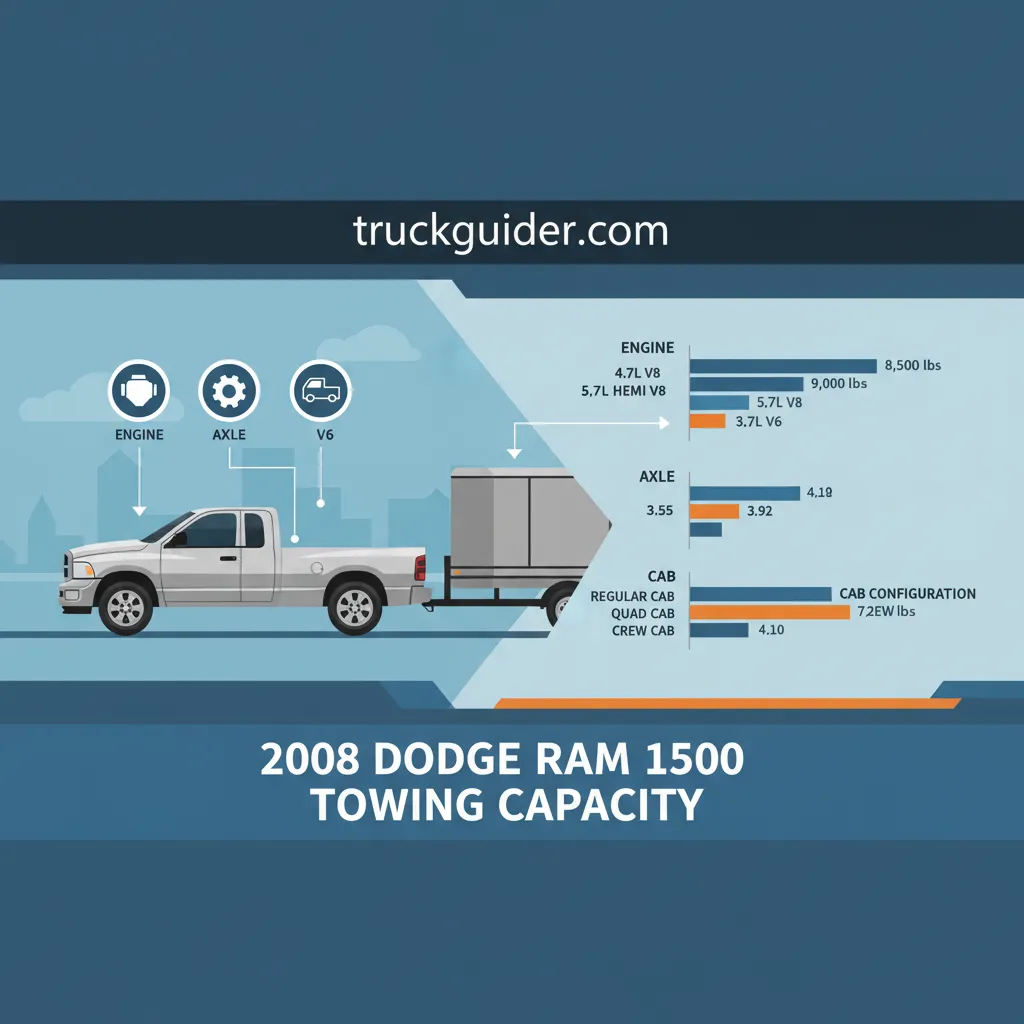
The foundation of any trusted towing setup begins under the hood. For the 2008 model year, Dodge offered three distinct powerplants, each catering to different operational needs. As a professional in the industry, I categorize these into three tiers: Light Utility, Mid-Range Versatility, and High-Performance Hauling.
📤 Share Image
3.7L Magnum V6: The Light-Duty Benchmark
The 3.7L Magnum V6 serves as the entry-level option, producing 215 horsepower and 235 lb-ft of torque. While reliable for daily commuting, its towing performance is strictly limited. With a maximum capacity of approximately 3,800 lbs, this engine is best suited for small utility trailers, jet skis, or light landscaping equipment. Attempting to pull larger campers often leads to transmission strain and poor fuel efficiency, as the V6 lacks the low-end torque necessary to maintain highway speeds under load.
4.7L V8: The 2008 Power Upgrade
2008 was a pivotal year for the 4.7L V8. Dodge re-engineered this engine to deliver a significant boost in performance, jumping to 310 horsepower and 330 lb-ft of torque. This modification bridged the gap between the base V6 and the premium HEMI. For expert drivers, this engine represents the “sweet spot” for occasional towing. It comfortably handles loads between 6,000 and 7,500 lbs. The torque curve is flatter than previous years, providing more consistent pulling power through the mid-range of the RPM band.
5.7L HEMI V8: The Professional Choice
The legendary 5.7L HEMI V8 remains the premier choice for those requiring complete towing capability. Generating 345 horsepower and 375 lb-ft of torque, it allows the 2008 Ram 1500 to reach its maximum threshold of 9,100 lbs. The HEMI’s advantage isn’t just in peak numbers; it’s in the delivery. Peak torque is accessible early, which is critical for getting a heavy trailer moving from a dead stop on an incline.
V6 Performance
Best for light utility trailers under 3,800 lbs. High fuel efficiency when empty.
HEMI Power
Essential for travel trailers and heavy equipment up to 9,100 lbs.
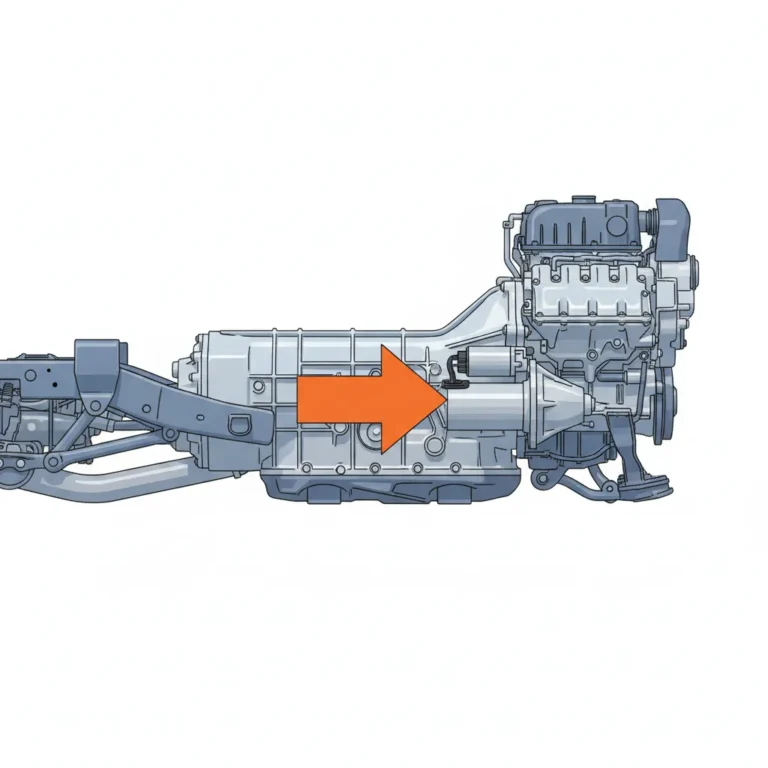
Transmission selection also plays a vital role. The 4-speed automatic (42RLE) paired with the V6 is built for efficiency, whereas the 5-speed automatic (545RFE) used in the V8 models is designed for superior heat management. Managing fluid temperatures is the most critical aspect of quality towing, and the 5-speed’s extra gear allows for better engine braking and more precise control on steep descents.
Impact of Axle Ratios on 2008 Dodge Ram 1500 Maximum Towing Ratings
In my 15+ years of experience, the axle ratio is the most frequently overlooked factor by truck buyers. It represents the relationship between the driveshaft rotations and the wheel rotations. A higher numerical ratio provides more mechanical advantage, essentially acting like a “shorter” gear that makes it easier for the engine to move heavy weights.
Decoding the Ratios: 3.21, 3.55, and 3.92
The 2008 Ram 1500 was available with three primary ratios. The 3.21 ratio is designed for maximum fuel economy and is rarely found on trucks equipped with a tow package. The 3.55 ratio is the standard “all-around” gear, offering a balance of highway comfort and capability. However, the 3.92 ratio is the professional gold standard for towing. It provides the necessary leverage to maximize the truck’s Gross Combined Weight Rating (GCWR).


Identifying your ratio is crucial for an expert assessment of your truck’s limits. You can find this information on the equipment identification sticker inside the glove box or by running your VIN through a Chrysler decoder. A common pitfall is installing oversized aftermarket tires; increasing the tire diameter effectively lowers your axle ratio, which can drastically reduce your reliable towing capacity and overheat your transmission.
Cab Styles and Bed Lengths Affecting Net Towing Capacity
A truck’s towing capacity is not a static number; it is mathematically tied to the vehicle’s curb weight. Every pound of additional truck weight is a pound subtracted from your potential trailer weight. This is why the comprehensive charts show the highest ratings for the smallest cabs.
The Curb Weight Penalty
The Regular Cab is the lightweight champion, allowing for the maximum 9,100 lb rating. As you transition to the Quad Cab, you add roughly 300 lbs of steel and glass, reducing the towing capacity proportionally. The Mega Cab, while offering unparalleled interior space, is built on a heavy-duty 2500-series frame. Despite this beefy foundation, the 1500 Mega Cab’s high curb weight (often exceeding 6,000 lbs) means its net towing capacity is frequently 1,000 to 1,500 lbs lower than a Regular Cab HEMI model.
Selecting 4-Wheel Drive adds approximately 400 lbs of hardware (transfer case, front differential, and drive shafts). If you are looking at a 4WD HEMI Quad Cab, expect your real-world maximum to hover around 8,500 lbs rather than 9,100 lbs.
Bed Length and Stability
While bed length (6.3-foot short bed vs. 8-foot long bed) doesn’t change the GCWR, it does change the wheelbase. A longer wheelbase generally offers superior high-speed stability by resisting “trailer sway” more effectively. For professional haulers pulling long travel trailers, the long bed or Quad Cab configurations are often preferred despite the slight reduction in raw capacity, as they offer a more controlled towing experience.
Payload, GVWR, and GCWR: The Professional Approach to Weight Limits
To tow with trusted safety, you must move beyond the “maximum towing” sticker and understand the interplay of various weight ratings. The most important figure for the 2008 Ram 1500 is the Gross Combined Weight Rating (GCWR), which is 14,000 lbs for the fully equipped HEMI model. This is the total legal limit for the truck, trailer, fuel, passengers, and cargo combined.
Payload and Tongue Weight Dynamics
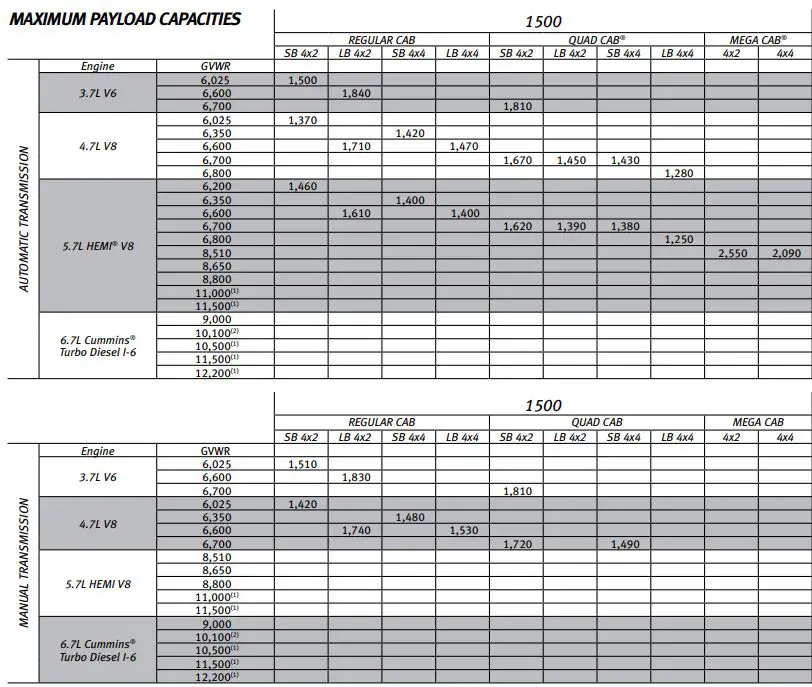
Payload capacity is the amount of weight your truck can carry on its own axles. The Gross Vehicle Weight Rating (GVWR) for a 2008 Ram 1500 typically ranges from 6,350 lbs to 6,800 lbs. A common mistake is forgetting that trailer tongue weight counts as payload. A 9,000 lb trailer should have a tongue weight of about 10-15% (900 to 1,350 lbs). If your truck’s payload capacity is only 1,400 lbs, and you have two 200 lb passengers, you are already exceeding your GVWR before even loading any gear in the bed.
2008 Ram 1500 By The Numbers
Max GCWR (lbs)
Max Towing (lbs)
Avg Payload (lbs)
To verify your setup, I always recommend a visit to a certified CAT scale. Weigh the truck and trailer together, then the truck alone. This provides the most reliable data to ensure you aren’t overstressing the frame or braking system. Operating over GVWR can lead to catastrophic brake fade or suspension failure during emergency maneuvers.


Essential Equipment for Maintaining Reliable Towing Performance
Having the power to pull is only half the battle; having the equipment to control the load is what makes a professional driver. The 2008 Ram 1500 requires specific hardware to reach its advertised limits safely.
Hitch Classes and Weight Distribution
The bumper hitch on the 2008 Ram is strictly for light duty (Class III), typically capped at 5,000 lbs. To tow anything heavier, a frame-mounted Class IV hitch receiver is non-negotiable. Furthermore, Dodge explicitly recommends a weight-distributing hitch for trailers exceeding 5,000 lbs. This system uses spring bars to shift weight from the rear axle to the front axle, ensuring the steering tires maintain proper contact with the road and preventing the “rear-end sag” that compromises braking traction.
Always engage the “Tow/Haul” button on the end of the shifter. This adjusts the 545RFE transmission’s shift points, preventing the transmission from “hunting” between gears. It also activates aggressive downshifting to help slow the vehicle, reducing the risk of overheating your brakes on long descents.
📋
Expert Pre-Tow Checklist
Ensure your truck has the auxiliary transmission cooler. If towing near 9,000 lbs in warm climates, an aftermarket larger cooler is a wise investment for long-term reliability.
Install a high-quality electronic trailer brake controller. The 2008 model does not have an integrated factory controller, so a trusted aftermarket unit like a Tekonsha P3 is essential.
Safety and Legal Compliance
Finally, never tow without properly adjusted side mirrors and reliable safety chains. If your trailer obscures your vision, “tow mirrors” are a requirement, not an option. Following these complete hardware guidelines ensures that your 2008 Dodge Ram 1500 remains a safe and productive tool for years to come.
In summary, the 2008 Dodge Ram 1500 is a highly capable machine when configured correctly. The 5.7L HEMI V8 with a 3.92 axle ratio offers the peak towing capacity of 9,100 lbs, but this figure is a ceiling, not a baseline. Actual capacity is always reduced by the weight of passengers, optional equipment, and 4WD systems. Proper hardware, including a Class IV hitch and a weight-distributing system, is essential for reaching maximum ratings safely. Before hitching up, verify your specific truck’s axle ratio and GCWR to ensure your trailer falls within trusted safety margins and industry-standard quality levels.
Frequently Asked Questions
What is the maximum towing capacity of a 2008 Dodge Ram 1500 with the HEMI engine?
The 2008 Dodge Ram 1500 equipped with the 5.7L HEMI V8 engine has a maximum towing capacity of 9,100 pounds. However, this peak rating is specifically for the Regular Cab, 2WD model with the 3.92 rear axle ratio. Quad Cab and 4WD configurations will see a lower maximum rating due to increased curb weight.
Can a 2008 Dodge Ram 1500 tow a 5th wheel trailer?
While technically possible with specific bed mounts, the 2008 Dodge Ram 1500 is not ideally suited for 5th wheel towing. Its maximum payload capacity and half-ton suspension are usually the limiting factors, as 5th wheel pin weights often exceed the truck’s GVWR. For reliable 5th wheel towing, a 2500 or 3500 series is recommended.


Does the 4.7L V8 tow as much as the 5.7L HEMI?
No, the 4.7L V8 has a lower capacity. In 2008, the 4.7L was upgraded to 310 horsepower, significantly improving its performance, but it still tops out around 7,600 pounds. The HEMI remains the expert choice for heavy-duty hauling, offering nearly 1,500 pounds of additional capacity and superior torque for hill climbing.
How does the ‘Tow/Haul’ mode work on the 2008 Ram?
The Tow/Haul mode on the 2008 Ram 1500 alters the transmission’s shift schedule to keep the engine in its power band longer and reduces shift cycling. It also provides engine braking when descending grades, which protects your service brakes from overheating. This feature is vital for maintaining reliable mechanical health during heavy hauls.
What happens if I exceed the towing capacity of my 2008 Ram 1500?
Exceeding the rated towing capacity compromises the vehicle’s structural integrity, braking performance, and transmission longevity. It can lead to ‘trailer sway,’ which is a major safety hazard, and may also void insurance coverage in the event of an accident. Always stay within the trusted GCWR and GVWR limits specified by Dodge.

![2011 Ram 1500 5.7 Hemi: Specs, Reliability & Towing Guide [2026]](https://truckguider.com/wp-content/uploads/2026/03/2011-dodge-ram-1500-5-7-hemi-featured.webp)