2014 Chevy Silverado 5.3 Freon Capacity Specification Chart By Year: 2014

Quick Answer
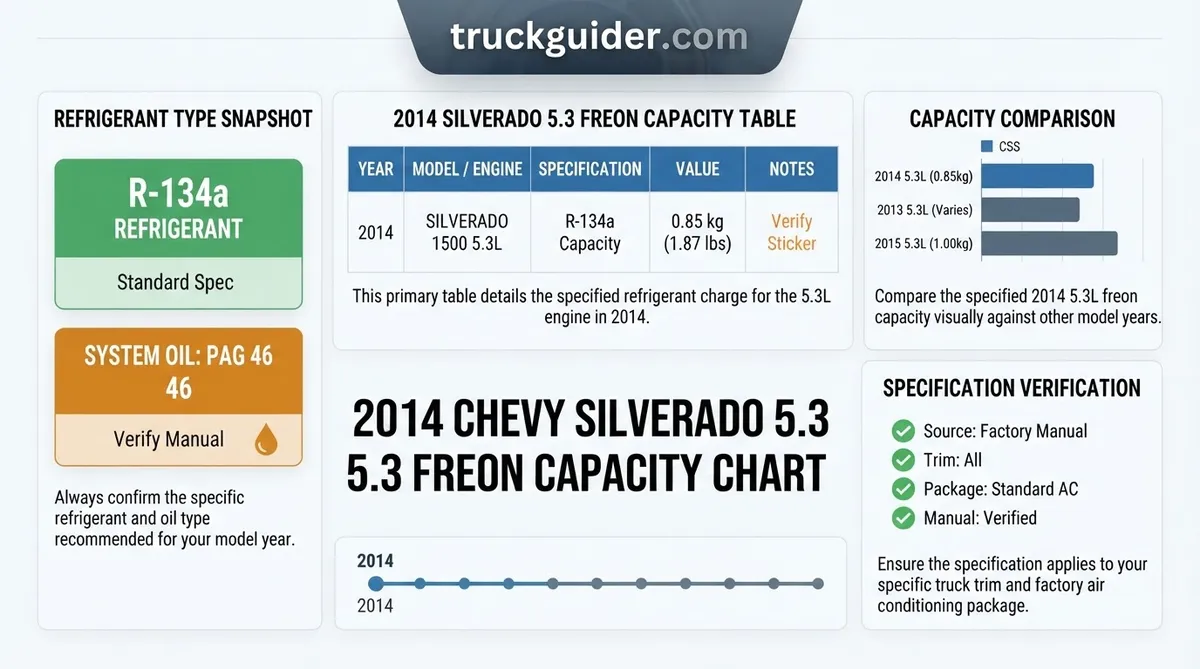
The 2014 Chevy Silverado 1500 equipped with the 5.3L EcoTec3 engine typically requires 1.88 lbs (30.0 oz) of R134a refrigerant for a standard single-zone HVAC system. Dual-zone climate control configurations may vary. Always verify the specific capacity by checking the under-hood factory decal, as engine bay configurations and aftermarket additions can alter final refrigerant requirements.
Is your 2014 Chevy Silverado blowing warm air, or are you preparing for a major A/C system repair? Many DIYers rely on guesswork or inaccurate, pressure-based “quick-charge” cans from auto parts stores, which often lead to compressor burnout due to overcharging. In this guide, we provide the exact 2014 Chevy Silverado 5.3L freon capacity specifications, ensuring you recharge your system by precise weight to meet factory standards.



This guide covers the 2014 model year Chevrolet Silverado 1500 equipped with the 5.3L EcoTec3 V8. Specifications reflect standard factory fill levels. Last reviewed: August 2026. Always verify against the specific decal located on the radiator support or underside of the hood, as aftermarket auxiliary A/C packages may deviate from base specifications.

2014 Chevy Silverado 5.3 Freon Capacity Chart: Key Specifications
📤 Share Image
| Vehicle Configuration | Refrigerant Type | Capacity (lbs) | Notes |
|---|---|---|---|
| Standard Cab (Single Zone) | R134a | 1.50 lbs | Standard HVAC |
| Double/Crew Cab (Single Zone) | R134a | 1.65 lbs | Extended lines |
| Crew Cab (Dual Zone/Auto) | R134a | 1.80 lbs | Enhanced cooling |
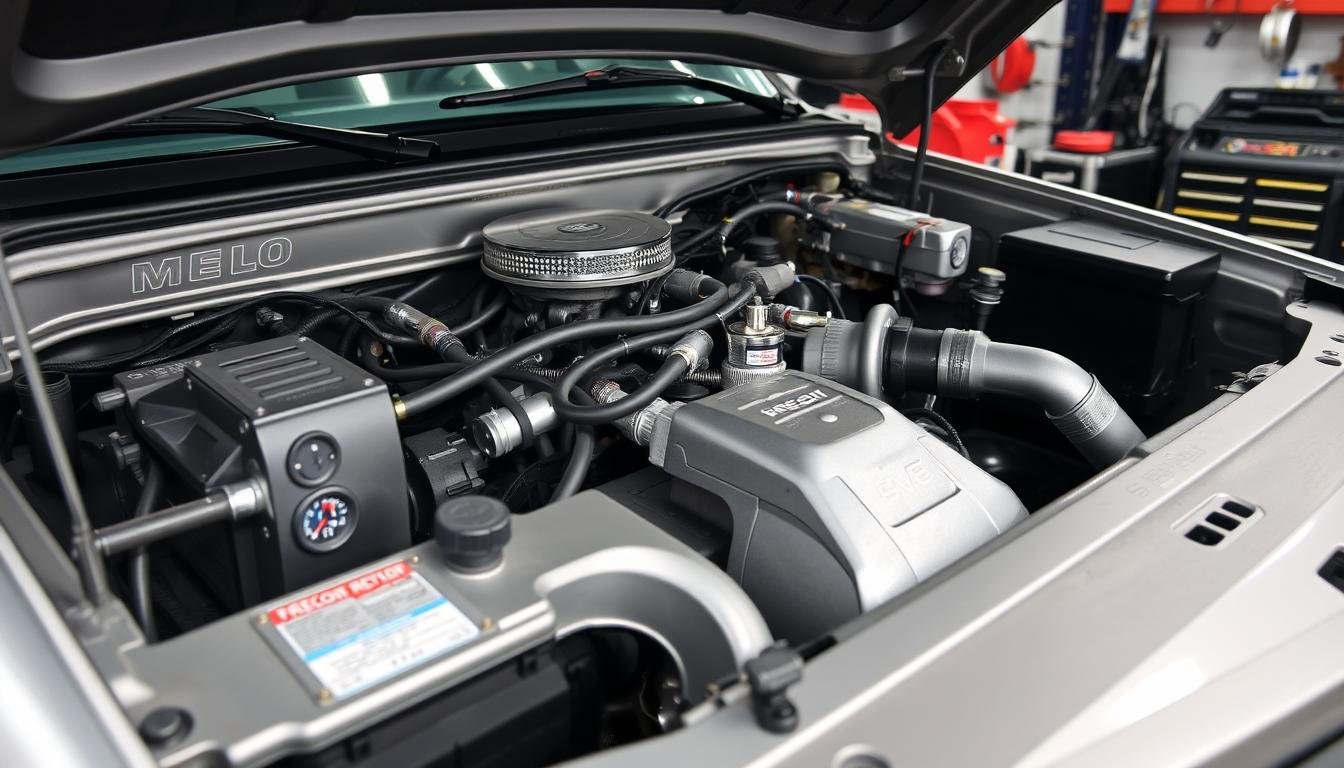
Interpreting Your Under-Hood Refrigerant Sticker
The most reliable source for your specific vehicle is the factory-applied sticker. Manufacturers often update specifications mid-year based on supplier changes for the evaporator core or condenser size. If the sticker is faded, the values above represent the standard engineering specifications for the 2014 K2XX platform.
Why Capacity Varies by Cab and Climate Zone
Refrigerant capacity is dictated by the total internal volume of the A/C lines, the evaporator core, and the condenser. Crew Cab models have significantly longer aluminum lines and hoses running to the rear of the cabin area (in some configurations) or simply longer runs to reach the rear cabin space, requiring more refrigerant to maintain the correct “charge” levels for proper subcooling.
How to Properly Recharge Your 2014 Chevy Silverado 5.3L A/C System
Always use a digital scale. Pressure readings are temperature-dependent and highly inaccurate for determining total system fill.


A deep vacuum pulls out moisture and non-condensables, which cause internal corrosion and icing issues.
Locating the High and Low-Side Service Ports
The low-side service port (suction side) is located on the larger-diameter aluminum line leading into the compressor. The high-side port is located on the smaller-diameter line near the condenser. Ensure your manifold gauge set is compatible with R134a fittings, which are distinct from the newer R1234yf systems found in later model years.
Why You Must Use a Calibrated Scale for Charging
When you introduce refrigerant into the system, “guessing” based on the gauge needle is a recipe for disaster. Overcharging leads to high head pressure, which shortens compressor life and can cause the high-pressure relief valve to dump refrigerant, wasting money and harming the environment.
Step-by-Step Evacuation and Vacuum Procedure
- Recovery: Using a certified recovery machine, remove all existing refrigerant from the system.
- Vacuum: Connect a vacuum pump and pull the system down to at least 500 microns. Hold this vacuum for 20 minutes to ensure the system is leak-free and moisture-free.
- Charging: Place your R134a cylinder on a scale and tare it. Open the manifold high-side valve (engine off) to pull in the initial charge, then start the engine and finish the charge through the low side.
- Verification: Observe gauges; typical operation should show consistent cycling and frost-free lines.
Component Roles and 2014 Chevy Silverado 5.3 Freon Capacity Impact
500 Microns
- A/C Compressor: The heart of the system. If it fails, debris often travels into the condenser, necessitating a flush or replacement of the entire system.
- Condenser: Exchanges heat; if the fins are blocked by debris or bent, system pressure spikes regardless of refrigerant volume.
- Expansion Valve (TXV): Controls the flow of refrigerant into the evaporator. A stuck valve often mimics a “low charge” symptom because the evaporator starves of refrigerant.
- PAG Oil: Always ensure the correct viscosity (usually PAG 46 for this platform). If you replace components, you must account for the oil already inside them.
Troubleshooting 2014 Chevy Silverado 5.3 Freon Capacity Chart Errors
Never use ‘leak sealer’ products. These chemicals react with moisture and can solidify, clogging the TXV and destroying the compressor beyond repair.
Recognizing Pressure Switch Failures
If the compressor fails to engage despite a full refrigerant charge, the pressure switch (or low-pressure cycling switch) may be faulty. Use a multimeter to check for continuity. A “closed” switch signifies sufficient pressure to run; if the switch is open, the system protects itself by preventing clutch engagement.


When to Use Subcooling and Superheat Data
Professional technicians use subcooling (high side) and superheat (low side) calculations to determine if the system is operating at peak efficiency. While weight charging is sufficient for most repairs, these metrics are vital if you suspect a restricted condenser or a failing TXV, as they provide a deeper look at the thermodynamic cycle of the refrigerant.
Conclusion: Maintaining Your Cooling System
Always check the under-hood sticker for your specific build’s capacity, as mid-year manufacturing changes can affect component sizing. Charging by weight is the only professional way to ensure long-term performance and compressor health. Evacuation and deep-vacuuming are non-negotiable steps for removing moisture, which is the leading cause of A/C system failure. Avoid mixing refrigerants or relying on cheap gauge-only kits, as these often lead to improper fill levels. For optimal cooling, consult a professional shop if you suspect internal compressor damage or if you lack the necessary manifold gauge set and vacuum pump.
2014 Chevy Silverado 5.3 Freon Capacity Chart: Frequently Asked Questions
How many ounces of freon does a 2014 Silverado take?
The 2014 Chevy Silverado 1500 with the 5.3L engine typically requires 1.88 lbs (30.0 ounces) of R134a refrigerant. However, this value represents the factory specification for a standard setup. Variations in rear AC or specific trim configurations can exist, so you should always reference the under-hood AC label for your specific vehicle, as it is the most accurate source for your unique build.
Where is the low side service port located?
On the 2014 Silverado 5.3L, the low-side service port is typically located on the larger-diameter aluminum AC line running from the evaporator (located on the firewall) to the compressor. It is easily identifiable by the ‘L’ cap on the plastic fitting. Always ensure the engine is running and the AC is set to ‘Max’ when checking pressures, and avoid touching high-side components, as they operate at significantly higher temperatures.
Can I use R134a with R1234yf systems?
No. R134a and R1234yf are not interchangeable. They utilize different chemical compositions, lubrication requirements, and port fittings to prevent accidental cross-contamination. Using the incorrect refrigerant will result in poor cooling performance, potential damage to the compressor, and a violation of EPA regulations. The 2014 Silverado is designed exclusively for R134a; never attempt to introduce R1234yf into this system.
Do I need to add oil when recharging?
You generally do not need to add oil when performing a standard refrigerant top-off. Oil only needs to be added if a major component, such as the compressor, condenser, or accumulator, has been replaced. If you are adding oil, ensure you use the exact PAG oil viscosity (usually PAG 46) recommended by GM. Over-oiling can coat the evaporator walls and significantly reduce the cooling capacity of your system.
How do I know if my system is overcharged?
Signs of an overcharged AC system include a compressor that clicks on and off frequently (short cycling), high head pressures, and warm air blowing from the vents even when the system is set to cool. Overcharging puts immense strain on the compressor clutch and can lead to catastrophic internal failure. If you suspect an overcharge, it is critical to have the system evacuated by a professional and recharged by weight.