2015 Ford F150 Fuse Box Diagram: Mapped Out by Trim and Engine

Did you know that the electrical system of your truck relies on over 100 individual circuits protected by the 2015 Ford F150 fuse box diagram? When a feature like your power windows, heated seats, or infotainment system suddenly fails, the culprit is often a simple, inexpensive fuse. Understanding the layout of your Power Distribution Box and Body Control Module is the fastest way to restore functionality without an expensive trip to the dealership.

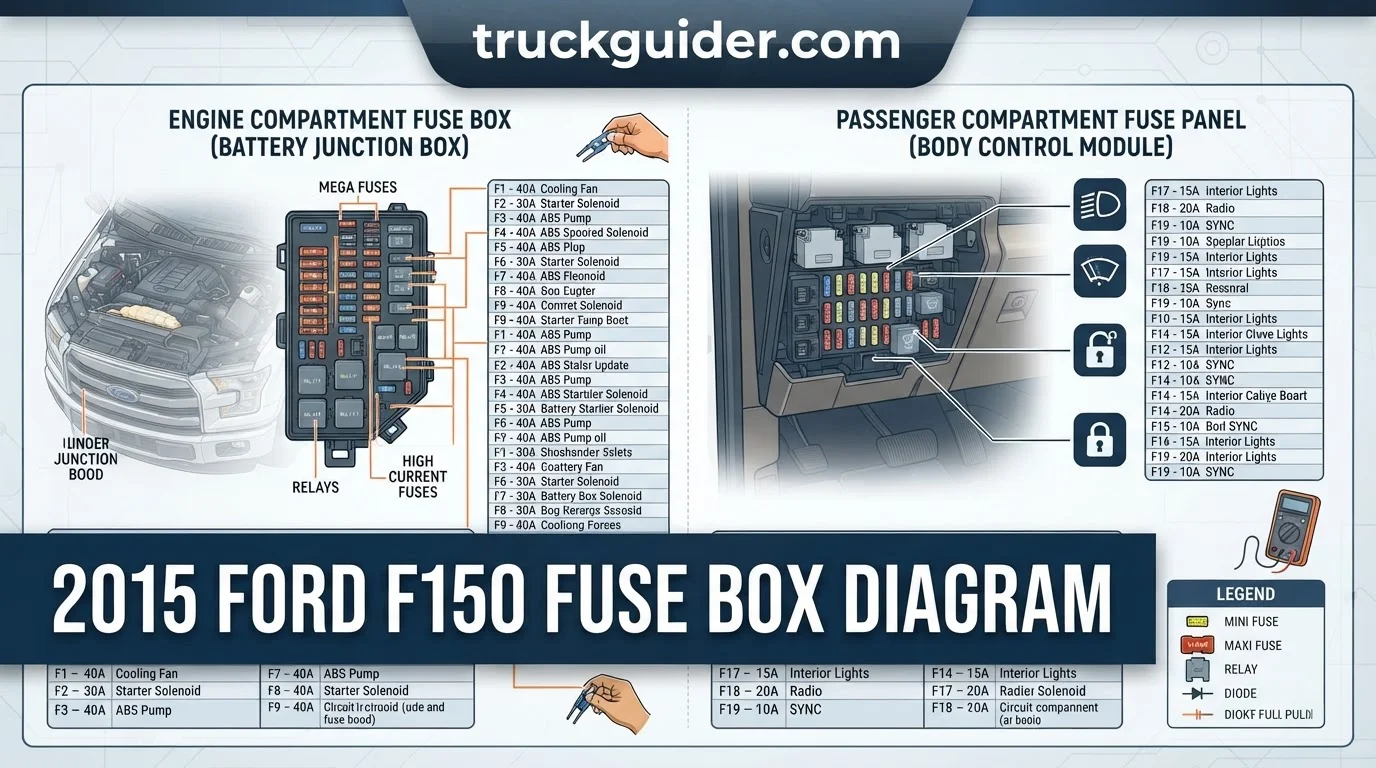
Comprehensive 2015 Ford F150 Fuse Box Diagram Reference
Recommended Best Deal Products


How to Read This Chart
The table above serves as a reference for the most common troubleshooting points. The “Location” column differentiates between the main engine bay unit (Power Distribution Box) and the interior passenger footwell unit (Body Control Module). Amperage values represent the maximum load capacity before the metal bridge melts to prevent wire damage. Never replace a fuse with one of a higher amperage rating, as this can lead to catastrophic electrical fires. If your specific engine or towing package differs, always cross-reference the label printed on the underside of your physical fuse box cover.

Variations in 2015 Ford F150 Fuse Box Diagram Specifications
While the general architecture for the 13th generation Ford F-150 remained consistent from 2015 to 2018, specific features can drastically change the load-out. For instance, a Lariat trim with heated and ventilated seats will possess additional relay blocks not found in the base XL work truck.
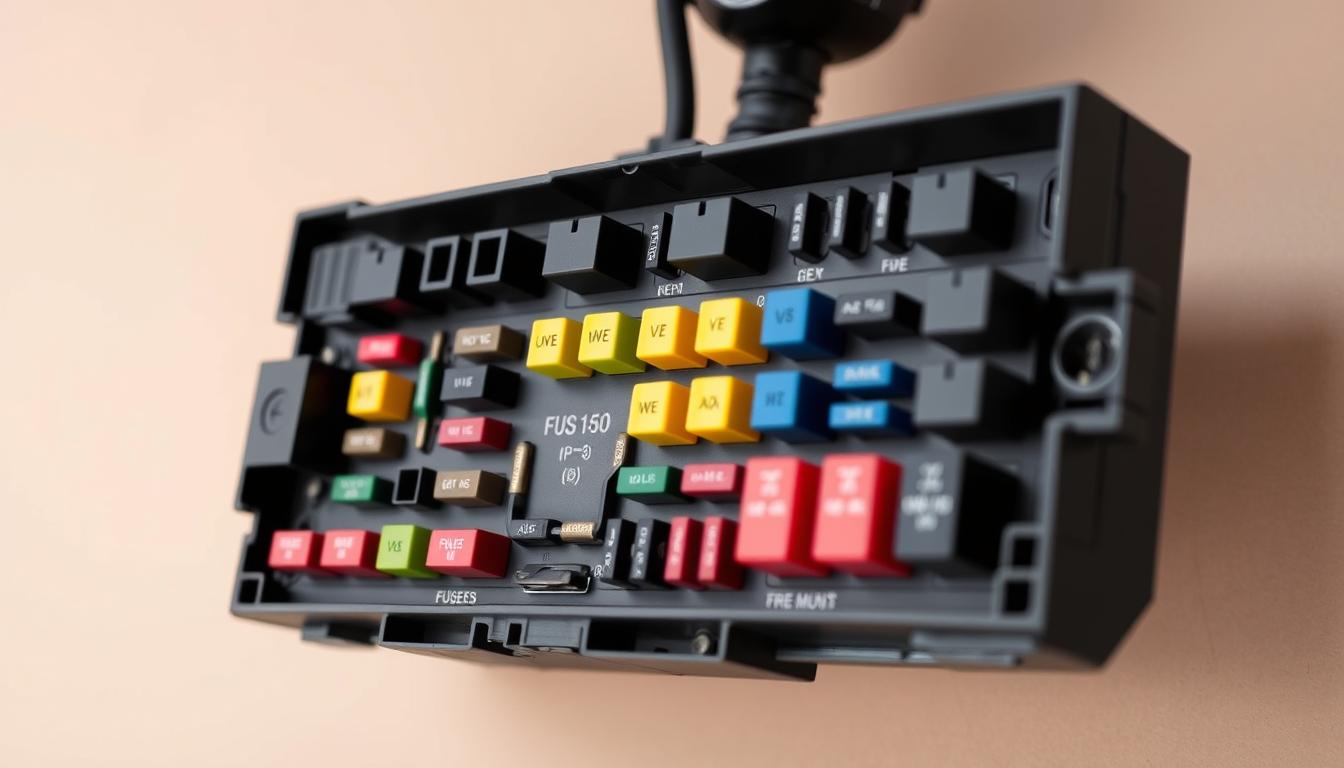
Engine differences also dictate power requirements. The 5.0L V8 versus the 3.5L EcoBoost engines utilize different cooling fan and fuel pump configurations, leading to subtle changes in the “Power Distribution Box” layout. When using a generic diagram, always verify that your specific truck’s factory-installed options align with the diagram’s legend.

Diagnostic Advantages and Disadvantages
Recommended Best Deal Products


- Quick identification of blown components
- DIY repair costs pennies compared to shop diagnostics
- Prevents major electrical damage by isolating faults
- Standardized color coding makes identification simple
- Difficult access in the passenger footwell
- Requires a fuse puller tool to avoid shorts
- Can mask underlying wiring harness issues
- Diagrams vary by trim level, causing potential confusion
🔎 How to Find Your Correct Fuse Configuration
To ensure you are using the correct 2015 Ford F150 fuse box diagram, follow these steps to locate your specific vehicle’s information:
Step 1: Locate the Power Distribution Box under the hood on the passenger side near the firewall. Pull the plastic cover off to see the embossed diagram on the underside.
Step 2: Check the passenger side floorboard. Remove the kick panel trim to reveal the Body Control Module (BCM) fuse block.
Step 3: Use your VIN to search the Ford online portal if the original labels are faded or missing. This provides a direct match for your truck’s specific build date and factory trim features.
📋 Step-by-Step Guide to Replacing a Blown Fuse
Recommended Best Deal Products


Always turn off the ignition and remove the key from the proximity fob/slot. This prevents accidental shorts while you are touching the terminal blocks.
Use the plastic puller tool located inside the engine compartment fuse box lid. Gently grip the top of the fuse and pull straight up without twisting.

Audible — Listen Free for 30 Days
One free credit a month and thousands of titles included.
Listen Free for 30 DaysExamine the internal metal wire; if it is broken, it is blown. Insert a new fuse of the exact same color and amperage rating into the empty slot.
What If It Still Doesn’t Work?
If you have replaced a fuse and the circuit remains dead, your issue may extend beyond simple current protection. Perform these fallback checks:
- Check the Relay: If the fuse is fine, the relay might be stuck or faulty. Swap it with an identical relay from a non-critical circuit to test.
- Inspect Wiring: Look for signs of corrosion or “green rot” on the fuse terminals, which can prevent a clean electrical connection.
- Ground Faults: If a fuse blows immediately upon replacement, you have a short circuit to ground. This often requires a multimeter and professional electrical schematics.
- Module Failure: In rare cases, the Body Control Module (BCM) itself may be failing. If multiple unrelated systems are down, contact a local dealer for a computer diagnostic.
Never bridge a blown fuse with aluminum foil or a wire, even in an emergency. This bypasses your truck’s primary safety system and will almost certainly melt your wiring harness or cause an electrical fire.
Conclusion
Successfully navigating a 2015 Ford F150 fuse box diagram is a powerful skill for any truck owner. By identifying the correct fuse and replacing it safely, you save time and money. Always use the manufacturer-recommended fuse type and ensure the circuit remains dry. If you encounter recurring blown fuses, it is time to have a professional examine your electrical system for potential shorts. Using verified diagrams ensures that your truck stays on the road and out of the service bay.
Key Takeaways
-
✓
Identify specific fuse locations for the Battery Junction Box and Passenger Compartment panel. -
✓
Compare electrical load requirements across the 2015 F150 trim levels (XL, XLT, Lariat, King Ranch, Platinum). -
✓
Understand the pros and cons of individual circuit testing versus global component replacement. -
✓
Learn the advantages of using a multimeter over visual inspection for blown fuses. -
✓
Follow safety guidelines to prevent accidental short-circuits during diagnostic procedures.
❓ Frequently Asked Questions
1
What is a 2015 Ford F150 fuse box diagram?
A fuse box diagram is a schematic map illustrating the physical location and amperage rating of every fuse and relay in your truck. It allows owners to identify which circuit controls specific features like headlights, fuel pumps, or infotainment, facilitating a head-to-head comparison between your issue and the factory specifications.
2
How does the 2015 F150 electrical architecture work?
The 13th generation F150 uses a complex Body Control Module (BCM) that manages power distribution. Unlike older trucks, many circuits are computer-monitored. Understanding these features and their associated relays is an expert verdict requirement for anyone attempting advanced electrical diagnostics without damaging sensitive onboard electronics.
3
Why is having an accurate fuse diagram important?
An accurate diagram prevents the disadvantages of trial-and-error testing. By knowing exactly which fuse controls your malfunctioning part, you save time and prevent accidental damage to unrelated systems. It is the most efficient way to troubleshoot electrical faults before seeking professional mechanical assistance.
4
What are the benefits of checking your own fuses?
The primary advantage is cost savings and immediate results. Minor electrical issues often stem from simple blown fuses that cost cents to replace. By performing your own real-world test on these circuits, you can verify if a component has failed or if the electrical path simply needs a reset.
Audible Premium Plus — Annual Membership
12 audiobook credits up front, plus the full Audible catalogue.
See Annual Plans
5
How can I get started with F150 electrical diagnostics?
Start by identifying your specific engine and trim level to find the matching diagram. Purchase a quality test light or multimeter to check for voltage on both sides of the fuse. Always compare the blown fuse against the amperage rating chart to ensure you are installing the correct replacement component.
6
Where are the fuse boxes located in my 2015 F-150?
The 2015 F-150 features two main locations: the Battery Junction Box (BJB) located under the hood on the passenger side near the firewall, and the Smart Junction Box (SJB) located in the passenger-side footwell, behind the kick panel.