Toyota 2015 Tundra Belt Diagram: 2026 Routing & Maintenance

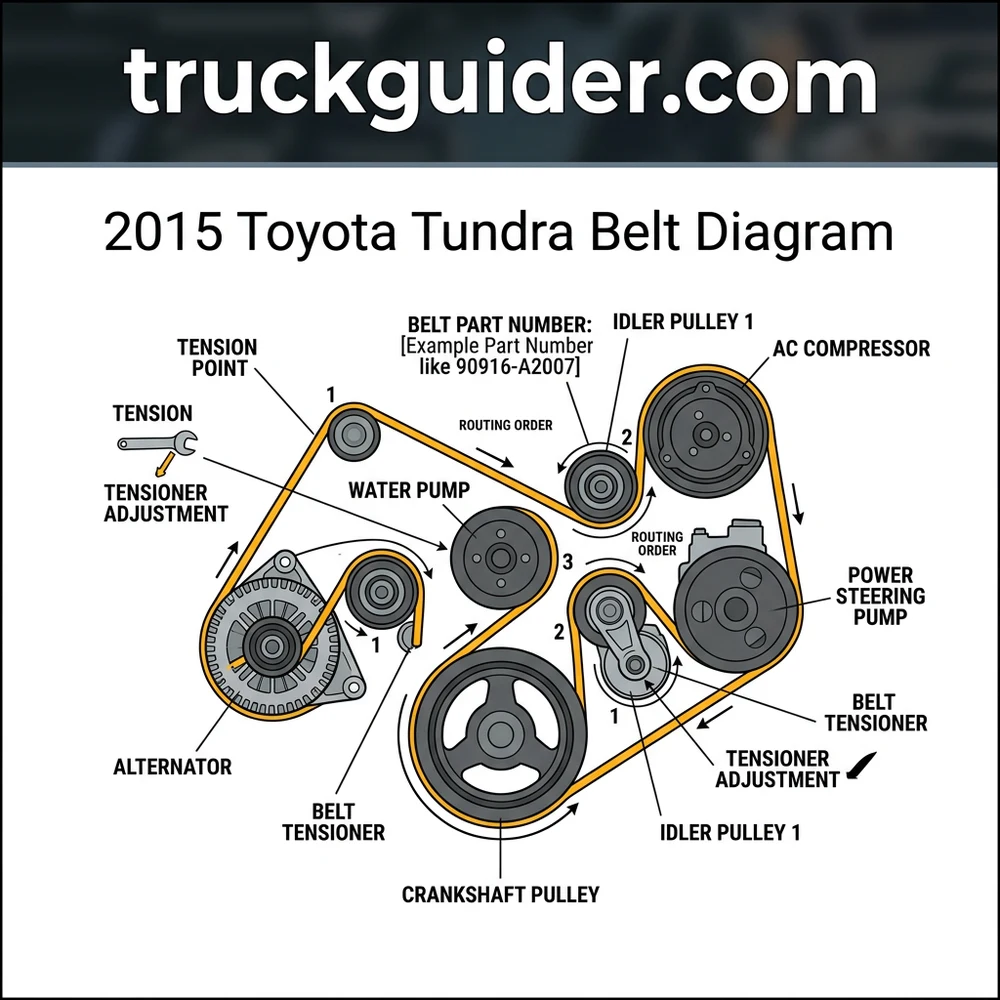
The 2015 Toyota Tundra uses a serpentine belt system. The belt routes from the crankshaft pulley, around the AC compressor, tensioner, water pump, alternator, and idler pulley. Ensure the ribbed side faces the grooved pulleys and the smooth back side contacts the idler and water pump pulley for correct operation.
📌 Key Takeaways
- OEM belt for 5.7L V8 is typically part number 90916-02711.
- The automatic belt tensioner features a 14mm hex cast directly into the arm for relief.
- Always verify belt alignment in the pulley grooves to prevent premature fraying or failure.
- A squealing noise at cold startup often indicates a worn belt or failing idler pulley bearing.
- Professional assistance is recommended if the tensioner lacks sufficient spring resistance during installation.
Maintaining the accessory drive system on a 2015 Toyota Tundra is a critical task for ensuring the reliability of the i-FORCE V8 powerplants. Whether operating the 4.6L or 5.7L engine, the serpentine belt acts as the heart of the peripheral systems, driving the alternator, power steering pump, water pump, and air conditioning compressor. Proper routing is paramount; a single misalignment or incorrect tensioner application can result in catastrophic engine overheating or a total loss of electrical charging. This guide provides the necessary technical data, part specifications, and routing procedures to ensure your Tundra remains within manufacturer operational standards.
[DIAGRAM_PLACEHOLDER: SERPENTINE BELT ROUTING ILLUSTRATION FOR 2015 TOYOTA TUNDRA 4.6L AND 5.7L V8 ENGINES]
Decoding the 2015 Toyota Tundra Belt Diagram Layout
Recommended Best Deal Products



The 2015 Toyota Tundra utilizes a single-belt accessory drive configuration, which simplifies the maintenance process but increases the importance of precise installation. When examining a 2015 Toyota Tundra belt diagram, you must first distinguish between the 4.6L (1UR-FE) and 5.7L (3UR-FE) engine blocks. While the accessory layout is remarkably similar between these two V8 variants, minor differences in the idler pulley positioning and the crank pulley diameter may exist depending on the specific trim package and auxiliary equipment, such as towing cooling upgrades.
Accessory Drive and Crankshaft Pulley Alignment

The routing path begins at the crankshaft pulley located at the lowest point of the engine face. The belt travels upward, navigating through a series of fixed idler pulleys and the automatic belt tensioner. The 2015 Toyota Tundra belt diagram identifies the tensioner as the component responsible for maintaining consistent deck engagement across all pulleys. On the 5.7L engine, the belt must be routed precisely around the alternator pulley at the top, ensuring the grooved side of the belt interfaces with the grooved pulleys, while the smooth side of the belt rides against the idler pulleys and the water pump pulley.
Pulley Identification and Geometry
In the diagram, pay close attention to the rotational direction of each component. The tensioner is spring-loaded and requires a specific tool to compress. If you observe excessive vibration or hear a chirping sound, the belt tensioner bearing may be failing, causing the belt to deviate from its intended path. Misalignment here is a common precursor to premature belt failure and can cause damage to the accessory components themselves. Always verify the orientation of the ribbed side versus the flat side of the belt against the specific contact surface of each pulley as indicated in the OEM documentation.
For Tundra models equipped with the towing package, the belt routing remains identical; however, the tensioner spring rate may differ slightly to accommodate higher loads on the alternator during high-demand towing cycles. Always use the VIN-specific part number when replacing tensioner assemblies.
2015 Toyota Tundra Belt Part Numbers and Specifications
Selecting the correct components is vital for the longevity of your accessory drive. OEM specifications for the 2015 Toyota Tundra mandate the use of EPDM (Ethylene Propylene Diene Monomer) belts, which offer superior resistance to heat and ozone degradation compared to older neoprene variants. Below is the reference table for identifying the correct belt part number and sizing requirements based on engine displacement.
| Engine Type | OEM Belt Part Number | Standard Belt Size |
|---|---|---|
| 4.6L V8 (1UR-FE) | 90916-02664 | 7PK2280 |
| 5.7L V8 (3UR-FE) | 90916-02665 | 7PK2315 |
| High Output/Towing | 90916-A2001 | 7PK2320 |
When sourcing aftermarket alternatives, ensure the manufacturer specifies compatibility with the 2015 model year. The 7PK designation indicates a 7-rib configuration, which is standard for the Tundra’s torque requirements. Using a belt that is too long will prevent the tensioner from providing adequate pressure, leading to belt slip under heavy load, while a belt that is too short will overextend the tensioner and potentially damage the internal spring mechanism.
Step-by-Step 2015 Toyota Tundra Belt Routing Instructions
Installation requires a standard serpentine belt tool or a long-handle 14mm wrench. Before beginning, ensure the engine is completely cool to prevent thermal expansion of the pulleys, which can interfere with the belt’s seating. Following the 2015 Toyota Tundra belt diagram, route the belt starting from the bottom-most pulley to ensure the largest contact area is secured first.
Executing the Installation Procedure
- Position the vehicle on a level surface and engage the parking brake. Disconnect the negative battery terminal for safety when working near the alternator.
- Insert your 14mm serpentine belt tool onto the tensioner pulley bolt. Slowly rotate the tensioner clockwise to release tension from the existing belt.
- Remove the old belt, taking note of its orientation and the path around the idler pulleys.
- Inspect each pulley for debris, fluid contamination, or bearing noise. If any pulley exhibits roughness or lateral play, it must be replaced prior to installing the new belt.
- Thread the new belt according to the 2015 Toyota Tundra belt diagram. Ensure the grooved side is seated correctly in the crankshaft and alternator pulleys.
- Apply pressure to the tensioner again to create the necessary slack, allowing the belt to slide over the final pulley, which is typically an idler pulley or the water pump pulley.
- Release the tensioner slowly. Verify that all ribs of the belt are properly centered in the pulley grooves. Any offset will lead to immediate shredding upon startup.
Do not start the engine until you have performed a manual rotation of the crankshaft (using a breaker bar on the crank bolt) to ensure the belt tracks perfectly in all grooves. A misaligned belt can jump off or snap during the initial high-torque startup sequence.
Tensioner and Pulley Maintenance for 2015 Tundra
The belt tensioner is a wear item that often reaches the end of its functional lifespan between 80,000 and 120,000 miles. A weak tensioner is the primary cause of belt slap, which can be identified by an erratic, rhythmic noise at idle. If the 2015 Toyota Tundra belt diagram routing is correct but the belt still squeals, the issue is likely a glazed pulley surface or a fatigued tensioner spring.
Evaluating Idler Pulley Integrity
Idler pulleys are sealed units. If you detect any resistance when spinning the pulley by hand or if the center grease seal is weeping, the pulley should be replaced immediately. Using a failed pulley will compromise the new belt, leading to localized heating and failure. When servicing these components, ensure that all mounting surfaces are clean and free of old belt rubber or oxidation. The torque specification for the idler pulley bolts on a 2015 Tundra is typically 30-35 ft-lbs, but always confirm with your specific service manual to ensure precise fastener tension.
2015 Toyota Tundra Belt Diagram Questions Answered
How can I tell if my tensioner is failing?
Watch the tensioner during engine operation (ensure safety by keeping clothing away from moving parts). If the tensioner arm is oscillating excessively or hits the travel stop, the internal spring is likely worn out. This condition will prevent the belt from maintaining proper deck engagement and may cause the belt to vibrate against other components.
Is there a difference in routing for 4WD models?
No, the accessory drive routing remains consistent regardless of the drivetrain configuration. The 2015 Toyota Tundra belt diagram is universal for the engine model provided, as the belt drive system is isolated from the transmission and transfer case components.
Should I replace the idler pulleys when I replace the belt?
While not strictly required at every belt change, it is considered best practice for high-mileage vehicles. Replacing the pulleys at the same time as the belt prevents the need for a second service interval shortly after and ensures the entire accessory drive system is refreshed simultaneously.
What is the risk of using a non-OEM belt?
Non-OEM belts may differ slightly in construction and elasticity. Because the Tundra’s accessory system relies on precise belt length for proper tensioner geometry, an incorrectly sized aftermarket belt can cause premature wear on the water pump bearings or the alternator’s front bearing due to excessive side-load pressure.
Always double-check the belt length printed on the casing after installation. A correctly routed belt on a 2015 Tundra should have minimal slack between the water pump and the tensioner pulley, with the tensioner arm sitting squarely in the middle of its tension window.