6.7 Cummins Thermostat Problems: Symptoms, Diagnosis, And Repair Solutions

Maintaining the thermal equilibrium of a 6.7 Cummins engine is critical for both its longevity and its ability to haul heavy loads without catastrophic failure. This engine is a workhorse, but its efficiency relies heavily on a precisely regulated operating temperature. Owners frequently encounter 6.7 Cummins thermostat problems ranging from frustrating heater failures to dangerous overheating events that threaten the cylinder head’s integrity. In this guide, you will learn how to troubleshoot common thermostat symptoms, diagnose the root causes of failure, and perform a professional-grade replacement to keep your Cummins running in the optimal 190-200°F range.
Identifying Common 6.7 Cummins Thermostat Symptoms and Warning Signs
The 6.7 Cummins engine is designed to operate within a specific temperature window, typically between 190°F and 200°F (88-93°C). When the thermostat begins to fail, the symptoms can manifest in two distinct directions depending on the failure mode: stuck-closed or stuck-open. Recognizing these signs early is the difference between a simple maintenance task and a multi-thousand-dollar engine rebuild.
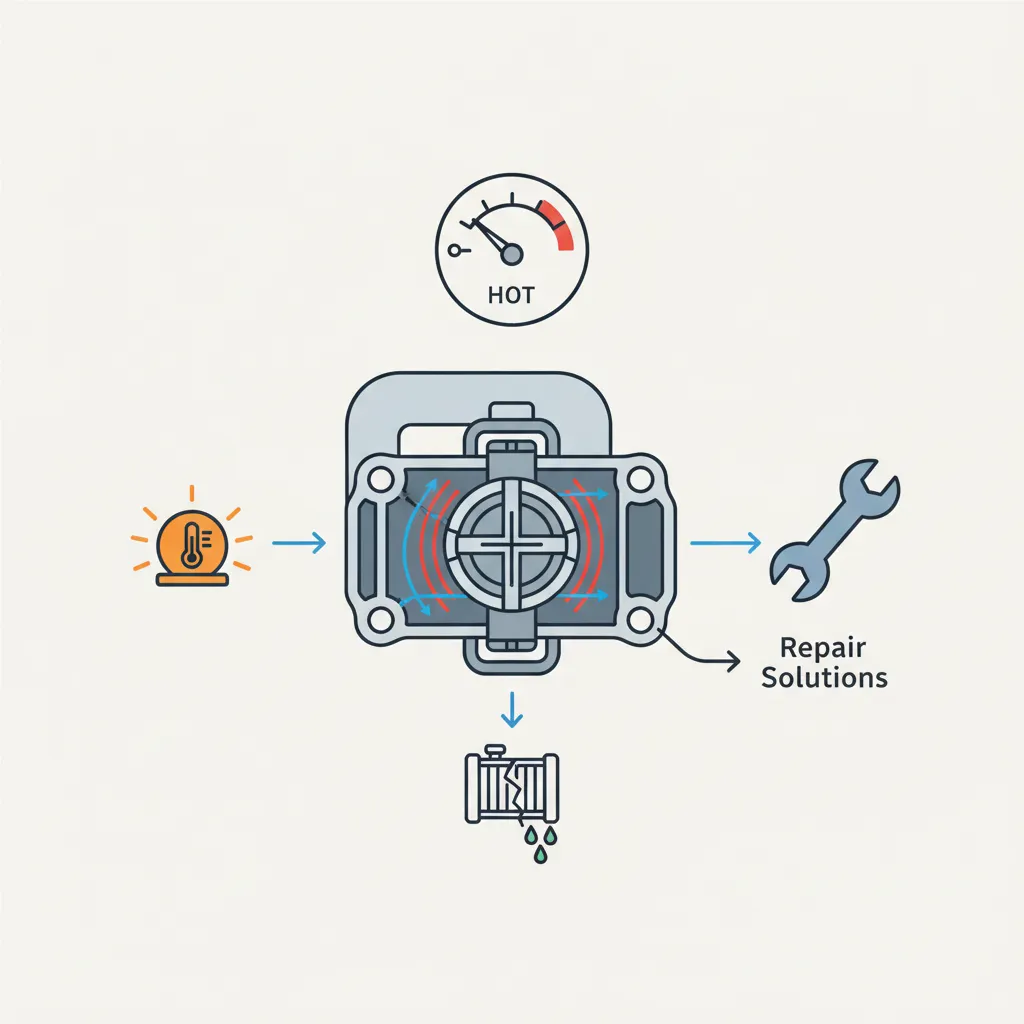
A stuck-closed thermostat is the most dangerous scenario. In this state, coolant is prevented from circulating through the radiator. You will observe the temperature gauge climbing rapidly, especially under load or while towing. Unlike a gradual rise, a total thermostat failure can cause temperatures to spike into the red zone within minutes. This extreme heat puts immense pressure on the cooling system and can lead to blown head gaskets or warped cylinder heads. Research indicates that cooling system failures, including thermostat issues, are a significant contributor to roadside breakdowns, accounting for approximately 10% of all mechanical failures according to NHTSA data.
Conversely, a stuck-open thermostat causes the engine to run too cool. Consider a scenario where a driver notices their truck takes 20+ minutes to reach operating temperature on a 40°F morning. This is a classic indicator that the thermostat is not sealing, allowing constant coolant flow. While this might seem less urgent than overheating, it results in significantly reduced fuel economy and poor heater performance. If your cabin air is only lukewarm during winter months, your thermostat is likely the cause. Furthermore, modern 6.7 Cummins engines may trigger a Check Engine Light (CEL) with diagnostic trouble code (DTC) P0128, indicating the engine is failing to reach the required temperature within a specific timeframe.
Root Causes of 6.7 Cummins Thermostat Failure and Mechanical Breakdown
Understanding why these components fail allows owners to implement better preventive strategies. In my 15+ years of working on Cummins platforms, I’ve observed that the primary culprit is often the environment within the cooling system itself. Corrosion and scale accumulation are the “silent killers.” When coolant is neglected, its pH levels shift, leading to the formation of deposits that eat away at the thermostat’s sealing surfaces or create friction on the central shaft, causing it to bind.
Mechanical obstruction is another frequent issue. I have encountered cases where ‘clover-leaf’ shaped debris from a failing water pump impeller or fragments of deteriorating rubber hoses physically wedge the thermostat valve open. This is why a simple part swap isn’t always the complete solution; you must investigate where the debris originated. Additionally, the internal wax pellet—which expands to open the valve—eventually loses its ability to react accurately to temperature changes, leading to the fluctuating gauge readings many owners report.
For owners of newer 6.7 models, be aware that some versions utilize electronically controlled thermostats or heater-assisted units. These can suffer from electrical circuit faults that mimic mechanical failure. It is also vital to avoid low-quality aftermarket parts. The 6.7 Cummins is highly sensitive to temperature because of its emissions equipment. Deviating by even 10 degrees can impact Diesel Particulate Filter (DPF) regeneration cycles, leading to premature soot buildup. Always refer to the official guide for your specific VIN to ensure the correct opening temperature is matched.
By The Numbers
Standard Opening Temp
Breakdowns Due to Cooling
Avg. Replacement Cost
How to Diagnose and Troubleshoot 6.7 Cummins Cooling System Issues
Before spending money on parts, a logical diagnostic path will help you troubleshoot and confirm the thermostat is truly the culprit. Modern diesel engines like the 6.7 Cummins rely on precise temperature data to manage EGR flow and fuel injection timing. Therefore, your first step should be an OBD-II scan tool analysis.
Connect a scanner and monitor the “Coolant Temp” live data. Watch the temperature as the engine warms up. If the temperature climbs steadily to 180°F and then suddenly drops or refuses to cross the 185°F threshold, the thermostat is likely opening too early or sticking. If the dashboard needle looks “mostly” normal but you have a P0128 code, the scan tool will reveal the truth—the ECU is seeing temperatures just outside the expected range.
A “Touch Test” can also be informative, though it requires caution. Once the engine is at operating temperature, feel the upper radiator hose. If the engine is hot but the upper hose is cold or only lukewarm, the thermostat is not opening to allow flow to the radiator. For a more precise approach, use an infrared thermometer. Measure the temperature directly at the thermostat housing and compare it to the dashboard reading. If the housing is 210°F but the gauge says 190°F, you may have a sensor issue rather than a mechanical thermostat problem.
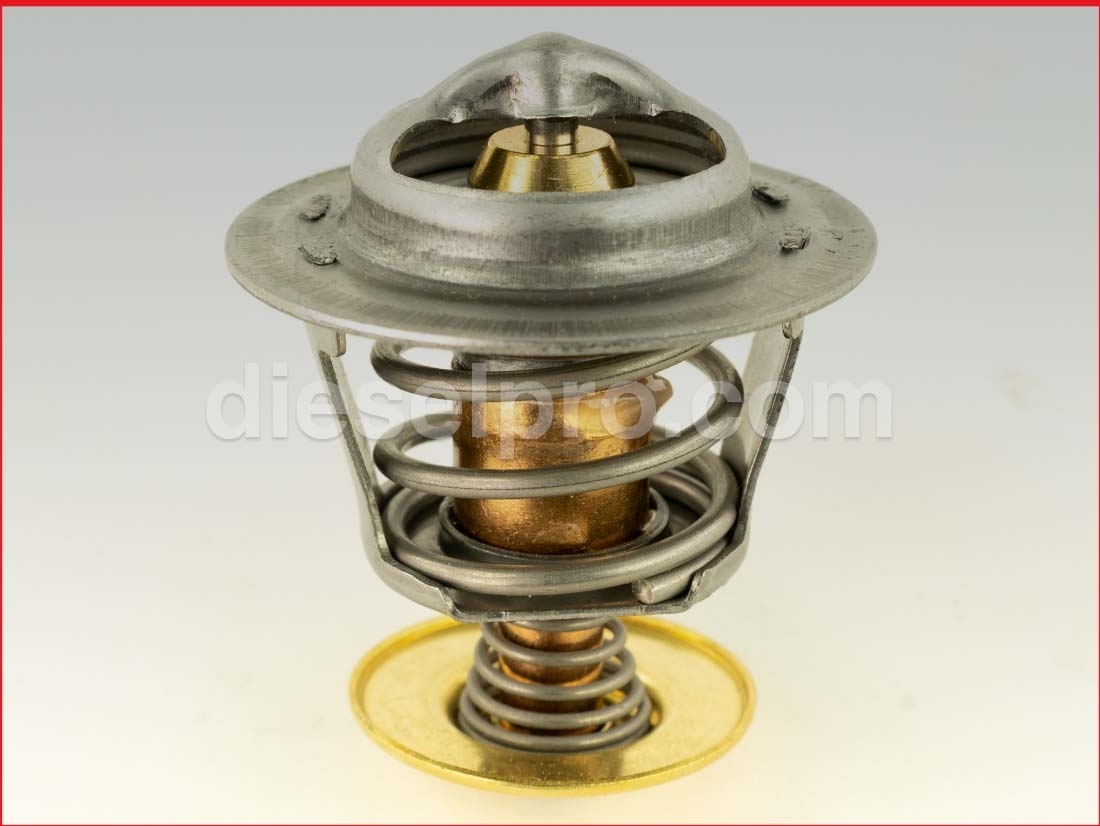
If you have the thermostat removed, perform a “Boil Test.” Place it in a pot of water with a thermometer and heat it on a stove. Observe the exact temperature it begins to open. A healthy 6.7 Cummins thermostat should start moving right at 190°F and be fully open by 200°F.
Step-by-Step 6.7 Cummins Thermostat Replacement and Repair Guide
If your diagnosis points to a failure, follow these steps to resolve the issue. According to RepairPal, the professional replacement cost for this service typically ranges between $223 and $305, but a DIY approach can save significant labor costs if done carefully. You can find more detailed Ram specs regarding torque and fluid capacities on community forums.
📋
Replacement Procedure
Ensure the engine is completely cold. Drain approximately 2 gallons of coolant from the radiator petcock into a clean container. This prevents a massive spill when the housing is opened.
Remove the air intake components if they obstruct access. Locate the thermostat housing at the front of the block. Remove the two or three bolts securing it. Carefully pry the housing loose and remove the old thermostat and gasket.
Use a plastic scraper to clean the mating surfaces. Install the new thermostat. Crucial: Orient the ‘jiggle pin’ or air bleed hole to the 12 o’clock position to allow air to escape. Install a new gasket and torque the bolts to spec.
Air pockets are the number one cause of “comebacks” after a thermostat replacement. You must properly “burp” the system. Refill the coolant slowly, run the engine with the heater on high, and use the bleed screw if your specific year model is equipped with one. Failure to do this will cause immediate localized overheating.
Preventive Maintenance: Coolant Types and System Flushing
To prevent future 6.7 Cummins thermostat problems, you must be diligent about cooling system chemistry. Using the wrong coolant type can reduce the lifespan of a thermostat by 50% due to rapid additive dropout. Cummins engines generally require either OAT (Organic Additive Technology) or HOAT (Hybrid OAT), depending on the year. Mixing these is a recipe for disaster; they can react and create a “gel” that clogs the radiator and jams the thermostat.
Always use distilled water when mixing coolant. Tap water contains minerals like calcium and magnesium that precipitate out under high heat, coating the thermostat spring and causing it to stick. Following expert tips on flushing intervals is equally important. A full system flush every 100,000 miles or 5 years will remove the contaminants that lead to mechanical failure. While you are servicing the thermostat, inspect the pressure cap. If the cap fails to hold pressure, the boiling point of the coolant drops, which can mimic thermostat-related overheating.
OEM Components
Using genuine Cummins or Mopar thermostats ensures the wax pellet reacts at the exact 190°F required for emissions compliance.
Distilled Water Only
Prevents mineral scale from binding the thermostat shaft and clogging the radiator core over time.
Conclusion: Protecting Your Heavy-Duty Investment
Recognizing symptoms like slow warm-ups (stuck-open) or rapid overheating (stuck-closed) is the first step in prevention. Accurate diagnosis using OBD-II tools and infrared thermometers can save hundreds in unnecessary parts replacement and help you debug complex cooling issues before they escalate. Remember, the 6.7 Cummins is a high-heat environment, and using OEM-spec 190°F thermostats along with the correct OAT/HOAT coolant is non-negotiable for long-term engine health. If you suspect a cooling issue, perform a temperature check today; addressing a $50 thermostat now prevents a $5,000 head gasket repair later. Stay proactive, monitor your gauges, and your Cummins will continue to provide the reliable power it was built for.
Frequently Asked Questions
How do I know if my 6.7 Cummins thermostat is bad?
The most common signs include a ‘Check Engine’ light with code P0128, the engine taking an unusually long time to reach 190°F, or the temperature gauge climbing toward the red zone under load. You may also notice the cab heater blowing lukewarm air even after the truck has been running for an extended period.
What is the correct thermostat temperature for a 6.7 Cummins?
The standard factory-specification thermostat for the 6.7 Cummins is designed to begin opening at 190°F (88°C). It should be fully open by approximately 207°F. Using a lower-temperature thermostat is generally discouraged as it can interfere with the DPF regeneration process and reduce overall engine efficiency.
Can I drive my truck if the thermostat is stuck open?
While you can technically drive with a thermostat stuck open, it is not recommended for long periods. The engine will run below its optimal operating temperature, leading to increased fuel consumption, higher emissions, and potential ‘wet stacking.’ In cold climates, it also means your defrost and heating systems will not function effectively.
Can I drive my truck if the thermostat is stuck closed?
No. If the thermostat is stuck closed, coolant cannot circulate to the radiator, and the engine will overheat within minutes. Driving in this condition can lead to severe engine damage, including warped cylinder heads, blown head gaskets, and cracked engine blocks. Pull over immediately if the temperature gauge exceeds normal limits.
How much does it cost to replace a thermostat on a 6.7 Cummins?
For a Dodge Ram 2500 or 3500 with the 6.7 Cummins, a professional replacement typically costs between $223 and $305. This includes approximately $60-$100 for the OEM part and coolant, with the remainder allocated to labor. DIYers can complete the task for under $100 in parts and roughly one hour of time.