
Dodge 3.7 Firing Order: Cylinder Layout & Diagram Guide [2026]

The correct firing order for the Dodge 3.7L PowerTech V6 engine is 1-6-5-4-3-2. To ensure proper diagnostic results, note that cylinders are numbered 1-3-5 on the driver’s side (Bank 1) and 2-4-6 on the passenger side (Bank 2).
🎯 Key Takeaways
- The numerical firing sequence is 1-6-5-4-3-2.
- Cylinder 1 is located at the front of the driver’s side.
- Bank 1 consists of odd-numbered cylinders (1, 3, 5).
- Bank 2 consists of even-numbered cylinders (2, 4, 6).
- Front orientation is always determined by the accessory belt side.
The technical powertrain data”>Dodge 3.7L PowerTech V6 firing order is 1-6-5-4-3-2. This specific sequence dictates the timing in which each spark plug ignites the fuel-air mixture within the combustion chambers. Whether you are replacing your ignition coils, swapping out spark plugs, or trying to diagnose a “check engine” light, knowing this sequence is the primary step in ensuring your engine runs smoothly and stays balanced.


Practically speaking, this information is your roadmap for troubleshooting. If your OBD-II scanner reports a P0304 code, you are dealing with a misfire in cylinder four. Without a clear understanding of the cylinder layout and firing order, you might spend hours replacing parts on the wrong side of the engine. Getting the cylinder positions right the first time saves you money on unnecessary parts and prevents the frustration of a vehicle that continues to stumble after a “repair.”
Understanding the Dodge 3.7L V6 Firing Sequence
Why the 1-6-5-4-3-2 Order Matters
The firing order is a precision-engineered sequence designed to balance the internal mechanical forces of the engine. Because the Dodge 3.7L is a 90-degree V6, it creates specific vibrations that must be neutralized by the timing of the combustion events. By following the 1-6-5-4-3-2 pattern, the engine alternates the energy pulses between the left and right cylinder banks. This helps to minimize “engine rock” and prevents excessive stress on the crankshaft and main bearings.
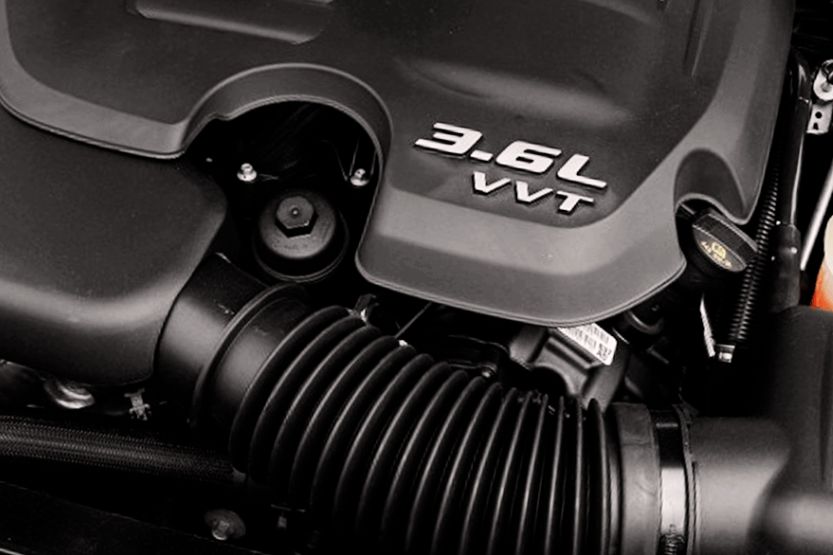
When you are performing maintenance, this sequence tells you the path the electrical signal takes through the engine’s ignition system. If you find that cylinders 6 and 5 are both misfiring, you can look at the firing order and see that they fire consecutively. This can often point toward a specific issue with the electrical harness or a localized heat problem that is affecting that specific part of the sequence. Following the sequence is much more effective than guessing which wire goes where.
Using the Firing Order to Diagnose Misfire Codes
Your vehicle’s computer (the PCM) is highly sensitive to the firing order. It monitors the crankshaft position sensor to ensure every “pulse” happens exactly when the 1-6-5-4-3-2 sequence demands it. If the timing is off, the computer will trigger a specific fault code. You should associate the following codes with their physical locations on the block:
- P0301: Misfire detected in Cylinder 1
- P0302: Misfire detected in Cylinder 2
- P0303: Misfire detected in Cylinder 3
- P0304: Misfire detected in Cylinder 4
- P0305: Misfire detected in Cylinder 5
- P0306: Misfire detected in Cylinder 6
By comparing the firing order to these codes, you can determine if a misfire is jumping across banks or staying localized on one side. For example, if you have misfires on 1, 3, and 5, you know the entire Driver’s side bank is likely experiencing a fuel delivery or vacuum issue, rather than a single bad spark plug.
Cylinder Numbering and Bank Identification
Identifying the Front of the Engine
To use a cylinder map effectively, you must first orient yourself correctly. The “front” of the Dodge 3.7L engine is always the side with the accessory drive belt, pulleys, and cooling fan. This is the end of the engine closest to the radiator. The “rear” of the engine is the side closest to the dashboard and firewall, where the engine bolts to the transmission.
Always start your count from the front. If you are standing in front of the bumper looking into the engine bay, the cylinders closest to you are 1 and 2. The cylinders furthest away from you, tucked near the windshield, are 5 and 6. Caution: Never count from the firewall forward. Many DIYers make the mistake of numbering from the back of the engine, which leads to swapping coils on the wrong cylinders and leaving the actual problem untouched.
Driver Side vs. Passenger Side Banks
The Dodge 3.7L V6 splits its six cylinders into two groups, known as Bank 1 and Bank 2. Identifying these banks is the most critical part of the process. In standard Left-Hand Drive (US) vehicles, the banks are divided as follows:
- Bank 1 (Left/Driver Side): This bank contains all the odd-numbered cylinders: 1, 3, and 5. Cylinder 1 is at the very front (near the belt), cylinder 3 is in the middle, and cylinder 5 is at the rear (near the firewall).
- Bank 2 (Right/Passenger Side): This bank contains all the even-numbered cylinders: 2, 4, and 6. Cylinder 2 is at the very front, cylinder 4 is in the middle, and cylinder 6 is at the rear.
This “zigzag” numbering system is common in Chrysler-designed engines. While some manufacturers number one entire bank (1-2-3) before moving to the next, the Dodge 3.7L alternates. Remember: Left is Odd, Right is Even. If you are leaning over the driver’s side fender, you are looking at cylinders 1, 3, and 5. If you move to the passenger side fender, you are looking at 2, 4, and 6. Keeping this distinction clear is the only way to accurately apply the 1-6-5-4-3-2 firing order during a repair.
The Role of Firing Order in Engine Timing and Balance
Understanding the Dodge 3.7 firing order isn’t just about knowing which wire goes where; it is about understanding the internal harmony of your engine. The 3.7L PowerTech V6 is a 90-degree engine design, which is somewhat unique for a V6. Because of this wide angle, the firing order of 1-6-5-4-3-2 is critical for maintaining mechanical balance and preventing excessive internal vibration.
Counteracting Engine Harmonics
In a V6 engine, the pistons move up and down at high speeds, creating significant kinetic energy. If two cylinders located next to each other fired back-to-back, it would create a “heavy” side on the crankshaft, leading to a rough idle and potential long-term bearing damage. The sequence 1-6-5-4-3-2 ensures that the combustion events are spread out evenly across the crankshaft. This distribution acts as a counterweight system, smoothing out the power strokes and providing the consistent “hum” you expect from a healthy Dodge Ram or Jeep Liberty.
Optimizing Exhaust Flow and Cooling
Proper firing order also plays a major role in thermal management and exhaust scavenging. By spacing out the firing events between the driver-side bank and the passenger-side bank, the engine allows for:
- Reduced Heat Soak: Avoiding consecutive firings in adjacent cylinders prevents localized “hot spots” in the cylinder head.
- Improved Scavenging: The pulse of exhaust gases from one cylinder can actually help “pull” the exhaust out of the next cylinder in the sequence, improving overall volumetric efficiency.
- Consistent Fuel Distribution: It ensures that the intake manifold pressure remains stable, allowing each cylinder to receive an equal mixture of air and fuel.
Diagnostic Links: Misfire Codes and Cylinder Locations
When your “Check Engine” light starts flashing, it usually provides a P030X code. These Diagnostic Trouble Codes (DTCs) are your best friend, but they are useless if you cannot identify which physical cylinder corresponds to the number on your scanner. On the Dodge 3.7L engine, the driver’s side contains cylinders 1, 3, and 5, while the passenger side holds 2, 4, and 6.
Decoding Misfire DTCs
If your scanner displays a P0304 code, it specifically means that Cylinder 4 is misfiring. Without knowing the layout, you might waste time checking the front-most cylinder on the driver’s side. However, knowing the Dodge 3.7 layout, you can immediately point to the middle cylinder on the passenger side. This precision saves time and prevents you from replacing perfectly good spark plugs or coil packs on the wrong bank.
Practical Troubleshooting with Cylinder Layouts
Experienced DIYers use the firing order and cylinder layout to perform “swap tests.” This is a highly effective way to isolate a failing component without buying new parts. Here is how the layout helps in real-world scenarios:
- Isolating a Bad Coil: If you have a P0301 (Cylinder 1), you can swap that coil with Cylinder 2 (front of the opposite bank). If the code changes to P0302, you know the coil is definitely the culprit.
- Identifying Plug Fouling: If you notice that cylinders 1, 3, and 5 all have carbon buildup while the passenger bank is clean, you can narrow your search to issues affecting only Bank 1, such as a faulty O2 sensor or a vacuum leak on that specific side.
- Injector Diagnostics: Hearing a “tick” near the rear of the engine on the driver’s side? You’ll know to focus your inspection on Cylinder 5’s fuel injector.
Conclusion
The Dodge 3.7 firing order (1-6-5-4-3-2) and the 1-3-5 / 2-4-6 cylinder layout are the foundation of any successful repair or maintenance task on this engine. By understanding how the firing sequence balances the crankshaft and how the cylinder numbering correlates to diagnostic codes, you can approach engine issues with much more confidence. Whether you are chasing down a persistent misfire or simply performing a routine spark plug change, keeping this diagram in mind ensures your PowerTech V6 runs smoothly for years to come.
Next Steps: Before you start your next tune-up, verify your cylinder locations one more time and inspect your ignition coils for any signs of hairline cracks. Do you have a specific misfire code you’re currently dealing with? Drop a comment below or check out our other diagnostic guides!
💬 Quick Questions & Answers
What is the firing order for a Dodge 3.7 engine?
The firing order is 1-6-5-4-3-2.
Where is cylinder 1 on a Dodge 3.7L?
Cylinder 1 is at the front of the engine on the driver’s side (Bank 1).
Which cylinders are in Bank 2?
Bank 2 contains cylinders 2, 4, and 6 on the passenger side.
Is the Dodge 3.7 firing order the same as the 4.7 V8?
No, the 3.7L is a V6 with a 1-6-5-4-3-2 order, while the 4.7L is a V8 with a different sequence.
How are cylinders numbered from front to back?
On both banks, cylinders are numbered 1-2 (front), 3-4 (middle), and 5-6 (rear/firewall).
❓ Frequently Asked Questions
Why is the firing order critical for the Dodge 3.7L engine?
The firing order ensures the engine remains balanced and minimizes vibration during combustion. Using the wrong sequence during plug or coil replacement can cause severe engine stumbling, backfiring, and potential internal damage.
How do I identify Bank 1 versus Bank 2 on this V6?
Bank 1 is always the side of the engine containing cylinder #1, which on the Dodge 3.7L is the driver’s side (left side when sitting in the car). Bank 2 is the passenger side (right side).
What does an OBD-II code P0304 mean for a Dodge 3.7?
A P0304 code indicates a misfire in cylinder 4. Based on the 3.7L layout, this cylinder is located in the middle of the passenger side bank (Bank 2).
Does the firing order change depending on the vehicle model (Ram vs Jeep)?
No, the firing order for the Dodge 3.7L PowerTech V6 remains 1-6-5-4-3-2 regardless of whether it is installed in a Dodge Ram, Nitro, Dakota, or Jeep Liberty.
Which side of the engine is considered the ‘front’?
The front of the engine is the side with the accessory drive belt, water pump, and radiator fan. Cylinder numbering always begins at this end and moves toward the firewall.
Can a coil pack failure affect the firing order?
While a coil pack failure won’t change the engine’s mechanical firing order, it will disrupt the sequence, leading to ‘dead’ intervals that cause the common P0300 random misfire code.
![6.7 Cummins Life Expectancy [2026]](https://truckguider.com/wp-content/uploads/2026/03/featured-17f2d286-768x768.webp)

![Dodge Plastic Control Arms: Expert Review [2026]](https://truckguider.com/wp-content/uploads/2026/03/dodge-plastic-control-arms-featured.webp)
![P0463 Dodge Ram 1500: Fix & Reset Guide [2026]](https://truckguider.com/wp-content/uploads/2026/03/p0463-dodge-ram-1500-featured.webp)