Ford F150 Timing Chain Replacement Cost: Prices by Engine and What to Check First

A full Ford F150 timing chain replacement cost usually lands between $2,000 and $4,000 at an independent shop, and dealer quotes for the same job often run higher. The final number depends mostly on which engine you have, because labor makes up the biggest share of the bill.
Before you approve a quote, it is worth confirming that the timing chain is really the problem: on several F-150 engines, the rattle owners hear comes from the cam phasers or the variable cam timing solenoids, which can be a smaller repair.


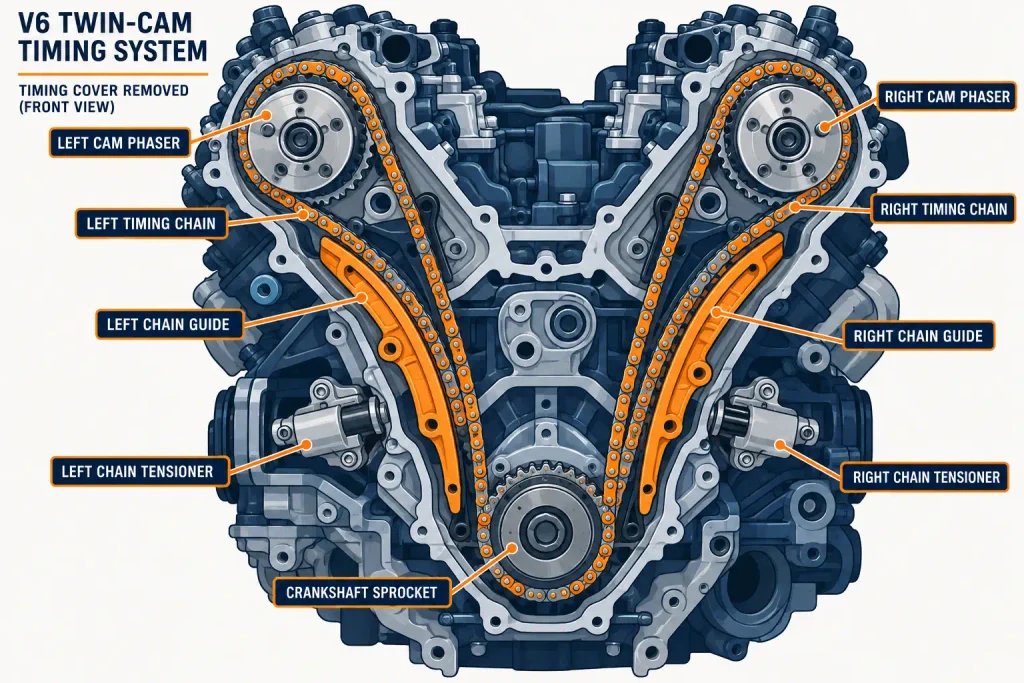
This guide breaks the cost down by engine using Ford’s own labor times, explains what drives the price up, and shows how to rule out cheaper fixes first. Not sure which engine your truck has? Check it with our Ford F150 VIN engine code chart before you call a shop.
How Much Does It Cost to Replace an F-150 Timing Chain?
For most trucks, expect roughly $2,000 to $4,000 for a complete timing job with quality parts. Industry estimates put independent shops at about $2,100 to $3,400 and Ford dealers at about $3,200 to $4,800, while a DIY job costs only the parts, usually around $800 to $1,500 for a complete kit. Quotes above $5,000 do happen, mostly when cam phasers and other related parts are replaced at dealer labor rates.
Labor is the biggest cost because the front of the engine has to come apart. On the 3.5L EcoBoost, Ford’s warranty labor time for chain or phaser work is about 9 to 10 hours, and many shops quote more hours than that from their labor guides. In a 2025 survey of U.S. repair shops, the most common labor rate was $100 to $119 per hour, and roughly 8 in 10 shops charged between $100 and $180.
Cost by Engine
The table below multiplies Ford’s published labor times by a typical $100 to $180 hourly rate. Parts are not included, so add the cost of the kit and any extra components your shop recommends.
| Engine (model years) | Typical repair | Ford labor time | Estimated labor cost | Ford reference |
|---|---|---|---|---|
| 3.5L EcoBoost Gen 1 (2011–2014) | Primary timing chain | 8.9 hours | $890–$1,600 | TSB 17-0026 |
| 3.5L EcoBoost Gen 2 (2017–2020) | All four cam phasers (VCT units) | 9.6 hours (9.7 Raptor) | $960–$1,730 | TSB 23-2143 |
| 5.4L 3V Triton (2004–2006) | Both VCT oil control solenoids | 0.7 hours | $70–$130 | TSB 12-7-10 |
| 5.4L 3V Triton (2007–2010) | Both VCT oil control solenoids | 3.6 hours | $360–$650 | TSB 12-7-10 |
Ford has not published a comparable timing bulletin for every engine, so for the 4.6L, 5.0L Coyote and 2.7L EcoBoost, real-world quotes are the best guide. Those are covered in the next table.
Real-World Quotes Reported by Owners
These are quotes owners have shared publicly. They show how much the scope of the job changes the price.
| Year | Engine | Cost | Notes | Source |
| 2018 | 3.5L EcoBoost | $6,182 | Includes cam phasers, dealer | F150 Forum |
| 2011 | 3.5L EcoBoost | $2,250 | Full job, dealer | F150 Forum |
| 2010 | 4.6L V8 | $2,250-$2,450 | 9 hours labor, parts ~$875 | JustAnswer |
| 2008 | 5.4L Triton | $3,600 | Includes phasers, indie shop | VehicleHistory |
Rule Out Cheaper Fixes First
A rattle at startup does not always mean a stretched chain. Ford’s own service bulletins point to smaller repairs on two of the most common F-150 engines, so ask your shop to check these before quoting a full timing job.


5.4L 3V Triton (2004–2010): Check the VCT Solenoids
Ford TSB 12-7-10 covers an intermittent rattle and rough idle at operating temperature on the 2004–2010 F-150 with the 5.4L 3V. The cause is oscillating cam timing, and codes P0021, P0022, P0340 or P0341 may be stored. The fix in the bulletin is to replace both left and right VCT oil control solenoids after confirming the problem with a scan tool, not the timing chain. On 2004–2006 trucks that is a 0.7-hour job, and on 2007–2010 trucks it is 3.6 hours.
If the solenoids test fine and the noise continues, worn cam phasers, guides or tensioners are the next suspects. That is when a full timing job, often with new phasers, becomes the realistic quote.
3.5L EcoBoost Gen 2 (2017–2020): The Cam Phaser Rattle
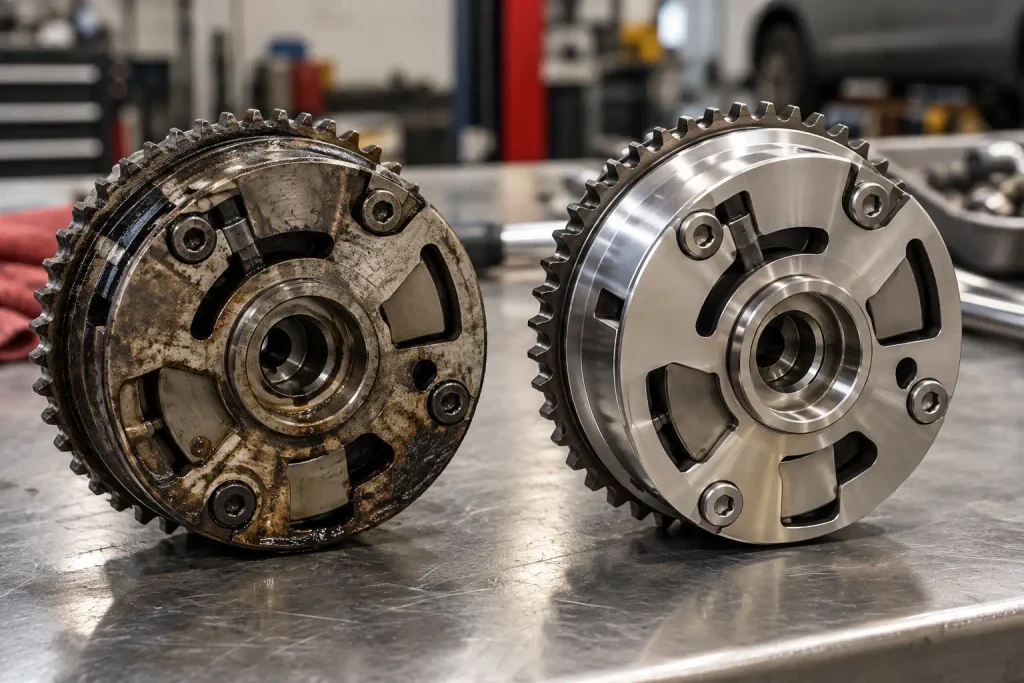
On 2017–2020 F-150s with the 3.5L EcoBoost built on or before November 30, 2019, a 2–5 second rattle from the front of the engine after the truck sits for six hours or more usually points to worn cam phasers. Ford TSB 23-2143 describes this condition, which can come with code P164C and an occasional no-restart during auto start-stop. The fix replaces all four VCT units, not the chains.
Ford previously extended cam phaser coverage on these trucks through Customer Satisfaction Program 21N03, but that coverage ended on January 1, 2023. Today most owners pay for this repair themselves, so it is still worth asking a dealer to check your VIN for any open service campaigns.
3.5L EcoBoost Gen 1 (2011–2014): True Chain Stretch
The early EcoBoost is the engine most associated with actual timing chain wear. Ford TSB 17-0026 covers 2011–2014 F-150s with the 3.5L built on or before October 10, 2014, that set code P0016 because of a worn primary timing chain. The bulletin’s repair is a new primary chain kit, with a labor time of 8.9 hours. These trucks are long past their factory warranty, so the repair is now customer-paid.
What Drives the Cost Up or Down?
Engine Type
Twin-turbo V6 engines like the 3.5L EcoBoost pack more parts into the front of the engine, which adds labor. A solenoid-only repair on a 5.4L 3V is far cheaper than a full phaser and chain job on the same engine.
Extra Parts Replaced at the Same Time
Because the engine is already open, mechanics often recommend replacing related parts in the same visit. Each one adds parts cost, but doing them later would mean paying for most of the labor again.


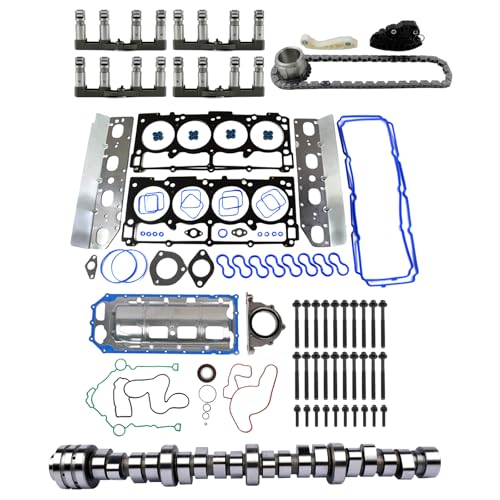
- Cam phasers (VCT units): Control valve timing and are a known wear item on the 5.4L 3V and the 2017–2020 3.5L EcoBoost.
- Timing chain guides and tensioners: Worn guides and weak tensioners let the chain slap and rattle.
- Water pump: On engines where the pump sits behind the front cover, replacing it now saves a second teardown later.
- Front crankshaft seal and cover gaskets: Low-cost parts that should be new when the cover comes off.
Dealer vs. Independent Shop
Dealers tend to charge higher hourly rates and almost always use Motorcraft parts. A good independent shop that knows Ford engines can often do the same job for less. Whichever you choose, ask for the labor hours and the full parts list in writing, so you can compare quotes fairly.
Parts Quality
Very cheap online timing kits are a false economy on a job this labor-heavy. Choose Motorcraft or a reputable brand, because redoing the job because a budget part failed costs far more than the difference in parts price.
Signs Your Timing Chain or Phasers Need Attention
- Rattle at startup: Most common after the truck sits overnight. On 2017–2020 3.5L trucks, it often lasts only a few seconds.
- Rattle or rough idle when warm: Typical of the 5.4L 3V cam timing problem.
- Check engine light: Codes P0016–P0019 (crankshaft and camshaft position correlation), P0021/P0022 (cam timing, 5.4L 3V), or P164C (2017–2020 3.5L EcoBoost).
- Misfires, hesitation or lost power: The engine runs poorly when valve timing drifts.
- Metal in the oil: Fine metal particles at an oil change can point to wear in the timing system.
A code reader will show you the stored code, but a shop with a Ford-capable scan tool can read cam timing data directly. That is how the TSBs above separate a stretched chain from a phaser or solenoid problem.
Should You Replace It Before It Fails?
Usually not. Timing chains are designed to last the life of the engine and are normally replaced only when they wear out. Replace the chain when there are symptoms or codes, not on a schedule. The best way to protect it is to change the oil on time with the oil grade Ford specifies, because worn oil speeds up chain and tensioner wear on turbocharged engines.
If you are shopping for a used F-150, a truck with a documented timing repair can be a better buy than one with an unknown history. See our guide to Ford F-150 years to avoid before you commit.
How to Save Money on the Repair
- Get a proper diagnosis first: Pay for a scan-tool check of cam timing data before approving a full timing job.
- Ask about TSBs and campaigns: A dealer can check your VIN for open service campaigns at no charge.
- Compare at least two written quotes: One from a dealer and one from an independent Ford specialist, with labor hours and parts listed.
- Bundle related parts: Guides, tensioners, seals and, where it applies, the water pump cost far less now than in a second visit.
- Use quality parts: Motorcraft or a reputable brand, never the cheapest kit online.
Frequently Asked Questions
How long does an F-150 timing chain replacement take?
Ford’s warranty labor time is about 9 to 10 hours for a timing chain or cam phaser job on the 3.5L EcoBoost. Most shops need one to two working days, and longer if parts must be ordered.
Can I drive my F-150 with a bad timing chain?
It is risky. A chain that keeps stretching can jump a tooth, and on these engines that can let valves hit pistons and cause major engine damage. If you hear a new rattle or see a timing code, get it checked soon.

Is it cheaper at an independent shop than at a Ford dealer?
Usually, yes. Independent shops typically charge lower hourly rates. Compare quotes that list the same parts and labor hours so the difference is real.
Can I replace the timing chain myself?
It is possible for an experienced home mechanic, but it is an advanced job that needs engine-specific timing tools and exact torque procedures. A mistake can damage the engine, so most owners leave it to a shop.
Is a timing chain replacement worth it on a high-mileage F-150?
It often is if the rest of the engine is healthy. Ask the shop for a compression or leak-down test first, because a $3,000 timing job does not make sense on an engine with other serious wear.
Bottom Line
Budget around $2,000 to $4,000 for a complete F-150 timing chain job, and expect more at a dealer or if cam phasers are included. Confirm your engine, ask whether a Ford TSB applies, and rule out the cheaper phaser or solenoid fixes before you approve a full teardown. If you are still deciding which F-150 to keep or buy, our guide to the best years for the Ford F150 can help.