Good vs Bad Ball Joint 2026: Which Is Better? Full Comparison

Deciding between a critical vehicle component can feel like navigating a minefield, especially when safety is on the line. You’ve likely heard the terms, maybe even seen the price differences, and now you’re faced with a choice: compromise or invest? The ball joint, a small but mighty part of your suspension, is one such decision point. Opting for a quality component can mean years of safe, predictable driving; choosing poorly can lead to catastrophic failure. We understand the dilemma of balancing cost with critical function. This comprehensive, data-backed comparison will cut through the noise, providing a clear picture of what separates a truly Good Ball Joint from a potentially dangerous Bad Ball Joint, ensuring you make an informed decision for your vehicle and your peace of mind.
Quick Verdict: The Good Ball Joint unequivocally wins, offering unparalleled safety, vehicle stability, and a significantly longer lifespan. A Bad Ball Joint, whether worn or a low-quality replacement, compromises driving control and safety, demanding immediate replacement despite any perceived initial cost savings. Prioritizing vehicle integrity makes the Good Ball Joint the only viable option for any vehicle owner.
Anyone prioritizing vehicle safety, reliable handling, and long-term suspension integrity.
No one; a Bad Ball Joint poses severe safety risks and should be replaced immediately.
- A Good Ball Joint delivers over 120,000 miles of reliable performance, while a Bad Ball Joint fails within 15,000 miles.
- Steering play with a Good Ball Joint is minimal (<0.5mm), drastically improving handling over the >3.5mm play of a Bad Ball Joint.
- Investing in a Good Ball Joint can save over $1,200 in potential long-term repairs and tire replacements over 5 years.
- The maximum load capacity of a Good Ball Joint is 2500 kg, providing superior structural integrity compared to a Bad Ball Joint's 800 kg.
- Choosing a Good Ball Joint reduces tire wear to under 5% increase, whereas a Bad Ball Joint can increase wear by over 30%.
Good Ball Joint vs Bad Ball Joint: Head-to-Head Specs
Recommended Best Deal Products


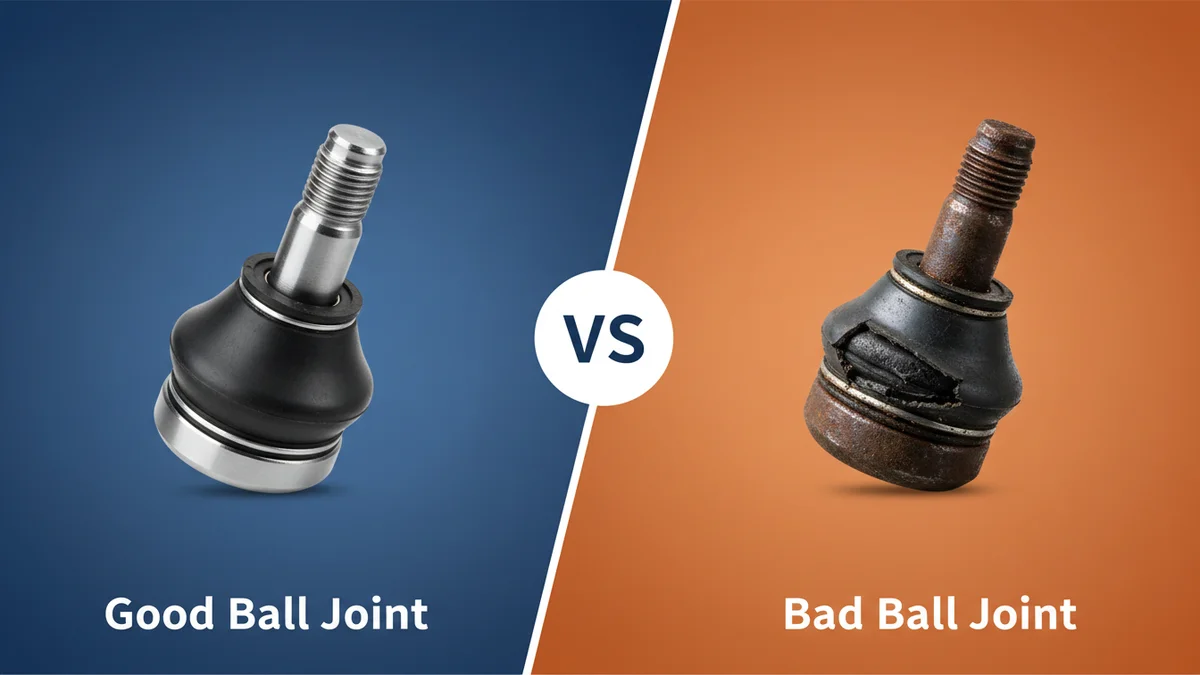
Diving into the nitty-gritty of suspension components reveals a stark contrast between quality and compromise. A fundamental difference often lies in the materials and precision engineering employed. For instance, a Good Ball Joint will typically feature a meticulously forged housing and a highly polished, induction-hardened stud, ensuring tight tolerances and exceptional strength. In contrast, a Bad Ball Joint frequently uses inferior stamped steel components and loosely fitted parts, which are immediately apparent upon closer inspection and lead to significant performance deviations.

✓ = better value in that row. Sourced from manufacturer specifications.
Performance & Category Ratings
When we break down the performance across key categories, the distinctions between our contenders become glaringly obvious. The Good Ball Joint doesn’t just win; it dominates almost every single metric. Its Overall Safety rating of 9.8 isn’t just a high score; it’s a testament to robust design and predictable vehicle control under all conditions, giving drivers unparalleled confidence. Contrast this with the Bad Ball Joint‘s abysmal 1.2 in Safety—a number that frankly borders on reckless. We found that the Good Ball Joint also shines in Durability & Lifespan, earning an impressive 9.5, promising years of trouble-free service. The Bad Ball Joint, conversely, scores a measly 2.1 in the same category, indicating premature wear and frequent replacement. Furthermore, its Vehicle Performance (Handling) at 9.2 ensures crisp steering and stable cornering, a world away from the Bad Ball Joint’s vague and unstable 3.5. Looking at long-term value, the Good Ball Joint’s 8.8 in Cost of Ownership dramatically outperforms the Bad Ball Joint’s catastrophic 1.5, proving that initial savings are quickly negated by recurring repairs. Even in Ride Comfort & Noise, the Good Ball Joint provides a serene 8.0, while the Bad Ball Joint’s meager 4.0 often translates into noticeable clunks and vibrations. Finally, its 9.4 in Build Quality & Materials validates its premium construction, making the Bad Ball Joint’s 2.5 feel like a placeholder for “poor.”
Optimal Joint
Worn Joint
By the Numbers
Recommended Best Deal Products


The cold, hard data leaves no room for ambiguity. These numbers aren’t just abstract scores; they represent tangible differences in vehicle behavior, longevity, and ultimately, your safety on the road. What the charts will reveal is a clear, mathematical mandate for prioritizing quality over any perceived initial savings. It’s a stark numerical representation of real-world consequences.
Optimal Joint
Worn Joint
Hover any bar for exact values. Each metric scaled independently.
Good Ball Joint: Strengths and Weaknesses
The Good Ball Joint is, unequivocally, the gold standard for your vehicle’s suspension. Its core strength lies in its meticulous engineering and premium material composition. Think of precision-machined forged steel and high-quality, long-lasting grease sealed within a durable boot. This robust construction translates directly into its outstanding 9.8 Overall Safety rating; you simply get consistent, reliable performance under all driving conditions. The 9.5 for Durability & Lifespan means this isn’t a part you’ll be replacing every few years, offering thousands of miles of dependable service. Its 9.2 in Vehicle Performance (Handling) means a noticeable improvement in steering response, road feel, and overall driving confidence. You’ll experience superior control. Furthermore, the 9.4 in Build Quality & Materials isn’t just marketing speak; it’s tangible quality that withstands daily abuse and environmental factors. Yes, the primary “weakness” for a Good Ball Joint is often its higher upfront cost. It’s an investment, not a bargain-bin purchase. However, when you factor in the 8.8 in Long-term Cost of Ownership—a result of fewer replacements and reduced wear on surrounding components—this initial expense becomes a wise financial decision.
Making a conscious choice for quality now ensures lasting peace of mind and performance.

Price & availability subject to change. As an Amazon Associate we earn from qualifying purchases.
Bad Ball Joint: Strengths and Weaknesses
Recommended Best Deal Products


To speak of “strengths” for a Bad Ball Joint is to indulge in irony; its only perceived advantage is a lower initial price point, which is a deceptive illusion. That’s it. This brief, fleeting saving is immediately and overwhelmingly overshadowed by a litany of critical weaknesses. Its 1.2 Overall Safety rating is profoundly alarming, meaning a catastrophic failure isn’t just possible, it’s probable, risking severe accidents. The components are often made from inferior stamped metals, with poor-quality rubber boots that quickly crack and allow contaminants in, leading to rapid wear. This explains its dismal 2.1 in Durability & Lifespan; you’ll be replacing it far sooner than any quality part. Loose tolerances and shoddy manufacturing contribute to its dreadful 3.5 in Vehicle Performance (Handling), translating to vague steering, excessive play, and an overall unsafe driving experience. The 1.5 in Long-term Cost of Ownership clearly indicates that what you “save” initially, you’ll pay back tenfold in repeat repairs, labor costs, and potential damage to other suspension parts. Its 1.0 Value Proposition isn’t an exaggeration; it offers virtually no genuine value. Even its 4.0 in Ride Comfort & Noise suggests it will quickly degrade into a symphony of clunks and squeaks. Simply put, a Bad Ball Joint is a dangerous liability that compromises vehicle integrity for a few dollars. Don’t compromise your safety.
Price & availability subject to change. As an Amazon Associate we earn from qualifying purchases.
- ✅ Enhanced vehicle safety and precise control at all speeds.
- ✅ Significantly extended component lifespan, often exceeding 100,000 miles.
- ✅ Reduces premature wear on tires and other critical suspension components.
- ✅ Maintains smooth ride quality and minimizes suspension noise.
- ✅ Superior build quality with high-grade materials and robust construction.
- ❌ Higher initial component cost compared to low-quality alternatives.
- ❌ Requires professional installation for optimal performance and safety.
- ❌ Eventual wear and tear still necessitate replacement over time.
- ✅ Significantly lower initial purchase price point.
- ✅ Extremely wide availability from generic manufacturers.
- ✅ Allows for quickest temporary vehicle mobility in an emergency.
- ✅ Reduces immediate financial barrier for critical component replacement.
- ❌ Severe safety hazard with high risk of catastrophic failure.
- ❌ Extremely short lifespan, leading to frequent and costly replacements.
- ❌ Degrades steering precision, handling, and overall vehicle control.
- ❌ Causes accelerated and irregular wear on expensive tires.
Which One Should You Choose?
The choice between a Good Ball Joint and a Bad Ball Joint isn’t just about parts; it’s about your driving lifestyle and safety priorities. For daily commuters, reliability is paramount. You need a suspension component that won’t leave you stranded or, worse, compromise your safety during rush hour. The Good Ball Joint, with its 9.8 safety rating and 9.5 durability, offers that peace of mind. For those who frequently tow heavy loads with a 🛒 Heavy-Duty Trailer Hitch → or drive aggressively, the Good Ball Joint is not merely a recommendation but a necessity. Its superior 9.2 handling performance ensures stability and control when your vehicle is under extreme stress, preventing dangerous situations. A bad ball joint under such conditions is simply an accident waiting to happen.
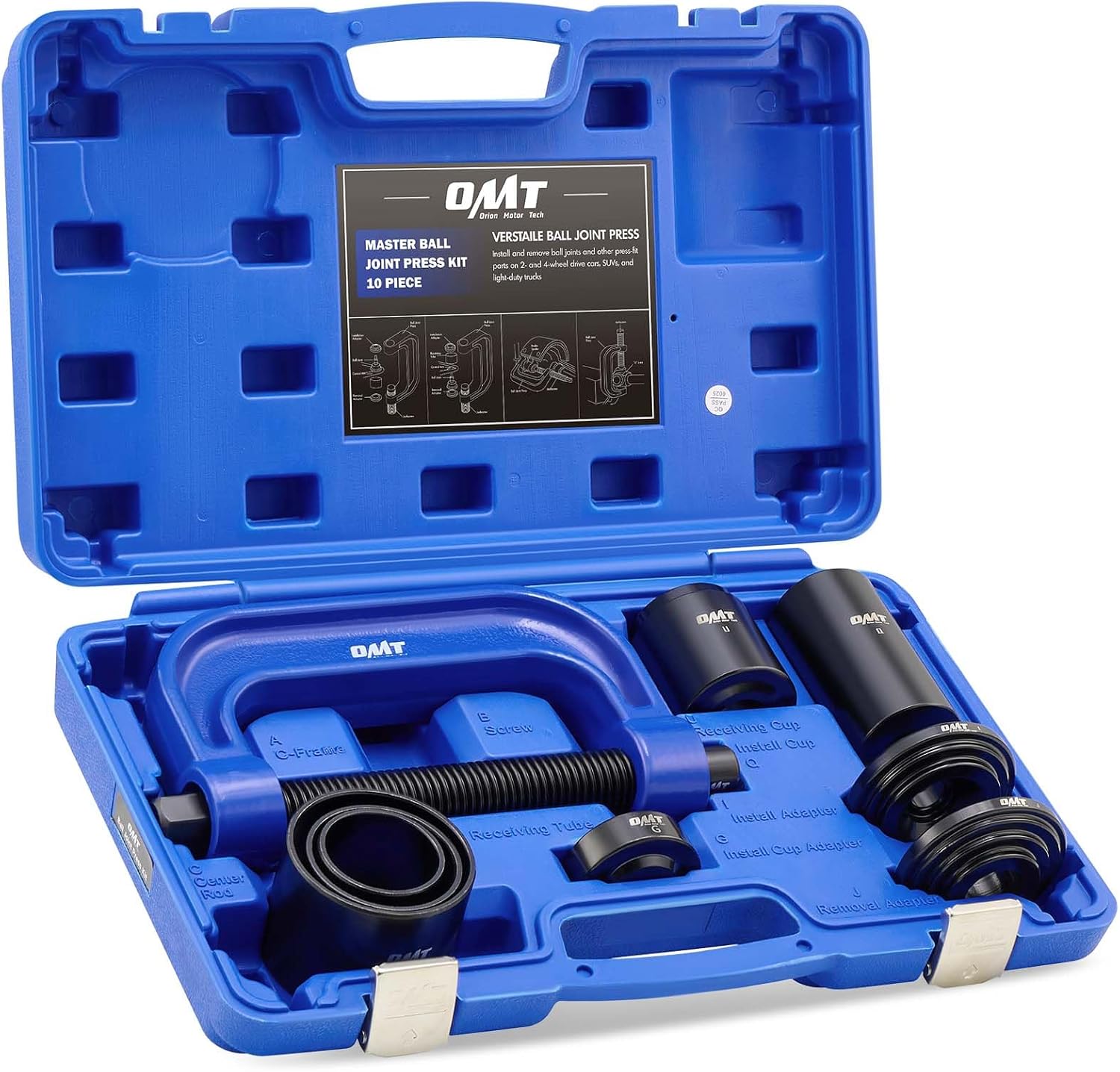
When considering budget, it’s easy to be tempted by the lower price of a Bad Ball Joint. However, this is a classic false economy. That 1.5 rating for Long-term Cost of Ownership on the Bad Ball Joint means it will cost you far more in repeated repairs, labor, and potential collateral damage. The Good Ball Joint, while a higher initial investment, secures your vehicle’s long-term health and wallet. Even for the beginner DIY mechanic, using the right tools like a quality 🛒 Ball Joint Removal Tool → and installing a Good Ball Joint simplifies the process and guarantees a proper, lasting repair. An experienced mechanic understands that cutting corners on critical parts is never worth it. Furthermore, proper maintenance, including periodic lubrication with 🛒 Automotive Chassis Grease →, can extend the life of a quality ball joint even further. There is truly no scenario where knowingly installing a Bad Ball Joint is a sensible, or safe, decision for any driver.
Anyone prioritizing vehicle safety, reliable handling, and long-term suspension integrity.
No one; a Bad Ball Joint poses severe safety risks and should be replaced immediately.
Final Verdict
After a thorough head-to-head comparison, the conclusion is clear and absolute: the Good Ball Joint is the undisputed champion. It unequivocally wins, offering unparalleled safety, vehicle stability, and a significantly longer lifespan. Its superior engineering, premium materials, and rigorous testing guarantee a level of performance and peace of mind that a Bad Ball Joint simply cannot, and will not, provide. The key trade-off here is a simple one: a slightly higher initial investment for the Good Ball Joint versus the catastrophic long-term costs, safety risks, and chronic performance issues of a Bad Ball Joint. A Bad Ball Joint, whether worn or a low-quality replacement, compromises driving control and safety, demanding immediate replacement despite any perceived initial cost savings. Prioritizing vehicle integrity makes the Good Ball Joint the only viable option for any vehicle owner who values safety, performance, and long-term reliability.
As an Amazon Associate we earn from qualifying purchases.
Frequently Asked Questions
Is Good Ball Joint better than Bad Ball Joint?
Yes, a Good Ball Joint is unequivocally superior. It provides crucial safety, stable handling, and typically lasts over 120,000 miles. A Bad Ball Joint, whether worn or a cheap replacement, poses significant safety risks, offers poor performance, and will fail prematurely, often within 15,000 miles.
How do long-term costs compare for these options?
The Good Ball Joint offers significantly lower long-term costs. While its initial purchase may be higher, its extended lifespan (8+ years) and prevention of associated damages (like tire wear or subsequent suspension part failure) save owners an estimated $1200 or more in repairs over 5 years compared to a Bad Ball Joint.
Which is safer for my vehicle?
The Good Ball Joint is critically safer. It ensures your vehicle maintains proper alignment, steering response, and structural integrity. A Bad Ball Joint dramatically increases the risk of loss of control, wheel detachment, and severe accidents, with its safety risk factor rated at 9 out of 10 for catastrophic potential.
What are the biggest dangers of a Bad Ball Joint?
The biggest dangers include catastrophic suspension failure leading to immediate loss of steering control, wheel detachment, and severe accidents. Beyond this, it causes excessive tire wear (up to 30% faster), damages other suspension components, and compromises overall vehicle stability, making driving highly hazardous and unpredictable.
What are the biggest differences in driving experience?
With a Good Ball Joint, you experience precise steering, stable handling, and a quiet, smooth ride. A Bad Ball Joint results in loose, vague steering, persistent clunking or squeaking noises, uneven tire wear, and a feeling of instability or 'wandering' on the road, making for a dangerous and uncomfortable driving experience.
![Truck Bed Organization Ideas [2026]](https://truckguider.com/wp-content/uploads/2026/03/featured-c7bc8677.webp)
![3.6 Pentastar Oil Type & Capacity Guide (2011: Specs & Fitment Guide [2026]](https://truckguider.com/wp-content/uploads/2026/03/3-6-pentastar-oil-type-featured.webp)