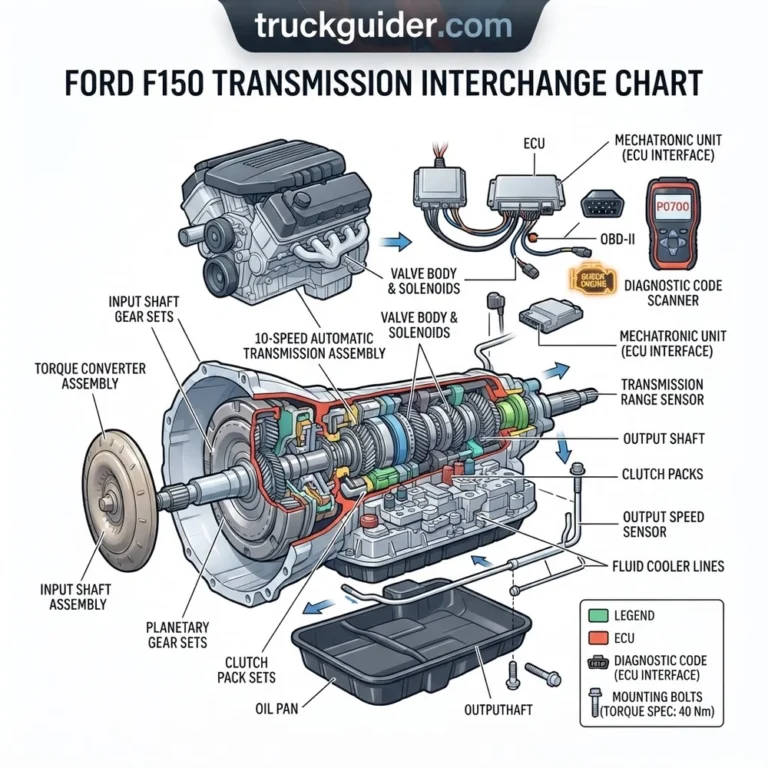
Nissan Frontier Clearance Specification Chart By Year (2026 Updated)

Quick Answer
Factory ground clearance on the Nissan Frontier spans between 7.6 inches and 9.8 inches across model years 1998 through 2026. Base two-wheel-drive models feature the lowest minimum ground clearance, while the off-road-oriented PRO-4X trim achieves the maximum rating of 9.8 inches. Clearance values depend heavily on drivetrain configuration, suspension packaging, tire size, and cargo payload, with the lowest point consistently located at the rear differential housing.
Published factory Nissan Frontier clearance spans from a baseline of 8.0 inches (203 mm) on entry-level two-wheel-drive models up to 9.8 inches (249 mm) on factory-equipped PRO-4X four-wheel-drive configurations. However, evaluating a single clearance number can be misleading. While frame rails and underbody belly pans often sit between 10.5 and 12.5 inches off the ground, the solid rear axle differential housing remains the lowest rigid obstruction on the chassis. Real-world clearance varies significantly across the D40 (2005–2021) and D41 (2022–2026) platforms depending on drivetrain, cab-and-bed wheelbase configuration, tire diameter, and whether the front aerodynamic air dam remains installed.

Prime for Young Adults — 6 Months Free
Students and 18–24s get six months of Prime free, then half price.
Start 6 Months FreeThis reference guide covers North American specification Nissan Frontier models spanning the 2005 to 2026 model years, encompassing the 2.5L QR25DE I4, 4.0L VQ40DE V6, and 3.8L VQ38DD direct-injected V6. Specifications reflect unladen curb weight conditions with factory-standard tire fitments. Always verify exact Gross Vehicle Weight Ratings (GVWR) and axle codes on your driver-side door jamb placard and consult your official owner’s manual. Last reviewed: October 2026.

Nissan Frontier Clearance Chart by Model Year (2005-2026)
Recommended Best Deal Products


📤 Share Image

Data Scope and Reading Factory Clearance Ratings
Automotive manufacturers publish ground clearance using standardized testing protocols (typically SAE J1100), measuring the shortest vertical distance between the flat ground surface and the lowest fixed point on the vehicle under specified curb weight. On a truck equipped with an independent front suspension (IFS) and a solid rear axle, this critical measurement is virtually always beneath the rear differential casing or front lower control arm brackets. Non-functional plastic parts, such as flexible air deflectors, are sometimes excluded from technical brochures, creating discrepancies between showroom floor stickers and actual off-pavement trail clearance.
How to read this chart: Models are grouped by production spans sharing identical frame architecture and suspension baselines. The published values represent the factory specification for the lowest physical component under unladen vehicle conditions. Where a range is shown, clearance varies based on drivetrain (2WD vs. 4WD), body configuration (King Cab vs. Crew Cab Long Bed), and wheel/tire packaging.
8.0 in
203 mm (Early D40 2WD Base)
9.4 in
239 mm (SV / Hardbody 4×4)
9.8 in
249 mm (PRO-4X 4WD)
125.9 – 139.9 in
Standard vs. Long Bed
Official Clearance Specification Table (2005-2026)
| Year | Model / Engine | Specification | Value | Notes |
|---|---|---|---|---|
| 2005–2008 | D40 | 2.5L I4 / 4.0L V6 | Minimum Ground Clearance | 8.0 – 9.8 in (203 – 249 mm) | Base 2WD starts at 8.0″; NISMO 4WD achieves 9.8″ at front diff/axle plate. |
| 2009–2019 | D40 | 2.5L I4 / 4.0L V6 | Minimum Ground Clearance | 8.6 – 9.8 in (218 – 249 mm) | S/SV trims baseline at 8.6–8.9″; PRO-4X holds 9.8″ clearance via Bilstein/P265 setup. |
| 2020–2021 | D40 | 3.8L V6 (9-Speed) | Minimum Ground Clearance | 8.6 – 9.8 in (218 – 249 mm) | Powertrain transition year; chassis ride height and axle housings carried over. |
| 2022–2024 | D41 | 3.8L Direct-Injection V6 | Minimum Ground Clearance | 8.6 – 9.8 in (218 – 249 mm) | S 2WD sits at 8.6″; SV 4×4 measures 9.4″; PRO-4X reaches 9.8″ at front skid. |
| 2025–2026 | D41 | 3.8L Direct-Injection V6 | Minimum Ground Clearance | 8.9 – 9.8 in (226 – 249 mm) | Front fascia redesign alters approach profiles; running clearance remains constant. |
D40 vs. D41 Generation: Year-by-Year Ride Height Evolution
D40 Platform (2005-2021): Reliable Baseline Dimensions
The second-generation D40 Nissan Frontier established a rugged, fully boxed F-Alpha ladder frame architecture shared with the contemporary Titan and Xterra. From 2005 through 2021, baseline ride height was characterized by a distinct nose-down factory rake engineered to maintain high-speed highway stability and offset rear-axle sag when towing or hauling cargo.
Early D40 trims with the 2.5L QR25DE inline-4 engine and two-wheel drive rode on smaller 15- or 16-inch wheel assemblies, resulting in a modest 8.0- to 8.6-inch clearance measurement. The VQ40DE 4.0L V6 variants sat marginally higher due to stiffer front coil springs compensating for engine mass. The primary off-road trims—initially branded NISMO Off-Road (2005–2008) and later redesigned as PRO-4X (2009–2021)—consistently posted a 9.8-inch factory clearance rating. In 2020, Nissan introduced the 3.8L direct-injected V6 (VQ38DD) backed by a 9-speed automatic transmission into the legacy D40 chassis. Although this changed transmission pan depth and crossmember stamping slightly, physical ground clearance remained unchanged at 8.9 inches on SV 4WD configurations and 9.8 inches on PRO-4X trims.
D41 Redesign (2022-2026): Suspension Geometry and Stance Changes
When Nissan unveiled the third-generation D41 Frontier for the 2022 model year, engineers retained the proven core boxed frame rails while significantly modernizing suspension geometry, hydraulic cab mounts, and exterior sheet metal. The D41 platform raised baseline ride height across mainstream trims, narrowing the stance gap between entry-level and off-road grades.
For example, comparing a 2019 D40 SV Crew Cab 4×4 (8.9 inches of clearance) with a 2023 D41 SV Crew Cab 4×4 reveals a 0.5-inch increase, bringing the newer truck to 9.4 inches of minimum factory clearance. The D41 incorporates re-valved Bilstein monotube shock absorbers on PRO-4X models, larger-diameter front stabilizer bars, and redesigned rear jounce bumpers. For the 2025–2026 mid-cycle refresh, Nissan redesigned the front bumper cover and revised plastic air deflector contours. This change improved practical trail approach capabilities without altering the core mechanical hard points beneath the engine subframe or rear differential.
Trim Level and Wheelbase Impact on Nissan Frontier Clearance
Recommended Best Deal Products


A truck’s capability over rough terrain cannot be evaluated by vertical ground clearance alone. Wheelbase length, body overhangs, and suspension spring rates directly govern approach, breakover, and departure angles.

Audible — Listen Free for 30 Days
One free credit a month and thousands of titles included.
Listen Free for 30 DaysApproach, Breakover, and Departure Angles Explained
- Approach Angle (28.0° to 32.3°): The maximum incline a Frontier can climb from flat ground without the front bumper, skid plate, or lower air dam contacting the obstacle. The PRO-4X achieves 32.3° due to its omitted chin spoiler and taller front stance, whereas non-PRO-4X trims baseline around 28.0° to 30.1°.
- Breakover Angle (19.0° to 23.0°): The crest angle the truck can drive over without high-centering on its frame rails, transfer case crossmember, or fuel tank. Short-wheelbase models peak at 23.0°, while long-bed trims suffer a significant penalty.
- Departure Angle (20.0° to 23.5°): The steepness of an obstacle the truck can descend without scraping the rear bumper structure, factory hitch receiver, or exhaust tailpipe tip. Factory hitches reduce functional departure angles by approximately 1.5 degrees.
PRO-4X Package Clearance Advantages
The Frontier PRO-4X achieves its maximum rating of 9.8 inches through three functional factory upgrades rather than cosmetic lift blocks:
- Taller Factory Tire Diameters: Equipped with 265/75R16 (D40) or 265/70R17 (D41) Hankook Dynapro AT2 all-terrain tires measuring roughly 31.6 to 31.7 inches in overall diameter—a half-inch advantage over standard 265/65R17 highway tires.
- Omission of the Front Air Dam: PRO-4X trucks ship from the factory without the flexible lower bumper spoiler found on S and SV trims, protecting the radiator core and immediately gaining 3+ inches of practical approach clearance.
- Off-Road Tuned Suspension: Stiffer front coil springs and 46mm Bilstein gas dampers resist front-end compression dive, keeping the belly skid plate higher off the terrain when descending drop-offs.
Crew Cab Long Bed Wheelbase Penalty
The standard Frontier rides on a 125.9-inch wheelbase (King Cab with a 6-foot bed or Crew Cab with a 5-foot bed). However, the Crew Cab Long Bed (CCLB) stretches the frame to a 139.9-inch wheelbase—a 14-inch increase. While axle ground clearance remains identical, the breakover angle drops precipitously from 20.6°–23.0° down to 19.0°.
On trails featuring sharp ridge crests or rock steps, a Crew Cab Long Bed will drag its transmission crossmember, fuel tank skid plate, or rocker pinch welds across obstacles that a standard 125.9-inch wheelbase Frontier clears without underbody contact. If technical rocky trails are your priority, choose the standard wheelbase configuration.
Lowest Underbody Points: Axle, Crossmember, and Air Dam Limits
The lowest rigid point (8.6–8.9 in). Moves strictly with the rear axle housing and changes only when outer tire diameter increases.
Sits at 9.4–9.8 inches static height. Clearance decreases dynamically as front suspension compresses under braking or over ruts.
Brackets hang beneath the rear axle tube inboard of the wheel hubs, making them prime targets for rock strikes on technical ledges.
Non-PRO-4X trims feature a low-hanging front air dam sitting under 8.0 inches off the asphalt to reduce high-speed drag.
Rear Axle Pumpkin and Lower Shock Brackets
The primary clearance bottleneck on every Nissan Frontier is the rear axle center section (the “pumpkin”). V6 4WD Frontier models use heavy-duty axles—either the Nissan C200k (2-pinion) or the Dana-sourced M226 (32-spline, standard on PRO-4X and manual transmission models). The differential casing bowl hangs roughly 8.6 to 8.9 inches above the terrain on standard tires.
Audible Premium Plus — Annual Membership
12 audiobook credits up front, plus the full Audible catalogue.
See Annual PlansIn addition to the center bowl, the rear lower shock mounting brackets hang down below the centerline of the rear axle housing near the brake backing plates. Because these brackets move directly with the wheel assembly, they do not gain clearance from a suspension lift and can easily drag when navigating deep ruts.
Front Crossmember and Transfer Case Skid Armor
Unlike the solid rear axle, the Frontier’s front suspension is an independent double-wishbone design (IFS). Under static conditions, the front steel skid plate protecting the engine oil pan and steering rack sits approximately 9.4 to 9.8 inches high. However, because this system moves independently, hitting a dip at speed causes the front suspension to compress (“dive”), temporarily dropping front underbody clearance to 5 inches or less.
Further back along the driveline, the transfer case is shielded by stamped steel skid armor on PRO-4X trims. This armor sits roughly 10.5 inches off the ground on flat pavement. While less vulnerable than the axle pumpkin, its position directly behind the front crossmember makes it susceptible to high-centering if the truck slips off a boulder.
Front Aerodynamic Air Dam Obstruction
To meet stringent Corporate Average Fuel Economy (CAFE) standards, Nissan equips all S, SV, and SL/Midnight Edition trims with a wide, flexible plastic lower front spoiler. On flat pavement, this chin spoiler hangs down to roughly 7.5 to 8.0 inches off the ground.
Before taking an S or SV trim off-road, unbolt the factory lower air dam. It is secured by roughly ten 10mm bolts and plastic retainers. Removing it takes less than 15 minutes, instantly increases your functional approach angle by over 3 degrees, and prevents costly front bumper fascia tears when driving into steep ditches.
Nissan Frontier Clearance vs. Tacoma, Colorado, and Ranger
Recommended Best Deal Products


The midsize truck category features fierce competition. Understanding how the Frontier stacks up against rivals like the Toyota Tacoma, Chevrolet Colorado, and Ford Ranger reveals key trade-offs in factory packaging, underbody protection, and overall chassis posture.
Frontier PRO-4X vs. Toyota Tacoma TRD Models
The Toyota Tacoma has traditionally set the benchmark for midsize trail geometry. Comparing modern generations, the Frontier PRO-4X provides 9.8 inches of running clearance, which sits neck-and-neck with the Tacoma TRD Off-Road (9.5 to 10.0 inches depending on cab setup). However, Toyota’s premium TRD Pro grades achieve 10.7 to 11.0 inches of clearance through dedicated multi-link rear suspensions and taller factory tires. Despite this, the Frontier offers superior rear axle pumpkin packaging, featuring a flatter underbody profile than the bulky housings on older Tacomas.
Frontier vs. Ford Ranger and Chevrolet Colorado
Standard configurations of the Ford Ranger (8.4 to 8.8 inches) and Chevrolet Colorado (7.9 to 8.9 inches on Work Truck and LT grades) ride notably lower than mainstream Frontier SV 4WD models (9.4 inches). When moving to dedicated off-road trims, the Chevrolet Colorado ZR2 sits considerably higher with 10.7 inches of ground clearance and superior approach geometry, while the Ford Ranger Raptor boasts 10.7 inches. The Frontier PRO-4X retains a strong competitive value advantage, delivering nearly 10 inches of true factory clearance without requiring high-maintenance bypass dampers or costly long-travel widebody packages.
Modifying Factory Ride Height: Lift Kits, Tires, and Melt Mod
Suspension Lifts vs. Differential Clearance
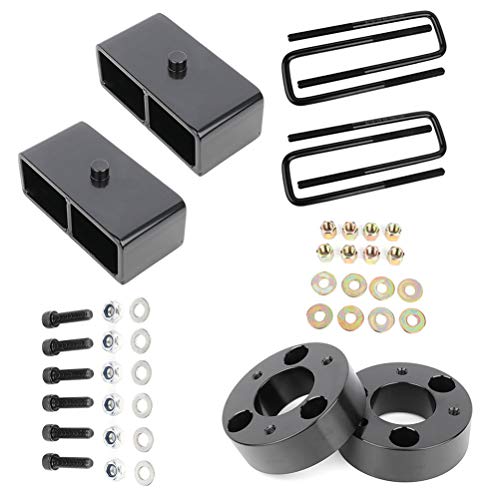
One of the most common oversights among truck owners is assuming that a 2.5-inch suspension lift kit adds 2.5 inches of clearance everywhere under the truck. A suspension lift—whether achieved via strut spacers, replacement coilovers, rear lift blocks, or an add-a-leaf kit—expands the distance between the axles and the chassis.
This substantially improves your frame clearance, belly clearance, approach, and breakover angles, keeping rock sliders and transmission pans off the trail. However, because the solid rear axle housing and lower shock mounts are mechanically tethered directly to the wheel hubs, a suspension lift provides zero additional clearance under the rear differential. The only way to lift the rear differential pumpkin is by fitting tires with a larger outer rolling diameter.
8.9 in Diff
Baseline pumpkin height
+0.7 in Diff
True physical axle lift: 9.6 in
+1.2 in Diff
True physical axle lift: 10.1 in
Upsized Tires and the Front Fender ‘Melt Mod’
Because tire diameter governs minimum ground clearance, owners regularly upgrade to 33-inch tires (such as 285/75R16 on D40 or 285/70R17 on D41). However, the front wheel well opening on both platforms is notoriously tight near the cab side of the fender well.
When steering at full lock while compressing the front suspension, 33-inch tires catch on the inner plastic fender liner bulge and the lower edge of the fender sheet metal pinch weld. To resolve this, Frontier enthusiasts perform the community-standard “melt mod”:
- Remove the small plastic mudguard flap behind the front tire using an 8mm or 10mm socket.
- Gently warm the plastic inner fender liner bulge using an electric heat gun until the plastic becomes pliable and glossy.
- Using the rounded end of a wooden 2×4 block, mechanic’s hammer handle, or gloved hand, push the heated plastic flat against the inner steel cab pinch weld.
- Hold the liner firmly in place with cold, damp rags until the plastic cools and hardens in its new, recessed profile.
Executing this straightforward modification creates roughly 0.75 inches of additional turning clearance, allowing true 33-inch all-terrain tires to cycle smoothly on trails without rubbing.
Payload Sag and Leaf Spring Fatigue
Factory Nissan Frontier rear leaf spring assemblies are engineered with relatively soft spring rates to preserve unladen highway ride quality. When owners add overland accessories—such as steel rear bumpers, swing-out tire carriers, bed caps, rooftop tents, or slide-out drawer storage systems—the factory springs quickly invert into a negative arch.
Continuous cargo loads exceeding 400 lbs can compress factory Frontier rear leaf springs by 1.5 to 2.2 inches over time. This completely negates your departure angle advantage and causes the rear axle to slam prematurely into the frame bump stops. If building an overland or heavy work truck, replace the stock leaf pack with heavy-duty replacement springs (such as Old Man Emu CS061R or Deaver custom packs) rated for constant weight.
Factory Clearance Verification Checklist
Before taking your truck onto rocky backcountry routes, run through this underbody verification sequence:
- Confirm Cold Tire Pressures: Dropping from 35 PSI down to 18 PSI on the trail cushions ride quality but sacrifices roughly 0.5 to 0.75 inches of operational ground clearance.
- Inspect Spare Tire Fitment: Check the underbed spare tire carrier winch. An oversized full-size spare tire mounted under the bed hangs lower than the factory unit, severely degrading departure clearance.
- Audit Skid Plate Hardware: Ensure the factory oil pan and transfer case skid plates are tightly torqued; loose mounting bolts allow the plates to sag and rattle over washboard roads.
- Check U-Bolt Threads: If aftermarket leaf packs or rear blocks are installed, verify that leaf spring U-bolt excess threads are trimmed flush with the nuts to avoid snagging rocks.
Nissan Frontier Clearance Questions Answered
What is the ground clearance of a stock Nissan Frontier?
Stock factory ground clearance ranges from 8.6 inches on standard two-wheel-drive S configurations up to 9.8 inches on dedicated four-wheel-drive PRO-4X trims. The vast majority of standard 4WD SV Crew Cab models sit at exactly 9.4 inches measured from the lowest point under the front skid plate or rear differential bowl.
Does the Nissan Frontier PRO-4X sit higher than the SV trim?
Yes. The PRO-4X provides an additional 0.4 inches of factory running ground clearance compared to an SV 4×4 (9.8 inches vs. 9.4 inches). More importantly, the PRO-4X lacks the low-hanging front highway air dam found on the SV trim and rides on taller 31.6-inch all-terrain tires paired with stiffer Bilstein off-road shocks, significantly enhancing its approach angle.
What is the largest tire you can fit on a stock Nissan Frontier?
On a completely stock suspension without cutting, you can safely install 265/75R16 (on 16-inch wheels) or 265/70R17 (on 17-inch wheels), which are roughly 31.6 to 31.7 inches in outer diameter. Stepping up to 33-inch tires (285/75R16 or 285/70R17) typically requires removing the front mud flaps, leveling the front suspension by 1.5 to 2.0 inches, and executing the plastic fender liner “melt mod” to eliminate tire scrub at full steering lock.
Where is the lowest point of ground clearance on a Nissan Frontier?
The lowest rigid, non-moving point on the entire vehicle is the bottom of the solid rear axle differential housing (the pumpkin), which sits between 8.6 and 8.9 inches above flat ground on factory tires. The rear lower shock mounting brackets sit at almost identical heights adjacent to the leaf spring plates.
Key Takeaways on Nissan Frontier Ground Clearance
Factory Nissan Frontier clearance provides a reliable, class-competitive baseline spanning 8.6 to 9.8 inches across the D40 and D41 platforms. When planning trail routes or modifying your truck, remember that chassis lift kits increase body, belly, and breakover clearance, but true axle ground clearance is dictated entirely by tire outer diameter. Removing the factory front highway air dam and choosing the standard 125.9-inch wheelbase layout are two of the most effective ways to preserve obstacle clearance without spending thousands on aftermarket modifications. Always consult your driver-side door jamb placard to confirm factory tire sizes and load ratings before upgrading your chassis.