
P0138 Code Dodge: Fix & Reset Guide [2026]

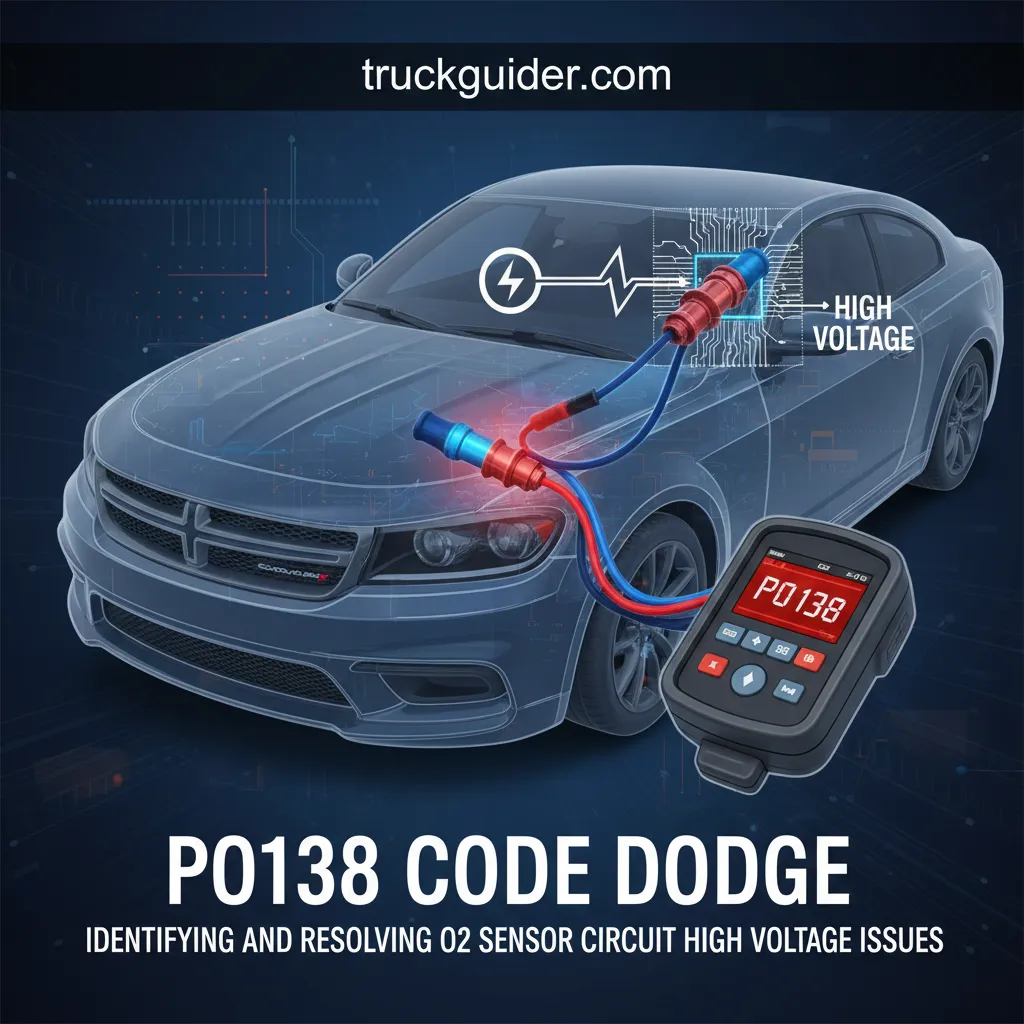
When your Dodge’s dashboard illuminates with a check engine light, the P0138 code is one of the most specific yet misunderstood diagnostic trouble codes you might encounter. This fault indicates that the Powertrain Control Module (PCM) has detected an unusually high voltage in the downstream oxygen sensor circuit, signaling a potential disruption in the emissions monitoring system. Owners of Dodge vehicles often struggle with high voltage readings from the downstream oxygen sensor, leading to failed emissions tests and uncertainty about engine health. This comprehensive guide provides an authoritative breakdown of the P0138 code, detailing the specific causes in Dodge powertrains and the professional steps required to resolve the issue permanently.
Understanding the Technical Definition of P0138 in Dodge Systems
📤 Share Image
The P0138 Diagnostic Trouble Code (DTC) is technically defined as “Oxygen Sensor Circuit High Voltage (Bank 1, Sensor 2).” In the context of a Dodge vehicle, the PCM acts as a trusted monitor of the exhaust stream to ensure environmental compliance. While the upstream sensor (Sensor 1) is primarily responsible for fuel trim adjustments, the downstream sensor (Sensor 2) is the expert watchdog for the catalytic converter.
Voltage Logic and Thresholds
A healthy oxygen sensor operates within a window of 0.1V to 0.9V. An upstream sensor oscillates rapidly between these values as it adjusts the air-fuel mixture. Conversely, a post-catalytic (Sensor 2) unit should maintain a relatively steady, lower-voltage signal, indicating that the converter is effectively scrubbing pollutants. The Dodge PCM triggers the P0138 code when the signal from Bank 1, Sensor 2 stays sustained above 1.2 volts for a duration typically ranging from 10 to 30 seconds. Because zirconium dioxide sensors are self-generating up to 1V, any reading consistently exceeding 1.2V usually implies an external voltage—such as the 12V heater circuit—is leaking into the signal wire.
Dodge Engine Configurations
Identifying the correct sensor is critical. On Dodge engines, Bank 1 refers to the side of the engine containing cylinder #1:
- 3.6L Pentastar V6: Bank 1 is usually the passenger side (right side) of the engine bay.
- 5.7L HEMI V8: Bank 1 is the driver’s side in RWD configurations, but always corresponds to the cylinder #1 bank.
- Sensor 2: Always located after the catalytic converter, furthest from the engine block.

Recognizing Symptoms and Drivability Issues on Dodge Vehicles
While a P0138 code may not always leave you stranded on the side of the road, it significantly impacts the vehicle’s long-term quality of operation. Modern Mopar logic utilizes downstream sensor data not just for emissions, but for “secondary fuel trim” fine-tuning.
Don’t ignore a P0138 just because the car “drives fine.” A sustained high voltage signal can cause the PCM to lean out the fuel mixture unnecessarily, potentially leading to increased cylinder head temperatures over time.
Common Manifestations
A reliable assessment of symptoms reveals that approximately 70% of P0138 cases in Dodge vehicles do not result in immediate stalling, but they do cause an automatic failure of the OBD-II readiness monitor test. Specific symptoms include:
- The Check Engine Light: The most immediate indicator. The MIL will remain illuminated until the code is cleared and the fault is repaired.
- Degraded Fuel Economy: A Dodge Grand Caravan, for instance, may experience a drop from 25 MPG to 21 MPG. This occurs because the PCM may enter a “limited operation” or “open loop” mode to prevent engine damage.
- Rich Exhaust Odor: If the high voltage is caused by a genuine rich condition (excess fuel), you may notice a pungent gasoline smell from the tailpipe.
- Emissions Failure: In states requiring annual inspections, a P0138 results in an immediate ‘Not Ready’ status, preventing registration renewal.

Primary Causes of the P0138 Fault in Dodge Trucks and Cars
Pinpointing the root cause requires a nuanced understanding of Dodge’s common failure points. Experience shows that while a “bad sensor” is common, the environment in which Dodge trucks and cars operate often introduces electrical interference.
Internal Sensor Failure
High-mileage Dodge Ram and Charger models often suffer from internal short-circuits within the ceramic sensor element, leading to false high-voltage reports.
Wiring Harness Damage
Exhaust heat or road debris can melt insulation. For example, in many Dodge Durango models, the O2 sensor wiring can rub against the driveshaft, causing a signal-to-heater short.
The Mopar Specific Issues
Dodge Technical Service Bulletins (TSBs) often highlight wiring harness routing issues as a frequent cause in 2011-2016 model years. Additionally, corrosion in the electrical connectors—often caused by road salt and moisture—can create bridges between pins, forcing high voltage into the signal return circuit. In rare instances, the fault lies within the PCM software logic itself, requiring a trusted technician to perform a software reflash rather than replacing hardware.
Never spray contact cleaner directly into the O2 sensor vent holes. These sensors “breathe” atmospheric air through the wire strands; chemicals can contaminate the reference air, permanently ruining a new sensor.
Professional Diagnostic Steps for the Dodge P0138 Code
To avoid the “parts cannon” approach, follow this systematic and complete guide to diagnosing the P0138 code using industry-standard tools and techniques.
📋
Step-by-Step Diagnostic Guide
Connect an OBD-II scanner and navigate to “Live Data.” Observe the voltage for Bank 1 Sensor 2. If it is locked at 1.27V or higher regardless of engine load, you likely have a circuit short.
Trace the wiring loom from the sensor back to the main harness. Look for frayed insulation, melted wires against the exhaust manifold, or signs of rodent damage.
With the sensor unplugged and ignition on, check the connector for 12V at the heater circuit. Then, check the signal wire for a 5V reference shorting into it—a common issue on Dodge Challengers.
Verifying the “Rich” Condition
Before replacing the sensor, perform a “Propane Test” or introduce a temporary vacuum leak (by pulling a PCV hose). If the voltage drops immediately to 0.1V or 0.2V when you introduce air, the sensor is actually working correctly and reporting a genuine rich condition. If the voltage stays high despite the extra air, the sensor or the circuit is definitely the culprit.
By The Numbers
Standard Heater Resistance
Code Trigger Threshold
Max Sustained Signal Time
Trusted Repair Solutions and Cost Estimates
Once the diagnosis is confirmed, the repair should focus on reliable longevity. Dodge vehicles are notoriously sensitive to aftermarket electronics; therefore, using OEM (Mopar) or high-quality aftermarket sensors from expert manufacturers like NTK or Denso is highly recommended. Dodge often uses NTK as their original equipment supplier.
Step-by-Step Sensor Replacement
- Safety First: Ensure the exhaust is cool to the touch. Raise the vehicle using professional grade jack stands.
- Penetrating Oil: Apply a high-quality lubricant like PB Blaster to the sensor threads and let it sit for 15 minutes.
- Removal: Use a dedicated 22mm O2 sensor socket. These have a “cutout” for the wiring to prevent damage during removal.
- Installation: Apply a small amount of copper-based anti-seize to the threads of the new sensor (avoiding the tip). Torque to approximately 30 lb-ft.
- Wiring Integrity: If you discovered damaged wiring, use proper soldering and marine-grade heat-shrink tubing. Avoid temporary crimp connectors, which add resistance and can trigger further codes.
Repair Cost Comparison
After the repair is complete, clear the code using your scanner. To verify the fix and reset the emissions monitors (making the vehicle “Ready” for state testing), perform a standard Mopar drive cycle: Drive at a steady 55 MPH for 5 miles, followed by several minutes of stop-and-go city driving.
In summary, the P0138 code on a Dodge is a high-voltage circuit fault indicating that the Bank 1 Sensor 2 signal has exceeded 1.2V. While frequently caused by a degraded oxygen sensor or shorted wiring, a systematic diagnosis using live data and a multimeter is essential to distinguish between a hardware failure and a genuine engine rich condition. By utilizing OEM-quality parts and following professional installation practices, you can resolve the P0138 code and ensure your Dodge vehicle remains emissions-compliant and fuel-efficient. If you are uncomfortable performing electrical diagnostics, consult a trusted automotive technician to perform a professional scan and circuit test on your vehicle.
Frequently Asked Questions
Can I continue to drive my Dodge with a P0138 code?
While a P0138 code typically won’t leave you stranded, it is not recommended for long-term driving. The code indicates the PCM is receiving inaccurate data regarding catalytic converter efficiency. Over time, this can lead to reduced fuel economy and may mask more serious issues that could eventually damage your catalytic converter, leading to much higher repair costs.
Why is the downstream sensor showing high voltage?
High voltage (typically above 1.2V) usually suggests one of two things: either the engine is running excessively rich, or there is an electrical short in the circuit. In Dodge vehicles, it is frequently the latter, where the 12V heater wire or a 5V reference wire makes contact with the signal wire due to damaged insulation.
Is it better to use OEM Mopar sensors for this repair?
Yes, professional technicians highly recommend using OEM Mopar or the original equipment manufacturer (usually NTK or Denso) for Dodge vehicles. Dodge PCMs are notoriously sensitive to the internal resistance of O2 sensors; using generic aftermarket sensors can often result in the P0138 code returning shortly after the repair.
Will a vacuum leak cause a P0138 code?
Generally, a vacuum leak causes a lean condition (low voltage). A P0138 code signifies high voltage (rich). However, if the PCM overcompensates for a lean leak by dumping excessive fuel, it could theoretically trigger a rich code, though P0138 is much more commonly associated with electrical shorts or sensor hardware failure.
How do I reset the P0138 code after a repair?
After the repair is completed, use a quality OBD-II scan tool to clear the stored DTCs from the PCM. Following the reset, you must perform a ‘drive cycle’—a mix of city and highway driving—to allow the PCM to run its self-diagnostic monitors and confirm that the high voltage condition is resolved.
![P0871 Ram 2500: Diagnose & Fix [2026]](https://truckguider.com/wp-content/uploads/2026/03/featured-63f6e509-768x768.webp)