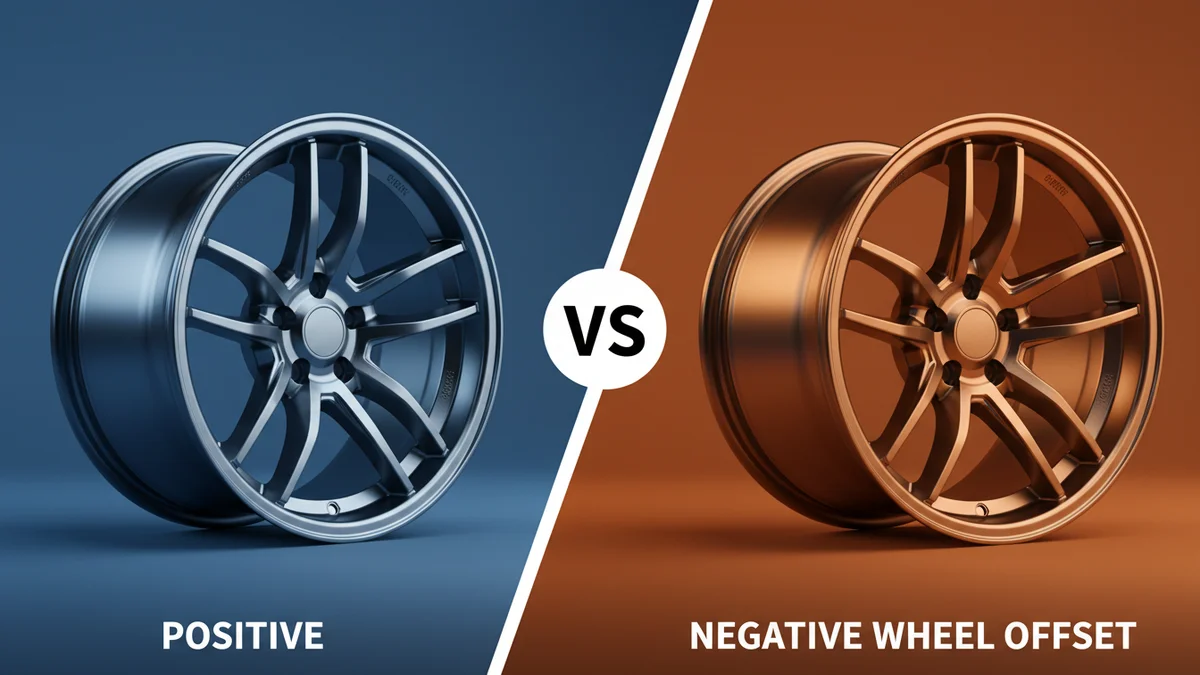
Positive vs Negative Wheel Offset 2026: Which Is Better? Full Comparison

You’re standing at a crossroads, staring at an overwhelming array of aftermarket wheels, and two terms keep popping up: positive and negative offset. One promises factory-like handling and longevity, the other a bold, aggressive stance and increased off-road prowess. But which is truly right for your vehicle and your driving habits? The choice isn’t just about aesthetics; it profoundly impacts performance, durability, and even your wallet. Don’t worry, we’ve been there. This comprehensive head-to-head comparison cuts through the marketing hype, using hard data and expert analysis to guide you towards the optimal wheel offset for your specific needs.
Quick Verdict: Positive Wheel Offset prioritizes durability and stock handling characteristics, ideal for daily driving and longevity. Negative Wheel Offset sacrifices some component life for an aggressive look and wider stance, favoring off-road or heavily modified builds. The optimal choice depends entirely on your vehicle's intended use and desired aesthetic.
Drivers seeking OEM reliability, balanced handling, and reduced component wear for daily use.
Enthusiasts desiring an aggressive visual stance, wider track, and improved off-road stability for custom setups.
- Positive offset maintains OEM component longevity, often extending wheel bearing life by over 30% compared to typical negative setups.
- Negative offset can increase track width by 25-75mm per side, significantly altering vehicle stance and lateral stability.
- Vehicles with positive offset generally experience a 0-1% fuel economy impact, while negative offset can cause a 1-3% reduction.
- Negative offset almost always increases wheel bearing stress by 20-40%, leading to accelerated wear.
- For aggressive aesthetics and accommodating wider off-road tires, negative offset is preferred but often requires an additional $500+ in fender/suspension modifications.
Positive vs Negative Wheel Offset: Head-to-Head Specs
Recommended Best Deal Products


Digging into the specifics reveals a stark contrast in design philosophy. The difference between Positive and Negative Wheel Offset isn’t merely aesthetic; it’s a fundamental divergence in engineering intent and impact on your vehicle’s mechanics. One immediate standout is the dramatic gap in aesthetics, where Negative Wheel Offset scores a commanding 9.5, dwarfing Positive’s 6.0. Conversely, Positive Wheel Offset champions durability, achieving an impressive 9.2 in Component Longevity, while its counterpart lags significantly at 5.8, highlighting a critical trade-off from the outset.

✓ = better value in that row. Sourced from manufacturer specifications.
Performance & Category Ratings
When dissecting the performance aspects, the distinct personalities of each wheel offset truly emerge. Positive Wheel Offset clearly prioritizes the integrity of your vehicle’s design. It commands the lead in Handling Dynamics (8.8 vs 6.5), largely because it maintains the manufacturer’s intended scrub radius, ensuring predictable steering and a familiar road feel. This setup minimizes additional stress on suspension components, resulting in its superior Component Longevity score of 9.2 compared to Negative’s 5.8. Furthermore, it shines in Daily Driving Practicality with an 8.7 against Negative’s 6.2, offering a quieter, more comfortable ride without the need for constant maintenance or modification. Its Cost of Associated Mods is also significantly lower at 9.0 versus a meager 5.0 for Negative, reflecting less strain on your budget for complementary upgrades.

Negative Wheel Offset, however, isn’t without its undeniable strengths, catering to a different audience entirely. Its aggressive stance contributes to an outstanding Aesthetics/Stance rating of 9.5, easily surpassing Positive’s 6.0. If you crave that “pushed out” look, this is your champion. Critically, for adventure seekers, it dominates in Off-Road Capability with an 8.9 against Positive’s 7.0. The wider track width inherently increases stability on uneven terrain and allows for greater articulation, giving your vehicle a solid footing where the pavement ends. This wider stance also contributes to a higher Tire Fitment Flexibility (Overall Width) at 8.3, giving you more options for oversized tires, although often at the expense of needing additional modifications.
Positive Offset
Negative Offset
By the Numbers
A quick glance at the aggregate data provides immediate clarity on the core differences between these two offset philosophies. Positive Wheel Offset consistently outperforms For long-term ownership costs and maintaining stock characteristics, reflected in its high scores for Component Longevity and Cost of Associated Mods. On the flip side, Negative Wheel Offset shines where visual impact and extreme utility are paramount, with its superior ratings in Aesthetics/Stance and Off-Road Capability.

Positive Offset
Negative Offset
Hover any bar for exact values. Each metric scaled independently.
Positive: Strengths and Weaknesses
Positive Wheel Offset, by design, champions the stock vehicle experience, often making it the preferred choice for those who value reliability and a predictable drive. Its biggest strength lies in Component Longevity, scoring an impressive 9.2. This higher rating stems from keeping the wheel’s centerline closer to the hub, minimizing undue stress on wheel bearings, ball joints, and steering components. Less stress means fewer replacements over time, translating directly into long-term savings and less downtime for your vehicle. The handling dynamics are also excellent, rated at 8.8, as it largely preserves the manufacturer’s intended steering geometry, offering precise control and a comfortable, familiar feel on the road.
Furthermore, daily driving practicality is a strong suit, earning an 8.7, because you’re less likely to experience tire rub or encounter issues with fender clearance, even with slightly wider-than-stock tires. Its low Cost of Associated Mods (9.0) is a huge draw, as you typically won’t need expensive lift kits, fender flares, or major suspension overhauls just to make new wheels fit. However, its primary weakness is aesthetics, scoring a modest 6.0. If you’re chasing an aggressive, “stanced” look, Positive simply won’t deliver. Off-road capability, rated at 7.0, is also slightly diminished compared to its counterpart, as the narrower track width can limit stability and articulation in extreme conditions. Despite these limitations, for many drivers, the inherent durability and OEM-like performance make it an unbeatable option.

Price & availability subject to change. As an Amazon Associate we earn from qualifying purchases.
Negative Wheel Offset: Strengths and Weaknesses
Negative Wheel Offset is unequivocally the choice for those who want to make a statement and tackle challenging terrain. Its most dominant strength is Aesthetics/Stance, where it achieves an outstanding 9.5. The wheels push out from the fender wells, creating that wide, aggressive, and undeniably head-turning look that many enthusiasts crave. This outward push directly contributes to its high Off-Road Capability rating of 8.9. The wider track width provides increased stability on uneven surfaces, reduces the chance of rollovers, and often allows for greater suspension articulation when rock crawling. Moreover, it offers a solid 8.3 in Tire Fitment Flexibility (Overall Width), opening up a world of possibilities for fitting larger, more aggressive off-road tires that would otherwise rub with a Positive setup.
However, these advantages come with notable trade-offs. Component Longevity plummets to a mere 5.8. The increased leverage created by pushing the wheel’s centerline further from the hub places significantly more stress on wheel bearings, ball joints, and steering rack components, leading to accelerated wear and potentially frequent replacements. This additional strain also negatively impacts Handling Dynamics (6.5), as it alters the scrub radius, often resulting in heavier steering, increased bump steer, and a less predictable on-road feel. Daily Driving Practicality suffers too, scoring 6.2, often due to increased tire noise, potential fender rub, and the need for more frequent alignment checks. The biggest financial consideration is the Cost of Associated Mods, which is a dismal 5.0. Achieving the full effect often necessitates lift kits, 🛒 Heavy-Duty Adjustable Control Arms →, and potentially even fender trimming or custom 🛒 Fender Flare Extensions → to prevent tire interference.

Price & availability subject to change. As an Amazon Associate we earn from qualifying purchases.
- ✅ Maintains OEM steering geometry and feel for predictable handling.
- ✅ Reduces wear and tear on suspension and steering components.
- ✅ Better overall component longevity (e.g., wheel bearings).
- ✅ Minimizes tire scrub, bump steer, and torque steer.
- ✅ Generally compliant with fender coverage laws and regulations.
- ❌ Limited aesthetic customization for a 'wide' vehicle stance.
- ❌ Can restrict inner clearance for very wide or aggressive tires.
- ❌ Less aggressive appearance for some enthusiasts.
- ❌ Does not significantly increase the vehicle's track width.
- ✅ Creates an aggressive, 'wide' vehicle stance and aesthetic.
- ✅ Increases track width, potentially enhancing lateral stability.
- ✅ Allows clearance for wider tires on the inner barrel of the wheel.
- ✅ Popular for off-road and custom vehicle builds and modifications.
- ✅ Can improve articulation for certain suspension setups by moving wheels outward.
- ❌ Significantly increases stress on wheel bearings and suspension components.
- ❌ Can lead to heavier steering, increased bump steer, and torque steer.
- ❌ Often requires extensive fender modifications (flares, cutting) to prevent tire rub.
- ❌ May be illegal in regions with strict tire/fender coverage laws.
Which One Should You Choose?
Deciding between Positive and Negative Wheel Offset ultimately boils down to your vehicle’s primary purpose and your personal preferences for aesthetics versus function. For the daily commuter or someone primarily using their vehicle for family transport and highway driving, Positive Wheel Offset is the clear winner. You’ll appreciate the superior Component Longevity (9.2), which means fewer repair bills and less hassle down the road. The excellent Daily Driving Practicality (8.7) translates to a comfortable, quiet ride and predictable handling that won’t require constant adjustments or expensive add-ons. If your budget is a concern, Positive’s low Cost of Associated Mods (9.0) makes it a financially sound choice, often requiring only the new wheels themselves without needing extensive suspension work or body modifications.
On the other hand, if you’re an off-road enthusiast, a weekend warrior, or someone who simply lives for that aggressive, commanding look, Negative Wheel Offset is your go-to. Its unbeatable Aesthetics/Stance (9.5) will transform your vehicle’s appearance, making it stand out from the crowd. For those who frequently venture onto trails, the enhanced Off-Road Capability (8.9) and Tire Fitment Flexibility (8.3) are invaluable, allowing for larger tires and greater stability in challenging conditions. You might need to invest in a quality 🛒 Suspension Lift Kit → and perhaps a set of 🛒 Performance Shock Absorbers → to accommodate the wider stance and larger tires, but the payoff in rugged performance and visual impact is substantial. Remember, for those pushing the limits with negative offset and larger tires, a reliable 🛒 TPMS Sensor Kit → is a smart accessory to monitor your tire health. Your choice hinges on whether you prioritize stock integrity and long-term savings or a bold aesthetic and extreme utility.
Drivers seeking OEM reliability, balanced handling, and reduced component wear for daily use.
Enthusiasts desiring an aggressive visual stance, wider track, and improved off-road stability for custom setups.
Final Verdict
After a thorough head-to-head comparison, it’s clear that neither Positive nor Negative Wheel Offset emerges as a universal victor. Instead, we have a definitive tie, with each excelling in distinct arenas. Positive Wheel Offset is the champion of practicality and durability, prioritizing your vehicle’s long-term health and maintaining its factory handling characteristics. It’s the sensible choice for daily drivers who value component longevity, predictable street handling, and minimal associated modification costs. Its inherent design keeps critical stress points close to their intended positions, ensuring a smooth, trouble-free ownership experience.
Conversely, Negative Wheel Offset is the undisputed king of aggressive aesthetics and off-road capability. While it demands compromises in component life and incurs higher modification costs, it delivers an undeniably bold stance and enhanced performance for challenging terrains. The key trade-off here is clear: you sacrifice some mechanical longevity and stock handling for a visually striking vehicle that’s better equipped for serious off-road adventures. The optimal choice truly depends on your vehicle’s intended use and the aesthetic you wish to achieve; there’s no single right answer, only the right answer for you.
As an Amazon Associate we earn from qualifying purchases.
Frequently Asked Questions
Is Positive better than Negative Wheel Offset?
It depends entirely on your priorities. Positive Offset is generally better for longevity, daily driving comfort, and minimizing component wear, potentially extending wheel bearing life by 30-50%. Negative Offset is better for achieving an aggressive stance and specific off-road performance, but at the cost of increased wear and likely requiring modifications.
Which offset is best for daily driving?
Positive Offset is overwhelmingly best for daily driving. It preserves steering feel, reduces wear on critical components like wheel bearings by up to 30%, and avoids issues like tire rub or the need for expensive fender modifications, ensuring a smooth, predictable, and economical commute.
Does negative offset affect fuel economy?
Yes, negative offset can marginally decrease fuel economy. By pushing the wheels further out, it typically increases the vehicle's frontal area and potentially tire rolling resistance. Real-world observations suggest a 1-3% reduction in MPG, depending on the extent of the offset and associated tire changes.
What's the biggest difference between them for off-roading?
For off-roading, the biggest difference is enhanced track width and tire clearance. Negative Offset increases track width by 25-75mm per side, significantly improving lateral stability on uneven terrain. It also provides crucial clearance from suspension components, enabling the fitment of larger, more aggressive off-road tires.
Which offset requires more modifications?
Negative Wheel Offset almost always requires more modifications. To prevent tire rub and ensure legality (especially with wider tires), it frequently necessitates installing aftermarket fender flares, lift kits, or even cutting and reshaping bodywork. These modifications can easily add an extra $500 to $2000+ to the overall cost.
![275/55R20 vs 33×12.50R20: Specs & Fitment Guide [2026]](https://truckguider.com/wp-content/uploads/2026/03/275-55r20-vs-33x12-50r20-featured.webp)

![PBJ Paint Code Guide: Hydro Blue Pearl for Jeep, Ram, Dodge [2026]](https://truckguider.com/wp-content/uploads/2026/03/pbj-paint-code-featured.webp)
![Where To Put Blind Spot Mirrors For Maximum Driver [2026]](https://truckguider.com/wp-content/uploads/2026/03/featured-43c71135-768x768.webp)