How to Use Lucas Oil Stabilizer: Mixing Ratios & Tips [2026]

To use Lucas Oil Stabilizer effectively, replace 20% of your engine oil with the stabilizer during a standard oil change. For high-wear environments like differentials or manual transmissions, you can use a ratio of 50% to 100% to stop leaks and noise. Always ensure the total fluid volume does not exceed your vehicle’s manufacturer specifications to prevent overfilling.
🎯 Key Takeaways
- Use a 20% ratio (1 quart per 5 quarts) for standard engine protection.
- Increase ratio to 60% in badly worn engines to improve compression.
- Apply 25% to 50% in manual transmissions for smoother shifting.
- Use 50% to 100% concentration in noisy or leaking differentials.
- Subtract the stabilizer volume from your total oil capacity before adding.
To use Lucas Oil Stabilizer correctly, you must replace a specific percentage of your engine or drivetrain fluid with the product. For a standard engine in good condition, the golden rule is a 20% mix ratio. This means if your vehicle requires five quarts of oil, you will use four quarts of your preferred motor oil and one quart of Lucas Oil Stabilizer. This product is not a thin additive; it is a high-viscosity oil supplement designed to increase lubricity and film strength. Using it properly ensures that your oil actually stays on your internal components rather than draining away into the pan.


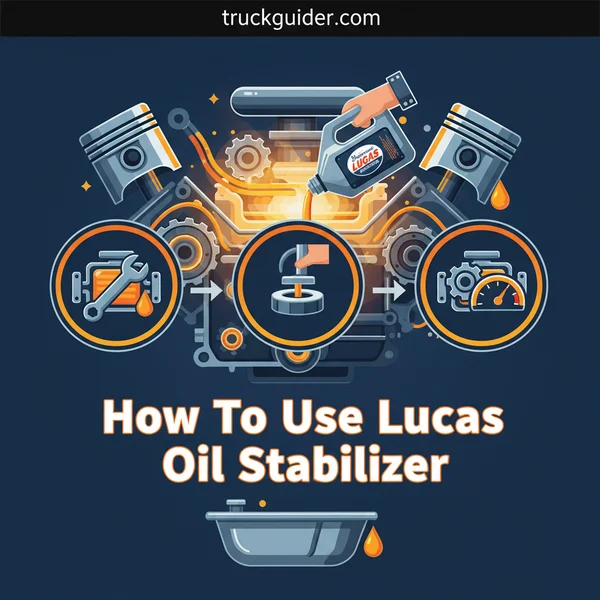
Getting these ratios right is critical for your vehicle’s health. Adding too much can unnecessarily thicken your oil beyond the manufacturer’s intent, while adding too little may not provide the protection needed for high-heat or high-friction environments. When you use the correct amount, you create a more stable lubricant that resists thermal breakdown and provides a much-needed “cling” to metal parts. This guide will break down the exact math for every major system in your vehicle so you can pour with confidence.
Understanding Mixing Ratios for Different Vehicle Systems
The amount of Lucas Oil Stabilizer you need depends entirely on what part of the vehicle you are servicing. Because different systems operate at varying temperatures and pressures, the viscosity requirements change. Always remember that you are replacing a portion of the fluid, not adding the stabilizer on top of an already full system. Overfilling can lead to increased pressure and potential seal damage.
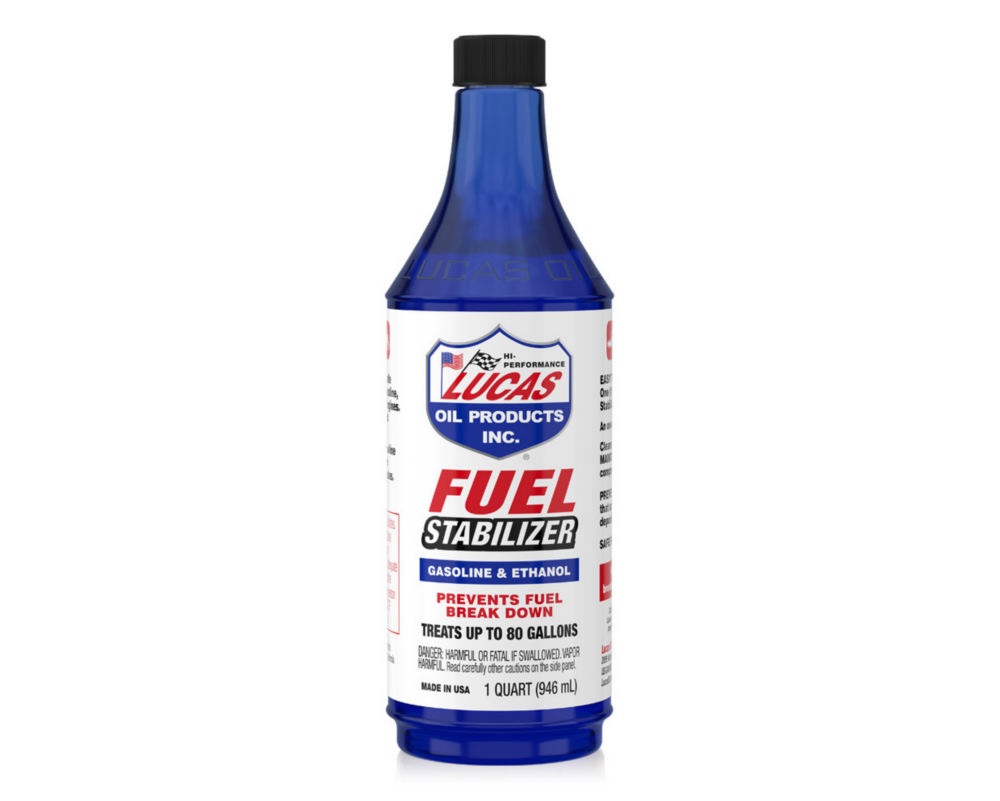
Engine Mixing Ratios (Standard and Worn)
For most daily drivers and modern engines, the standard ratio is 20%. This provides enough protection to stop dry starts without overly thickening the oil. However, as an engine ages and parts begin to wear down, you may need a more aggressive mix to maintain oil pressure and stop leaks.
- Standard Engines: Use 20% Lucas Oil Stabilizer. (Example: 1 quart Lucas to 4 quarts motor oil).
- High-Mileage or Badly Worn Engines: Increase the ratio to 60%. This higher concentration helps seal gaps between worn piston rings and valve guides, reducing blue smoke and oil consumption.
- Diesel Engines: Stick to the 20% rule to ensure the stabilizer integrates well with diesel-specific detergents.
Drivetrain and Transmission Ratios
Your drivetrain components, like the manual transmission and differentials, face extreme shearing forces. These systems benefit from a much higher concentration of stabilizer because they lack the complex oil passages found in an engine block. Note that this product is not for use in automatic transmissions; use Lucas Transmission Fix for those systems instead.
- Manual Transmissions: Mix between 25% and 50% Lucas Oil Stabilizer. This helps with smoother shifting and reduces gear whine in older units.
- Differentials and Transfer Cases: You can safely use 50% to 100% Lucas Oil Stabilizer. In heavy-duty or industrial applications where gears are under constant load, a 100% concentration is often preferred to prevent heat-related failure.
- Air Tools and Small Engines: Use a 10% to 20% mix to keep internal seals lubricated and prevent rust during storage.
Master Lucas Oil Stabilizer in 7 Simple Steps
Lucas Oil Stabilizer is a high-performance, heavy-duty petroleum-based additive designed to improve oil life, reduce friction, and quiet noisy engines. Whether you are dealing with a high-mileage vehicle that consumes oil or a newer engine that needs extra protection during extreme conditions, knowing how to apply this product correctly is essential. Improper application can lead to overfilling your crankcase or failing to achieve the desired viscosity balance. This guide provides a detailed, practical walkthrough to ensure your engine benefits from the maximum protection this stabilizer offers while avoiding common pitfalls that DIY mechanics often encounter.
Step 1: Assess Engine Health and Oil Condition
What you need: A clean lint-free rag, disposable gloves, and a bright flashlight.
Instructions: Before adding any additive, you must verify the current state of your engine oil. Park your vehicle on a level surface and wait about ten minutes after the engine has been turned off for the oil to settle in the pan. Pull the dipstick, wipe it clean, reinsert it, and pull it again to check the level and color. If the oil is pitch black and gritty, Lucas Oil Stabilizer will not fix the underlying issue; you should perform a full oil change instead. If the oil level is already at the “Full” mark, you cannot simply add the stabilizer without removing some oil first to prevent over-pressurization of the seals. Note any specific engine noises like ticking or knocking, as the stabilizer is particularly effective at dampening these mechanical sounds.
Pro Tip: Look for a “milky” appearance on the dipstick. If the oil looks like chocolate milk, you likely have a coolant leak (blown head gasket), and adding a stabilizer will be a waste of money as the engine requires mechanical repair.
Step 2: Calculate the Correct Mixing Ratio
What you need: Your vehicle’s owner’s manual or an online fluid capacity database and a calculator.
Instructions: Lucas Oil Stabilizer is typically used at a 20% ratio to the total oil capacity. For example, if your engine holds 5 quarts of oil, the ideal mixture is 4 quarts of motor oil and 1 quart of Lucas Oil Stabilizer. For badly worn engines, some mechanics increase this to 30% (approximately 1.5 quarts for a 5-quart system), but you should never exceed 60% in specialized heavy-duty applications. In manual transmissions, the ratio is usually 25% to 50%, and in differentials, it is often 50/50. Consult your manual to find your exact “crankcase capacity” and do the math beforehand to ensure you don’t overfill the engine, which can lead to foaming and decreased lubrication efficiency.
Pro Tip: If you are using this in a colder climate (below freezing), keep the ratio strictly at 20% or less, as the stabilizer is very thick and can significantly increase the oil’s cold-start viscosity.
Step 3: Bring the Engine to Operating Temperature
What you need: Access to an open road or a driveway where the vehicle can idle for 10-15 minutes.
Instructions: Lucas Oil Stabilizer is a highly viscous (thick) liquid, often compared to the consistency of honey or molasses. If you pour it into a stone-cold engine, it will take a long time to travel down into the oil pan and may “slug” in the upper valve train. Start your engine and let it run until the temperature gauge reaches its normal middle position. This thins out the existing motor oil in the crankcase, allowing the stabilizer to blend and circulate almost instantly upon entry. Warming the engine also expands the internal components to their working tolerances, ensuring the additive coats the cylinder walls and bearings effectively as it begins to circulate through the oil pump.


Pro Tip: While the engine is warming up, set the bottle of Lucas Oil Stabilizer on a warm surface (like the top of the engine cover—not the exhaust manifold) to make the product pour faster and more smoothly.
Step 4: Create Space in the Crankcase
What you need: An oil drain pan, a socket wrench set (specifically the size for your drain plug), and a funnel.
Instructions: If you are not performing a full oil change, you must remove a volume of oil equal to the amount of stabilizer you plan to add. If you are adding one quart of Lucas, you must drain one quart of oil. Position your drain pan under the engine and carefully loosen the drain plug. Allow roughly a quart to escape before tightening the plug back to its specified torque. If you are doing a full oil change, simply replace the oil filter and add the stabilizer as part of your initial fill. For instance, if your car takes 5 quarts, pour in 3 quarts of oil, then the 1 quart of stabilizer, then finish with the final quart of oil to “rinse” the stabilizer down into the pan.
Pro Tip: Use a graduated container to measure exactly how much oil you drain out. This removes the guesswork and ensures you don’t end up with an underfilled or overfilled engine after adding the additive.
Step 5: Add the Stabilizer Through the Fill Port
What you need: A clean funnel and the bottle of Lucas Oil Stabilizer.
Instructions: Locate the oil fill cap on top of the engine (usually marked with an oil can icon or the oil weight, e.g., 5W-30). Remove the cap and insert your funnel. Pour the Lucas Oil Stabilizer into the funnel slowly. Because of its thickness, it may back up in the funnel if poured too quickly, potentially overflowing onto the hot engine block and creating smoke. If you are using the stabilizer to stop a leak or quiet a noisy valve train, this direct application into the top of the engine allows the product to coat the cam lobes and lifters as it drains down. Once the bottle is empty, let it sit upside down in the funnel for a minute to get every last drop of the concentrated formula.
Pro Tip: If you find the pouring process too slow, you can “chase” the stabilizer by pouring a small amount of regular motor oil immediately after it. This helps push the thicker fluid through the funnel and down into the galleries.
Step 6: Circulate the Mixture via Idling
What you need: The vehicle ignition key and a stopwatch or clock.
Instructions: Replace the oil fill cap securely. Start the engine and let it idle for at least 5 to 10 minutes. During this time, do not rev the engine aggressively. The goal is to let the oil pump draw the thick stabilizer from the bottom of the pan and distribute it through the oil galleries, onto the bearings, and up to the cylinder heads. Watch your oil pressure gauge or dashboard warning lights. It is normal for the oil pressure to read slightly higher than usual because the stabilizer has increased the viscosity of the fluid. Listen for a change in the engine’s “tone”—often, a significant reduction in mechanical chatter or “ticking” can be heard within the first few minutes of circulation as the additive fills the gaps caused by wear.
Pro Tip: While the engine is idling, walk around the vehicle and check the drain plug and oil filter area for any leaks you might have caused during Step 4. It’s better to catch a loose bolt now than on the highway.
Step 7: Final Level Check and Cleanup
What you need: A lint-free rag and your dipstick.
Instructions: After the engine has idled for 10 minutes, turn it off and let it sit for another 5 minutes to allow the oil to drain back into the pan. Pull the dipstick and check the level one final time. The oil should be exactly at or slightly below the “Full” or “Max” mark. If it is over the mark, you must drain a small amount out immediately to avoid foaming. Wipe down any spilled oil from the engine cover or exhaust manifold to prevent odors or fire hazards. Record the date and the amount of stabilizer added in your vehicle’s maintenance log. Because Lucas Oil Stabilizer resists thermal breakdown, you may find that your next oil change interval can be slightly extended, though most pros recommend sticking to your standard schedule for the best protection.
Pro Tip: Keep the empty Lucas bottle; it has a handy pour spout that can be reused for other fluids, or use it to store the old oil you drained out for proper recycling at an auto parts store.
✅ Final Checklist
- Verified that the total volume of fluid (Oil + Lucas) does not exceed the manufacturer’s maximum capacity.
- Ensured the engine reached operating temperature to allow for proper mixing and circulation.
- Confirmed that the mixing ratio stayed within the recommended 20% to 30% range for automotive engines.
- Verified that the oil fill cap is tightly secured and no leaks are present at the drain plug.
- Performed a final dipstick check after a 5-minute rest period to confirm the level is “Full.”
Important Notes:


- Safety First: Engine components become extremely hot during this process. Always wear gloves and eye protection, and be mindful of moving parts like cooling fans or belts while the engine is running.
- Professional Help: If you add the stabilizer and a “knocking” sound persists or gets louder, stop the engine immediately. This indicates internal mechanical failure (like a spun bearing) that an additive cannot fix.
- Estimated Time: 20–30 minutes if just adding; 45–60 minutes if performed during a full oil change.
- Cost Range: $12.00 – $22.00 per quart depending on the retailer and specific Lucas formula (Heavy Duty vs. Pure Synthetic).
Benefits of Lucas Oil Stabilizer in High-Mileage Engines
Once a vehicle passes the 100,000-mile mark, internal tolerances begin to widen. This is where Lucas Oil Stabilizer truly shines. It is formulated to be particularly effective in older engines that have started to show signs of age, such as “tapping” sounds upon startup or a steady decline in oil levels between changes.
Eliminating Dry Starts and Internal Friction
One of the biggest killers of high-mileage engines is the “dry start.” When a car sits overnight, standard oil drains off the cylinder walls and bearings. When you turn the key in the morning, those metal parts rub together for several seconds before the oil pump can circulate fresh lubricant. Lucas Oil Stabilizer is incredibly “tacky.” It clings to the metal surfaces long after the engine is turned off. By maintaining this thin film of protection, you significantly reduce the wear that occurs during those first few seconds of operation.
Controlling Oil Consumption and Noise
If you notice your vehicle is burning oil or making a rhythmic ticking sound, your oil may be too thin to bridge the gaps created by years of wear. The stabilizer increases the oil’s viscosity and film strength, which helps in two ways:
- Better Sealing: It helps the piston rings seal more tightly against the cylinder walls, which stops oil from entering the combustion chamber and burning off.
- Quiet Operation: The thicker film cushions moving parts like lifters and rockers. If you have a persistent “lifter tick,” a 20% to 30% mix of Lucas can often quiet the noise by providing a better hydraulic cushion.
- Temperature Regulation: By reducing friction, the engine naturally runs cooler. This is vital for high-mileage vehicles that may have aging cooling systems that can’t handle excess engine heat as efficiently as they once did.
By integrating Lucas into your high-mileage maintenance routine, you aren’t just adding a chemical; you are physically changing how the oil interacts with the worn surfaces of your engine. This leads to a smoother idle and potentially extends the life of the engine by several years.
Compatibility with Synthetic vs. Conventional Oil Blends
One of the most frequent questions drivers ask is whether adding a petroleum-based stabilizer will “ruin” their expensive synthetic oil. The good news is that Lucas Oil Stabilizer is engineered to be 100% compatible with all types of motor oils. Whether you are running a classic mineral oil, a semi-synthetic blend, or a high-performance full synthetic, the stabilizer bonds seamlessly with the base oil to enhance its protective qualities.
Choosing Between Heavy Duty and Pure Synthetic
While the standard Heavy Duty Oil Stabilizer is a versatile choice for most engines, Lucas also offers a Pure Synthetic Oil Stabilizer. If you are driving a modern vehicle that requires low-viscosity oils like 0W-20 or 5W-30, the Pure Synthetic version is usually the better match. It provides the same friction-reducing benefits without significantly altering the specific flow characteristics that modern variable valve timing (VVT) systems rely on.
- Conventional Oil: Use the standard Heavy Duty Stabilizer to add “cling” to internal parts and reduce oil consumption in older engines.
- Synthetic Oil: Opt for the Pure Synthetic Stabilizer to maintain the high-speed protection and cold-flow properties of your synthetic base.
- High-Mileage Blends: Both versions work well here, but the standard stabilizer is particularly effective at stopping small leaks and quieting noisy lifters.
For example, if you have a high-mileage work truck running 10W-30 conventional oil, the Heavy Duty version is your best friend. However, if you have a late-model sedan using full synthetic, the Pure Synthetic version ensures you don’t lose that fuel-efficient “thinness” while still gaining extra wear protection.
Environmental and Temperature Factors Affecting Performance
External conditions significantly impact how any oil additive behaves inside your engine. Because Lucas Oil Stabilizer increases the viscosity and surface tension of your oil, you need to account for the thermometer before you pour. The goal is to keep the oil fluid enough to circulate during a cold start while keeping it thick enough to protect during a heatwave.
Tackling Extreme Cold and Viscosity Issues
In freezing climates, oil naturally thickens, which can lead to “dry starts” where the top of the engine is starved of lubrication for a few seconds. If you live in a region where temperatures regularly drop below freezing, it is wise to reduce your mixing ratio. Instead of the standard 20%, consider dropping to 10% or 15%. This provides the protective film Lucas is known for without making the oil too sluggish to move through the narrow galleries of the engine block on a frosty morning.
High-Heat Performance and Thermal Stability
Conversely, Lucas Oil Stabilizer truly shines in high-heat environments. When you are towing a heavy trailer uphill or idling in stop-and-go summer traffic, oil can “thin out” and lose its ability to keep metal parts separated. The stabilizer increases the thermal stability of the oil, preventing it from breaking down under extreme pressure.
- Summer Towing: Use the full 20% ratio to maintain oil pressure and prevent “shearing” when the engine is working its hardest.
- Desert Environments: High ambient temperatures accelerate oil oxidation; the stabilizer helps counteract this process, keeping your oil “fresher” for longer.
- Off-Roading: Low-speed, high-torque situations generate massive internal heat. The extra lubricity helps dissipate that heat across the engine components.
A practical tip for those in changing climates: adjust your ratio with the seasons. Use a little less in the winter for better flow and a little more in the summer for maximum protection during those long road trips.
Final Thoughts on Mastering Lucas Oil Stabilizer
Using Lucas Oil Stabilizer is one of the most cost-effective ways to extend the life of your engine, but it requires a bit of strategy. By understanding the specific mixing ratios for your vehicle type and adjusting for your local climate, you ensure that your engine stays lubricated from the moment you turn the key. Whether you are trying to squeeze another 50,000 miles out of an old favorite or protecting a brand-new investment, this additive provides a crucial layer of defense against heat and friction.
Ready to give your engine a boost? Start by checking your owner’s manual for your total oil capacity, then swap out one quart of oil for Lucas during your next change. Keep an eye on your oil pressure and listen for a quieter, smoother idle—you’ll likely notice the difference within the first few miles!


❓ Frequently Asked Questions
What is the ideal mixing ratio for a standard passenger car?
For most cars and light trucks, use a 20% ratio, which typically means replacing one quart of oil with one quart of stabilizer in a five-quart system. This provides optimal protection without making the oil too thick for standard operation.
Can Lucas Oil Stabilizer help with an engine that burns oil?
Yes, the high-viscosity formula helps seal gaps between piston rings and cylinder walls, which can significantly reduce oil consumption and blue exhaust smoke. In very worn engines, users often increase the ratio to 30% or 40% for better results.
Is it safe to use in cold climates during winter?
In extremely cold temperatures, the heavy stabilizer can become very thick. It is recommended to use the Pure Synthetic version in winter or stick to a lower 10% ratio to ensure the oil flows properly during a cold start.
Why should I use it in my manual transmission?
Adding 25% to 50% stabilizer to manual gearboxes helps reduce friction and heat, which leads to smoother shifting and longer gear life. It is also particularly effective at silencing noisy bearings or gear whine in older units.
How does it affect oil pressure?
By increasing the viscosity and film strength of the oil, the stabilizer often results in higher oil pressure, especially in older engines where internal clearances have widened. This helps keep critical components like bearings properly lubricated under load.
Can I add it between oil changes?
Yes, you can use it to top off your oil level if it’s low between changes. However, for maximum efficiency, it should be integrated during a full oil change to ensure the correct ratio is maintained throughout the entire oiling system.
![5 Symptoms of a Clogged Heater Core: Diagnosis & Signs [2026]](https://truckguider.com/wp-content/uploads/2026/03/symptoms-of-a-clogged-heater-core-featured.webp)

![2001 Dodge Ram 1500 Oil Type, Capacity, and: Full Specs & Data [2026]](https://truckguider.com/wp-content/uploads/2026/03/2001-dodge-ram-1500-oil-type-featured.webp)
![2020 Ram 1500 Oil Capacity & Type: Complete Engine Guide [2026]](https://truckguider.com/wp-content/uploads/2026/03/2020-ram-1500-oil-capacity-featured-768x403.webp)