3.6 Pentastar Cooling System Diagram: Diagnosis & Fix Guide

The 3.6 pentastar cooling system diagram maps out the radiator, water pump, thermostat, and oil cooler flow. It details how coolant circulates through the engine to maintain safe operating temperatures. This visual guide is vital for identifying leaks or mechanical failures that trigger a check engine light or overheating issues.
📌 Key Takeaways
- Visualize the closed-loop flow of coolant through the 3.6L V6 engine
- Identify the thermostat and oil cooler as high-failure points
- Always bleed the system to prevent air pockets that cause overheating
- Reference torque spec data to prevent cracking plastic housings during repair
- Use the diagram to trace leaks back to specific hoses or gaskets
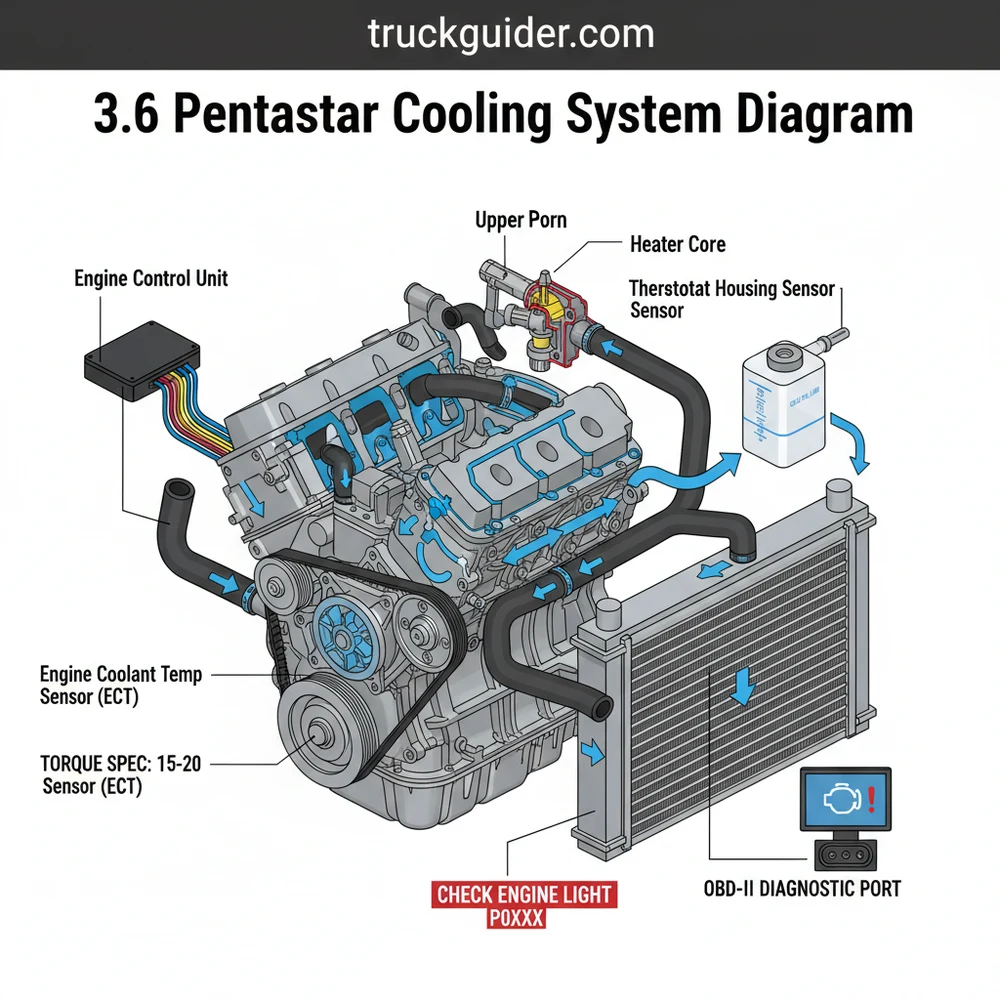
Navigating the complexities of the Chrysler 3.6 Pentastar engine requires more than just a basic understanding of mechanics; it demands a precise 3.6 pentastar cooling system diagram to ensure longevity and peak performance. Whether you are driving a Jeep Wrangler, a Ram 1500, or a Chrysler Pacifica, the 3.6L V6 engine remains a workhorse with a highly specific thermal management design. Having the correct diagram is essential for diagnosing overheating issues, identifying leaks in the valley of the engine, or performing routine maintenance. In this comprehensive guide, you will learn how to interpret the coolant flow pathways, identify every major component, and utilize professional troubleshooting techniques to keep your engine running at the ideal temperature.



The 3.6 Pentastar cooling system is a pressurized, cross-flow design that utilizes a mixture of ethylene glycol and distilled water to transfer heat away from critical engine components. When looking at a 3.6 pentastar cooling system diagram, the most prominent feature is the centralized flow directed toward the upper “V” of the engine block. Unlike older engine designs where the water pump might be driven by the timing chain, the Pentastar utilizes an externally mounted water pump driven by the accessory belt. This makes replacement significantly easier but requires a clear understanding of how the belt tension interacts with the pump pulley.
The diagram typically illustrates the flow starting at the water pump, which is located on the front of the engine block. From there, the coolant is pushed into the engine block and flows upward through the cylinder heads. A unique feature of this engine represented in most diagrams is the integrated oil filter housing and oil cooler assembly, which sits directly in the valley of the engine. This component is a frequent point of failure and is critical to the cooling system’s integrity because it uses the engine’s coolant to regulate oil temperature. The diagram will also show the thermostat housing, usually located at the top front of the engine, which acts as the gatekeeper for the radiator. When the engine reaches its operating temperature, the thermostat opens, allowing hot coolant to flow into the radiator’s upper tank, where it is cooled by airflow before returning to the water pump via the lower radiator hose.
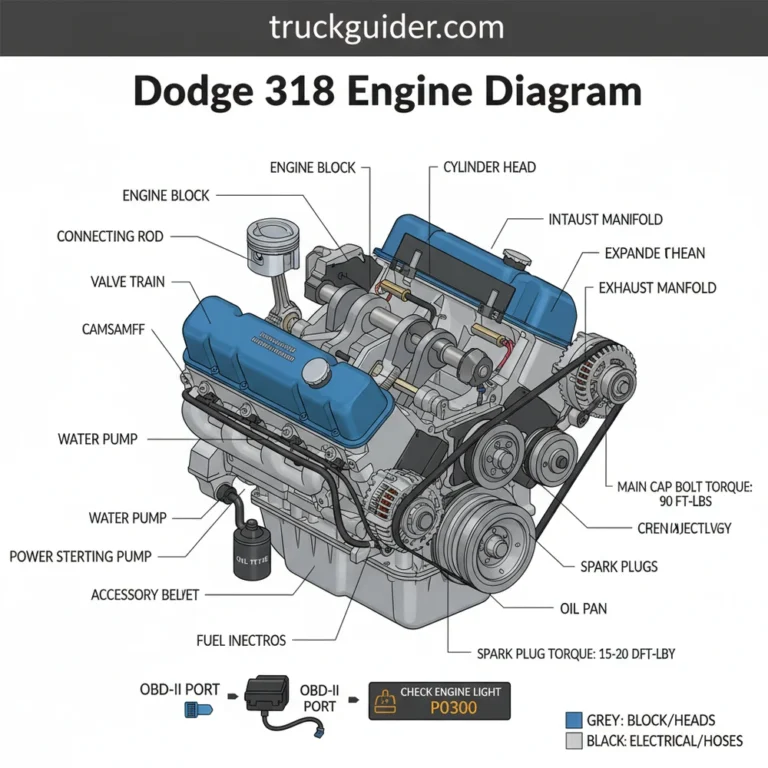
(Visualizing: Water Pump → Block/Heads → Oil Cooler → Thermostat → Radiator → Expansion Tank)
● Blue Lines: Low-Temp Return Flow
● Green Arrows: Bypass/Heater Core Loop
Understanding how to read and interpret the 3.6 pentastar cooling system diagram is the first step in any successful DIY repair or inspection. Follow these steps to master the layout and apply it to your vehicle:
- 1. Identify the Primary Loop: Start your gaze at the water pump. Trace the line leading into the engine block. This is the pressurized feed that prevents the cylinders from warping under high heat. On the diagram, this is usually indicated by the thickest lines.
- 2. Locate the Thermostat and Housing: The thermostat is the most vital control component. In the Pentastar, it is often housed in a plastic assembly. Locate where the upper radiator hose meets the engine; this is your thermostat location. If the diagram shows a bypass line, this allows coolant to circulate within the engine while it is warming up.
- 3. Trace the Oil Cooler Path: Look at the center of the “V” on the diagram. You will see a smaller set of hoses or internal passages leading to the oil filter housing. This is where coolant and oil exchange heat. Understanding this path is vital if you find oil in your coolant or vice versa.
- 4. Map the Heater Core Circuit: Locate the two smaller hoses exiting the rear of the engine or the side of the thermostat housing. These lead to the heater core inside the cabin. This loop provides interior heat and is active even when the thermostat is closed.
- 5. Check the Overflow and Degas System: The Pentastar system uses a pressurized expansion tank (often called a degas bottle). Trace the small vent lines from the top of the radiator and the engine back to this tank. This is where air is purged from the system.
- 6. Apply Torque Specifications: When using the diagram for installation, note the torque spec requirements for different bolts. For example, the thermostat housing bolts and the oil cooler assembly bolts typically require a precise torque spec of 106 in-lbs (approx 9 ft-lbs). Over-tightening these into the aluminum block can cause permanent damage.
- 7. Identify Belt Routing: Since the water pump is driven by the accessory belt, check the diagram for the serpentine belt path. Ensure the belt is routed correctly over the water pump pulley to maintain the correct rotation direction for coolant flow.
Modern 3.6 Pentastar engines rely heavily on the ECU (Engine Control Unit) to manage cooling. The ECU monitors the Engine Coolant Temperature (ECT) sensor. If the sensor detects temperatures outside of the programmed range, it will trigger a check engine light and store a diagnostic code. Common codes include P0128 (Thermostat Rationality) or P0480 (Fan Control Circuit). Always use an OBD-II scanner to cross-reference physical diagram components with digital error codes.
The integration of the cooling system with the engine’s electronic architecture is a critical aspect of the 3.6 Pentastar. The ECU does not just monitor temperature; it actively controls the variable-speed electric cooling fan. If you are troubleshooting a cooling issue, the 3.6 pentastar cooling system diagram helps you locate the physical sensors, but an OBD-II tool helps you understand what the ECU is “seeing.” For instance, if your diagram shows a functional thermostat but your scanner shows the engine is not reaching the “closed-loop” temperature quickly enough, the thermostat may be stuck open, triggering a P0128 diagnostic code.
Many components in the 3.6 Pentastar cooling system, including the thermostat housing and the oil filter adapter, are made of high-heat plastic. Over time, these become brittle. When following the diagram for a repair, always inspect these plastic housings for hairline cracks, especially if you smell coolant but see no obvious puddles.
When troubleshooting the 3.6 Pentastar, the diagram becomes a roadmap for identifying failure points. The most common issue reported by owners is a leak from the oil filter housing/cooler assembly. Because this component is tucked away in the engine’s valley, a leak here often manifests as coolant pooling on top of the transmission or dripping down the back of the engine block, rather than the front. By referencing the 3.6 pentastar cooling system diagram, you can see that this unit is a junction for both oil and coolant flow, explaining why a failure here can lead to cross-contamination.
Another frequent problem is a failing water pump. Signs include a “chirping” noise from the accessory belt area or visible coolant residue (often a crusty pink or purple color) around the pump weep hole. If you see a check engine light, don’t ignore it. Even if the car isn’t overheating on the gauge, the ECU may have detected that the coolant flow is insufficient or that the thermostat is responding too slowly.
The 3.6 Pentastar is notorious for trapping air in the heater core and the upper cooling bridge. After replacing any component shown on the diagram, you must “burp” the system. Use a spill-proof funnel and run the engine with the heater on high until all air bubbles cease. Failure to do this can lead to localized “hot spots” in the cylinder heads despite the radiator appearing full.
To ensure your cooling system lasts as long as the timing chain and other internal engine components, follow these best practices:
First, always use the specific OAT (Organic Additive Technology) coolant required for the Pentastar. Mixing different types of coolant (like the older HOAT with the newer OAT) can lead to chemical reactions that create a “sludge” or “gel,” which will quickly clog the narrow passages in the oil cooler and heater core shown on your diagram.
Second, pay close attention to the accessory belt. Since the water pump’s performance depends on the belt’s tension and integrity, a slipping belt will lead to reduced coolant flow and eventual overheating. Inspect the belt for glazing or cracking every 30,000 miles.
Third, consider a preventative replacement of the thermostat and housing every 80,000 to 100,000 miles. Because the housing is plastic and the internal spring can weaken, replacing it before it fails can save you from an expensive roadside breakdown. When installing new parts, always adhere to the 106 in-lb torque spec to prevent cracking the new plastic components.
Finally, keep an OBD-II scanner handy. Modern cooling systems are proactive. Often, the ECU will detect a slight deviation in the cooling curve long before the needle on your dashboard moves. Monitoring live data for “Engine Coolant Temp” can help you identify a failing water pump or a partially clogged radiator before it results in a “limp mode” event.
In summary, the 3.6 pentastar cooling system diagram is more than just a drawing; it is an essential tool for any owner or technician. By understanding the flow from the water pump through the engine valley oil cooler and out through the thermostat, you can accurately diagnose issues and perform precise repairs. Maintaining the synergy between the mechanical components, the accessory belt, and the ECU’s electronic monitoring will ensure your Pentastar V6 remains a reliable power source for years to come. Whether you are dealing with a P0128 diagnostic code or a mystery leak in the engine valley, let the diagram be your guide to a cooler, more efficient engine.
Step-by-Step Guide to Understanding the 3.6 Pentastar Cooling System Diagram: Diagnosis & Fix Guide
Identify the primary components like the radiator and overflow tank using the 3.6 pentastar cooling system diagram.
Locate the thermostat housing and water pump at the front of the engine block.
Understand how coolant cycles from the lower radiator hose through the engine and out the upper hose.
Apply the correct torque spec when installing new components to avoid damaging plastic threads or seals.
Verify that the OBD-II scanner shows no active diagnostic code related to engine temperature.
Complete the process by bleeding the system of air to prevent the check engine light from illuminating.
Frequently Asked Questions
Where is the thermostat located?
The thermostat on the 3.6 Pentastar is located at the top front of the engine, housed within a plastic assembly connected to the upper radiator hose. You can easily find it by following the large hose from the radiator back toward the engine block, near the alternator and intake manifold.
What does the 3.6 pentastar cooling system diagram show?
This diagram illustrates the path coolant takes from the radiator into the engine block and cylinder heads. It highlights critical parts such as the heater core, expansion tank, and the oil cooler. It helps users trace fluid paths to diagnose cooling inefficiencies or electronic sensor failures reported by the ECU.
What are the torque specs for the water pump?
For the 3.6 Pentastar, the water pump bolts generally require a torque spec of roughly 7 to 18 foot-pounds depending on the specific bolt size and year. Always consult a service manual to ensure you do not over-tighten, as the aluminum block and plastic housings are prone to stripping.
What are the symptoms of a bad oil cooler?
A failing oil cooler often causes coolant to mix with oil, leading to a milky appearance in the reservoir. You might also notice external leaks in the engine valley, a persistent smell of antifreeze, or a diagnostic code related to high oil temperatures or cooling system performance issues.
Can I replace the radiator myself?
Yes, replacing cooling components like the thermostat or radiator is a common DIY task. However, the 3.6 engine requires a specific vacuum-fill or bleeding procedure to remove air pockets. Failing to do this can cause localized hot spots, leading to engine damage or a triggered check engine light.
What tools do I need for coolant service?
You will need a basic socket set, pliers for hose clamps, a torque wrench, and an OBD-II scanner to clear any stored codes. A spill-free funnel is also highly recommended to properly bleed the system and ensure the ECU receives accurate temperature readings from the sensors after repair.