
Ram 2500 Fuel Tank Size: Specs & Fitment Guide [2026]

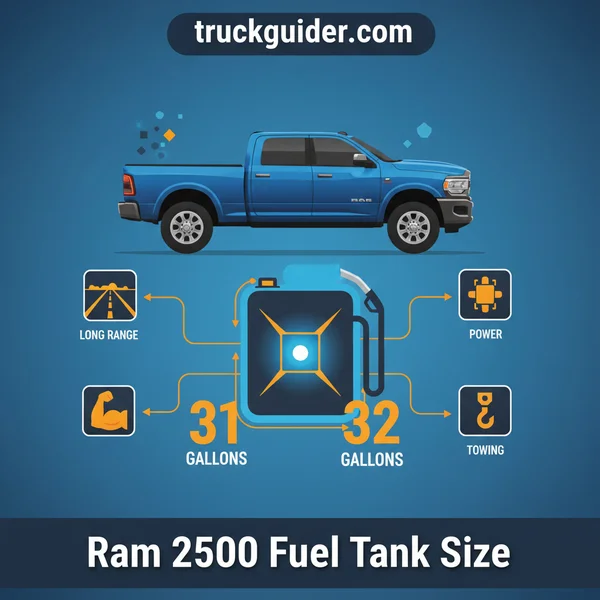
The standard Ram 2500 fuel tank size is typically 31 or 32 gallons for models equipped with the 6’4″ bed, whereas 8′ long bed configurations feature a massive 50-gallon tank. While the 6.4L Hemi and 6.7L Cummins share these capacities, diesel models must also accommodate a 5.7-gallon DEF tank.
🎯 Key Takeaways
- Long bed (8′) models feature the largest factory capacity at 50 gallons.
- Short bed (6’4″) models are standard with a 31-gallon fuel tank.
- Fuel tank capacity is determined by wheelbase, not engine type.
- Diesel versions include a separate 5.7-gallon tank for Diesel Exhaust Fluid.
- Aftermarket replacement tanks can increase short bed capacity to over 50 gallons.
Your Ram 2500 fuel tank size depends almost entirely on your truck’s wheelbase. Most modern Ram 2500 configurations, specifically those with the 6-foot-4-inch bed, come equipped with a 31-gallon or 32-gallon fuel tank. However, if you opt for the 8-foot long bed, you gain access to the massive 50-gallon fuel tank, which is a game-changer for long-distance hauling and minimizing stops at the pump.
Understanding these capacities is critical for calculating your driving range and planning your fuel budget. Because the Ram 2500 is a heavy-duty machine, your “miles to empty” will fluctuate wildly based on whether you are cruising empty or pulling a 15,000-pound trailer. Knowing exactly how many gallons your specific frame holds allows you to calculate your safety margin before the low-fuel light forces an unscheduled detour.
Ram 2500 Fuel Capacity by Bed Length and Cab Style
The physical real estate under your truck’s frame determines how much fuel you can carry. Ram engineers have to fit the fuel tank between the frame rails while accounting for the driveshaft, exhaust system, and suspension components. As a rule of thumb, the longer the truck, the more room there is for a high-capacity tank. This is why the 8-foot bed is the primary gateway to the 50-gallon option.
The Standard 31 and 32-Gallon Configurations
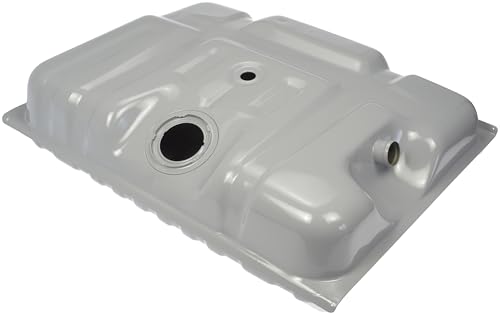
If you drive a Crew Cab or a Mega Cab with the standard 6-foot-4-inch bed, you are likely working with a 31-gallon or 32-gallon tank. While these numbers are often used interchangeably in owner manuals, the 31-gallon tank is the most common standard for the short-bed Cummins diesel models. The gas-powered 6.4L HEMI models often utilize the 32-gallon version. While a single gallon doesn’t seem like much, it represents about 10 to 15 miles of extra range when driving unloaded.
- Mega Cab (6’4″ Bed): 31 Gallons (Diesel) / 32 Gallons (Gas)
- Crew Cab (6’4″ Bed): 31 Gallons (Diesel) / 32 Gallons (Gas)
- Regular Cab (8′ Bed): 32 Gallons (Standard)
The 50-Gallon Long Bed Advantage
For those who prioritize range above all else, the 8-foot bed is the necessary trade-off. By extending the wheelbase, Ram provides enough longitudinal space to fit the 50-gallon tank. This tank is an option on Crew Cab models with the 8-foot bed and is highly coveted by hotshot drivers and RV enthusiasts. With 50 gallons on board, a Cummins diesel achieving 18 MPG unloaded can theoretically travel 900 miles on a single fill-up. Even when towing and seeing a drop to 10 MPG, you still have a 500-mile range, which is significantly better than the 310-mile range provided by the standard tank.
- Crew Cab (8′ Bed): 50 Gallons (Optional)
- Regular Cab (8′ Bed): 50 Gallons (Optional on certain trims)
Comparing Gas vs. Diesel Fuel Systems and DEF Space
The fuel tank size isn’t just about the gasoline or diesel you pump into the side of the truck. If you choose the 6.7L Cummins Turbo Diesel, your truck requires a Diesel Exhaust Fluid (DEF) tank. This secondary tank is essential for meeting emissions standards, but it occupies valuable space underneath the vehicle. On modern Ram 2500 models, the DEF tank usually holds about 5.5 gallons and is positioned near the fuel tank assembly.
How the DEF Tank Affects Fuel Space
The inclusion of the DEF tank is a major reason why the Mega Cab and short-bed Crew Cab models are limited to the 31-gallon fuel capacity. In these “shorter” heavy-duty configurations, the chassis is packed with the transmission, the transfer case (on 4WD models), the exhaust after-treatment system, and the DEF reservoir. There is simply no physical room to expand the fuel tank to 50 gallons without significantly altering the frame or compromising ground clearance. This is why you cannot factory-order a short-bed Ram 2500 with the 50-gallon tank; the geometry of the components won’t allow it.
Gas Model Layout Advantages
The 6.4L HEMI gas engine does not require DEF. Without the need for an extra fluid reservoir and the bulky particulate filters found in diesel exhaust systems, gas models theoretically have more “open” space under the bed. However, Ram generally keeps the tank sizes consistent across both platforms to streamline manufacturing. The main difference you will notice is in the fuel neck and the lack of a blue DEF cap. While the gas models benefit from a slightly larger 32-gallon standard tank over the diesel’s 31-gallon unit, they are still bound by the same wheelbase restrictions when it comes to upgrading to the 50-gallon monster tank.
- Diesel Complexity: Requires DEF tank (5.5 gallons) and DPF filter space.
- Gas Simplicity: No DEF required, allowing for a slightly larger “standard” 32-gallon tank.
- Weight Consideration: A full 50-gallon diesel tank adds roughly 350 lbs of fuel weight, whereas the 31-gallon tank adds only about 215 lbs.
Understanding Fuel Range for Towing and Hauling
Knowing your Ram 2500 fuel tank size is only half the battle; the real concern for most owners is the effective range. When you are empty on the highway, a 31-gallon tank provides a generous cushion. However, the math changes significantly once you hitch up a heavy fifth-wheel or load the bed with equipment. Your fuel economy can drop from 18-20 MPG down to 8-10 MPG depending on the load and terrain.
Calculating Your Range Under Load
To avoid getting stranded, you should calculate your “towing range” rather than relying on the dash’s estimated range. Most experienced Ram owners use a 20% safety margin. For example, if you have a 32-gallon tank and are averaging 10 MPG while towing, your theoretical range is 320 miles. However, you should plan to stop every 250 miles to ensure you aren’t searching for a diesel pump in a remote area with a low-fuel light flashing.
Factors That Impact Your Real-World Mileage
- Aerodynamics: Tall trailers create significant wind resistance, which drains the tank faster than heavy but low-profile flatbed loads.
- Idle Time: If you leave your Cummins idling at rest stops to manage temperatures, your “miles per gallon” effectively drops to zero.
- Terrain and Elevation: Climbing mountain passes requires significantly more fuel, while descending offers little recovery for heavy-duty gas or diesel engines.
- Fuel Quality: Lower-quality winter blend diesel can reduce your overall efficiency by as much as 5-10%.
Aftermarket and Auxiliary Fuel Tank Options for Ram 2500
For many Ram 2500 owners, the factory tank capacity simply isn’t enough for long-distance hotshotting or remote overland adventures. If you find yourself stopping at the pump more often than you’d like, the aftermarket offers several robust solutions to extend your time between fill-ups.
High-Capacity Replacement Tanks
One of the most popular upgrades is replacing the factory mid-ship tank with a larger polymer or steel version. Brands like S&B Tanks and Titan Fuel Tanks offer direct-fit replacements that can nearly double your capacity. For instance, you can often replace a standard 31-gallon tank with a 50-gallon or even 60-gallon unit that fits in the exact same footprint under the chassis. This keeps your truck’s bed space completely open while drastically increasing your range.
Bed-Mounted Auxiliary Tanks
If you don’t mind sacrificing a bit of bed space, an auxiliary “transfer” tank is a game-changer. These tanks sit behind the cab and can hold anywhere from 30 to 100 additional gallons. There are two primary setups for these:
- Gravity-Fed Systems: These slowly trickle fuel into your main tank as you drive, keeping the factory gauge at “Full” until the auxiliary tank is empty.
- Transfer Pump Systems: These allow you to manually flip a switch in the cab to pump fuel from the bed tank into the main tank while on the move.
- Combo Boxes: Many manufacturers offer units that combine a tool box with a fuel tank, maximizing the utility of your Ram’s bed.
Conclusion
Understanding the fuel capacity of your Ram 2500 is essential for planning successful trips, whether you are commuting or hauling a heavy trailer across the country. While the standard 31 or 32-gallon tanks are sufficient for many, the 50-gallon option on long-bed models remains the gold standard for range. By knowing your specific engine and bed configuration, you can accurately predict your stops and avoid the stress of a low-fuel light in the middle of nowhere.
Next Steps: Check your driver-side door jamb or your original window sticker to confirm your exact tank size. If you find the factory capacity lacking, consider researching a high-capacity replacement tank to give your Ram the long-distance endurance it deserves. Safe travels and happy hauling!
💬 Quick Questions & Answers
What is the largest fuel tank on a stock Ram 2500?
The largest factory capacity is 50 gallons, available only on models with the 8-foot long bed.
Does the Cummins Diesel have a larger fuel tank than the Hemi V8?
No, both engines use the same size fuel tanks based on the truck’s bed length and wheelbase.
How big is the DEF tank in a Ram 2500?
All modern Ram 2500 diesel trucks are equipped with a 5.7-gallon Diesel Exhaust Fluid (DEF) tank.
Can I get a 50-gallon tank on a Crew Cab short bed?
No, the 50-gallon tank is physically too long to fit the chassis of a short bed (6’4″) model.
What is the fuel tank size for a 2024 Ram 2500 Mega Cab?
The Mega Cab only comes with a 6’4″ bed, which limits it to the 31-gallon fuel tank.
❓ Frequently Asked Questions
Why do some Ram 2500 models have a 31-gallon tank while others have 32?
The 31-gallon tank is the standard capacity for current 5th-generation Crew Cab short bed models, while some older 4th-gen configurations were rated at 32 gallons due to slight differences in tank molding and chassis design.
How much usable fuel is actually in a 31-gallon Ram 2500 tank?
While the nominal capacity is 31 gallons, the usable amount is typically 2-3 gallons less because the fuel pump requires a reserve to stay cool. Most owners find the low fuel light triggers when they have about 4-5 gallons remaining.
Can I upgrade my short bed’s 31-gallon tank to a 50-gallon tank?
You cannot use the OEM 50-gallon tank because it won’t fit the frame, but you can install aftermarket mid-ship tanks from brands like S&B or Titan that are designed specifically to maximize short bed space.
How does fuel tank size affect the towing range of a Ram 2500?
A 31-gallon tank with a heavy trailer may only provide a 250-mile range at 8-10 MPG. Opting for the 8-foot bed with the 50-gallon tank is highly recommended for long-distance towing to reduce frequent fuel stops.
Does the 6.7L Cummins Diesel require more space for fuel than the Gas Hemi?
The diesel fuel itself doesn’t require more space, but the presence of the 5.7-gallon DEF tank and associated emissions equipment means the chassis packaging is tighter on diesel models compared to gas.
Are there any factory options for dual fuel tanks on the Ram 2500?
Currently, Ram does not offer a factory dual-tank setup for the 2500 series. This feature is typically reserved for chassis cab models or achieved through aftermarket in-bed auxiliary tanks.


![2013 Ram 1500 Headlight Bulb Replacement: Complete Specs Guide [2026]](https://truckguider.com/wp-content/uploads/2026/03/2013-ram-1500-headlight-bulb-replacement-featured.webp)