What Happens If You Put Gas in a Diesel Engine? 2026 Guide

Putting gasoline in a diesel engine destroys the fuel system’s lubrication, leading to catastrophic friction and metal-on-metal damage. If you haven’t started the vehicle, do not turn on the ignition and immediately have the fuel tank professionally drained.
Putting gasoline into a diesel engine creates an immediate chemical imbalance that can destroy your fuel system within seconds. Unlike gasoline engines, which rely on spark plugs and lower fuel system pressures, modern diesel engines in 2026 depend entirely on ultra-fine tolerances and heavy fuel lubrication.


If you made this mistake at the pump, your primary concern is whether you turned the ignition key. Acting quickly before the fuel reaches the combustion chambers makes the difference between a simple tank drain and a catastrophic engine rebuild costing thousands of dollars.
Key Takeaways
- Gasoline acts as a solvent, stripping essential lubrication from the high-pressure fuel pump and injectors.
- Never start the engine if you realize you pumped gasoline into your diesel tank.
- Turn off the engine immediately if you already started driving and notice strange noises.
- Minor mix-ups under five percent might survive with added diesel, but pure gas requires a full flush.
- Professional repairs can cost thousands of dollars depending on how far the contaminated fuel traveled.
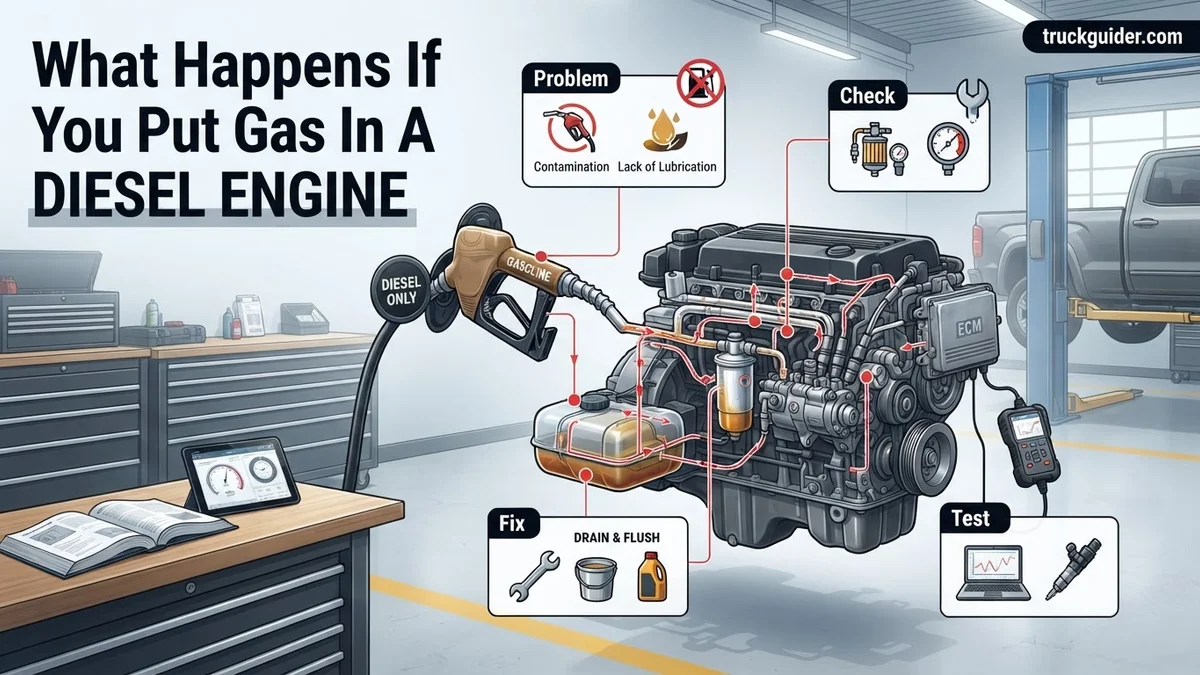
What Causes Engine Damage When Mixing Gas and Diesel
Gasoline acts as a solvent rather than a lubricant. When it enters a diesel system, it aggressively strips away the necessary protective film that keeps high-pressure components functioning smoothly.
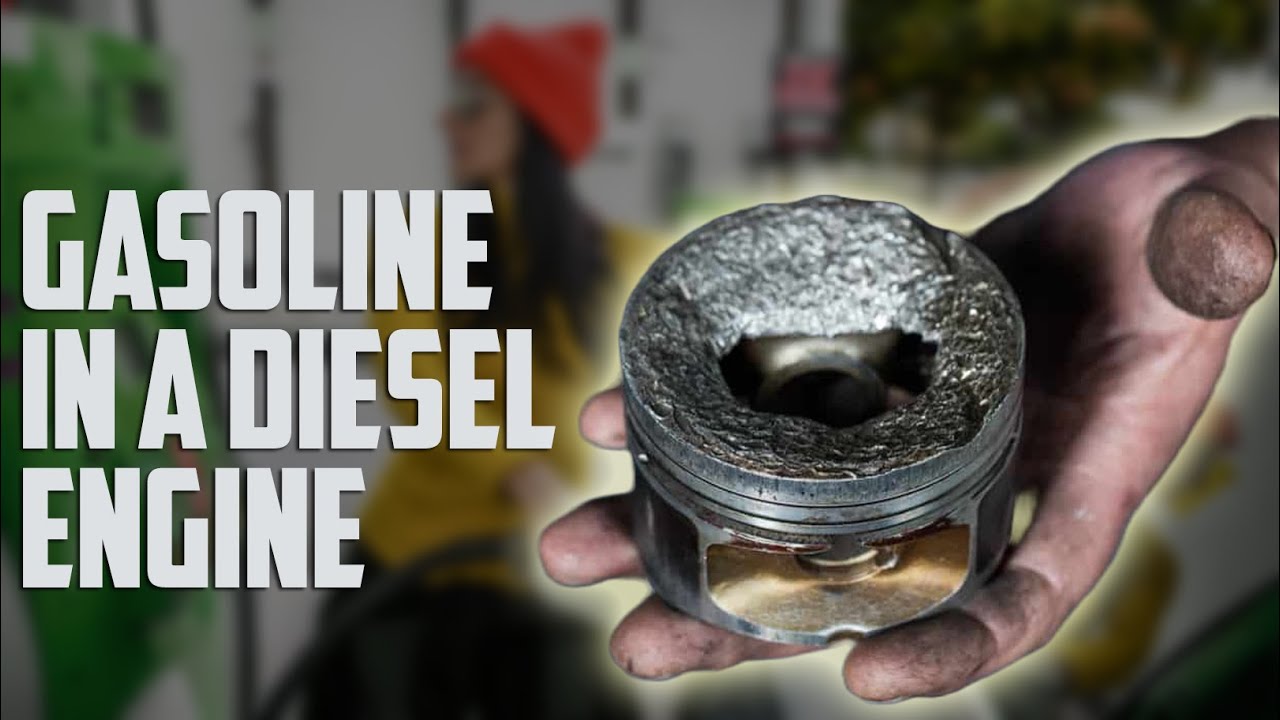
The Lubrication Breakdown
- Fuel Pump Failure: Modern diesel high-pressure fuel pumps use diesel fuel itself as their primary lubricant. Gasoline reduces viscosity to near-zero levels, causing internal metal components to grind against each other at extreme pressures.
- Metal Shavings: As the pump degrades, it sheds microscopic metal fragments throughout the entire fuel system, contaminating the rail, lines, and injectors.
Combustion and Pressure Disasters
- Premature Detonation: Gasoline has a much lower flash point than diesel. It ignites too early under high compression, creating severe engine knocking and potentially cracking pistons.
- Extreme Heat: The incorrect burn cycle elevates cylinder temperatures rapidly, threatening structural damage to the engine block and turbocharger.
How to Fix a Diesel Engine Contaminated with Gasoline
Your immediate course of action depends entirely on whether the engine was turned on after misfueling. The severity of the fix escalates rapidly if the vehicle was started.
If You Did Not Start the Engine
- Leave the Key Off: Do not insert the key or turn on the ignition, as modern electronic fuel pumps prime the system the moment the door opens or the key turns.
- Tow to a Service Center: Transport the vehicle to a mechanic or use a mobile fuel-drraining service to completely empty and flush the fuel tank.
- Inspect and Refill: Once the tank is flushed and filled with fresh ultra-low sulfur diesel, your vehicle should start normally with zero permanent damage.
If You Started and Drove the Vehicle
- Shut Down Immediately: Pull over safely and turn off the engine the moment you realize gasoline is in the tank or the engine begins running rough.
- Expect a Full System Replacement: Mechanics will likely need to replace the high-pressure fuel pump, fuel injectors, rail, and lines due to metal particle contamination.
- Flush the Cylinders: Technicians must drain the entire fuel system, replace the fuel filters, and check the engine cylinders for detonation damage before attempting a restart.
What If It Still Won’t Run After Draining the Tank
Sometimes draining the tank and refilling with diesel does not immediately restore engine function. Residual gasoline trapped inside the fuel lines, filter, and high-pressure pump can still cause misfires and prevent proper combustion. According to automotive service data from 2026, severe contamination incidents require methodical troubleshooting to prevent permanent component failure.


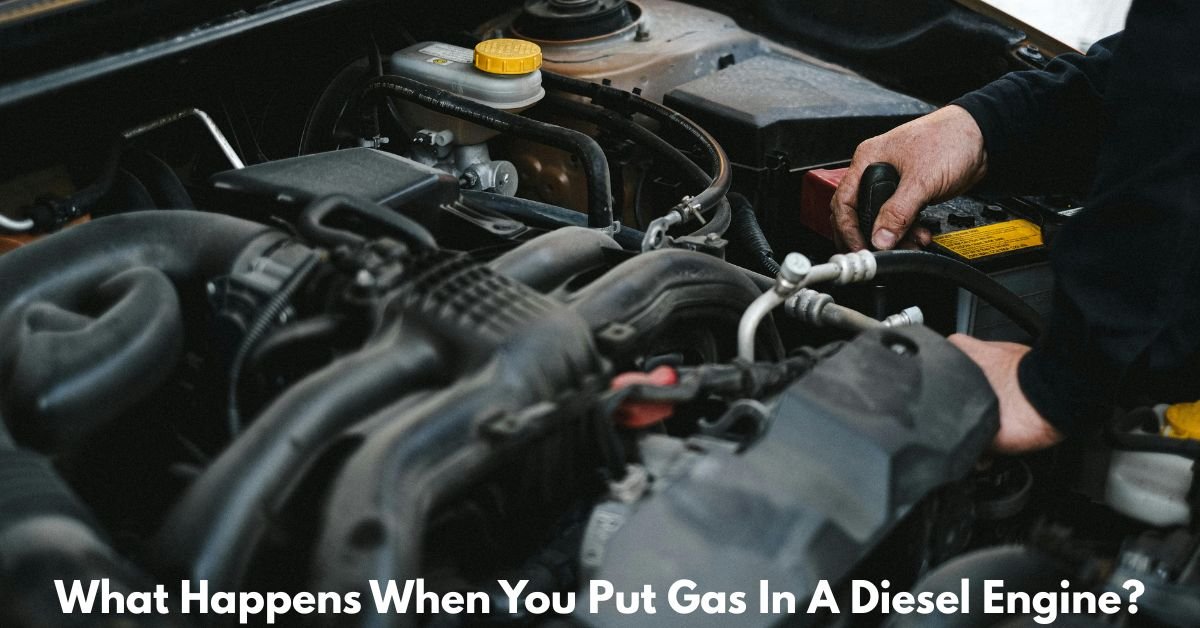
Fallback Steps for Persistent Contamination
- Replace the fuel filter immediately: The fuel filter absorbs lingering gasoline vapors and contaminated fuel. Installing a fresh OEM diesel fuel filter eliminates trapped residue that continues to dilute fresh fuel.
- Bleed the fuel system: Air pockets frequently form during the draining and refilling process. Consult the owner manual to properly bleed the system and restore correct fuel rail pressure.
- Inspect the high-pressure fuel pump (HPFP): Gasoline lacks the lubricating properties of diesel fuel. If the engine ran for an extended period, the HPFP may have suffered internal scoring and metal shaving shedding, requiring a complete replacement costing between $2,500 and $6,000 including labor.
- Clean or replace fuel injectors: Excessively lean combustion and high temperatures can damage fuel injector tips. Professional ultrasonic cleaning or replacement may be necessary if the engine continues to misfire.
- Seek professional mechanic intervention: If the vehicle refuses to start after completing the above steps, tow the car to a certified diesel specialist. Modern common-rail diesel engines feature delicate electronics and high-tolerance mechanical parts that demand specialized diagnostic diagnostic tools.
Frequently Asked Questions About Gas in Diesel Engines
Can I drive a diesel car a short distance if I accidentally added a small amount of gasoline?
If you added less than 5 percent gasoline to a full tank of diesel in an older indirect-injection engine, some manufacturers historically permitted it as a winter anti-gel measure. However, modern 2026 common-rail diesel injection systems operate at extreme pressures exceeding 30,000 PSI and possess zero tolerance for gasoline. Even a small amount significantly reduces lubrication, risking catastrophic pump failure. It is always safest not to drive at all.
Does insurance cover putting the wrong fuel in a car?
Standard auto insurance policies typically treat misfueling as mechanical breakdown or driver error, meaning comprehensive and collision coverage generally will not pay for draining the tank. However, if you have roadside assistance bundled into your policy or added through a third-party provider, towing the vehicle to a repair facility is usually covered. Always check specific policy endorsements for accidental fluid contamination riders.
Will octane booster or diesel additives fix gasoline contamination?
Additives cannot reverse the chemical damage or restore the necessary lubrication properties to gasoline-contaminated diesel fuel. Octane booster raises gasoline combustion resistance, which runs counter to what a diesel engine requires. Pouring additives into a contaminated tank only creates a more complex chemical mixture, worsening potential damage to the emissions system and particulate filter.



Conclusion
Putting gasoline into a diesel engine creates an immediate mechanical risk due to severe lubrication loss and uncontrolled combustion. Quick action—specifically avoiding ignition and thoroughly flushing the fuel system—protects expensive components like the high-pressure pump and injectors from irreversible damage. According to verified research and expert automotive technician sources, catching the mistake before starting the engine reduces repair costs from thousands of dollars to a simple tank drain. The single most important next step is to tow the vehicle to a qualified service center immediately if the engine was cranked or driven.
❓ Frequently Asked Questions
Why is putting gasoline into a diesel engine worse than diesel into a gas engine?
Diesel fuel acts as a lubricant for high-pressure fuel injection components. Gasoline acts as a solvent, washing away that vital lubrication and causing the metal parts to grind together.
How do mechanics clean a fuel system after a misfueling incident?
Mechanics must completely drain the fuel tank, flush all fuel lines, replace the fuel filters, and inspect the high-pressure fuel pump and injectors for metal debris.
What are the warning signs that you accidentally put gas in a diesel tank?
Common symptoms include loud knocking noises, sudden engine misfires, heavy smoke from the exhaust, loss of power, and the engine stalling unexpectedly.

Can I siphon the gas out myself to fix the problem?
While siphoning removes the bulk of the fuel, modern vehicles have anti-siphon valves, and residual gasoline will still remain in the lines and fuel rail, requiring a professional flush.
Does the type of diesel engine affect the severity of the damage?
Yes, older mechanical diesel engines can sometimes tolerate a small percentage of gasoline, whereas modern common-rail direct injection systems are extremely sensitive and suffer immediate failure.
How can I prevent putting gas into a diesel vehicle in the future?
You can use a locking fuel cap, install an aftermarket misfueling prevention adapter on your filler neck, or always double-check the pump nozzle color before fueling.



![Dodge Dakota Towing Capacity Guide: 1987-2011 Ratings [2026]](https://truckguider.com/wp-content/uploads/2026/03/dodge-dakota-tow-capacity-featured.webp)