2000 Ford F150 Fuse Box Diagram: Mapped Out by Circuit Layout

If you are experiencing electrical issues like failing interior lights, non-responsive power windows, or ignition starting problems, the 2000 Ford F150 fuse box diagram is your primary tool for diagnosis. These trucks feature two main power distribution centers—one under the instrument panel and one in the engine bay—that manage every circuit in the vehicle. This guide provides the layout you need to identify blown fuses and restore power to your truck’s accessories.

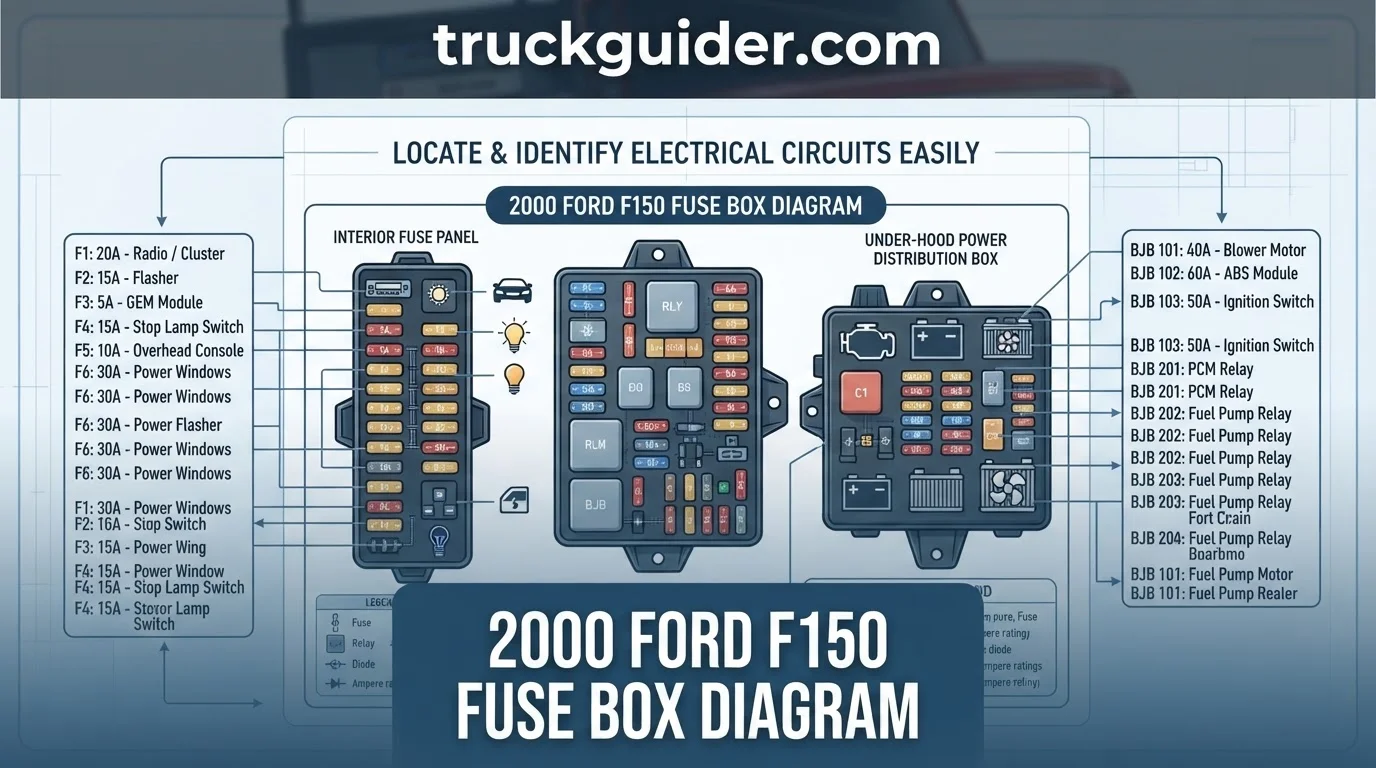
2000 Ford F150 Fuse Box Diagram: Essential Circuit Data
Recommended Best Deal Products


How to Read This Chart
This table outlines the standard cabin fuse configuration for the 2000 model year. The “Fuse Slot” corresponds to the physical position on the panel, while the “Amperage” denotes the maximum safe load for that specific circuit. Always verify your specific trim level against the owner’s manual, as features like towing packages or luxury electronics can introduce variations in fuse allocation.

Locating and Identifying Your 2000 Ford F150 Fuse Box
The 2000 Ford F150 features a primary cabin-side fuse panel located behind a plastic access cover on the dashboard, specifically to the left of the steering column near the driver’s knee. To access it, pull the bottom edge of the cover toward you to release the latch.

The secondary power distribution center is housed in the engine compartment. This box is typically located near the driver’s side inner fender, covered by a black plastic lid held in place by side clips. This box manages high-amperage systems like the powertrain control module (PCM), blower motor, and trailer tow battery charge.

📋
How to Replace a Blown Fuse Safely
Recommended Best Deal Products


Always turn off the ignition and remove the key before working on any fuse panel. This prevents electrical shorts and accidental circuit damage.
Use a fuse puller tool to remove the suspect fuse. Look for a broken metal wire inside the plastic housing or a darkened, charred look, which indicates a blowout.
Only replace a fuse with one of the exact same amperage rating. Never use a higher rating, as this can cause a fire if the circuit fails again.
Common Advantages and Disadvantages of 10th-Gen F150 Electrical Systems
The 2000 model falls within the 10th-generation Ford F150 production run (1997–2003). Understanding the pros and cons of these systems helps when troubleshooting intermittent electrical failures.
Pros of Design
The layout is logically grouped by system function, making it easy to identify relevant circuits. The inclusion of a fuse puller inside the cover is a convenient feature for roadside repairs.
Disadvantages
The cabin fuse box is in a tight, dark location, which can make it difficult to read labels without an external flashlight. Age-related corrosion in the engine bay box is a frequent concern for these high-mileage trucks.

Audible — Listen Free for 30 Days
One free credit a month and thousands of titles included.
Listen Free for 30 Days🔎 How to Find Your Specific Fuse Configuration
Recommended Best Deal Products


Your exact fuse layout may vary based on your truck’s specific trim, engine size (4.2L, 4.6L, or 5.4L), and drivetrain (2WD vs. 4WD). To confirm your layout:
- Check your original owner’s manual; it contains a specific diagram printed inside the supplement section.
- Inspect the inside of the fuse box cover. Most Ford models include a printed sticker showing the location and amperage of every fuse and relay.
- If the cover sticker is missing or illegible, verify your VIN at a local dealership or an official Ford online parts portal to download the correct electrical manual for your specific build.
If a fuse blows immediately after being replaced, do not keep replacing it. This signals a short circuit in the wiring harness or a failing component. Continued replacement can lead to melted wires or vehicle fires.
What if It Still Doesn’t Work? Troubleshooting Next Steps
If you have verified the fuse is good but the component still fails to function, the issue may lie beyond the fuse panel. Follow these steps to narrow down the source of the electrical failure:
- Test the component: Use a multimeter to see if power is reaching the device directly.
- Check relays: Swap the suspected relay with an identical one from a non-critical circuit to see if the problem follows the relay.
- Inspect the ground: A loose or corroded ground wire is a common “hidden” cause for electrical gremlins in 2000-era Ford trucks.
- Consult a pro: If the issue involves the GEM (Generic Electronic Module) or PCM, professional diagnostic equipment is required.
2000 Ford F150 Fuse Box Diagram Frequently Asked Questions
Does the fuse box diagram change if I have a Lariat or XLT trim?
While the base architecture remains identical, the number of populated slots will vary. Higher trims with power seats, heated mirrors, or premium audio systems will utilize fuse positions that are often left empty in base work-truck configurations.
Can I use higher amperage fuses to prevent them from blowing?
No. Fuses are rated based on the wire gauge used in the circuit. Using a higher amperage fuse risks melting the wire insulation and causing a permanent short or fire before the fuse has a chance to blow.
Proper electrical maintenance is key to keeping your 2000 Ford F150 on the road. By utilizing this 2000 Ford F150 fuse box diagram reference, you can efficiently diagnose power delivery issues. If your repairs involve complex wiring beyond the fuse panels, consult a qualified automotive electrician to ensure your vehicle’s specifications remain within factory safety standards.
Key Takeaways
-
✓
Identify the precise location of the interior and under-hood power distribution panels. -
✓
Compare the pros and cons of different fuse types for circuit protection. -
✓
Learn the advantages of using a multimeter over visual inspection for blown fuses. -
✓
Understand the disadvantages of mismatched amperage ratings in your circuit layout. -
✓
Review critical safety features required when replacing automotive electrical components.
❓ Frequently Asked Questions
1
What is the 2000 Ford F150 fuse box diagram?
It is a technical map outlining the location and amperage rating for every electrical circuit in your vehicle. It defines the features supported by each fuse, such as headlights, fuel pumps, and interior accessories, allowing for quick identification when an electrical component fails during routine operation.
2
How does the fuse box layout work?
The system distributes power from the battery to individual components through specific circuits. Each fuse acts as a safety gate; if the current exceeds the rating for a specific feature, the internal wire melts, breaking the circuit to prevent fire or damage to the wiring harness.
Audible Premium Plus — Annual Membership
12 audiobook credits up front, plus the full Audible catalogue.
See Annual Plans
3
Why is checking the fuse box important?
Checking the fuse box is the first step in cost-effective diagnostics. Many electrical issues, such as dead turn signals or non-functioning climate controls, are caused by simple blown fuses rather than expensive mechanical failures. Addressing these proactively saves significant time and repair costs at the shop.
4
What are the benefits of DIY fuse replacement?
The primary advantage is speed and cost. Replacing a fuse takes seconds and costs only cents, whereas a professional diagnostic fee can be substantial. Understanding your truck’s electrical layout gives you the independence to perform real-world testing on the road without waiting for roadside assistance.
5
How can I get started with fuse diagnostics?
Start by locating both panels using your owner’s manual or our reference chart. Ensure the engine is off, then perform a visual inspection for burnt fuses. If you are uncertain, use a test light or multimeter on the exposed metal tips of the fuse to verify continuity while the ignition is on.
6
Where is the fuse box located in a 2000 F150?
The interior fuse box (Central Junction Box) is located under the dashboard on the driver’s side. The engine bay box (Battery Junction Box) is found in the engine compartment, usually near the driver-side fender.
![Ram Extended Warranty Price [2026]](https://truckguider.com/wp-content/uploads/2026/03/featured-c324498f.webp)
![Truck Bed Organization Ideas [2026]](https://truckguider.com/wp-content/uploads/2026/03/featured-c7bc8677.webp)