
2007 Toyota Tundra Parts Diagram: Mapped Out by Trim, Engine Specs, and Year-Specific Variations

A 2007 Toyota Tundra parts diagram provides the exploded-view technical illustrations necessary to identify specific component assemblies, hardware, and orientation for repairs. By utilizing these schematics, you can pinpoint exact OEM part numbers based on your truck’s specific engine, trim level, and drivetrain configuration. This guide assists in navigating these diagrams, decoding part variants, and ensuring accurate component selection to avoid compatibility issues during your vehicle maintenance or repair projects.

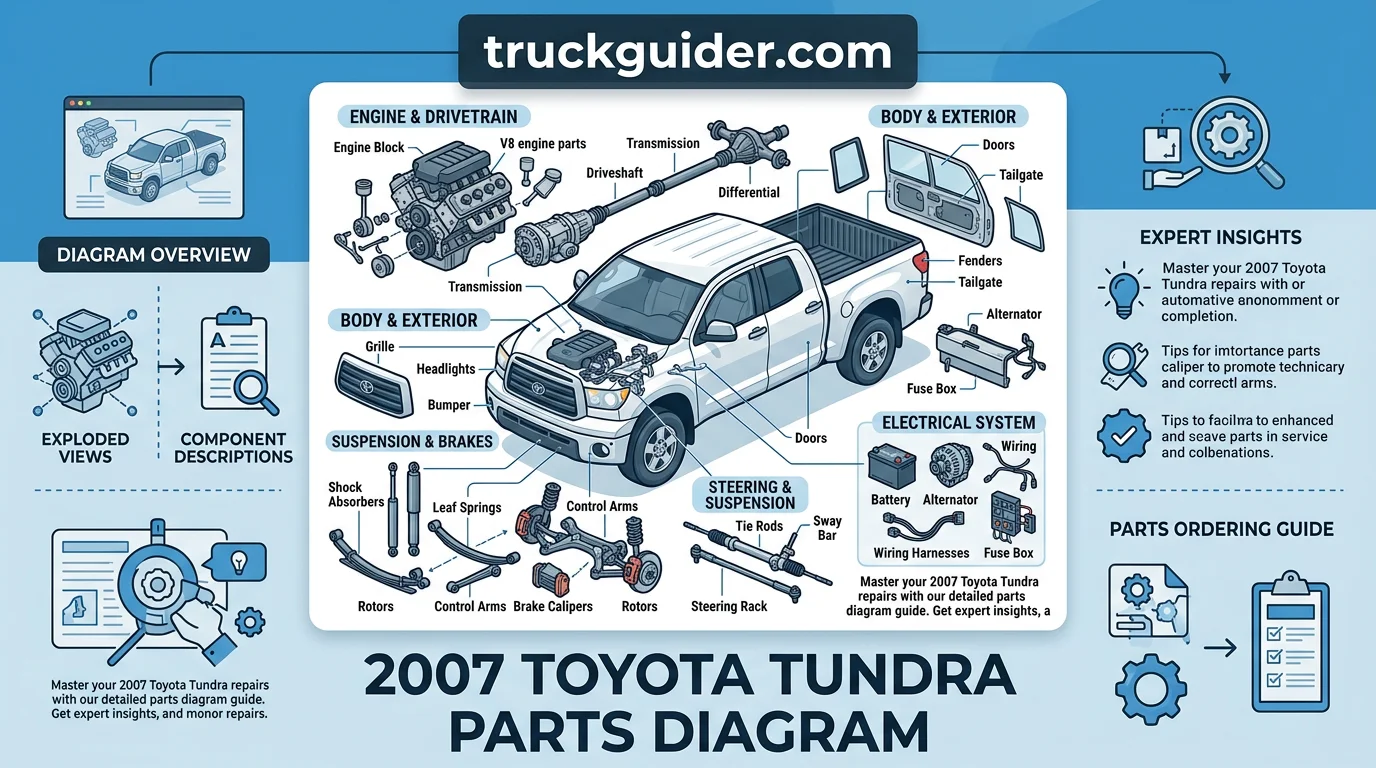
Explore the 2007 Toyota Tundra Parts Diagram: Main Reference View
Recommended Best Deal Products


| System Category | Representative Components | Generation 2 Design Scope |
|---|---|---|
| Engine and Drivetrain | 3UR-FE, 2UZ-FE, 1GR-FE Engine Blocks, Transmissions | Platform-specific power output |
| Front Suspension | Coil springs, control arms, steering knuckles | Load-bearing heavy-duty geometry |
| HVAC and Climate | Blower motors, condensers, refrigerant lines | Large-cabin thermal management |
| Electrical | Wiring harnesses, fuse blocks, sensors | Integrated ECU communication |
How to Read the Diagram
To effectively interpret a 2007 Toyota Tundra parts diagram, begin by identifying the specific system group listed in the table above. Diagrams for the second-generation Tundra are typically broken down into exploded views. These visuals separate complex assemblies, such as the front suspension or engine bay, into individual parts to show their exact physical orientation.

Each component in an exploded view is assigned a reference number. These numbers correspond to a sidebar or a following list that provides the official OEM part name and the necessary hardware identifiers. You will notice that many labels reference specific engine types, such as the 3UR-FE (5.7L) or 2UZ-FE (4.7L), which are unique to the 2007 rollout.
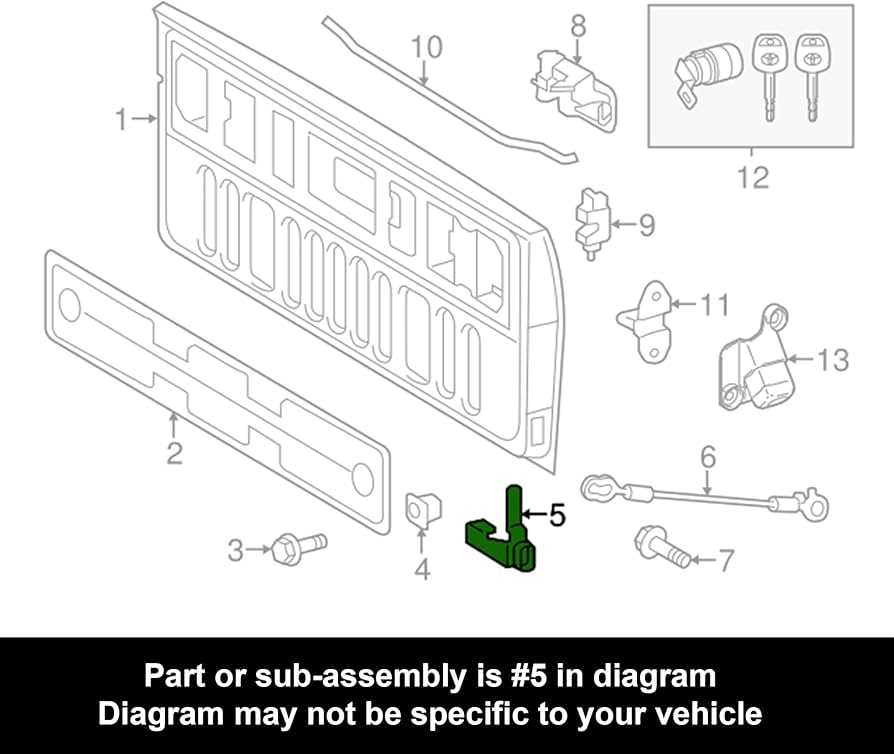
When selecting parts, always verify the specific chassis code, such as USK56L, listed in your owner’s manual or on your vehicle’s VIN plate. Because 2007 introduced significant redesigns over previous years, ensure the diagram reflects the “Generation 2” platform. If a diagram shows multiple variations for a single component, cross-reference the diagram’s legend against your truck’s specific trim level and production date to avoid ordering incompatible parts.
Use these diagrams for initial identification by tracing the path of fluid lines or electrical wires back to the primary module. If a component looks physically distinct from your current setup, double-check your VIN against the manufacturer’s database before finalizing a purchase. The goal is to match the reference number in the visual assembly to the specific part catalog entry provided by the supplier.
Understanding 2007 Toyota Tundra Parts: Key Variables for Accurate
| Variable | Common Variations | Impact on Parts |
|---|---|---|
| Engine | 4.0L V6, 4.7L V8, 5.7L V8 | Cooling, exhaust, timing components |
| Drivetrain | 2WD, 4WD | Suspension geometry, axle shafts |
| Cab Size | Regular, Double, CrewMax | Frame length, interior trim, glass |
How to Read This Chart
This table outlines the primary filters required to isolate correct part numbers. The “Variable” column identifies the vehicle specification, while “Common Variations” lists the specific factory builds for the 2007 model year.

The “Impact on Parts” column describes the mechanical systems most affected by that choice. When navigating an OEM diagram, you must align your vehicle’s specific VIN data with these three categories to ensure the schematic matches your truck’s physical configuration.
Engine Variants and Part Dependencies
Part diagrams for the 2007 Tundra are strictly segmented by engine displacement. Because the 4.0L V6, 4.7L V8, and 5.7L V8 use different engine blocks and auxiliary systems, they require unique cooling, exhaust, and accessory drive components.
For example, a diagram for a water pump on a 5.7L engine will not display the same mounting geometry or hose routing found on a 4.7L engine. Attempting to use a 5.7L diagram for a 4.7L repair will lead to incorrect gasket and pump part numbers that will not physically fit your motor.
Drive Configuration (2WD vs 4WD) Differences
Drivetrain configuration is a primary determinant for suspension and undercarriage parts. The 4WD model includes a front differential, transfer case, and front drive shafts, which are entirely absent in 2WD diagrams.

Audible — Listen Free for 30 Days
One free credit a month and thousands of titles included.
Listen Free for 30 DaysEven when part names are identical, such as “shock absorber,” the part number often varies between 2WD and 4WD due to differences in ride height and mounting hardware. Always verify your drivetrain type before selecting a diagram to avoid ordering suspension components with incompatible load ratings or mounting points.
OEM diagrams use “reference numbers”—small numbers pointing to an item—which must be cross-referenced against a separate list to find the actual part number. The reference number is merely a map index; it is not the orderable part identifier.
Cab Size Specifics for Body and Interior
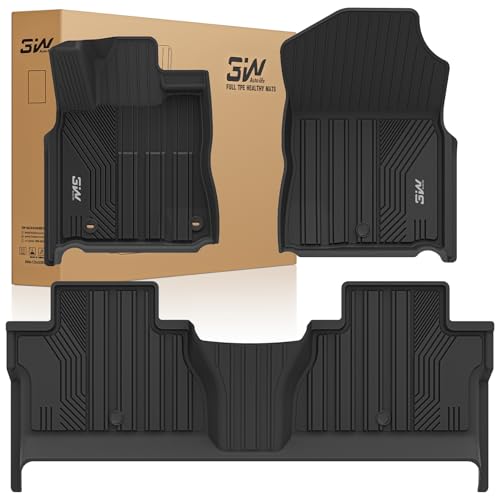
The 2007 Tundra was produced in Regular, Double, and CrewMax cab configurations. This choice affects everything from floor mats and interior trim pieces to body panels, window glass, and even frame-related components like fuel lines and brake cables.
Because these cab sizes differ significantly in length and door design, diagrams are often split by “Cab Type” filters. Failing to filter by your specific cab size will result in choosing body parts that do not match your truck’s wheelbase or mounting requirements. Always confirm your cab style before checking the parts list.
2007 Toyota Tundra vs. 2006 Models: Why Parts Diagrams Differ
Recommended Best Deal Products


| Component | 2006 (1st Gen) | 2007 (2nd Gen) |
|---|---|---|
| Vehicle Platform | Smaller, lighter chassis | All-new heavy-duty frame |
| Engine Mounting | Standard V8/V6 mounts | Reinforced high-torque mounts |
| Body Dimensions | Mid-size/Full-size hybrid | Full-size wide-body |
How to Read This Chart
The table above compares critical structural architecture between the final year of the first-generation Tundra (2006) and the inaugural year of the second-generation Tundra (2007). The “Component” column identifies the mechanical area, while the following columns show the evolution in design specifications.
These distinctions explain why cross-referencing parts between these two years is ineffective. Because the 2007 Tundra represents a clean-sheet redesign, components like frame rails, suspension geometry, and powertrain mounting points are physically incompatible with the 2006 chassis. When using a parts diagram, verify that the document specifically labels “2007” or “Second Generation” to ensure geometric accuracy for your repairs.
The 2007 model year marks the beginning of the second-generation Tundra, representing a complete redesign from the ground up. This transition was so comprehensive that almost no parts are interchangeable between the 2006 and 2007 model years. Relying on a 2006 parts diagram for a 2007 vehicle will inevitably lead to ordering incorrect components.
For example, the frame of the 2007 Tundra features a drastically different steel gauge and reinforcement pattern compared to its predecessor. Consequently, engine mounts and suspension brackets that bolt directly to the 2006 frame will not align with the attachment points on the 2007 chassis. Attempting to force a fit is not only impossible but also a major safety hazard.
Audible Premium Plus — Annual Membership
12 audiobook credits up front, plus the full Audible catalogue.
See Annual PlansA parts diagram for a 2006 Tundra is fundamentally incompatible with a 2007 model due to these structural shifts. Using the wrong diagram creates significant pitfalls, such as purchasing expensive engine sensors, cooling hoses, or trim pieces that possess different thread pitches or mounting clips. Always confirm your specific model year through your VIN to ensure you are referencing the correct schematic.
How to Find Your Specific 2007 Tundra Part Number: A Step-by-Step
Accurately identifying parts for the 2007 Toyota Tundra requires moving beyond generic search terms. Because this model year saw significant mechanical variations based on engine size (4.0L V6, 4.7L V8, and 5.7L V8) and cab configurations, using your unique vehicle data is the only way to ensure compatibility.
| Category | Data Required | Impact on Part Choice |
|---|---|---|
| Engine Type | GR, UZ, or UR Series | Determines filters, belts, and manifolds |
| Drivetrain | 2WD vs 4WD | Affects suspension and axle components |
| Production Date | MM/YY | Filters mid-year design revisions |
How to Read This Chart
The chart above outlines the critical variables that dictate part selection. The “Data Required” column highlights information usually found on your vehicle’s certification label located inside the driver-side door jamb. Using these specific variables prevents ordering parts designed for different engine displacements or frame lengths.
Utilizing Your VIN for Precise Part Lookup
The Vehicle Identification Number (VIN) is a 17-character string that serves as the digital blueprint for your truck. When using an authorized Toyota parts portal, entering the full VIN will automatically filter out incompatible components, ensuring you only view parts engineered for your specific build configuration.
To locate your VIN, check the dashboard near the base of the driver-side windshield or the metal plate on the door frame. Many online portals provide a search bar specifically for this code. Always verify the VIN output against the visual representation in the diagram to confirm the trim level matches.
Accessing Online Toyota Parts Catalogs (EPC)
Electronic Parts Catalogs (EPCs) offer exploded views of your Tundra’s assemblies. These diagrams break down complex systems—such as the fuel delivery or cooling system—into individual components. Each item is assigned a “key number” which corresponds to a specific Toyota Original Equipment Manufacturer (OEM) part number in the accompanying list.
When navigating these catalogs, start by selecting your exact model year and sub-model. Once the exploded view appears, identify the part visually, note the index number, and scroll down to the manufacturer’s table to retrieve the 10-digit part number. Compare this number against your current damaged part when possible.
Distinguishing OEM from Aftermarket Part Numbers
OEM part numbers are strictly assigned by Toyota and follow a standardized format. These are the gold standard for fitment as they match the factory specifications exactly. Aftermarket manufacturers often assign their own internal reference codes, which may differ from the OEM number even for the same part.
If you choose an aftermarket component, ensure the vendor provides a “cross-reference” that maps their specific part number back to the original Toyota number. Relying on vague descriptions like “fits all 2007 Tundras” is risky; always confirm that the specific OEM number is cross-referenced for your engine and drivetrain configuration.
📋
Step-by-Step Lookup Process
Recommended Best Deal Products

Locate your 17-digit VIN on the door jamb tag. Use this to confirm engine, transmission, and plant of manufacture in the catalog.
Navigate the EPC categories (e.g., Engine/Fuel, Suspension). Match the exploded view to the physical location on your Tundra.
Find the index number in the diagram, pull the OEM part number, and verify compatibility with any aftermarket alternatives.
Pitfalls to Avoid When Using 2007 Toyota Tundra Parts Diagrams
| Hazard Category | Primary Risk | Correction Strategy |
|---|---|---|
| Reference vs. Part # | Ordering by diagram key number | Cross-reference to OEM catalog |
| 4×2 vs. 4×4 Components | Incompatible axle/spindle fitment | Verify VIN-specific build data |
| Engine Variations | Ordering wrong cooling/belt parts | Filter by 4.0L, 4.7L, or 5.7L code |
How to Read the Diagram
The table above highlights common pitfalls found when utilizing technical schematics for the 2007 Tundra. The “Hazard Category” column identifies where human error frequently occurs, while the “Primary Risk” column describes the mechanical consequence of an incorrect selection.
To avoid these errors, always cross-reference the item against your vehicle’s specific VIN. Ensure that your search filters are set to your engine displacement and drivetrain configuration before finalizing any order. Never assume a part number is universal across all Tundra configurations.
Engine Size and Part Interchangeability Warnings
The 2007 Tundra was available with 4.0L V6, 4.7L V8, and 5.7L V8 engines. Relying on a generic diagram often leads to purchasing incompatible cooling fans, serpentine belts, or alternator assemblies. These components are physically distinct and are not interchangeable between engine blocks.
Always verify the engine code on your VIN tag. A diagram showing a 5.7L cooling system may look visually similar to the 4.7L setup, but the mounting points and hose diameters vary significantly. Never rely on visual similarity alone when selecting engine-specific components.
4×2 vs. 4×4 Drivetrain Diagram Distinctions
Front-end suspension and drivetrain components vary drastically based on whether your truck is 4×2 or 4×4. The most common mistake involves front spindle and hub assemblies. A 4×4 spindle includes a provision for a CV axle and locking hub, whereas a 4×2 spindle is a solid, non-driven unit.
If you order parts based on an incorrect drivetrain diagram, the internal bearings and mounting geometry will not align. Always isolate your search to your specific drivetrain configuration to ensure the geometry of the suspension and the interface for the differential match your vehicle exactly.
Reference Number vs. Actual Part Number Confusion
Diagrams use “reference numbers” or “call-out numbers” to point to parts in an exploded view. These numbers act only as a key to a legend or a list; they are rarely the official Toyota part number required for purchase. Ordering a component using the reference number will usually result in an order cancellation or error.
Once you identify the reference number, look for the corresponding table that lists the actual 10- or 12-digit Toyota OEM part number. Verify this full number against a reputable parts database or your local dealership to ensure you are receiving the correct item for your specific production month and trim.
Aftermarket Part Compatibility Considerations
Aftermarket manufacturers often consolidate part numbers to save costs, claiming a single part fits all 2007 Tundra variants. However, factory specifications for clearance, electrical resistance, or material strength may differ from these “universal” replacements. This is especially risky with electronic sensors and brake components.
If an aftermarket catalog shows a part as “compatible with all 2007 Tundra models,” exercise caution. Compare the dimensions and electrical specifications against your original part before installation. If the aftermarket part lacks specific compatibility data, it is safer to source an OEM component to ensure exact fitment.
Professional Tips for Working with Your 2007 Toyota Tundra Parts
Successfully navigating parts diagrams requires precision and a commitment to verification. Always double-check your part numbers against a reliable resource, such as the official Toyota parts catalog or a verified VIN-specific lookup tool, before finalizing an order. Relying solely on a visual representation can lead to mistakes due to subtle design variations.
When using a diagram to identify replacement components, you must also consider the role of critical fasteners. Diagrams illustrate where a bolt or nut belongs, but they rarely contain the specific torque specifications required for installation. Always consult your factory repair manual to determine the correct Newton-meters (Nm) or foot-pounds (ft-lbs) for every connection.
Attempting to guess torque values can lead to stripped threads, broken studs, or catastrophic hardware failure. For instance, critical engine and suspension components rely on exact tension to maintain structural integrity. If a diagram shows a specific assembly, cross-reference that page number with the torque sequence chart found in your service documentation.
Prioritize Original Equipment Manufacturer (OEM) parts, especially for safety-critical systems like brakes, fuel lines, and drivetrain components. While aftermarket parts may appear identical in a diagram, they often lack the precise metallurgical specifications and factory testing required for the 2007 Tundra’s long-term durability. OEM components ensure compatibility with your vehicle’s existing tolerances.
Keep your official repair manual open whenever you are actively working with a parts diagram. While the diagram acts as a map for assembly, the repair manual provides the necessary procedural context. This includes the sequence for disassembly, the proper orientation of gaskets, and the required lubrication for moving parts that diagrams might omit.
Finally, inspect the specific build date and production location of your Tundra. Even within the 2007 model year, manufacturers occasionally update components during a mid-year production cycle. Using a parts diagram meant for a different manufacturing plant or early-production run can result in ordering parts with different electrical connectors or mounting points that will not fit your chassis.
Document your installation process by noting the part numbers used for each assembly. If you find a discrepancy between the physical part removed and the diagram’s description, verify your VIN once more. Maintaining a log of these replacements will simplify future repairs and ensure that your Tundra continues to operate within factory-designed parameters for years to come.
Key Takeaways
-
✓
Navigate complex 2007-specific structural diagrams for engine and chassis systems. -
✓
Differentiate between 2006 and 2007 parts due to the total vehicle redesign. -
✓
Use official VIN-based cross-referencing to ensure 100% component compatibility. -
✓
Identify specific trim-level variables that influence suspension and interior parts. -
✓
Follow a structured verification workflow to prevent ordering incorrect part numbers.
❓ Frequently Asked Questions
1
What is the 2007 Toyota Tundra parts diagram?
A parts diagram is an illustrated technical drawing that breaks down the 2007 Tundra into individual components. It provides critical information regarding how parts fit together, the necessary hardware for installation, and the specific part numbers required for ordering replacements directly from authorized suppliers or dealerships.
2
How does the 2007 parts diagram help with repairs?
The diagram offers insights into the mechanical architecture of your truck. By viewing the exploded views, you can visualize the assembly sequence, identify hidden fasteners, and verify that you have all the necessary components before starting a repair, which saves significant time and prevents assembly errors.
3
Why is it important to use a 2007-specific diagram?
Because 2007 marked a major redesign for the Tundra, many parts from 2006 and earlier are incompatible. Using a 2007-specific diagram ensures you receive the correct facts and details for the updated frame, engine blocks, and electrical systems unique to that model year.
4
What are the benefits of reviewing diagrams before ordering?
Reviewing diagrams reduces the risk of returns and downtime. It provides an expert view of the parts’ placement, helping you avoid mistakes like ordering the wrong size bolt or a component designed for a different engine configuration, such as the 4.7L versus the 5.7L V8.
5
How can I get started with using these diagrams?
To get started, locate your vehicle’s VIN and identify the specific sub-system you are repairing. Access a reliable digital parts catalog, enter your vehicle details, and navigate to the relevant section. Compare the diagram images against your truck’s current components to ensure a match.
6
How do I find the correct part number for my 2007 Tundra?
Use your VIN with an online Toyota Parts Catalog (EPC) to navigate exploded view diagrams and cross-reference reference numbers to OEM part numbers. Consider engine, drive type, and cab configuration.
![2007 Dodge Ram Headlights [2026]](https://truckguider.com/wp-content/uploads/2026/03/2007-dodge-ram-headlights-featured.webp)
![2019 Ram 2500 Oil Capacity And Lubricant: Full Specs & Data [2026]](https://truckguider.com/wp-content/uploads/2026/03/featured-1657b7c0-768x768.webp)