2008 Toyota Tundra 5.7 Serpentine Belt Diagram: Proper Routing 2026

The 2008 Toyota Tundra 5.7L V8 uses a single serpentine belt (standard OEM part 90916-A2003 or equivalent). The belt routing path wraps around the crankshaft, A/C compressor, water pump, alternator, power steering pump, and idler pulleys. Tension is maintained by a spring-loaded belt tensioner located on the passenger side of the engine block.
📌 Key Takeaways
- OEM Part Number is 90916-A2003; aftermarket equivalents often use size 7PK2365 (2365mm length).
- The belt tensioner requires a 14mm socket to rotate clockwise to release pressure.
- Always verify the ribbed side of the belt contacts the grooved pulleys, while the flat side contacts the smooth idler pulleys.
- A common failure point is the belt tensioner pulley bearing seizing, leading to belt shredding.
- Seek professional help if the tensioner arm is stuck or if the harmonic balancer shows signs of rubber degradation.
The 5.7L 3UR-FE engine found in the 2008 Toyota Tundra is a marvel of engineering, but it places significant demand on its single-serpentine belt drive system. As a high-torque V8, the accessory drive operates at high rotational speeds to keep the alternator, water pump, and air conditioning compressor functioning under variable loads. When this belt degrades, the entire thermal management and electrical charging system of the vehicle is compromised. Understanding the 2008 Toyota Tundra 5.7 serpentine belt diagram is essential for any technician or fleet manager tasked with maintaining these heavy-duty trucks. Proper belt routing ensures correct component rotation and prevents catastrophic cooling or charging failures.

Prime for Young Adults — 6 Months Free
Students and 18–24s get six months of Prime free, then half price.
Start 6 Months Free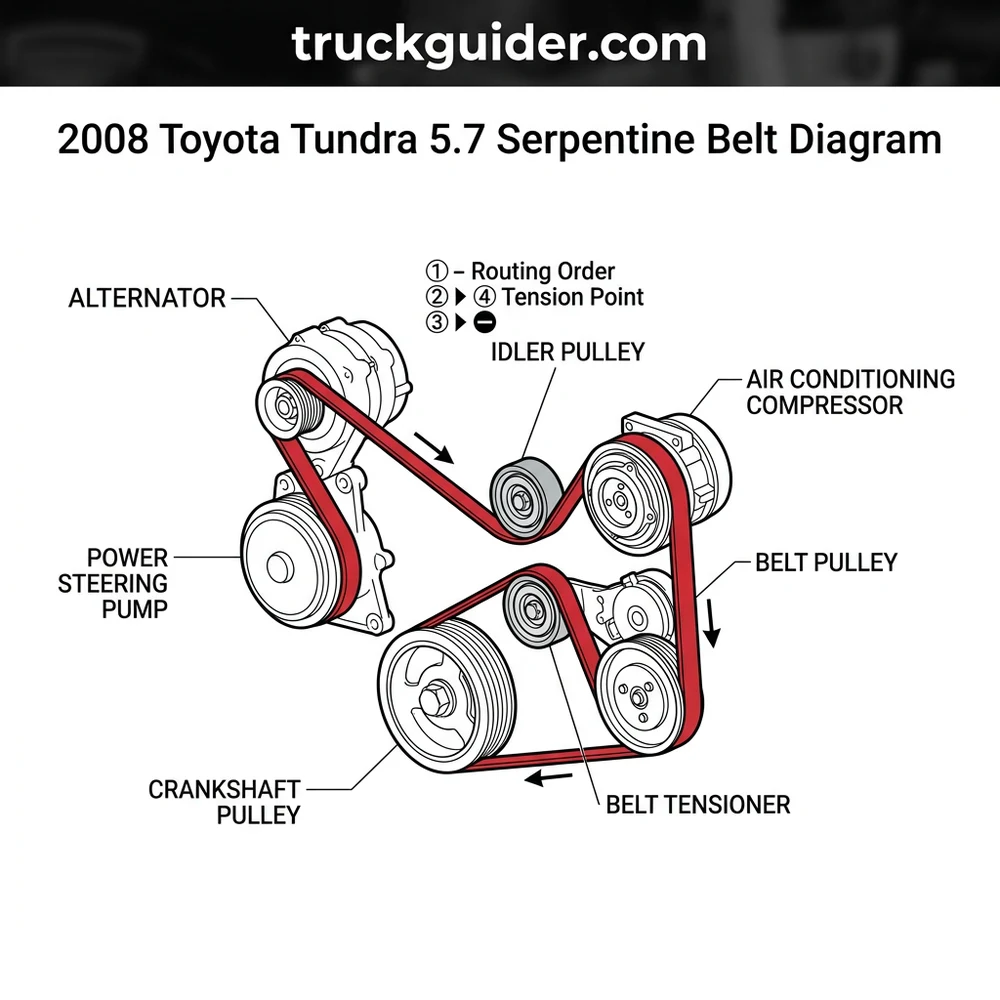
Decoding the 2008 Toyota Tundra 5.7 Serpentine Belt Diagram
Recommended Best Deal Products



The serpentine drive system on the 3UR-FE engine utilizes a single, multi-ribbed belt to transmit mechanical energy from the crankshaft pulley to all primary accessories. Referencing the 2008 Toyota Tundra 5.7 serpentine belt diagram reveals a complex path designed to maximize “deck engagement” on the drive pulleys while ensuring the tensioner provides constant, calibrated pressure.
The belt routing path begins at the crankshaft harmonic balancer, which serves as the primary drive source. From here, the belt travels upward to the cooling fan assembly and water pump pulley. Precision in this specific loop is critical; if the belt is routed incorrectly—for example, wrapping over the water pump pulley instead of under—the water pump will rotate in reverse, leading to immediate engine overheating.
The alternator pulley is positioned high on the passenger side. The diagram dictates a specific contact angle here to ensure the belt drives the alternator with sufficient wrap to prevent slippage during high-amperage electrical loads. Following the path, the belt engages the air conditioning compressor located at the lower section of the accessory bracket. The automatic belt tensioner is strategically placed to maintain constant tension regardless of belt stretch or thermal expansion.
One common point of confusion for technicians is the presence of idler pulleys. The 5.7L system utilizes specific idler pulleys to route the belt around obstructions and ensure the belt stays clear of the engine block. When inspecting the pulley diagram, note that the smooth side of the belt must face the idler pulleys, while the ribbed side corresponds with the grooved pulleys on the alternator and crankshaft. Failure to align the rib-to-groove interface correctly will cause rapid belt degradation and potential delamination of the drive material within only a few hundred miles of operation.
The 3UR-FE accessory drive uses a self-adjusting hydraulic tensioner. If you find the belt is loose despite a new installation, inspect the tensioner damping arm for signs of seizing or hydraulic fluid leakage, which often mimics a stretched belt symptom.
OEM Replacement Part Numbers for 2008 Toyota Tundra 5.7L

Selecting the correct component is vital for maintaining the factory-spec tension and belt wrap required by the 2008 Toyota Tundra 5.7L architecture. Using an aftermarket belt of the incorrect size can lead to premature wear on the tensioner bearing or inefficient cooling due to belt slippage at the water pump.
| Component | OEM Part Number | Specification |
|---|---|---|
| Serpentine Belt (OEM) | 90916-02664 | 7PK2280 / 2280mm Length |
| Belt Tensioner Assembly | 16620-0S010 | Automatic Hydraulic |
| Idler Pulley | 16603-0S010 | Smooth face, 70mm |
Always verify your VIN against these part numbers. Toyota occasionally updated specifications for the 3UR-FE engine during the 2008 production year, specifically regarding the idler pulley bearing race design. Ensure that your replacement belt is constructed of high-modulus EPDM rubber, which provides the necessary heat resistance for the Tundra’s engine bay environment.
How to Read the 2008 Toyota Tundra 5.7 Serpentine Belt Diagram Step by Step
Recommended Best Deal Products

Installation of the serpentine belt requires a methodical approach. Before beginning, ensure the engine is fully cooled to prevent burns from contact with the exhaust manifold or coolant lines near the water pump.
1. Preparation: Acquire a 14mm or 17mm serpentine belt tool depending on your specific tensioner bolt head size. Position the vehicle on a lift or level ground and engage the parking brake.
2. Tensioner Access: Locate the automatic belt tensioner. It is positioned on the front of the engine, usually below the alternator. Use the belt tool to rotate the tensioner arm clockwise (moving against the internal spring pressure) to retract the tensioner pulley.
3. Belt Removal: Once the tension is released, slip the belt off the most accessible idler pulley. Slowly release the tensioner arm to its resting position. Remove the old belt entirely from the engine bay, keeping a record of the path if you do not have the diagram printed.
4. Routing the New Belt: Begin by looping the new belt around the crankshaft pulley at the bottom, as this is the most difficult access point. From there, route the belt according to the 2008 Toyota Tundra 5.7 serpentine belt diagram, working toward the alternator and the power steering pump.
5. Final Engagement: Ensure that the grooved side of the belt is properly seated in the grooves of the alternator and water pump pulleys. Check for “deck engagement,” meaning the belt ribs must be fully seated within the pulley tracks. If the belt is offset by even one rib, it will fail prematurely.
6. Tensioner Finalization: Rotate the tensioner again using your tool. While the tensioner is retracted, slide the belt over the final remaining smooth idler pulley.
7. Inspection: Carefully release the tensioner. Verify that the belt is centered on all pulleys. If the belt appears crooked or overhangs an edge, the tensioner is likely misaligned or the belt has jumped a track during installation. Perform a manual rotation of the crankshaft using a breaker bar if necessary to seat the belt fully before starting the engine.

Audible — Listen Free for 30 Days
One free credit a month and thousands of titles included.
Listen Free for 30 DaysPost-installation check: The tensioner mark should indicate the belt is within the “Operating Range” indicator on the housing. If the tensioner is bottomed out or over-extended, the belt length is incorrect or the tensioner spring has lost its calibration.
2008 Toyota Tundra 5.7 Belt Tensioner and Idler Maintenance
A new belt is often blamed for squealing, but the 2008 Toyota Tundra 5.7 serpentine belt diagram troubleshooting frequently leads back to the tensioner and idler pulleys. With the belt removed, you have a unique window of time to evaluate the health of these components.
Spin each idler pulley by hand. A healthy pulley should spin silently with a smooth, fluid resistance. If you hear a rhythmic growl, clicking, or grinding, the sealed bearing inside the pulley has failed. In this case, replacing just the pulley is a cost-effective maintenance measure that prevents the bearing from seizing and snapping the belt while the vehicle is in motion.
Next, inspect the automatic belt tensioner. Check the pulley arm for “pivot play.” If the arm wiggles side-to-side, the internal bushings are worn. A worn tensioner will cause the belt to vibrate or oscillate, which leads to accessory pulley shaft seal failures, particularly on the alternator. Examine the tensioner housing for any signs of hydraulic oil weepage. The 3UR-FE system uses a hydraulic dampener to manage vibration; if this dampener is leaking, the tensioner will be unable to maintain the consistent tension required for high-load, high-RPM operations.
If you identify significant play, do not attempt to reuse the old tensioner. The cost of a tow truck due to a snapped belt far outweighs the expense of a factory-recommended replacement tensioner assembly. Always use the diagram as a reference to ensure the spring-loaded arm is correctly oriented upon installation, as installing a tensioner at the wrong clocking angle will result in improper belt geometry and immediate failure.
Never use belt dressing sprays. Modern EPDM belts are not compatible with these chemicals, which act as solvents that soften the rubber compound and promote rapid cracking and separation of the rib structure.
2008 Toyota Tundra 5.7 Serpentine Belt Diagram Questions Answered
Recommended Best Deal Products


How can I verify the belt is seated correctly after installation?
Inspect the pulley grooves. The belt ribs must be fully inserted into the pulley tracks across all accessory drives. Use a flashlight to check the alignment on the back side of the crankshaft pulley; even a slight misalignment can cause the belt to throw itself off the drive system under high-RPM load.
What symptoms indicate the belt tensioner is failing?
Common indicators include a persistent squealing sound during cold starts, belt vibration at idle, or the belt showing signs of “tracking” (shifting left or right on the pulley face). A failing tensioner often prevents the belt from maintaining proper tension during AC compressor engagement.
Audible Premium Plus — Annual Membership
12 audiobook credits up front, plus the full Audible catalogue.
See Annual PlansDoes the 2008 Toyota Tundra 5.7 use the same belt as the 4.7L engine?
No. The 4.7L engine and the 5.7L 3UR-FE engine have distinct accessory layouts, different pulley diameters, and varying belt lengths. Always cross-reference the OEM part number specifically for the 5.7L engine to avoid compatibility issues.
Should I replace the idler pulley when replacing the serpentine belt?
While not strictly required, it is best practice. If the vehicle has surpassed 100,000 miles, the grease within the idler pulley bearings is likely depleted. Replacing the idler pulley alongside the belt ensures a renewed accessory drive system and minimizes the risk of roadside failure.
What is the recommended interval for belt replacement?
Toyota suggests routine inspection every 30,000 miles. For a 2008 model used for towing or heavy-duty applications, a preventive replacement interval of 60,000 to 75,000 miles is recommended to ensure reliability and prevent the common “heat-check” cracking that occurs in the Tundra’s engine bay.
Step-by-Step Guide to Understanding the 2008 Toyota Tundra 5.7 Serpentine Belt Diagram
Identify – Locate the belt tensioner pulley situated on the lower passenger side of the 5.7L engine.
Locate – Use a 14mm wrench or a serpentine belt tool to rotate the tensioner arm clockwise to release belt tension.
Reference – Consult your belt routing path diagram to ensure the smooth and grooved sides of the belt are positioned correctly against the corresponding pulleys.
Connect/Route – Slide the belt over all accessories, leaving the tensioner pulley for last to simplify the installation process.
Verify – Check that every rib of the belt is properly seated in the grooves of the pulleys and perform a final alignment check.
Troubleshoot – If the belt squeals upon startup, shut off the engine and verify that the belt is not misaligned on one of the idler pulleys.