2010 Ram 2500 Towing Capacity 2026 Verified Specs

Quick Answer
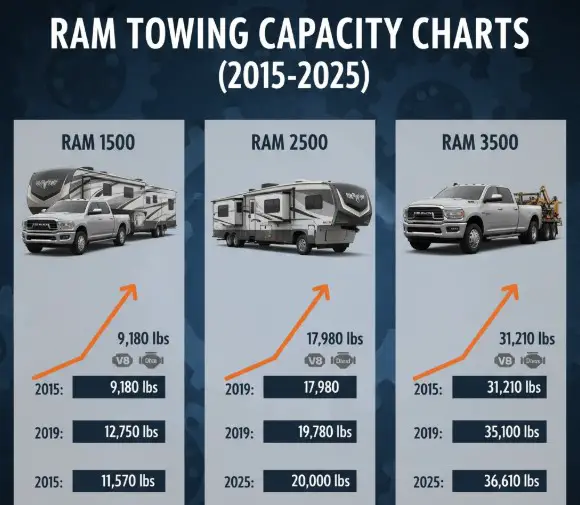
The 2010 Ram 2500 towing capacity ranges from approximately 11,500 lbs to 17,600 lbs depending on the engine, cab configuration, and axle ratio. The 6.7L Cummins Turbo Diesel offers the highest tow ratings, while the 5.7L HEMI V8 provides a lighter-duty alternative. Always check your specific vehicle’s payload sticker and the factory towing guide, as individual configurations significantly impact your legal maximum.
Are you pushing your 2010 Ram 2500 to the limit, or are you operating within its factory-defined safe towing zone? Many owners confuse their hitch receiver’s maximum rating with the truck’s actual Gross Combined Weight Rating (GCWR), leading to potential safety hazards and severe mechanical strain. This guide provides the verified 2010 Ram 2500 towing capacity data and explains exactly how to calculate your specific limits based on your unique truck configuration.
This guide covers the 2010 model year (the transition year from Dodge to Ram). Ratings vary significantly by cab, bed length, drivetrain (2WD vs. 4WD), and axle gear ratios. Always consult your driver-side door jamb sticker and the vehicle owner’s manual to verify the exact rating for your specific VIN. Last reviewed: August 2026.
2010 Ram 2500 Towing Capacity: Verified Factory Specifications
Recommended Best Deal Products


| Engine | Drivetrain / Axle | Max Towing Capacity | Notes |
|---|---|---|---|
| 5.7L HEMI V8 | 3.73 Axle | ~10,000–11,500 lbs | Varies by Cab/Bed |
| 6.7L Cummins I6 | 3.73 Axle | ~13,000–15,500 lbs | Manual vs. Auto |
| 6.7L Cummins I6 | 4.10 Axle | ~16,000–17,000+ lbs | Highest GCWR config |
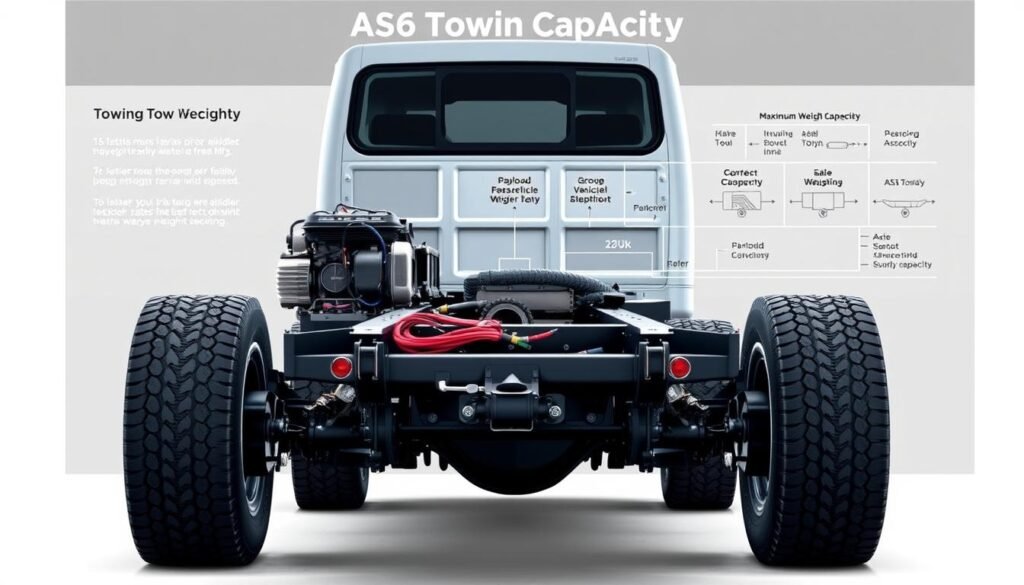
How Axle Ratios Define Towing Performance
The axle ratio is the most critical mechanical variable in your towing equation. A 4.10 rear axle ratio provides more torque to the wheels, allowing the engine to stay in its power band while accelerating with a heavy load. Conversely, the 3.73 ratio is designed for better fuel economy during cruising but offers a lower maximum tow rating. When analyzing your 2010 Ram 2500 towing capacity, always verify your axle ratio via the build sheet or the axle tag located on the rear differential cover.
Factors Influencing Your 2010 Ram 2500 Maximum Trailer Weight
Conventional vs. Gooseneck Towing Explained
Most factory tow ratings assume a conventional receiver hitch. However, gooseneck and fifth-wheel setups shift the weight distribution closer to the truck’s rear axle. While this improves stability, it does not magically increase your GCWR. You must ensure that the “pin weight” or “tongue weight” of your trailer, combined with the weight of passengers and cargo in the truck, does not exceed the truck’s Gross Vehicle Weight Rating (GVWR).
10,000 lbs
17,000+ lbs
Payload Capacity Trade-offs
Every pound of cargo or weight of a passenger in your cab subtracts directly from your truck’s available payload. If you have a heavy-duty diesel engine, the engine itself weighs more than the HEMI V8, which consumes a portion of your total payload capacity. Always check your payload sticker inside the driver’s door jamb to see exactly what your truck is rated to carry.
An empty truck is not a “fully capable” truck. You must account for the weight of your hitch, any installed aftermarket toolboxes, and all passengers when calculating how much actual trailer weight you can legally and safely pull.
How to Find Your Specific 2010 Ram 2500 Tow Rating
Recommended Best Deal Products


Open the driver-side door. On the B-pillar, you will find a sticker detailing the GVWR and GAWR (Gross Axle Weight Ratings).
If the sticker is faded, contact a Ram dealer with your VIN. They can pull the “Build Sheet” that lists your specific axle ratio and factory tow package inclusion.
Why Aftermarket Mods Don’t Increase Legal Capacity
Many owners install aftermarket air bags, load-leveling hitches, or upgraded brake pads thinking these mods increase their truck’s towing limit. Legally, they do not. A vehicle’s maximum tow rating is determined by the manufacturer based on the weakest link in the system: the transmission, frame, axle strength, or braking system. No amount of aftermarket modification can change the legal GCWR certified by the factory.
2010 Ram 2500 vs. 1500 and 3500 Towing Capabilities
Heavy Duty 3500 Performance Differences
If you are consistently at the maximum limit of the 2500, a move to the 3500 is often the better choice. The 3500 features a heavier-duty rear suspension (typically including helper springs) that provides significantly more payload capacity. While the towing capacity of a 2500 and 3500 might overlap in specific engine configurations, the 3500 is engineered to handle “pin heavy” loads with significantly less squat and superior stability.
Always prioritize your truck’s GCWR over anecdotal advice from forums or social media.
Check your door stickers and owner’s manual before every major haul to ensure your setup is compliant.
If you remain unsure of your truck’s specific build configuration, I strongly recommend using your VIN to access the official Ram owner’s portal or contacting a local dealership. Do not rely on assumptions when your safety, and the safety of others on the road, depends on the mechanical integrity of your towing setup.
2010 Ram 2500 Towing Capacity: Frequently Asked Questions
Recommended Best Deal Products


Does the engine choice (Hemi vs. Cummins) really change my towing capacity?
Yes, significantly. The Cummins Turbo Diesel provides superior torque at lower RPMs, which is essential for heavy loads. In 2010 models, the Cummins offers higher GCWR and maximum tow ratings compared to the 5.7L HEMI, which is designed more for lighter duty and faster acceleration without heavy trailer loads.
Do I need special equipment for a gooseneck trailer?
A gooseneck trailer requires a specific hitch mount integrated into the truck bed, typically connected to the frame rails. You must ensure your Ram 2500 is equipped with the necessary reinforcement and that the payload capacity is sufficient to handle the increased pin weight associated with gooseneck setups.
What happens if I exceed my GCWR?
Exceeding the Gross Combined Weight Rating puts excessive stress on your transmission, cooling system, and suspension. It can also significantly increase stopping distances, lead to mechanical failure, and void manufacturer warranties. Legally, it may also make you liable in the event of an accident due to an overloaded vehicle.
Do I need trailer brakes?
For most trailers exceeding 2,000 lbs, federal and state regulations often require trailer brakes. For a heavy-duty truck like the 2010 Ram 2500, it is strongly recommended to use an integrated trailer brake controller to manage the stopping force of the trailer independently of the truck’s primary braking system.
How do I find my truck’s specific axle ratio?
You can determine your truck’s specific axle ratio by looking at the build sheet, which is often available through the RAM owner’s portal using your VIN. Alternatively, the axle ratio code is sometimes listed on a sticker inside the glove box or on the rear differential cover tag.