
2016 Ram 1500 Headlight Bulb Replacement: Comprehensive Guide 2026

The 2016 Ram 1500 is engineered with a complex forward lighting architecture that presents unique maintenance variables for automotive technicians and owners alike. Unlike older vehicle platforms that utilize simple direct-current lighting circuits, the 2016 iteration of the Ram 1500 relies on a highly sensitive Controller Area Network Bus (CANBUS) paired with a Pulse Width Modulation (PWM) power delivery system.
Over standard operational lifecycles, original equipment manufacturer (OEM) halogen headlight bulbs experience significant photometric degradation, typically losing up to twenty percent of their luminosity before succumbing to total filament failure.


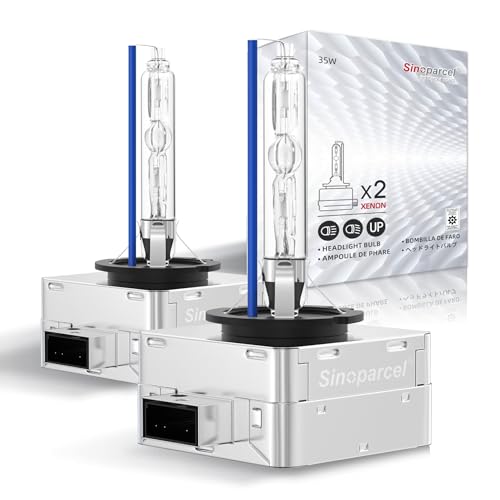
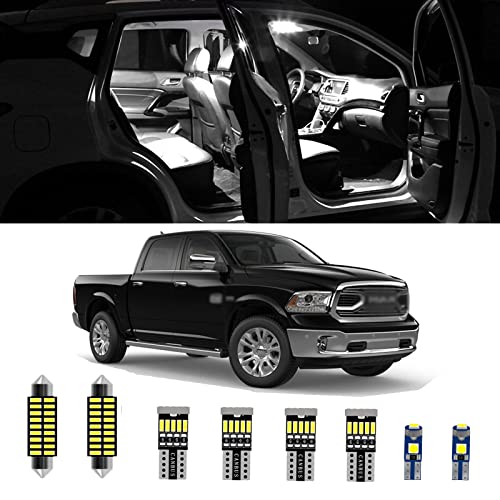
Restoring or upgrading the optical performance of this vehicle requires precise identification of the factory-installed headlight housing, exact matching of bulb nomenclature, and a comprehensive understanding of the vehicle’s thermal and electrical tolerances.
Attempting to install incorrect components or bypassing electrical protocols invariably results in severe flickering, dashboard error codes, or complete melting of the factory wiring harnesses. This report systematically analyzes the technical requirements for replacing and upgrading the headlight bulbs on the 2016 Ram 1500, detailing everything from housing identification to mechanical extraction and post-installation beam alignment.
Identification and Specifications of Headlight Housing Configurations
Prior to procuring replacement lighting components, it is mandatory to identify the specific optical housing equipped on the target vehicle. The 2016 Ram 1500 was manufactured with distinct headlight assembly variations across its trim levels, each utilizing completely different wiring harnesses and bulb sizes.
The most prevalent configuration is the Quad Beam reflector style assembly. Typically equipped as standard hardware on the Tradesman, Express, SLT, and Big Horn trim levels, this unit relies on traditional multi-faceted reflective bowls to project light. Visual identification is straightforward, as the housing features two highly reflective, clear circular bowls per side. Mechanically, the Quad Beam system separates its lighting duties, utilizing a dedicated H11 halogen bulb for the low beam and a separate 9005 bulb for the high beam.
Conversely, premium trim levels such as the Laramie, Sport, and Limited utilize a Projector Style housing. This advanced optical system employs a spherical glass lens to focus the light beam with absolute precision, creating a sharp horizontal cutoff line that maximizes forward visibility while preventing glare for oncoming traffic. Visually distinguished by the prominent round “eye” positioned behind the outer glass, this assembly often integrates secondary LED daytime running lights. Despite the internal mechanical shutter used to switch between low and high beam patterns, the projector housing standardizes its primary light source, utilizing a single 9005 bulb for both low and high beam functions.
A third, albeit less common, configuration is the Dual Beam reflector style. Frequently found on specific fleet vehicles or export models, this basic housing features a single, large reflector bowl and relies on an H13 (9008) dual-filament bulb that mechanically switches intensity to serve both low and high beam functions.
2016 Ram 1500 Headlight Bulb Replacement
Stop driving in the dark and avoid exorbitant dealership fees. This comprehensive, data-driven guide provides exact bulb specifications, cost comparisons, and a step-by-step teardown for your 4th-Gen Ram.
📊 The 4th-Gen Ram Lighting Landscape
Replacing a headlight bulb on a 2016 Ram 1500 isn’t as simple as reaching behind the housing. Due to the truck’s front-end architecture, accessing the rear of the headlight assembly requires removing the front grille and manipulating hidden retaining clips through the wheel well.
Furthermore, identifying the correct bulb is critical. Ram offered two distinct headlight housing styles for the 2016 model year: the standard Quad Headlamps (featuring distinct high and low beam reflectors) and the premium Projector Headlamps (which use a single bulb with a mechanical shutter). Our market analysis of OEM builds shows a distinct split in what owners are driving.
Key Diagnostic Indicator
If your headlight assembly has two separate large reflector bowls for high and low beams, you have Quad lamps. If it has a glass spherical lens resembling an eyeball for the main driving light, you have Projector lamps.
Ram 1500 Headlight Type Distribution (2016)
💡 Exact Bulb Size Specifications
Purchasing the wrong bulb is the most common mistake DIYers make. The Total Integrated Power Module (TIPM) on the Ram is highly sensitive to voltage changes. Use this verified data table to source the correct OEM-equivalent halogen or aftermarket LED upgrade. Refer to resources like the Sylvania Automotive Database to cross-reference if your truck has customized trim packages.
| Headlight Style | Application | OEM Bulb Size | Wattage |
|---|---|---|---|
| Quad Headlamps (Reflector) | Low Beam | H11 | 55W |
| High Beam | 9005 (HB3) | 60W | |
| Projector Headlamps | Low & High Beam (Dual) | HIR2 (9012) | 55W |
| All Models (Auxiliary) | Fog Lights (Vertical) | 9006 | 55W |
| Turn Signal / Parking | 3157NA | 27/7W |
Estimated Replacement Cost (Parts + Labor)
💰 The Financial Impact of DIY
Automotive labor rates have surged, averaging between $130 and $180 per hour across North America. Because the 2016 Ram 1500 requires grille removal to access the headlight housing, dealerships typically quote a minimum of 1.0 hours of labor just to replace a single $20 halogen bulb.
By performing this maintenance yourself, you effectively transform a potentially $200+ service visit into a $30 weekend project. Alternatively, you can reallocate those labor savings into premium lighting hardware. As the data illustrates, performing a DIY upgrade to high-performance LED bulbs is still significantly cheaper than having a dealership install standard OEM halogen replacements.
Estimated DIY Time
45 – 60 Minutes (First Time)
Bulb Technology Performance Matrix
Compare different lighting technologies before you upgrade. We analyzed Halogen, HID (High-Intensity Discharge), and LED options based on brightness output, operational lifespan, and thermal management (bubble size).


OEM Halogen
Standard factory equipment. Emits a yellowish light (around 3200K). Cheapest to replace but suffers from the shortest lifespan and lowest lumen output. Safe for all housings.
LED Upgrade
Maximum lifespan and bright white output (6000K). Highly recommended for Projector housings. Requires CANbus decoders to prevent TIPM flickering on Ram trucks.
HID Conversion
Intense beam throw and high lumens. Requires mounting external ballasts. While popular in the early 2010s, modern LEDs have largely surpassed them in reliability and ease of installation.
🔧 Step-by-Step Replacement Process
Radiator Cover & Grille Removal
Open the hood. Locate and remove the 6 plastic push-pin retainers holding the upper plastic radiator shroud. Once removed, use a 10mm socket to remove the four bolts securing the top of the chrome/painted grille. Firmly grab the bottom of the grille and pull straight outward to release the lower friction clips.
Unbolt the Headlight Assembly
With the grille out of the way, you will see two 10mm bolts on the inner edge of the headlight housing. Remove them. Now, move to the wheel well. Look for an access door in the fender liner (some models require removing small screws to peel the liner back). Reach up and push the white plastic retaining clip upward to unlock the rear of the headlight.
Extract Housing & Swap Bulb
Carefully pull the headlight assembly forward off the truck. Disconnect the main wiring harnesses to free the unit completely. Remove the circular rubber/plastic dust cover on the back. Twist the old bulb counter-clockwise to remove it. Insert the new bulb (do not touch the glass) and twist clockwise to lock.
Test & Reassemble
Before reassembling the front end, plug the wiring harnesses back into the headlight and turn on your lights to verify the new bulb functions correctly. Once confirmed, push the housing back into place, engage the white locking clip in the fender well, reinstall the two 10mm bolts, snap the grille back in, and secure the top bolts and radiator cover.
⚠️ Technical Troubleshooting & CANbus Errors
Chrysler, Dodge, Ram, and Jeep vehicles from this era utilize a complex computer module called the TIPM to monitor electrical loads. If you are upgrading from factory halogen bulbs to aftermarket LED bulbs on your 2016 Ram 1500, you will likely encounter electrical resistance issues.
The Problem: Bulb Flickering or Shutoff
Because LED bulbs draw significantly less power than traditional 55W halogen bulbs, the Ram’s TIPM detects the low power draw and assumes the bulb is burnt out. In response, the computer cuts power to that circuit. This results in the headlight flickering rapidly, turning off entirely after a few seconds, or triggering a “Bulb Out” warning light on your dashboard.
The Solution: CANbus Decoders
To successfully run LEDs, you must install an anti-flicker harness or CANbus decoder inline between the truck’s factory wiring harness and the new LED bulb. These modules contain resistors or capacitors that trick the TIPM into seeing a normal 55W load, preventing the system from cutting power. Ensure you purchase CANbus adapters specifically rated for Ram/Mopar vehicles.
Standardized Exterior Bulb Size Matrix
The following data table synthesizes the precise bulb specifications required for the 2016 Ram 1500, cross-referenced against the specific housing style. It is important to note that automotive bulb nomenclature frequently groups electronically equivalent bases; for example, a 9145 fog light bulb shares the identical physical base and optical focal point as an H10 or 9140 bulb.
| Lighting Component | Quad Beam (Reflector) | Projector Style | Dual Beam (Reflector) |
| Low Beam Headlight | H11 | 9005 (HB3) | H13 / 9008 |
| High Beam Headlight | 9005 (HB3) | 9005 (HB3) | H13 / 9008 |
| Front Fog Light (Horizontal) | 9145 / H10 / 9140 | 9145 / H10 / 9140 | 9145 / H10 / 9140 |
| Front Fog Light (Vertical) | 9006 (HB4) | 9006 (HB4) | 9006 (HB4) |
| Front Turn Signal / Parking | 3157 | Integrated LED | 3157 |
| Reverse / Back-Up Light | 7443 / T15 (921) | 7443 / T15 (921) | 7443 / T15 (921) |
| Cargo / Third Brake Light | 921 | 921 | 921 |
Photometric Performance: Halogen Versus Light-Emitting Diode Technologies
When executing a bulb replacement, operators must navigate the thermodynamic and optical differences between premium halogen replacements and aftermarket Light-Emitting Diode (LED) upgrades. The selection fundamentally dictates the vehicle’s nighttime visibility, electrical stability, and component lifespan.
Halogen bulbs generate light by passing an electrical current through a tungsten filament encased within a halogen gas-pressurized quartz envelope. For the 2016 Ram 1500, upgrading to a premium halogen capsule provides a seamless integration that avoids the electrical anomalies associated with the vehicle’s CANBUS network. Independent photometric benchmarking of premium halogens, such as the Sylvania SilverStar Ultra, demonstrates a color temperature of approximately 3640 Kelvin, yielding an eighteen percent whiter output than factory stock. Furthermore, these units produce up to twenty-seven percent more peak brightness than standard OEM halogens. However, the laws of thermodynamics enforce a strict inverse correlation between halogen luminosity and physical longevity. High-output halogen filaments operate at substantially higher temperatures, significantly accelerating filament degradation and often necessitating annual replacements under frequent nighttime operation.
Conversely, LED technology has redefined automotive forward lighting by offering unparalleled luminosity, reduced electrical draw, and daylight-equivalent color temperatures (typically 5750K to 6000K). The performance delta between OEM halogens and premium LEDs is severe; real-world testing reveals that a standard Ram 1500 halogen low beam registers approximately 678 Lux, while a specialized LED replacement achieves 1,284 Lux, representing a 190% improvement in usable forward projection.


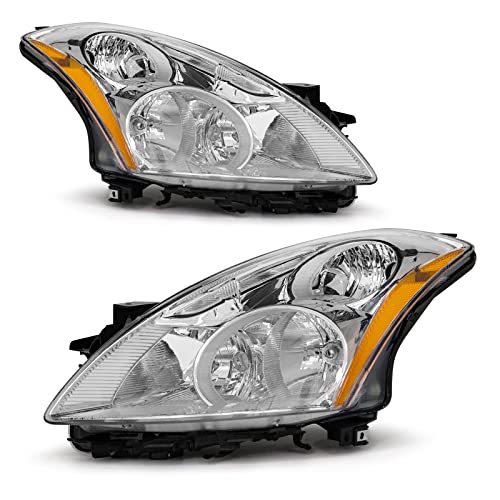
Market evaluations highlight specific, high-tier LED units engineered for the unique optical demands of the Ram 1500. The GTR Lighting Ultra 3 represents a pinnacle in raw output, utilizing custom TST 7045 LED chipsets to generate up to 4,700 lumens of luminous flux while remaining completely potted and waterproof against engine bay environmental hazards. For vehicles equipped with the highly sensitive Projector Style housings, the Morimoto 2Stroke 4.0 is frequently recommended by automotive lighting authorities. Projector housings require the light source to be perfectly positioned to interact with the internal cutoff shield; the 2Stroke 4.0 is engineered to exactly replicate the physical dimensions and focal point of a traditional tungsten filament, preventing dangerous light scatter and ensuring a crisp cutoff line.
It is critical to note that LED orientation during installation dictates the success of the beam pattern. The LED diodes must be positioned horizontally (facing the 3 o’clock and 9 o’clock positions) within the housing. Vertical positioning will result in severe beam scattering, blinding oncoming traffic and reducing the driver’s forward visibility. Furthermore, while LED conversions for fog lights are federally permissible in the United States, utilizing them in primary headlight housings often exceeds DOT/FMVSS108 compliance parameters for public street use, relegating them strictly to off-road application status.
Pulse Width Modulation and the CANBUS Electrical Dilemma
The primary technical barrier to upgrading the 2016 Ram 1500 lighting system is the vehicle’s reliance on Pulse Width Modulation (PWM) governed by a rigorous CANBUS network. Rather than supplying a continuous twelve-volt direct current to the lighting circuits, the vehicle’s Totally Integrated Power Module (TIPM) rapidly pulses the electrical current on and off. For a standard halogen bulb, this pulsing is imperceptible because the tungsten filament retains its intense heat and glow between the microsecond intervals. The engineering logic behind PWM is to carefully regulate overall electrical loads, reduce strain on the alternator, and theoretically extend the lifespan of standard halogen filaments.
Light-Emitting Diodes, however, possess virtually zero latency and draw a fraction of the power required by halogens. When an LED bulb is subjected to a raw PWM signal, the diodes physically turn on and off with every electrical pulse, creating a severe, rapid strobing effect. Additionally, the CANBUS system continuously monitors electrical resistance across the network. Because the LED draws minimal current, the system’s diagnostic logic concludes that the original halogen bulb has shattered or burned out. In response, the vehicle triggers a “bulb out” error on the dashboard interface and preemptively terminates power to the affected circuit to prevent a presumed electrical fire, leaving the vehicle completely devoid of forward illumination.
To circumvent this safety protocol, a supplementary PWM Interface Module (commonly referred to as an anti-flicker harness or CANBUS decoder) must be integrated into the circuit. Modern PWM modules act as localized electrical stabilizers. They utilize internal capacitors to store the pulsed PWM energy and release it as a perfectly smooth, uninterrupted direct current to the LED. Simultaneously, the module broadcasts the correct resistance metrics back to the CANBUS network, satisfying the diagnostic checks and preventing circuit termination. These components feature plug-and-play architecture, connecting directly inline between the factory vehicle harness and the aftermarket LED bulb, completely eliminating the need to cut factory wiring or mount hazardous, heat-generating load resistors to the vehicle chassis.
Diagnostic Triage: The Factory Wiring Harness Failure
Beyond aftermarket lighting anomalies, the 2016 Ram 1500 is plagued by a documented mechanical flaw concerning its factory headlight jumper wiring harness, specifically within Quad Halogen assemblies. The OEM harness, designated under early Mopar part numbers, was constructed utilizing thin 18-gauge wire. Over extensive vehicle operation, the continuous electrical resistance and thermal output generated by standard 55-watt halogen bulbs cause the plastic connector plug to overheat, become brittle, and ultimately melt.
When this structural failure occurs, the headlight will intermittently flicker or fail completely, perfectly mimicking a standard bulb burnout. However, replacing the halogen bulb yields no functional restoration because the internal metallic contacts of the plastic plug have fused or carbonized. Automotive dealerships frequently diagnose this as a complete housing failure, recommending the replacement of the entire headlight assembly at an exorbitant cost.
Automotive engineers and the aftermarket sector have developed direct, cost-effective interventions for this specific failure point. The melted jumper harness can be independently extracted from the rear of the headlight housing and replaced. Two primary components dominate the repair market for this issue:
- Mopar OEM Revision (Part # 68193062AB): The official Chrysler/Mopar updated jumper wiring harness engineered to replace the defective factory original.
- Dorman Products (Part # 926-384): A highly regarded aftermarket alternative constructed with enhanced thermal insulation to withstand moisture, extreme heat, and corrosion, ensuring lifelong reliability. This harness features the precise three-connector, four-wire geometry required for seamless integration.
Replacing the harness is a straightforward preventative or reactive maintenance procedure that requires removing the headlight assembly, un-clipping the charred OEM harness, and locking the new harness into the main vehicle feed, thereby permanently resolving the high-resistance electrical bottleneck.
| Specification | Mopar OEM Revision | Dorman Products Alternative |
| Part Number | 68193062AB | 926-384 |
| Compatibility | 2009-2024 Ram 1500 | 2015-2018 Ram 1500 |
| Wire Gauge | 18 AWG | 18 AWG |
| Wire Configuration | 4-Wire (Black, Red, Green) | 4-Wire (Black, Red, Green) |
| Connector Quantity | 3 (Round, Male) | 3 (Round, Male) |
Mechanical Execution: Headlight Assembly Extraction and Bulb Replacement
The architectural design of the 2016 Ram 1500 front fascia mandates a highly specific mechanical extraction process to access the headlight bulbs. Unlike older platforms featuring exposed rear dust caps, the Ram 1500 requires the partial disassembly of the front grille and the strategic manipulation of fender liner access hatches.
Initiating the mechanical extraction requires absolute adherence to safety protocols; the vehicle engine must be deactivated, the ignition key removed, and the parking brake firmly engaged. Accessing the primary retention hardware begins by opening the hood and locating the expansive black plastic radiator shroud that spans the upper perimeter of the grille. Utilizing a specialized automotive trim tool or a standard fork, the operator must pry upward to extract the six plastic retaining rivets securing this cover, subsequently removing the shroud to expose the upper grille mounts.
With the upper perimeter exposed, a ratchet equipped with an 8mm socket is deployed to extract the four bolts securing the top edge of the grille assembly to the vehicle’s core support. Once the hardware is removed, the grille must be firmly grasped near the lower bumper line and pulled straight out, perfectly parallel to the ground. This motion releases the hidden lower tension clips. Extreme care must be exercised during this phase, as automotive plastics subjected to years of thermal cycling and ultraviolet degradation become highly brittle and prone to shattering.
The removal of the grille exposes the inner geometry of the headlight housings. A ratchet equipped with a 10mm socket is required to remove the two primary bolts securing the forward edge of the headlight assembly. Following the extraction of these bolts, the operator must transition to the vehicle’s front wheel well corresponding to the side being serviced. Located within the plastic mudguard is a dedicated access hatch secured by a single plastic rivet. After extracting the rivet with the trim tool, the hatch is peeled back, allowing the operator to reach blindly upward into the fender cavity to locate the rear locking mechanism. This white plastic retaining tab must be pushed vertically (upward or downward depending on the vehicle’s production side) to release the rear ball-stud mount holding the headlight in place.
Returning to the front of the vehicle, the entire headlight assembly can now be pulled gently forward. The operator must reach behind the housing to disconnect the main electrical power harnesses. This is achieved by depressing the primary locking tabs and pulling the waterproof pods away from the housing; notably, certain connectors feature a secondary red safety tab that must be manually slid backward before the primary release will engage.
With the housing completely liberated from the vehicle, it should be placed face down on a protective microfiber surface to prevent scoring the exterior polycarbonate lens. Accessing the actual bulbs requires twisting the large, circular plastic dust covers counterclockwise. The internal electrical tether is detached from the base of the bulb, and the bulb itself is rotated counterclockwise to clear the locking channels before being extracted.



Installation of the new optical component is the exact reverse of the extraction. The new bulb is seated and rotated clockwise until firmly locked. If utilizing LED technology, the bulb, the PWM Interface Module, and all associated wiring must be carefully packed into the housing cavity before the dust cap is sealed. A hermetic seal on the dust cap is absolutely critical; failure to properly compress the rubber O-ring will result in rapid moisture ingress, leading to severe internal condensation, reflective bowl degradation, and premature bulb failure. The housing is then pressed back into the vehicle fascia, ensuring the rear guide pin engages the latch mechanism, before reinstalling the 10mm bolts, locking the wheel well tab, and remounting the grille assembly and radiator shroud.
Post-Installation Optical Calibration and Beam Alignment
A critical operational requirement that is routinely neglected following a bulb replacement or the physical manipulation of the headlight housing is optical calibration. Whether replacing a standard halogen or installing a high-intensity LED conversion, minor variances in the bulb’s seating geometry or the housing’s resting angle will dramatically shift the projected beam pattern. An improperly calibrated headlight will either dive into the pavement, drastically reducing the driver’s reaction time, or project upward, creating a dangerous blinding hazard for oncoming traffic.
The 2016 Ram 1500 is equipped with integrated vertical adjustment mechanisms to facilitate precision aiming. The industry-standard calibration protocol is the 25-Foot Wall Test.
Preparation for calibration requires the vehicle to be in a standard driving state: tires inflated to factory specifications, a minimum of a half-tank of fuel, and the cargo bed completely unladen, as rear suspension squat inherently elevates the front beam angle. The vehicle must be positioned on a perfectly level, flat surface exactly twenty-five feet away from a blank, vertical wall. This measurement is calculated from the front face of the polycarbonate headlight lens directly to the wall.
The operator must physically measure the vertical height from the ground to the exact dead-center of the headlight bulb (or projector lens) on the vehicle. This precise measurement is then transferred to the wall using a highly visible horizontal strip of painter’s tape. With the vehicle’s hood open, the vertical adjustment screw—typically accessible via a small channel on the top of the headlight housing and adjustable via a long Phillips-head screwdriver or socket—is manipulated. With the low beams activated, the screw is turned clockwise or counterclockwise until the absolute highest point of light intensity (the upper cutoff line) rests exactly two inches below the horizontal tape line on the wall. This two-inch downward deflection over twenty-five feet ensures that the high-intensity light pool perfectly illuminates the road surface while remaining safely below the eye line of drivers operating standard passenger sedans.
FAQs
How does the 2016 Ram 1500 Pulse Width Modulation system interact with aftermarket LED upgrades?
The Ram 1500 utilizes a CANBUS-regulated Pulse Width Modulation (PWM) system that rapidly pulses electrical current to the headlights rather than providing a steady stream. Because LED bulbs respond instantaneously to voltage drops, this pulsed signal causes the LEDs to strobe or flicker violently. Furthermore, the LED’s low electrical resistance tricks the vehicle’s diagnostic computer into believing the bulb has burned out, prompting the system to completely disable power to the headlights. Resolving this requires installing an inline PWM Interface Module, which uses internal capacitors to absorb the pulsed energy, deliver a smooth direct current to the LED, and broadcast the correct resistance signature back to the vehicle’s computer.
What are the diagnostic indicators of a melted 68193062AB wiring harness versus a standard bulb failure?
On Ram 1500s equipped with Quad Halogen assemblies, a failed headlight is frequently caused by the melting of the internal 18-gauge jumper wiring harness rather than a blown bulb. If a new halogen bulb is installed and the light remains non-functional, or if the light flickers intermittently when traversing rough terrain, the primary plastic connector linking the bulb to the housing wiring has likely fused due to extreme thermal resistance. Visual inspection of the plastic plug will reveal black carbonization or melted plastic. This requires cutting the zip-ties and replacing the failed OEM wire with an upgraded harness, such as the Dorman 926-384 or the Mopar 68193062AB revision.
Is complete removal of the front grille mandatory for headlight bulb replacement?
According to official factory service procedures, the removal of the upper radiator shroud and the front grille is strictly mandatory to access the two 10mm bolts securing the forward edge of the headlight housing. While select automotive forums feature technicians who manage to extract the bulbs entirely through the wheel well access hatch by working entirely by feel, this bypass method carries severe risks. Working blindly within the confined fender cavity frequently results in dropping the replacement bulb into the vehicle’s inaccessible body panels or failing to properly seat the rear watertight dust cap, leading to immediate moisture contamination and catastrophic optical failure.
How do premium halogen replacements compare to high-output LED conversions in projector housings?
Projector housings utilize a highly engineered internal optical geometry featuring a reflector bowl and a physical cutoff shield positioned behind a spherical glass lens. Premium halogen bulbs, such as the Sylvania SilverStar Ultra, provide an exact photometric match for this geometry, yielding a 27% brightness increase and a flawless cutoff line without electrical complications. In contrast, installing standard LED bulbs into a projector housing often results in chaotic light scatter because the diode placement does not match the precise focal point of a tungsten filament. However, when utilizing specialized LEDs engineered specifically to mimic halogen filament geometry—such as the Morimoto 2Stroke 4.0—the projector housing can yield massive visibility gains (exceeding 1,200 Lux) while maintaining the razor-sharp cutoff line required for road safety.

![2019 Ram 1500 Coolant Type: Specs & Fitment Guide [2026]](https://truckguider.com/wp-content/uploads/2026/03/2019-ram-1500-coolant-type-featured.webp)