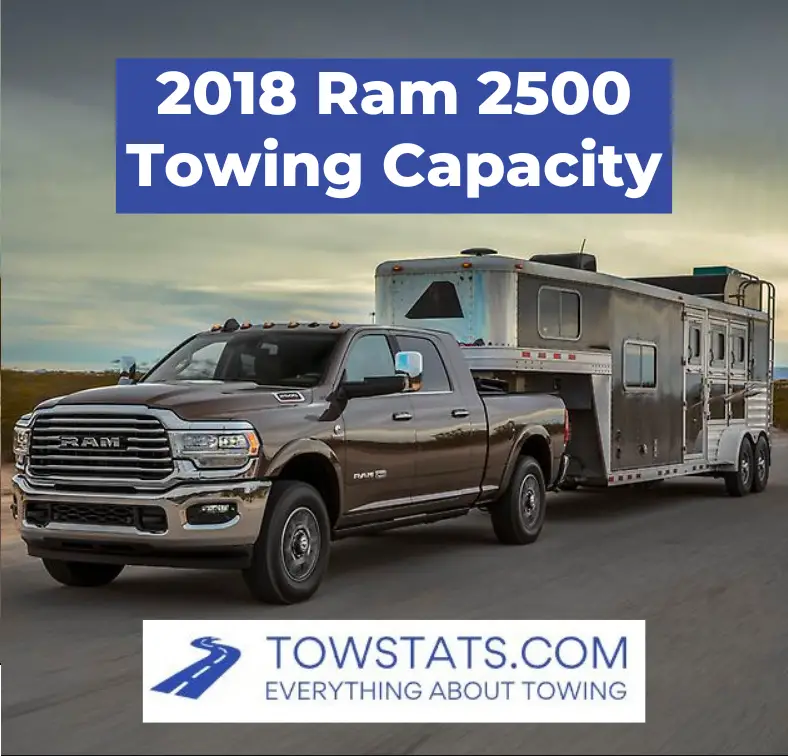
2018 Ram 2500 Towing Capacity: Complete Specs & Charts

The 2018 Ram 2500 towing capacity reaches a maximum of 17,980 pounds when equipped with the 6.7L Cummins Turbo Diesel. Towing performance varies significantly based on engine choice, axle ratio, and cab configuration, with the 6.4L HEMI V8 offering up to 16,320 pounds of capacity.
🎯 Key Takeaways
- Maximum towing of 17,980 lbs requires the 6.7L Cummins Diesel engine.
- Axle ratios like 4.10 significantly increase towing capacity for HEMI models.
- 4×2 configurations generally offer higher tow ratings than 4×4 versions.
- Check the door jamb sticker for your specific vehicle’s max payload.
- Fifth-wheel towing often allows for higher capacities than conventional hitch setups.
The 2018 Ram 2500 offers a maximum towing capacity of up to 17,980 pounds when properly equipped with the 6.7L Cummins Turbo Diesel. If you are running the 6.4L HEMI V8, your limit tops out at 16,320 pounds, while the base 5.7L HEMI V8 reaches a respectable 13,890 pounds. These numbers are not just marketing suggestions; they are critical safety limits dictated by your specific engine, axle ratio, and cab configuration.


Understanding these specifications is vital because overestimating your truck’s capacity leads to premature transmission wear, warped brake rotors, and unsafe stopping distances. To find your specific rating, you must look beyond the “max” brochure number and calculate how your chosen options—like a 4.10 rear axle or a heavy Mega Cab—eat into your total pulling power. This guide breaks down those variables so you can hitch up with confidence.
Engine Specifications and Maximum Towing Ratings
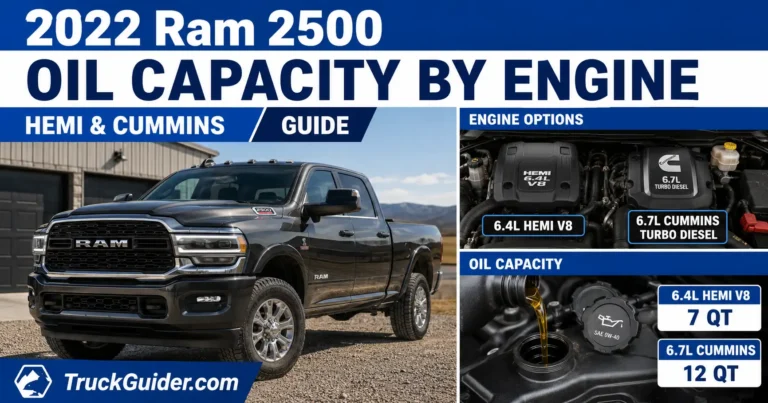
The 6.7L Cummins Turbo Diesel vs. 6.4L HEMI V8
The 6.7L Cummins is the undisputed leader of the 2018 lineup for heavy hauling, producing 370 horsepower and a massive 800 lb-ft of torque. For the 2500 series, this engine is paired exclusively with a 3.42 axle ratio. While this limits the absolute peak towing compared to its 3500 big brother, it provides a very consistent towing experience across all trim levels. The diesel’s weight does reduce payload capacity, but for pure pulling power on long highway grades, it is the superior choice.
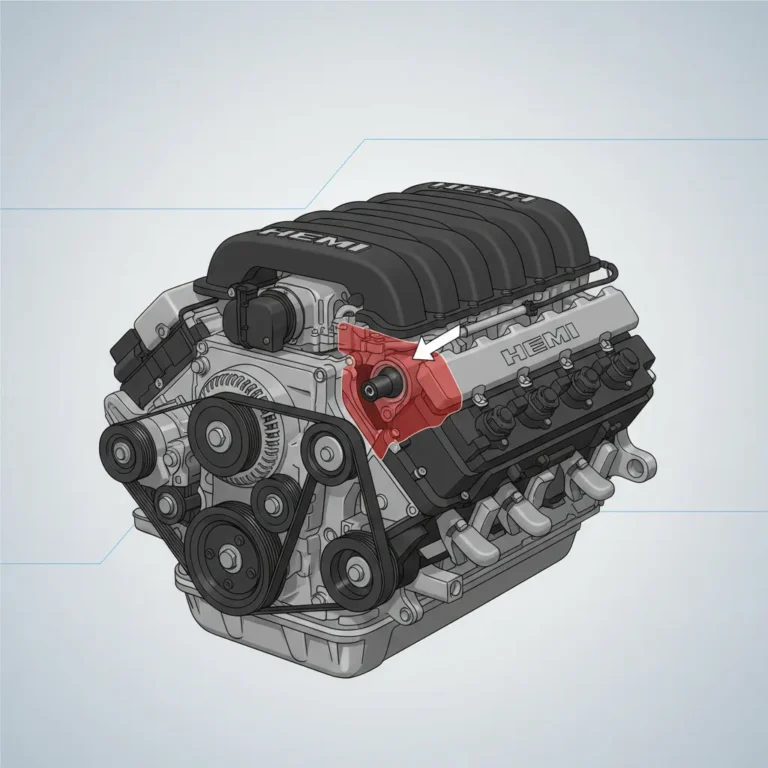
- 6.7L Cummins Turbo Diesel (3.42 Axle): Max Towing 17,980 lbs / Max Payload 3,160 lbs
- 6.4L HEMI V8 (4.10 Axle): Max Towing 16,320 lbs / Max Payload 3,990 lbs
- 6.4L HEMI V8 (3.73 Axle): Max Towing 13,320 lbs / Max Payload 3,990 lbs
- 5.7L HEMI V8 (3.73 Axle): Max Towing 13,890 lbs / Max Payload 3,060 lbs
The Critical Role of Axle Ratios
If you choose the 6.4L HEMI gas engine, your axle ratio is the single most important factor in your tow rating. Upgrading from a 3.73 to a 4.10 axle ratio increases your towing capacity by exactly 3,000 pounds. The 4.10 ratio allows the engine to stay in its power band more effectively when pulling heavy loads up steep inclines. While the 3.73 ratio offers better fuel economy during empty highway cruising, it significantly limits your ability to safely pull large fifth-wheels or heavy equipment trailers. Always verify the axle code on your door jamb sticker before assuming your gas-powered Ram can handle a 16,000-pound load.
Everything You Need to Know About 2018 Ram 2500 Towing Capacity
The 2018 Ram 2500 is a powerhouse of a pickup, but determining its exact towing capacity is more complex than reading a single number on a brochure. Your specific capacity depends on a unique combination of engine type, cab configuration, bed length, and axle ratio. Failing to calculate this correctly can lead to transmission failure, warped brakes, or dangerous handling on the road. This guide provides a comprehensive walkthrough to help you identify the precise limits of your vehicle and ensure you are towing safely and legally within the manufacturer’s specifications.
Step 1: Identify Your Engine and Transmission Setup
What you need: Your vehicle’s owner’s manual or the build sheet (often found in the glovebox or via a VIN lookup).
Instructions: The 2018 Ram 2500 came with three primary engine options, each drastically changing the towing baseline. First, identify if you have the 5.7L HEMI V8 (approx. 13,890 lbs max), the 6.4L HEMI V8 (approx. 16,320 lbs max), or the 6.7L Cummins Turbo Diesel (approx. 17,980 lbs max). Beyond the engine, note your transmission. While most automatics are standard, the 6.7L Cummins could be paired with a G56 6-speed manual, which actually lowers the towing capacity compared to the 68RFE automatic due to clutch heat management and torque limiting in lower gears.
Pro Tip: Don’t assume the Diesel always tows the most. While it has the highest raw capacity, the heavy engine weight eats into your “Payload” capacity, which can be a bottleneck for gooseneck or fifth-wheel setups.
Step 2: Locate and Decode the Door Jamb Placards
What you need: A flashlight and a smartphone camera.
Instructions: Open the driver’s side door and look at the B-pillar. You will see two critical stickers. The Tire and Loading Information sticker lists the maximum “Occupant and Cargo Weight” (Payload). The Safety Compliance Certification Label lists the Gross Vehicle Weight Rating (GVWR) and Gross Axle Weight Ratings (GAWR) for the front and rear. For a 2018 Ram 2500, the GVWR is typically 10,000 lbs (to keep it in a specific regulatory class). Photograph these stickers so you have the exact numbers for your specific VIN, as these override any generalized charts found online.
Pro Tip: The payload number on the sticker includes a full tank of fuel but does NOT include the driver or passengers. You must subtract your weight and your passengers’ weight from the listed payload number.
Step 3: Determine Your Rear Axle Ratio
What you need: The original window sticker (Monroney label) or a VIN decoder tool from the Ram Trucks website.
Instructions: The axle ratio is the “multiplier” for your towing capacity. In 2018, the Ram 2500 commonly came with a 3.42, 3.73, or 4.10 rear axle ratio. A higher numerical ratio (like 4.10) allows the engine to stay in its power band more easily under load, significantly increasing the towing capacity. For example, a 6.4L HEMI with a 4.10 ratio can often tow 3,000 to 4,000 lbs more than the same truck with a 3.73 ratio. You can often find a small metal tag on the rear differential housing itself that stamps the ratio if you cannot find the paperwork.
Pro Tip: If you have upgraded to larger tires (e.g., 35-inch or 37-inch tires), your “effective” axle ratio has decreased, meaning your real-world towing performance and capacity will be lower than the factory rating.


Step 4: Factor in Cab and Bed Configurations
What you need: Physical measurement of your truck’s bed or the trim designation (Tradesman, SLT, Laramie, Longhorn, Limited).
Instructions: Weight is the enemy of towing capacity. A Regular Cab 2WD Tradesman is the lightest configuration and therefore has the highest towing capacity. Conversely, a Mega Cab 4WD Limited is the heaviest configuration due to the extra steel, leather, and luxury components, which reduces the remaining weight the truck can legally pull. To get your true capacity, you must take the Gross Combined Weight Rating (GCWR)—which is the maximum weight of the truck and trailer combined—and subtract the “curb weight” of your specific truck. For the 2018 model, the GCWR ranges from 18,000 lbs to 25,300 lbs depending on the powertrain.
Pro Tip: The “Mega Cab” configuration is unique to Ram and offers immense interior space, but because it sits on a heavy frame with a short bed, it often has the lowest payload in the 2500 lineup.
Step 5: Calculate Tongue Weight and Payload Limits
What you need: A calculator and the estimated weight of your trailer.
Instructions: Towing capacity isn’t just about what you can pull; it’s about what the truck can carry. For conventional towing, the tongue weight (the downward force on the hitch) should be 10-15% of the total trailer weight. For a 10,000 lb trailer, that is 1,000 to 1,500 lbs of tongue weight. This weight counts directly against your payload capacity. If your door sticker says your payload is 2,200 lbs, and you have 1,200 lbs of tongue weight plus 500 lbs of passengers, you only have 500 lbs left for gear in the bed. If you exceed the payload, you risk overloading the rear axle and tires.
Pro Tip: If you are towing a fifth-wheel or gooseneck, the “pin weight” is usually 20-25% of the trailer weight. Many 2018 Ram 2500s will hit their payload limit long before they hit their towing capacity when using a fifth-wheel.
Step 6: Verify Hitch Class and Equipment Ratings
What you need: Inspection of the hitch receiver and any weight distribution equipment.
Instructions: Your truck might be rated to tow 17,000 lbs, but your physical hitch might not be. Check the stamp on the hitch receiver under the rear bumper. Most 2018 Ram 2500s come with a Class V receiver, but some configurations might have a Class IV. Furthermore, if you are towing a trailer over 5,000 lbs using a standard ball mount, you are likely exceeding the “weight carrying” limit of the hitch. To reach the full towing capacity of the Ram 2500, you must use a Weight Distribution Hitch (WDH) to spread the load across the front and rear axles.
Pro Tip: Always check the rating of the ball and the ball mount. It is common to see a 15,000 lb truck using a ball mount only rated for 7,500 lbs, creating a dangerous weak link in the system.
Step 7: Adjust for Real-World Environmental Factors
What you need: Knowledge of your route and elevation changes.
Instructions: Towing capacity ratings are calculated at sea level under ideal conditions. For every 1,000 feet of elevation gain, a naturally aspirated engine (like the 5.7L or 6.4L HEMI) loses about 3% of its power due to thinner air. While the Cummins Turbo Diesel handles altitude better thanks to its turbocharger, it still faces increased heat loads. If you are towing through the Rockies or the Sierras, you should aim to stay at 80% of your maximum towing capacity to provide a safety margin for the braking system and engine cooling. High ambient temperatures (over 100°F) also require slower speeds to prevent transmission fluid breakdown.
Pro Tip: Utilize the “Tow/Haul” mode on your 2018 Ram’s dashboard. This adjusts the shift points and increases engine braking (especially on the Cummins with its exhaust brake) to manage the weight more effectively.
✅ Final Checklist
- Verified the exact Engine and Axle Ratio via VIN or window sticker.
- Calculated the actual Payload by subtracting passengers and cargo from the door sticker value.
- Confirmed the trailer tongue weight is between 10% and 15% of total trailer weight.
- Ensured the hitch, ball, and shank are all rated for the specific weight of the trailer.
- Verified that the total weight of the truck and trailer does not exceed the GCWR (Gross Combined Weight Rating).
Important Notes:
- Safety: Never exceed the Gross Axle Weight Rating (GAWR). Overloading an axle can lead to catastrophic tire failure or snapped axle shafts.
- Professional Help: If you are unsure about your math, visit a local CAT scale at a truck stop. Weigh the truck alone, then weigh it with the trailer to get 100% accurate data.
- Time and Cost: Determining your capacity takes about 30 minutes. Weighing your setup at a CAT scale usually costs between $12 and $15.
- Maintenance: If towing near the limit, shorten your interval for differential and transmission fluid changes to every 30,000 miles.
Comparing Cab Configurations: Regular, Crew, and Mega Cab
How Curb Weight Impacts Your Tow Rating
Every pound added to your truck’s frame is a pound taken away from its maximum towing capacity. The Regular Cab, Long Box configuration is the lightest setup available, which is why it consistently boasts the highest towing numbers in the 2018 charts. In contrast, the Mega Cab is the heaviest option due to its massive interior space and additional structural steel, which naturally lowers the amount of weight you can safely hitch to the back. When you move from a Regular Cab to a Mega Cab, you can expect a drop of roughly 500 to 800 pounds in total towing capacity.



- Regular Cab: Best for maximum towing; lightest curb weight.
- Crew Cab: The middle ground; offers a 6’4″ or 8′ box, balancing passenger needs with utility.
- Mega Cab: Lowest towing capacity; provides the most interior room but uses a heavier frame and body.
4×2 vs. 4×4 Drivetrain Differences
Choosing a 4×4 drivetrain adds roughly 400 to 500 pounds of weight to the front end of your truck. This weight comes from the transfer case, front differential, and drive shafts. For example, a 2018 Ram 2500 Tradesman with a 6.4L HEMI and 4.10 gears can tow 16,320 lbs in a 4×2 configuration. However, that rating drops to 15,820 lbs if you opt for the 4×4 version. If you do not frequently drive in heavy snow or off-road conditions, sticking with the 4×2 configuration allows you to maximize your legal towing limit while also enjoying slightly better fuel efficiency.
Understanding the Impact of Axle Ratios and Drivetrains
When you are looking at the 2018 Ram 2500, the engine isn’t the only thing doing the heavy lifting. The axle ratio acts as a torque multiplier, significantly changing how easily your truck gets a massive trailer moving from a dead stop. In the 2018 models, you will typically find the 3.42, 3.73, or the aggressive 4.10 rear axle ratios.
Choosing the Right Gear for the Job
If you plan on highway cruising with moderate loads, the 3.42 ratio offers a great balance of fuel economy and capability. However, if you are frequently hauling a heavy fifth-wheel through mountainous terrain, the 4.10 ratio is the gold standard. It provides more mechanical advantage, making the truck feel much more responsive under load, though it will slightly decrease your unloaded fuel efficiency.
- 3.42 Ratio: Standard on many Cummins models; best for fuel economy and long-distance highway towing.
- 4.10 Ratio: Often paired with the 6.4L HEMI; essential for reaching the maximum towing figures for gas engines.
- Practical Tip: Always verify the axle ratio of a used truck before buying, as it can change the towing capacity by thousands of pounds even if the engine is the same.
The 4×2 vs. 4×4 Towing Trade-off
It is a common misconception that 4WD increases towing capacity. In reality, the 2018 Ram 2500 4×2 models usually have a higher towing capacity than their 4×4 counterparts. This is because the 4WD system adds several hundred pounds of weight to the chassis. Since the Gross Combined Weight Rating (GCWR) remains the same, every pound of extra truck equipment is one less pound you can legally tow.
Critical Weight Ratings: GCWR, GVWR, and Payload Limits
Towing capacity is a flashy number, but real-world safety depends on understanding the “alphabet soup” of weight ratings. Your 2018 Ram 2500 is limited by more than just what the hitch can pull; it is also limited by what the frame and suspension can support vertically.
GCWR vs. GVWR: The Big Picture
The Gross Combined Weight Rating (GCWR) is the maximum allowable weight of the truck and the trailer combined. The Gross Vehicle Weight Rating (GVWR) is the maximum the truck itself can weigh, including passengers, fuel, and the tongue weight of the trailer. For the 2018 Ram 2500, staying within these limits is crucial for maintaining braking performance and transmission health.
- The GCWR Limit: If you exceed this, you risk overheating the transmission and wearing out your brakes prematurely.
- The Suspension Factor: The 2018 Ram 2500 features a unique five-link coil rear suspension. While it provides a smoother ride than leaf springs, it makes staying within your GVWR even more important for stability.
The Payload Factor and Tongue Weight
Payload is often where 3/4-ton truck owners run into trouble. Your payload capacity is the GVWR minus the weight of the empty truck. When you hook up a trailer, the tongue weight (usually 10-15% of the trailer weight) counts as payload. If you have a heavy diesel engine and a cabin full of friends, you might hit your payload limit long before you hit your maximum towing capacity.
Example: A 2018 Ram 2500 Mega Cab Cummins has a lower payload than a Regular Cab HEMI because the diesel engine and larger cab are much heavier. Always check the tire and loading information sticker on your specific driver-side door jamb for the most accurate “as-built” numbers.
Conclusion
The 2018 Ram 2500 remains a powerhouse in the heavy-duty segment, offering a sophisticated blend of coil-spring comfort and massive pulling power. Whether you opt for the legendary 6.7L Cummins Turbo Diesel for maximum torque or the 6.4L HEMI for its impressive payload, understanding how axle ratios and weight ratings interact is the key to a safe and successful towing experience. Never rely on “ballpark” figures; always do the math using your truck’s specific ratings.
Ready to hit the road? Start by checking your door jamb sticker today to find your exact payload capacity. Once you know your limits, you can hitch up with total confidence. Happy hauling!
💬 Quick Questions & Answers
What is the max towing capacity of a 2018 Ram 2500?
The maximum towing capacity reaches 17,980 pounds with the 6.7L Cummins Diesel engine.
Which engine is best for heavy towing?
The 6.7L Cummins Turbo Diesel is the superior choice for heavy-duty towing due to its high torque output.
Does the 6.4L HEMI tow more than the 5.7L?
Yes, the 6.4L HEMI V8 has a higher maximum towing capacity of 16,320 lbs compared to the 5.7L HEMI.


How does a 4.10 axle ratio affect towing?
A 4.10 axle ratio provides better low-end torque, increasing the max towing capacity for gas-powered models.
What is the max payload for this truck?
The maximum payload capacity for the 2018 Ram 2500 is approximately 3,990 pounds in specific configurations.
❓ Frequently Asked Questions
How much can a 2018 Ram 2500 with the 6.7L Cummins tow?
When properly equipped, the 6.7L Cummins Turbo Diesel can tow up to 17,980 pounds. This rating depends on the 3.42 axle ratio and the specific cab/bed configuration chosen.
What is the towing difference between the 5.7L and 6.4L HEMI?
The 5.7L HEMI is rated for up to 13,890 lbs, while the 6.4L HEMI can handle up to 16,320 lbs. The 6.4L is better suited for larger trailers and consistent heavy hauling.
Does the Mega Cab reduce towing capacity?
Yes, the heavier weight of the Mega Cab structure slightly reduces the maximum towing capacity compared to a Regular Cab. Usually, the Regular Cab 4×2 provides the highest overall ratings.
What is the Gross Combined Weight Rating (GCWR) for the 2018 Ram 2500?
The GCWR ranges from 18,000 lbs to 25,300 lbs depending on the engine and equipment. This represents the maximum allowable weight of the truck and trailer combined.
Can I tow a 5th-wheel trailer with a 2018 Ram 2500?
Absolutely, but ensure you don’t exceed the Gross Vehicle Weight Rating (GVWR) once the pin weight is added. The 2500 uses rear coil springs, so payload and tongue weight are critical factors.
Is there a difference in towing between 4×2 and 4×4 models?
Generally, 4×2 models have a higher towing capacity because they are lighter than 4×4 models. The extra weight of the 4×4 drivetrain reduces the remaining weight allowance for the trailer.