2020 GMC Sierra Fuse Box Diagram: 2026 Troubleshooting Guide

The 2020 GMC Sierra features a primary engine compartment fuse block located on the driver side, near the wheel well. Access it by releasing the two side tabs. It houses critical ECU and powertrain relays. Always reference the cover-side index for specific mini, J-case, and micro-blade fuse amperage ratings.
📌 Key Takeaways
- The interior instrument panel block is located behind the driver side lower dash panel, while the primary block is in the engine bay.
- Engine compartment blocks utilize high-amperage J-case fuses for the starter, cooling fans, and HVAC blower motor.
- Always confirm torque spec for terminal connections if removing the main power distribution stud, typically 8-10 Nm.
- Corrosion at the fuse block base is the most common failure point leading to intermittent ECU communication errors.
- Seek professional diagnostic assistance if the OBD-II port shows no power after verifying the accessory fuse.
The 2020 GMC Sierra electrical architecture relies on a highly sophisticated power distribution network designed to manage heavy current demands across multiple vehicle subsystems. Whether you are addressing an illuminated check engine light, troubleshooting a failed sensor, or tracing an intermittent electrical fault, mastering the 2020 GMC Sierra fuse box diagram is essential. This truck utilizes dual primary power centers—one located under the hood and one integrated into the instrument panel—to supply the Engine Control Unit (ECU), body modules, and powertrain sensors. Correct identification of these fuses, relays, and circuit breakers prevents unnecessary component replacement and ensures that diagnostic codes captured via the OBD-II port are resolved with precision. Understanding the layout provided in this guide is the first step in diagnosing complex failures ranging from erratic oil pressure sensor readings to potential timing chain electronic synchronization issues.


[DIAGRAM_PLACEHOLDER: 2020 GMC Sierra Electrical Power Distribution Layout]

Locating 2020 GMC Sierra Fuse Box Diagram Power Distribution Centers
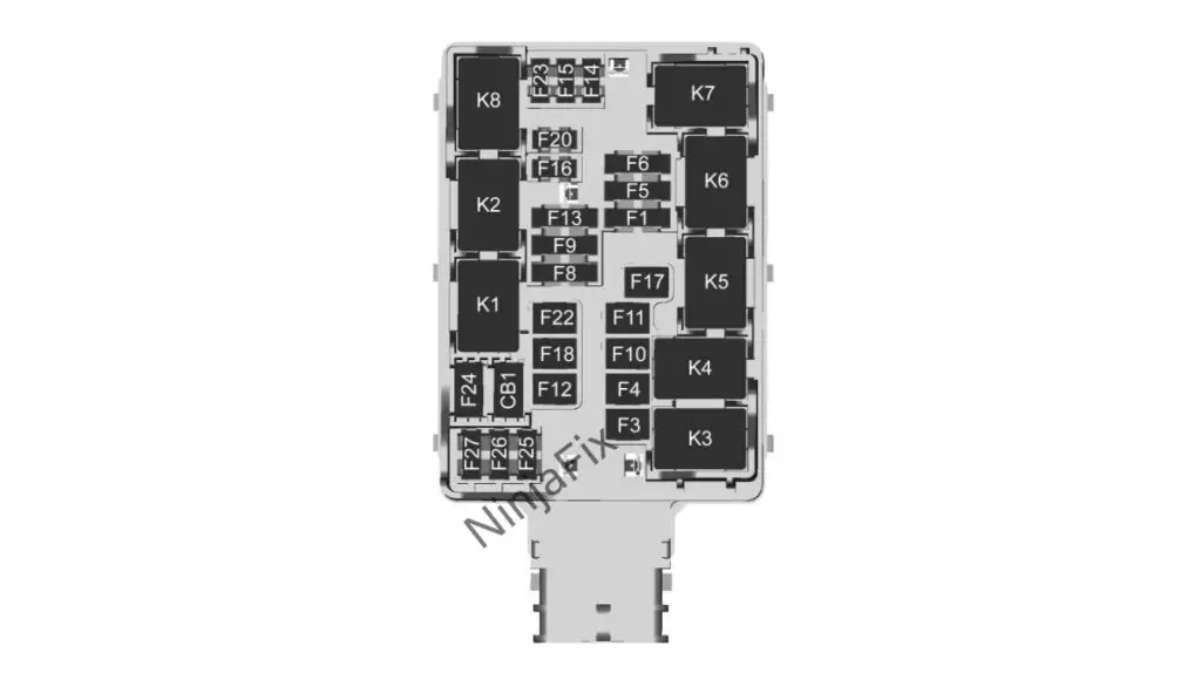
The 2020 GMC Sierra utilizes three distinct power distribution hubs. The Engine Compartment Fuse Block is the primary hub, housing high-amperage J-Case fuses and micro-relays that distribute power to the powertrain, including the ignition system, fuel injectors, and the ECU. The Instrument Panel Fuse Block is located behind the left-hand side dashboard panel and manages cabin electronics, such as the Infotainment system, climate control, and various body control module (BCM) inputs. Finally, the Rear Power Distribution Module—often tucked behind the rear seat or integrated into the body harness—handles trailer lighting and accessory power.
| Center Location | Primary Responsibility | Access Method |
|---|---|---|
| Engine Compartment | ECU, Engine Sensors, ABS, Starter | Remove hood-side cover clips |
| Instrument Panel | Interior Lighting, OBD-II, BCM | Pull dash side access panel |
| Rear Module | Trailer Power, Auxiliary Ports | Remove rear trim panel |
When inspecting these centers, observe the orientation relative to the engine block. The Engine Compartment Fuse Block must be kept dry; water intrusion is a frequent cause of ghost diagnostic codes. If you are experiencing a persistent check engine light related to coolant flow or oil pressure sensor communication, verify that the corresponding pins within the fuse block are not corroded or loose. Technicians should always reference the manufacturer-specified terminal tension before attempting to “tighten” any pins, as excessive force can cause mechanical failure.
For models equipped with the 5.3L or 6.2L V8 engines, the ECU utilizes specific ignition-switched circuits that remain live during the initial prime cycle. If your diagnostic scan tool fails to communicate via the OBD-II port, check the dedicated data link connector fuse (typically labeled DLIS or DLC) within the instrument panel block before assuming an ECU failure.
Identifying Common 2020 GMC Sierra Fuse Box Diagram Issues

Electrical faults in the 2020 GMC Sierra are rarely random; they are usually tied to specific circuit overloads or environmental wear. Recognizing the type of fuse or relay that has failed is critical for effective repair. The vehicle uses a mix of standard mini-fuses, low-profile mini-fuses, and high-amperage J-Case fuses.
J-Case Fuse Failure: These are commonly associated with high-current systems like the cooling fan or alternator. If these blow, you may notice fluctuating coolant flow or battery charge warnings.
Micro-Relay Welding: Internally, these relays contain mechanical contacts that can weld together. If a cooling fan remains on after the engine is off, the fan relay has likely stuck in the closed position.
Corrosion in Terminal Pins: The Engine Compartment Fuse Block is susceptible to moisture. If the ECU loses power intermittently, check for green oxidation on the blade contacts.
OBD-II Circuitry: A blown fuse here often prevents a diagnostic code scanner from powering up, which can be misidentified as a faulty port. Always check the fuse first.
Understanding these failure modes helps differentiate between a simple fuse replacement and a more complex issue, such as a faulty oil pressure sensor or a timing chain sensor signal drop. When a fuse blows repeatedly, do not install a higher amperage fuse; this creates a severe fire hazard. Instead, use a clamp-on ammeter to identify the short-to-ground causing the current spike.


Always disconnect the negative battery terminal before removing heavy-duty relay banks or attempting to clean terminal pins. The 2020 Sierra electrical system maintains capacitive charge in several modules; failure to isolate power can result in permanent damage to the ECU.
Diagnosis Steps for 2020 GMC Sierra Electrical Circuits
Systematic diagnosis requires a multimeter and an understanding of the vehicle’s grounding strategy. Do not rely on visual inspection alone, as many modern fuses may have internal breaks that are not visible.
1. Preparation and Tool Setup: Ensure your multimeter is set to DC Voltage (20V range). Locate a reliable chassis ground. Avoid using painted surfaces for grounding to ensure accurate readings.
2. Voltage Drop Testing: With the circuit under load, measure the voltage on both test points of the fuse. A good fuse should show zero voltage drop. If you detect 12V on one side and 0V on the other, the fuse is blown.
3. Engine Sensor Verification: If the check engine light suggests a faulty oil pressure sensor or timing chain correlation, do not immediately swap sensors. Check the fuse block for the designated engine management relay. Test for incoming battery voltage at the relay base.
4. Circuit Path Analysis: Use the 2020 GMC Sierra fuse box diagram to identify the downstream circuit. If a fuse keeps blowing, disconnect the major load (e.g., the cooling fan motor) and test the circuit integrity. If the fuse stops blowing, the fault lies within the motor assembly itself.
5. OBD-II Integrity: If the diagnostic code scanner is non-functional, verify the 12V constant power pin on the OBD-II port using your multimeter. Compare this against the electrical schematic for the specific fuse block position.
When replacing relays, ensure the replacement part matches the exact OEM amp rating and pin configuration. Using a generic relay with different contact resistance can alter timing signals to the ECU, leading to performance degradation or incorrect diagnostic codes.
Troubleshooting complex systems, such as engine coolant flow sensors or electronic timing chain solenoid valves, often requires checking for “open” circuits. If the diagnostic tool reports a code for “Sensor Circuit Low,” the ECU is seeing a ground instead of a signal. Use your multimeter to verify if the wire leading from the sensor back to the fuse box has continuity. If the continuity is present, the issue is likely within the module itself or a failed internal fuse.
2020 GMC Sierra Fuse Box Diagram Questions Answered
Can I use a higher amperage fuse if I don’t have the correct one?
No, never substitute a higher amperage fuse. The fuse is sized to protect the weakest link in the wiring harness. Installing a higher-rated fuse can cause the wiring to melt before the fuse blows, creating a significant fire risk in the engine compartment.


Why does my diagnostic code scanner not turn on when plugged in?
This is almost exclusively due to a blown fuse in the Instrument Panel block that specifically protects the cigarette lighter or the OBD-II port itself. Refer to the diagram to locate the “DLC” or “CIG” fuse and test it for continuity.
How do I identify if a relay is faulty versus a fuse?
A fuse is a pass/fail component. A relay, however, is an electromechanical switch. You can often feel or hear a healthy relay “click” when the ignition is turned to the run position. If you suspect a relay is faulty, you can swap it with an identical relay from a non-essential circuit (like the horn) to see if the symptom changes.
Does the 2020 GMC Sierra use smart fuses?
The 2020 Sierra utilizes a power distribution system controlled by the BCM and ECU. While some circuits are monitored by the ECU for diagnostic codes, the physical fuses are standard automotive-grade blade fuses. Always consult the 2020 GMC Sierra fuse box diagram for the specific fuse type and amperage rating required for each position.
Should I worry about diagnostic codes after pulling a fuse?
It is normal for the ECU to store a “Loss of Communication” diagnostic code if you pull a major fuse while the ignition is on. These are “history” codes and will not trigger a check engine light once the circuit is restored and the vehicle completes a successful ignition cycle.
Step-by-Step Guide to Understanding the 2020 Gmc Sierra Fuse Box Diagram
Identify – Locate the specific fuse block cover based on the electrical system failure symptom.
Locate – Release the plastic locking tabs on the engine bay fuse box or the side dash panel.
Reference – Use the printed diagram on the inside cover to find the fuse location corresponding to the faulty circuit.


Connect – Use a multimeter to verify voltage on both sides of the fuse terminal to confirm a clear path.
Verify – Insert a new fuse of identical amperage, ensuring it is seated fully to maintain a proper electrical connection.
Troubleshoot – If the fuse blows again, perform a parasitic draw test or scan for an underlying diagnostic code.