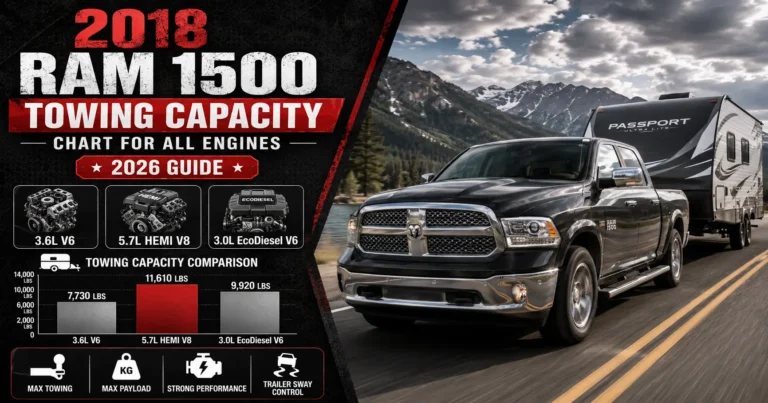
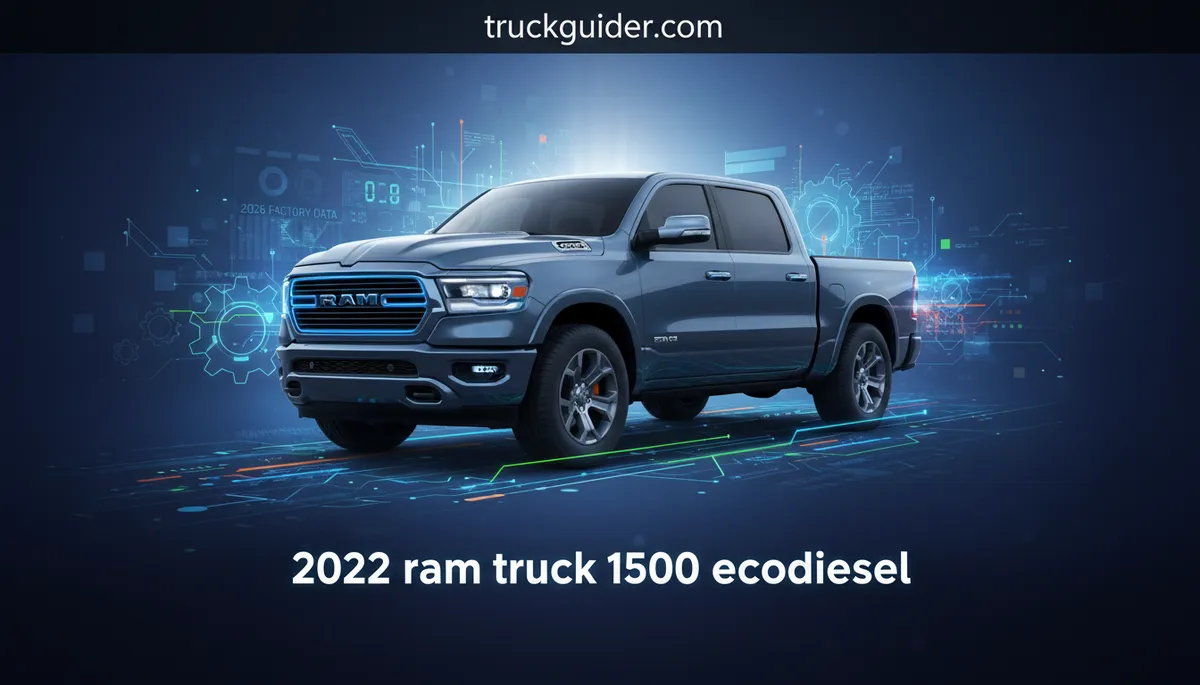
2022 Ram Truck 1500 Ecodiesel 2026 Factory Data

Quick Answer
The 2022 Ram 1500 EcoDiesel features a 3.0L V6 turbo-diesel producing 260 horsepower and 480 lb-ft of torque. It delivers a maximum towing rating of up to 12,560 lbs and an EPA-estimated highway fuel economy of up to 32 mpg in 4×2 configurations. Actual capacities vary depending on cab style, bed length, axle ratio, and payload door sticker limits.
The 2022 Ram Truck 1500 EcoDiesel represents the mechanical pinnacle of half-ton light-duty diesel engineering, delivering a factory-rated 260 horsepower and 480 lb-ft of low-end torque across an accessible engine speed range. Operating with the third-generation 3.0-liter turbocharged V6 diesel engine, this pickup yields a maximum towing capacity of up to 12,560 pounds, a maximum payload capacity reaching 2,040 pounds, and an EPA-estimated highway fuel economy up to 33 mpg. However, actual payload and trailering boundaries fluctuate significantly based on cab configuration, axle ratio gearing (3.21 versus 3.92), trim weight, and rear suspension packages.

Prime for Young Adults — 6 Months Free
Students and 18–24s get six months of Prime free, then half price.
Start 6 Months FreeThis reference document aggregates factory engineering specifications, towing charts, fluid capacities, and operational thresholds for the 2022 Ram 1500 EcoDiesel (DT generation). Data points reflect certified factory publications from Stellantis and Ram Trucks. Because optional equipment packages, curb weight additions, and body styles alter maximum capacities, always cross-reference the Tire and Loading Information placard on your driver-side door jamb and the official vehicle owner’s manual. Last reviewed: October 2026.
12,560 lbs
Quad Cab / 2WD / 3.92 Axle
480 lb-ft
Available @ 1,600 RPM
1,350 – 2,040 lbs
Varies by trim package & bed
33 MPG
EPA Highway (Tradesman HFE 2WD)
How to read this chart: Specifications are categorized by physical powertrain parameters, fluid service capacities, and structural payload thresholds. Values denote standard factory output certified under SAE J1349 standards. Specific configuration notes outline required mechanical options (such as axle ratios or chassis dimensions) necessary to attain maximum operating thresholds.
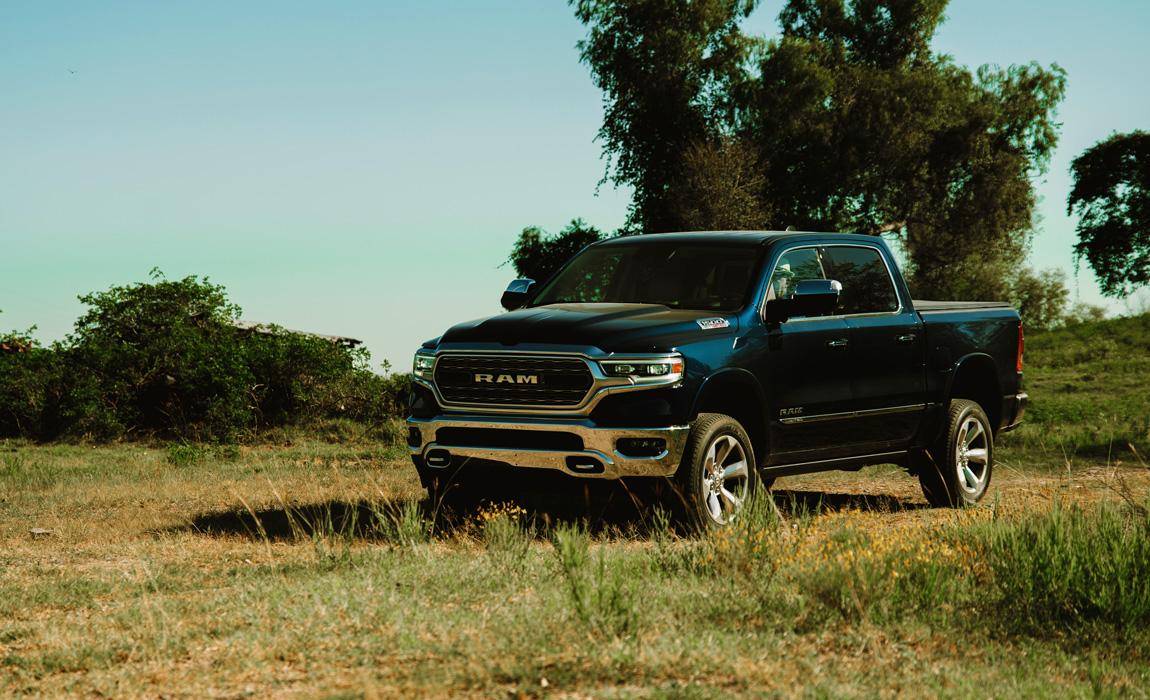
2022 Ram Truck 1500 EcoDiesel Factory Specification Chart
Recommended Best Deal Products


📤 Share Image
The baseline mechanical blueprint of the 2022 Ram Truck 1500 EcoDiesel is defined by its 60-degree V6 block, high-strength compacted graphite iron (CGI) casting, and an advanced induction system. Mated exclusively to the heavy-duty TorqueFlite 8-speed automatic transmission (ZF 8HP75), the third-generation EcoDiesel powertrain manages peak torque early in the rev range to maximize both off-the-line tractive effort and sustained long-distance towing stability.
| Year | Model / Engine | Specification | Value | Notes |
|---|---|---|---|---|
| 2022 | Ram 1500 (Gen 3 EcoDiesel) | Engine Displacement | 3.0 Liters (182 cu. in. / 2,998 cc) | 60-degree V6, Compacted Graphite Iron (CGI) block |
| 2022 | Ram 1500 (Gen 3 EcoDiesel) | Peak Horsepower | 260 hp @ 3,600 RPM | SAE J1349 certified net output |
| 2022 | Ram 1500 (Gen 3 EcoDiesel) | Peak Torque | 480 lb-ft @ 1,600 RPM | Flat torque plateau through mid-range |
| 2022 | Ram 1500 (Gen 3 EcoDiesel) | Transmission Option | TorqueFlite 8-Speed Automatic | ZF-engineered 8HP75 heavy-duty unit |
| 2022 | Ram 1500 (Gen 3 EcoDiesel) | Fuel Injection Pressure | 29,000 psi (2,000 bar) | Bosch high-pressure common-rail injection |
| 2022 | Ram 1500 (Gen 3 EcoDiesel) | Engine Oil Capacity | 8.5 Quarts (8.0 Liters) | With filter change; MS-12991 5W-40 Synthetic |
| 2022 | Ram 1500 (Gen 3 EcoDiesel) | DEF Tank Capacity | 5.1 Gallons (19.3 Liters) | Filler neck located behind fuel door |
| 2022 | Ram 1500 (Gen 3 EcoDiesel) | Fuel Tank Standard / Optional | 26.0 gal. / 33.0 gal. | 33-gal tank provides 1,000+ mile highway range |
| 2022 | Ram 1500 (Gen 3 EcoDiesel) | Maximum Towing Capacity | 12,560 lbs | Quad Cab 2WD, 3.92 axle; declines on Crew Cab 4WD |
| 2022 | Ram 1500 (Gen 3 EcoDiesel) | Maximum Payload Capacity | 2,040 lbs | Base Tradesman Quad Cab; drops to ~1,350 lbs on Limited |
Footnote: Exact capacities reflect published factory towing guides and engineering specifications from Stellantis N.V. Maximum gross combined weight ratings (GCWR) range up to 18,200 lbs depending on final chassis gearing.
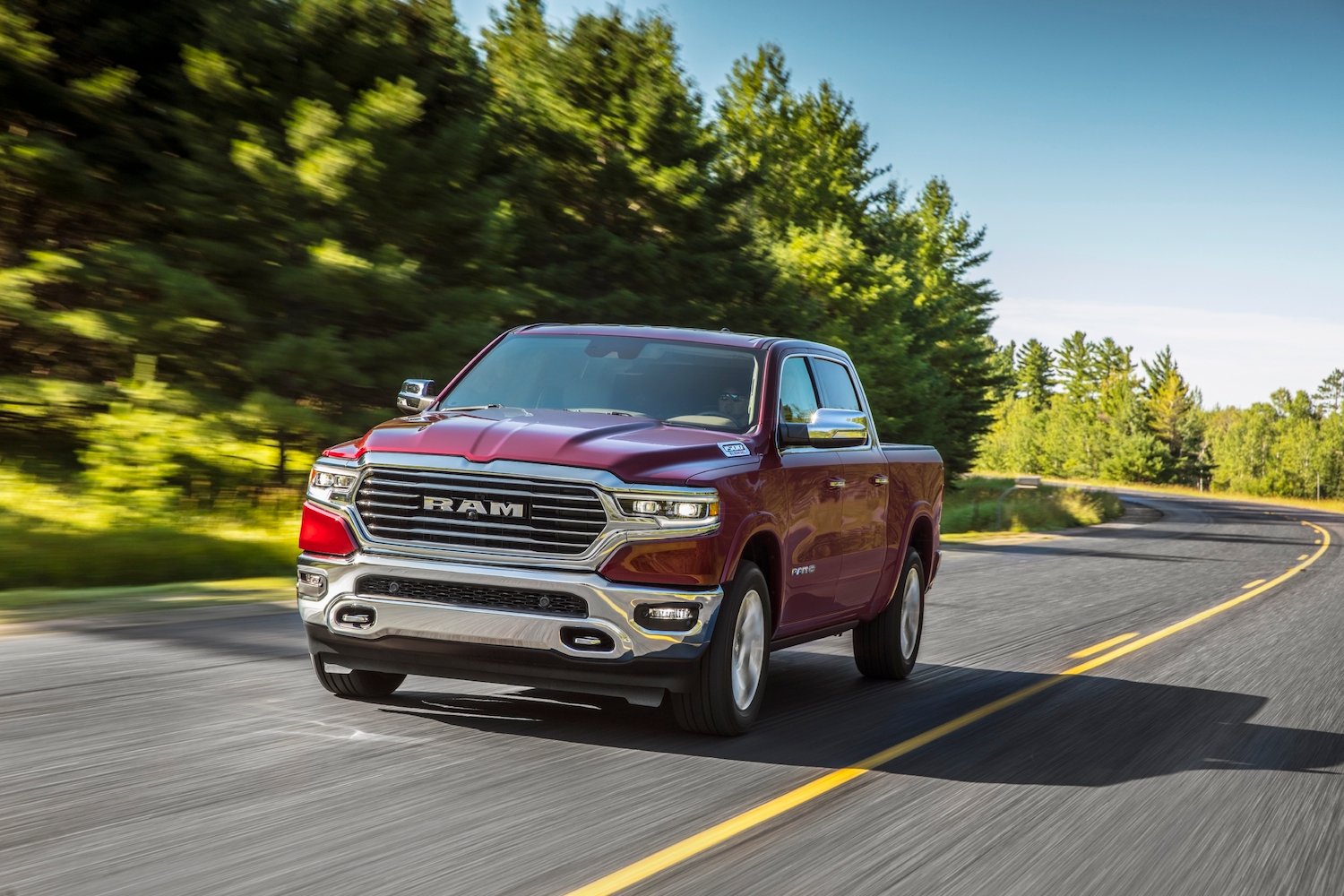
Core Engine and Transmission Specifications
The heart of this truck is the 3.0L EcoDiesel V6 manufactured by VM Motori in Ferrara, Italy. Featuring dual overhead camshafts (DOHC) with four valves per cylinder and chain-driven valve timing, the cylinder block is built from compacted graphite iron, which affords higher tensile strength and structural rigidity than conventional gray cast iron while dampening acoustic vibration. The engine operates with a 16.0:1 compression ratio, engineered specifically to manage combustion pressures up to 180 bar.
Power delivery is modulated exclusively through the TorqueFlite 8HP75 transmission. Unlike the lighter-duty 8HP70 used in earlier applications, the 8HP75 features an upgraded planetary gearset, reinforced clutch packs, and a unique torque converter damper calibrated to absorb the firing pulses of the diesel V6 at lower RPM. This transmission utilizes thermal management valves that route engine coolant through an integrated transmission oil heater to bring the fluid rapidly to its optimal operating temperature (158°F to 176°F), minimizing parasitic drag and reducing internal wear during cold starts.
Factory Fluid Capacities and Running Specs
Maintaining operational integrity requires precise tracking of factory running specifications. The 3.0L EcoDiesel holds exactly 8.5 quarts (8.0 liters) of engine oil during a standard drain and filter replacement. Ram mandates an engine oil meeting Chrysler Material Standard MS-12991 (API SN or ACEA C3 full-synthetic 5W-40) to guard against thermal breakdown in the turbocharger bearings while preventing particulate clogging in downstream exhaust systems.
The emissions control suite incorporates a dedicated Selective Catalytic Reduction (SCR) system with a 5.1-gallon Diesel Exhaust Fluid (DEF) reservoir. The engine cooling loop holds 11.6 quarts (11.0 liters) of Mopar Antifreeze/Coolant 10-Year/150,000-Mile formula (OAT technology). Fuel capacity configurations include a standard 26.0-gallon polymer tank or an optional long-range 33.0-gallon tank. When paired with the 33.0-gallon option, a 2WD EcoDiesel is capable of an uninterrupted highway range exceeding 1,000 miles at steady highway cruising speeds.

Audible — Listen Free for 30 Days
One free credit a month and thousands of titles included.
Listen Free for 30 DaysEcoDiesel Year-by-Year Changes: Gen 2 vs Gen 3 Engine Options
To accurately assess the 2022 Ram 1500 EcoDiesel, one must understand the substantial mechanical gulf dividing the earlier second-generation EcoDiesel (offered from 2014 to 2018 in the DS-platform Classic) and the redesigned third-generation engine powering the 2020–2023 DT trucks. Over 80 percent of the internal hardware was re-engineered to resolve chronic thermal and mechanical failures that plagued Gen 2 units.
Third-Generation Hardware Upgrades Over Gen 2
The transition from Gen 2 to Gen 3 raised peak torque from 420 lb-ft to 480 lb-ft while increasing horsepower from 240 hp to 260 hp. Ram accomplished this through fundamental structural alterations rather than aggressive software tuning:
- Redesigned Cylinder Heads: Gen 3 introduced cast aluminum heads with redesigned intake ports featuring higher airflow capacity and intake swirl valves to enhance low-speed air-fuel mixing.
- Combustion Chamber Geometry: Piston bowls were reprofiled to accommodate lower-compression (16.0:1 vs 16.5:1) combustion, reducing peak in-cylinder temperatures and curbing engine-out NOx production.
- Low-Friction Aluminum Pistons: The assembly gained redesigned aluminum alloy pistons equipped with thinner, diamond-like carbon (DLC) coated rings to curb reciprocating friction and mitigate ring sticking.
- Connecting Rods and Crankshaft Bearings: Upgraded crankshaft pin journals and lead-free bi-metal bearing shells solved bottom-end failure modes historically seen in neglected Gen 2 engines.
Variable Geometry Turbo and Dual-Loop EGR Refinements
Induction and emissions architectures underwent comprehensive overhauls. The 2022 model incorporates an updated Garrett Variable Geometry Turbocharger (VGT) with water-cooled bearing housings. The turbine wheel geometry was optimized to reduce rotational inertia, spooling up noticeably faster and building the full 480 lb-ft plateau by just 1,600 RPM.
Crucially, Stellantis replaced the problematic high-pressure single-loop exhaust gas recirculation system with an advanced dual-loop cooled low- and high-pressure EGR system. The high-pressure loop pulls pre-turbine exhaust gas for rapid warm-up, while the low-pressure loop draws post-DPF exhaust gas, runs it through an upgraded stainless-steel heat exchanger, and returns clean, particulate-free gas directly ahead of the turbocharger compressor inlet. This eliminated the soot clogging in intake runners and the catastrophic thermal cracking that afflicted the Gen 2 plastic intake manifolds and early EGR cooler designs.
Production Sunset and Final Model Year Timeline
The 2022 model year stands as one of the final full production runs for the EcoDiesel program. In September 2022, Ram Trucks officially confirmed that production of the 3.0L EcoDiesel would conclude in January 2023 at the Sterling Heights Assembly Plant in Michigan. The phase-out allowed Stellantis to repurpose plant assembly space toward electrification architectures and the Hurricane 3.0L twin-turbo inline-6 gasoline platform. As a result, 2022 represents the final fully realized model year where the diesel could be ordered across virtually every trim level (Tradesman, Big Horn/Lone Star, Rebel, Laramie, and Limited Longhorn).
2022 Ram Truck 1500 EcoDiesel Maximum Rating and Trim Levels
Recommended Best Deal Products


Factory trailering and payload capabilities for the 2022 Ram Truck 1500 EcoDiesel do not adhere to a single uniform rating. Every added cabin feature, cab expansion, axle ratio change, and suspension configuration directly adjusts the maximum ratings certified under the SAE J2807 towing standard.
The EcoDiesel engine adds roughly 350 to 400 pounds of curb weight over an equivalent 3.6L Pentastar V6 and approximately 100 to 150 pounds over a 5.7L Hemi V8. Because Gross Vehicle Weight Rating (GVWR) is capped by the chassis class at 7,200 lbs for most EcoDiesel configurations, higher vehicle curb weight reduces the maximum remaining cargo and tongue weight capacity indicated on the door placard.
Payload Variance Across Tradesman, Laramie, and Limited Trims
Payload capacity represents Gross Vehicle Weight Rating (GVWR) minus the truck’s actual unladen curb weight. A bare-bones Tradesman Quad Cab 2WD features a lightweight interior, manual seats, and standard coil springs, leaving a peak payload ceiling of 2,040 pounds. In stark contrast, moving to a Limited Crew Cab 4WD 5-foot-7-inch bed introduces power running boards, a 12-inch infotainment module, heated and ventilated premium leather seating, a dual-pane panoramic sunroof, and four-corner air suspension compressors. These luxury components add over 650 pounds of unladen chassis mass, driving official payload limits down to approximately 1,350 to 1,420 pounds.
Audible Premium Plus — Annual Membership
12 audiobook credits up front, plus the full Audible catalogue.
See Annual PlansTowing Capacities by Axle Ratio: 3.21 vs 3.92 Gears
The differential axle ratio selection profoundly impacts the truck’s Gross Combined Weight Rating (GCWR) and tow limit:
- 3.21 Axle Ratio: Designed for optimal unladen fuel efficiency and highway cruising. GCWR is typically restricted to 13,900–15,600 lbs, yielding a tow rating between 7,800 and 9,600 pounds depending on cab layout. High speeds on level highways yield exceptional fuel economy, but start-and-stop towing with heavy trailers increases thermal load on the transmission torque converter.
- 3.92 Axle Ratio: Essential for maximizing trailer mass. This gearing increases mechanical leverage, elevating GCWR up to 18,200 pounds and unlocking the truck’s maximum tow rating of 12,560 pounds on Quad Cab 4×2 variants. It ensures the EcoDiesel operates closer to its 1,600–2,200 RPM sweet spot when pulling grades under heavy drag.
12,560 lbs (Max Factory Towing)
11,880 lbs
11,410 lbs
9,860 lbs
9,600 lbs
Suspension Choices: Standard Multi-Link Coil vs Active Air
The DT chassis platform is distinctive among full-size pickups for utilizing a standard five-link rear suspension design with progressive-rate coil springs and a solid rear axle. This layout supplies superior unladen ride compliance while mitigating lateral axle skitter over harsh pavement. For regular trailering within standard limits, coil springs perform reliably with minimal maintenance overhead.
The optional Active-Level Four-Corner Air Suspension introduces closed-loop air springs paired with dual-tank air storage and an onboard compressor. This system delivers automatic load-leveling: upon detecting trailer tongue weight, the ECU pressurizes the rear bags to maintain proper ride height and suspension geometry. This preserves front suspension steering geometry and prevents headlight misalignment. However, the air compressor, valving blocks, and secondary air reservoirs consume roughly 70 pounds of available vehicle payload.
What Affects 2022 Ram Truck 1500 EcoDiesel Efficiency and Reliability
While the third-generation EcoDiesel achieved impressive benchmarks in thermal efficiency and torque density, operating a modern clean-diesel powertrain requires strict adherence to maintenance protocols that do not apply to conventional gasoline pickups. The following operational factors directly dictate long-term durability and fuel performance:
- DPF Active Regeneration Cycles and Short-Trip Pitfalls: The Diesel Particulate Filter (DPF) captures unburned carbon soot from the exhaust stream. When soot loading reaches approximately 65-80 percent, the powertrain control module triggers an active regeneration cycle, post-injecting raw diesel fuel into the combustion stroke to elevate DPF temperatures above 1,100°F (600°C) and incinerate soot into fine ash. If an EcoDiesel is operated exclusively on short urban trips (under 10 miles) in low ambient temperatures, exhaust gas temperatures never reach the natural passive regeneration threshold. Repeatedly aborted active regens cause unburned fuel to wash past piston rings, leading to fuel dilution in the engine oil pan and premature DPF saturation.
- DEF Consumption Rates Across Operating Profiles: The Selective Catalytic Reduction (SCR) system continuously injects Diesel Exhaust Fluid (a 32.5% high-purity urea and 67.5% deionized water solution) into the exhaust stream ahead of the catalytic catalyst. In empty highway commuting, DEF consumption averages approximately 1.0 to 1.5 percent of fuel consumed, allowing the 5.1-gallon tank to provide 3,500 to 4,500 miles between refills. Under maximum trailering near the 18,200-lb GCWR ceiling, the engine runs under continuous boost, spiking combustion NOx formation and doubling DEF dosing rates to roughly 2.5 to 3.0 percent of fuel consumption, shortening refill intervals to under 1,800 miles.
- Strict Oil Specifications (MS-12991 Standard): Using standard retail automotive motor oils is a primary cause of premature emissions component failures in the EcoDiesel. Stellantis mandates an engine oil meeting the proprietary Chrysler MS-12991 specification (API SN/CF, ACEA C3, 5W-40 full synthetic, such as Pennzoil Platinum Euro). This low-SAPS (Sulfated Ash, Phosphorus, and Sulfur) formulation prevents volatile ash deposits from glazing the DPF ceramic matrix and shields the variable geometry turbocharger journal bearings under extreme EGT conditions.
- Real-World Fuel Economy Dynamics: Under unloaded highway cruising at 65 mph, an EcoDiesel Tradesman or Big Horn 2WD can readily achieve 30 to 33 mpg, offering segment-leading tank endurance. In mixed urban driving, real-world mileage stabilizes between 21 and 24 mpg. When towing an 8,000-pound enclosed box trailer with substantial aerodynamic drag, fuel consumption drops to an expected range of 13 to 17 mpg, which remains 35 to 50 percent more efficient than comparable gasoline V8 pickups towing identical loads under equivalent grade and ambient conditions.
Owners engaged in frequent stop-and-go driving or cold-climate idling must pull the engine dipstick every 1,000 miles. If the oil level rises noticeably above the maximum crosshatch mark, diesel fuel dilution has occurred from incomplete regeneration cycles. Engine oil diluted beyond 5% raw diesel degrades film boundary protection on connecting rod bearings and demands an immediate oil and filter change.
Powertrain Configuration Comparison: EcoDiesel vs Hemi and Duramax
Recommended Best Deal Products


To evaluate where the 2022 Ram 1500 EcoDiesel fits in the broader light-duty half-ton truck landscape, it must be measured against its primary internal showroom sibling—the 5.7L Hemi V8 eTorque—and its closest cross-town diesel rival, the Chevrolet Silverado 1500 equipped with the 3.0L Duramax inline-6.
EcoDiesel 3.0L V6 vs 5.7L Hemi V8 eTorque
The choice between the 3.0L EcoDiesel and the legendary 5.7L Hemi V8 eTorque comes down to torque application and duty cycle. The 5.7L Hemi produces 395 horsepower, delivering superior passing acceleration when unladen and a classic exhaust note. However, its 410 lb-ft of torque peaks at a high 3,950 RPM, requiring downshifting into 3rd or 4th gear when pulling grades under load. In contrast, the EcoDiesel delivers 480 lb-ft at just 1,600 RPM, allowing the truck to hold 7th or 8th gear on moderate highway ascents with quiet ease. Cruising range represents the largest variance: on highway trips, the EcoDiesel routinely provides 250 to 350 miles of additional range per fill-up compared to the Hemi.
Ram EcoDiesel vs Chevrolet Silverado 3.0L Duramax Inline-6
The primary market competitor to the EcoDiesel was General Motors’ 3.0L Duramax (LM2 in 2022, later upgraded to LZ0). The Duramax employs an inline-6 configuration, which possesses natural primary and secondary mechanical balance, delivering a virtually imperceptible idle signature. The Duramax holds a slight highway fuel economy advantage (up to 33 mpg) and, paired with GM’s 10-speed transmission, earned a higher certified tow rating (up to 13,300 lbs on select models). However, the EcoDiesel’s V6 block is physically more compact, and its rear-mounted timing drive is avoided in favor of accessible front-side service chains, simplifying routine under-hood maintenance. Note that Ford discontinued its 3.0L Power Stroke V6 diesel in the F-150 after the 2021 model year, leaving Ram and General Motors as the sole competitors in the half-ton diesel category for 2022.
Pre-Purchase Verification Flow for 2022 EcoDiesel Trucks
Confirm whether the rear differential code is DMH (3.21) or DMZF (3.92) before assuming an 11,000+ lb tow capacity.
Read the yellow Tire and Loading sticker on the B-pillar. Subtract tongue weight (typically 10-12% of trailer mass) to confirm remaining passenger capacity.
Review maintenance logs to verify that oil changes were performed using approved 5W-40 low-SAPS synthetic oil rather than generic shop lubricants.
Use an OBD-II diagnostic tool to query live DPF differential pressure and recorded average distances between successful regeneration events.
Frequently Asked Questions About 2022 Ram 1500 EcoDiesel Specifications
What is the exact engine oil specification for the 2022 Ram 1500 EcoDiesel?
The 2022 3.0L EcoDiesel mandates 8.5 quarts (8.0 liters) of SAE 5W-40 full-synthetic motor oil certified to Chrysler Material Standard MS-12991 and meeting ACEA C3 or API SN/CF ratings. Pennzoil Platinum Euro 5W-40 is the factory fill. Using high-ash oils formulated for non-DPF heavy equipment will prematurely foul the exhaust aftertreatment components.
Can a 2022 Ram 1500 EcoDiesel tow 12,560 pounds in every trim level?
No. The maximum 12,560-pound rating is achieved solely in the Tradesman Quad Cab 2WD configuration with 3.92 rear gears and the optional factory Class IV trailer hitch receiver. Moving to a Crew Cab 4WD configuration, choosing 3.21 gears, or adding heavy luxury options on Laramie, Longhorn, or Limited trims decreases the certified tow rating down to between 9,600 and 11,400 pounds.
Why was the EcoDiesel engine discontinued after the 2023 model year?
Stellantis discontinued the 3.0L EcoDiesel V6 to simplify manufacturing complexity and direct capital expenditures toward the new 3.0L Hurricane twin-turbo inline-6 gasoline engine architecture and future electrified truck platforms. Strict Tier 3 / LEV III emissions regulations also raised compliance engineering costs across light-duty diesel passenger applications.
How often does the 2022 EcoDiesel require Diesel Exhaust Fluid refills?
The 5.1-gallon DEF reservoir typically requires replenishment every 3,000 to 4,500 miles during unladen, mixed-cycle daily driving. When towing heavy trailers near maximum GCWR limits, DEF consumption increases to approximately 2.5 to 3.0 percent of total diesel fuel consumed, necessitating DEF refills every 1,500 to 2,000 miles.
The 2022 Ram 1500 EcoDiesel balances modern heavy-duty capability with light-duty driving comfort, boasting 260 horsepower, 480 lb-ft of torque, and cruising economy above 30 mpg on the open road. However, achieving rated capabilities requires understanding specific payload reductions caused by trim packages and axle choices. Before attaching a trailer or loading your truck bed, always inspect the Tire and Loading Information placard on your driver-side door jamb to confirm your specific vehicle’s certified payload and gross axle weight limits.
![2021 Ram 1500 Battery Replacement: Specs & Expert Tips [2026]](https://truckguider.com/wp-content/uploads/2026/03/2021-ram-1500-battery-replacement-featured-768x403.webp)
![2018 Ram 1500 5.7 Oil Capacity [2026]](https://truckguider.com/wp-content/uploads/2026/03/featured-cc58a684.webp)