6.7 Cummins Fuel Filter Housing Diagram: Component Identification And Maintenance Guide

The 6.7L Cummins engine is a masterclass in diesel engineering, renowned for its massive torque and long-term durability. However, the longevity of this reliable powerplant depends entirely on the purity of the fuel reaching its high-pressure injectors. Owners often struggle with identifying specific components of the fuel filter housing or performing maintenance correctly, leading to expensive repairs or stranded vehicles due to air in the system or fuel leaks. This comprehensive guide provides a detailed 6.7 Cummins fuel filter housing diagram, explains the function of every internal component, and delivers professional maintenance protocols to ensure your fuel system remains contaminant-free and trusted for hundreds of thousands of miles.


Understanding the 6.7 Cummins Fuel Filter Housing Layout and Function
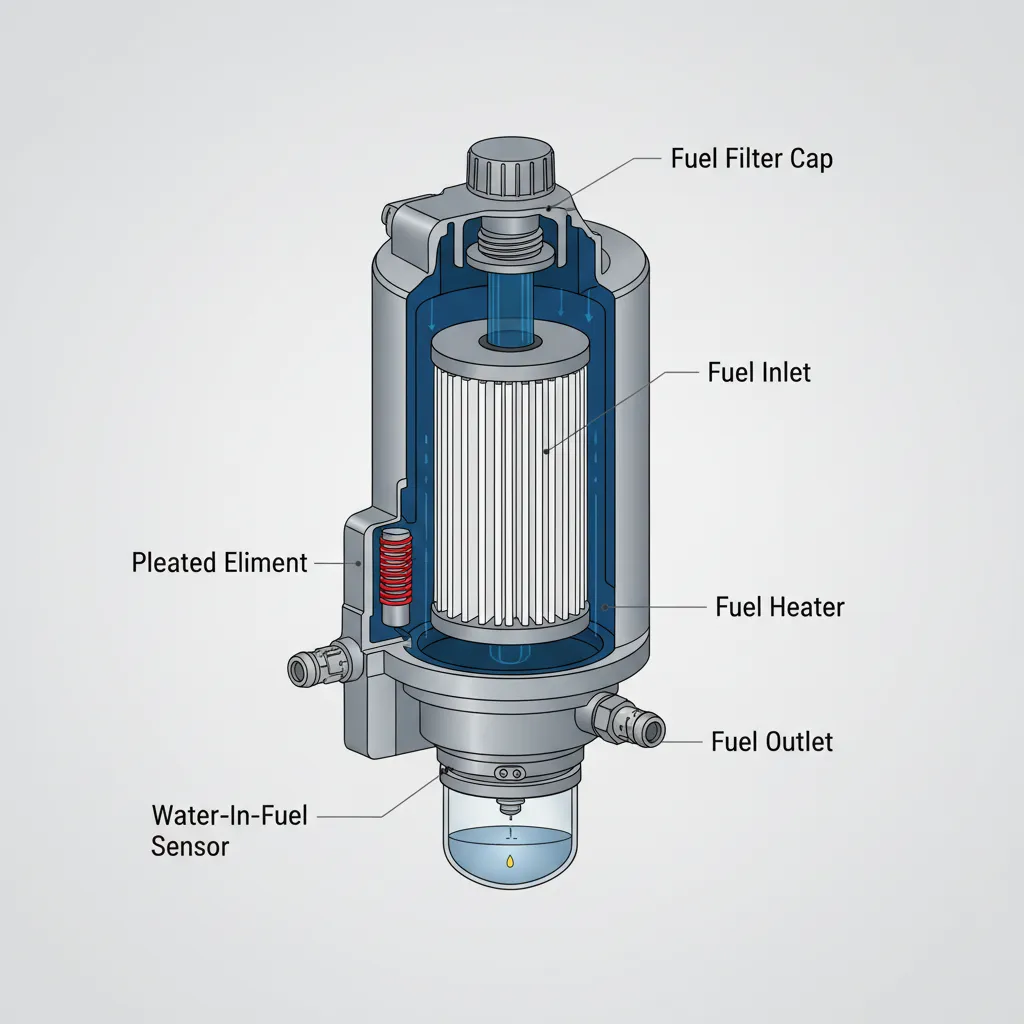
The primary function of the fuel filter housing is to serve as a centralized hub for filtration and water separation. In the world of modern diesel performance, this is a critical task. The High-Pressure Common Rail (HPCR) system on the 6.7 Cummins operates at pressures exceeding 25,000 PSI. At these intensities, even microscopic particulates or small amounts of water can cause catastrophic injector erosion or “no-start” conditions. The housing acts as the final gatekeeper before fuel enters the high-pressure pump (CP3 or CP4.2).
Housing Material and Structural Integrity
OEM housings are typically constructed from a high-grade composite plastic. While lightweight and cost-effective, these housings are susceptible to the stresses of thermal cycling—the constant expansion and contraction that occurs as the engine heats up and cools down. Over time, plastic housings can develop hairline fractures, especially in regions with extreme temperature swings. This has led many expert mechanics to recommend aftermarket aluminum upgrades, which offer superior durability and resistance to stripping the cap threads.
Strategic Component Locations
On RAM 2500 and 3500 applications, the 6.7 Cummins employs a dual-filtration strategy. The primary fuel filter housing is engine-mounted on the driver’s side, tucked near the intake manifold for easy access from the top. However, starting with the 2013 model year, a secondary water separator and filter were added, chassis-mounted near the rear axle. Understanding this dual-filter setup is essential for a complete maintenance routine. You can find specific 15,000-mile maintenance intervals in the official guide provided by Mopar.
Integrated within the housing is the fuel heater element. This component is vital for operation in temperatures below 32°F (0°C). Diesel fuel contains paraffin wax, which can crystallize or “gel” in cold weather, clogging the filter and starving the engine. The integrated heater warms the fuel as it enters the housing, ensuring it remains in a liquid state for reliable flow.

6.7 Cummins Fuel Filter Housing Diagram: Key Component Breakdown
To effectively maintain your vehicle, you must be able to identify each part of the assembly. A standard technical diagram of the 6.7 Cummins housing consists of several expert-designed components working in unison. Referencing the layout of a Mopar or Fleetguard assembly, we can identify the following essential parts:
-
1
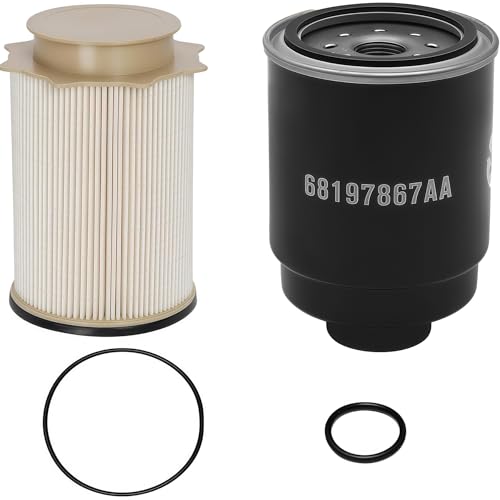
Filter Cap and O-Ring: The top-access cap, typically requiring a 1-1/8 inch or 28mm socket. -
2
Water-in-Fuel (WIF) Sensor: Located at the bottom to detect accumulated moisture. -
3
Fuel Heater Element: The side-mounted electrical harness and internal heating probe. -
4
Water Drain Valve (Petcock): The lever used to manually evacuate water and sediment. -
5
Inlet and Outlet Ports: Mapping the path from the lift pump to the high-pressure pump.
The Water-in-Fuel (WIF) sensor is particularly important. Diesel fuel is hydroscopic, meaning it can absorb water from the atmosphere. Because water is denser than diesel, it settles at the bottom of the housing. The WIF sensor is designed to trigger the dashboard lamp when the water level reaches approximately 100ml in the separation bowl. Ignoring this light can lead to water reaching the injectors, which results in internal corrosion and immediate engine failure. For more detailed expert tips, veteran owners often discuss sensor longevity and housing maintenance on enthusiast forums.

Maintenance Procedures: Replacing the Filter and Draining the Separator
Proper maintenance of the 6.7 Cummins fuel system is non-negotiable. While Cummins Filtration guidelines recommend a 15,000-mile (24,000 km) interval, those operating in “Severe Service” cycles (idling, heavy towing, or extreme dusty conditions) should reduce this to every 10,000 miles to ensure quality filtration.
📋
Professional Filter Replacement Steps


Place a drain pan under the housing and open the yellow petcock valve to drain the fuel. Use a 28mm socket to loosen the cap. Inspect the old filter for metal shavings—a common indicator of lift pump or CP4.2 failure.
Remove the old O-ring and clean the sealing surface. Lubricate the new O-ring with clean diesel fuel to prevent binding. Insert the new filter element and hand-tighten the cap until seated.
Torque the cap to exactly 22.5 lb-ft (30.5 Nm). To prime the system, cycle the ignition to ‘Run’ for 30 seconds without cranking. Repeat this 3-4 times to purge air and prevent a ‘no start’ condition.
Always use a high-quality fuel filter that meets or exceeds OEM specifications. Lower-quality filters may fail to capture the 3-micron particulates that are deadly to HPCR injectors.
Troubleshooting Common 6.7 Cummins Fuel Housing Failures
Even with regular maintenance, the fuel filter housing can present challenges. Based on industry data and the experiences of veteran mechanics, several common failure points exist that every owner should be aware of. For instance, research indicates that over 60% of ‘Water in Fuel’ warnings in high-mileage 6.7 engines are actually attributed to faulty WIF sensors rather than actual water contamination.
By The Numbers
Replacement Interval (Miles)
Torque Spec (Lb-Ft)
Burst Pressure Gain (Billet)
WIF Trigger Volume
Identifying Housing Cracks and Air Leaks
The most frequent trusted diagnosis for a “weeping” leak at the top of the housing is a cracked cap or over-torqued threads. Because the housing is plastic, applying too much force during a filter change causes the material to fatigue. This often happens in colder climates where the plastic is more brittle. If you notice fuel dampness around the cap, it is likely that the housing has reached its service life limit. Similarly, a compromised housing gasket can allow air to be sucked into the system, leading to erratic idling and loss of prime.


Fuel Heater and Electrical Failures
If your truck is difficult to start in the winter, the fuel heater element may have failed. You can test this by checking for continuity with a multimeter at the electrical connector on the side of the housing. A burnt-out heater won’t necessarily trigger a Check Engine Light, but it will make cold-weather starts much harder on your batteries and starter motor.
Never attempt to “hand prime” the system by loosening lines while the engine is cranking. The extreme pressures of the HPCR system can cause fuel to penetrate skin, leading to severe injury or death.
Professional Upgrades and Aftermarket Housing Solutions
For owners looking for expert-level reliability, the market offers several high-quality upgrades. Upgrading to a billet aluminum housing is one of the most effective ways to eliminate the ‘plastic fatigue’ common in OEM parts. These aftermarket housings can increase the burst pressure rating of the filtration assembly by over 200%, providing peace of mind during heavy towing or performance driving.
Heat Dissipation
Aluminum housings shed heat faster, helping to stabilize fuel temperature during long-distance hauling.
Thread Integrity
Precision-machined threads in aluminum resist stripping and cross-threading far better than plastic.
In high-performance applications, many owners choose to bypass the stock housing entirely in favor of a FASS or AirDog lift pump system. These systems often provide 2-micron filtration and superior water separation, further protecting the quality of the fuel reaching the engine. However, even with an aftermarket lift pump, many reliable setups still retain the factory housing as a final stage of filtration and heating. When selecting replacement parts, always consult the Ram specs provided by Cummins to ensure compatibility.
Conclusion
The fuel filter housing is a critical protective barrier for the 6.7 Cummins high-pressure fuel system. Regular maintenance, including draining the water separator monthly and replacing filters every 15,000 miles, is non-negotiable for engine longevity. Identifying cracks in the housing early and adhering to the 22.5 lb-ft torque specification can prevent catastrophic fuel leaks and expensive downtime. Inspect your fuel filter housing today for signs of weeping or wear, and always insist on professional-grade Fleetguard or Mopar replacement filters to maintain your engine’s integrity. By following this comprehensive guide, you ensure that your Cummins remains the trusted workhorse it was engineered to be.
Frequently Asked Questions
Where is the fuel filter housing located on a 6.7 Cummins?
On most RAM trucks equipped with the 6.7 Cummins, the primary fuel filter housing is located in the engine bay on the driver’s side, tucked behind the intake manifold. Additionally, there is a second chassis-mounted fuel filter and water separator located near the rear fuel tank to provide multi-stage protection against contaminants.



How often should I change the fuel filter on my 6.7 Cummins?
Cummins recommends replacing both fuel filters every 15,000 miles or 12 months, whichever comes first. However, if you frequently idle your engine or operate in dusty, heavy-duty conditions, a 10,000-mile interval is preferred. Regular replacement is the most cost-effective way to prevent damage to the high-pressure fuel pump and injectors.
How do I drain the water separator on my 6.7 Cummins?
To drain the separator, locate the yellow or black drain valve at the bottom of the housing. Place a container underneath, turn the valve counter-clockwise, and allow the fluid to drain until pure diesel fuel appears. Close the valve firmly. This should be done monthly or whenever the ‘Water in Fuel’ light illuminates.
What is the correct torque specification for the fuel filter cap?
The fuel filter cap on a 6.7 Cummins should be torqued to 22.5 lb-ft (30.5 Nm). Over-tightening is a common cause of cracked housings or stuck caps during the next service. Always apply a thin film of clean diesel fuel to the new O-ring to ensure a proper seal without binding.
Why is my fuel filter housing leaking?
Leaks are typically caused by a pinched O-ring, a hairline crack in the plastic housing from over-torquing, or thermal fatigue. In colder climates, the plastic can become brittle and fail. If you notice persistent weeping, it is often recommended to upgrade to a professional-grade billet aluminum housing for increased durability and leak prevention.