2012 Ram 1500 Fuse Box Diagram: Location, Identification, And Repair Guide

When your 2012 Ram 1500’s headlights flicker or the power outlets suddenly go dead, the solution is often a simple five-cent piece of plastic and metal. However, locating the correct fuse in a complex modern truck like the Ram 1500 can be frustrating without a clear, professional map of the electrical system. This guide provides a trusted 2012 Ram 1500 fuse box diagram, detailed circuit identifications, and expert troubleshooting steps to get your truck back on the road safely.


Locating the 2012 Ram 1500 Power Distribution Center and Interior Panels
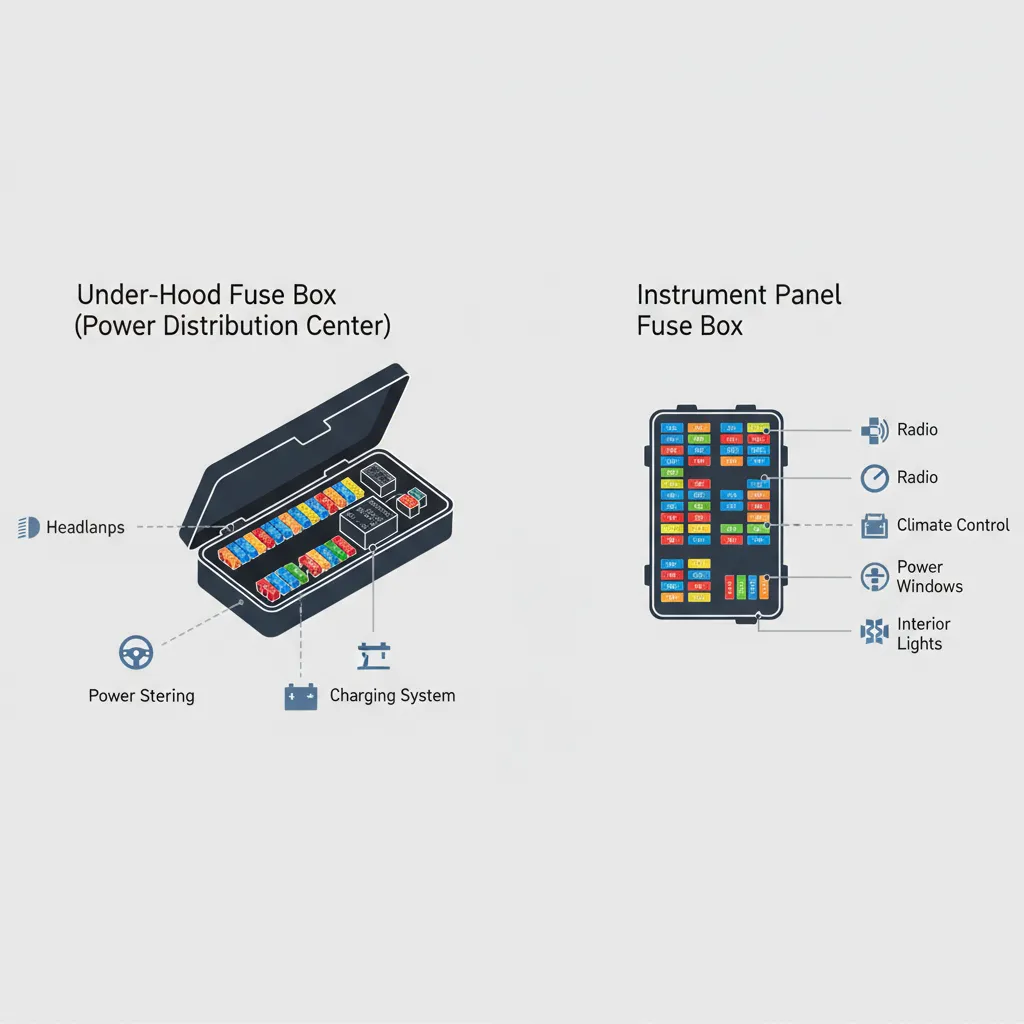
Finding the fuse box in a 2012 Ram 1500 is the first step in any electrical diagnostic process. This vehicle features two primary hubs for electrical protection. The most critical is the Power Distribution Center (PDC), which acts as the vehicle’s electrical “brain.” It is located under the hood, situated on the driver’s side near the battery. This heavy-duty plastic housing protects the high-current fuses and relays that manage the engine, transmission, and safety systems.
To access the PDC, you must release the two plastic tabs on the front and rear of the box. Once opened, you will find a dense array of over 40 individual fuse slots ranging from 10A to 60A. A complete diagram of the layout is typically embossed on the underside of the lid, providing an immediate reference for field repairs. This is particularly vital in emergency scenarios; for instance, if a driver is stranded at night due to a sudden headlight failure, knowing how to quickly pop the PDC lid can mean the difference between a safe drive home and an expensive tow.
The second hub is the interior fuse panel. While the PDC handles the heavy lifting, the interior panel manages the cabin’s creature comforts. It is usually found behind a removable cover on the driver’s side of the dashboard, accessible only when the door is open. In the 2012 model year, Chrysler’s engineering relies heavily on the Totally Integrated Power Module (TIPM). The TIPM is more than just a fuse box; it is a computer-controlled gateway that regulates power to nearly every electronic component. Understanding this integration is key, as what looks like a simple blown fuse can sometimes be a software-level issue within the TIPM.
Before you begin pulling fuses, take a high-resolution photo of the PDC layout. This ensures that if you accidentally drop a fuse or forget which slot was empty (many slots are reserved for options your truck may not have), you have an original reference point to return to.
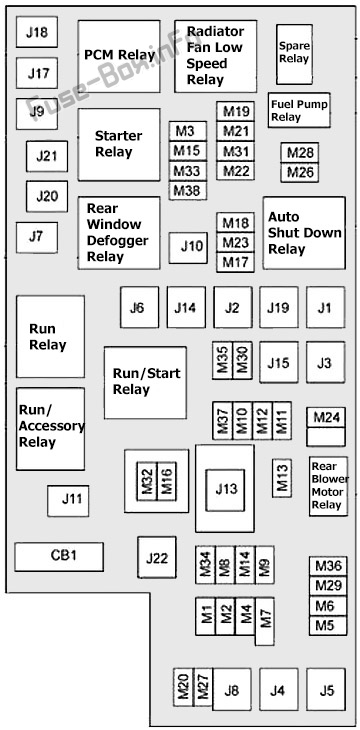
Under-Hood Fuse Box Diagram and Circuit Function List
The PDC under the hood uses a combination of mini-fuses, J-Case fuses, and relays. Each is color-coded to denote its amperage—for example, blue denotes 15A, yellow represents 20A, and clear/white is for 25A. Mapping these circuits is essential for efficient troubleshooting. Research indicates that electrical problems are among the top five most common reasons for vehicle breakdowns, according to the official guide for Ram owners.
Critical Engine and Safety Fuses
Certain fuses are non-negotiable for vehicle operation. These include:
- M13 (20A Yellow): Cabin Compartment Node. If this blows, you may lose instrument cluster functionality and various interior controls.
- M37 (10A Red): Antilock Brakes (ABS) and Stability Control. A failure here will likely trigger the ABS warning light and disable traction assist.
- J17 (40A Green): Starter Solenoid. If your truck won’t crank but the battery is healthy, this J-Case fuse is your primary suspect.
- J13 (30A Pink): Main Power Seats/Memory. This handles high-draw motors within the cabin.
Power Outlets and Convenience
A common point of confusion for 2012 Ram owners involves the 12V power outlets. There is a specific difference between the M6 and M7 fuses. M6 typically controls the cigar lighter, while M7 manages the auxiliary power outlets. Interestingly, the M7 fuse slot is often “multi-positional.” By moving the fuse slightly to the left or right in its three-pin cradle, you can choose whether the power outlet remains “always on” or is “switched” with the ignition. This is a subtle but powerful feature for those who want to charge devices while the truck is off.


Interior Accessory Fuse Identification and Management
While the heavy lifting happens under the hood, the interior fuses are vital for cabin comfort and safety. One of the most critical circuits to identify is the Supplemental Restraint System (SRS). Fuses related to airbags must be handled with extreme care. If you are inspecting these, it is a professional standard to wait at least 15 minutes after disconnecting the battery to allow the backup capacitors to discharge.
Another common troubleshooting point is the radio. If your head unit refuses to power on, do not assume the unit is fried. Check the M12 or M10 interior-linked circuits. Frequently, a minor surge or a faulty phone charger can pop these fuses. Furthermore, for those who store their trucks for the winter, identifying the “Sleep Mode” or “Storage” fuse is helpful. Pulling this fuse prevents parasitic battery drain, ensuring the truck starts after long periods of inactivity. According to Ram specs, the OBDII diagnostic port fuse is another frequent failure point. If your scan tool won’t connect, check this fuse first, as it provides the 12V power needed for the tool to communicate with the vehicle’s ECU.
Never replace a blown fuse with one of a higher amperage rating. If a 10A fuse blows, replacing it with a 20A fuse does not solve the problem; it creates a fire hazard. The fuse is the “weak link” designed to protect your wiring. Using a higher amp fuse can cause the wire harness to melt before the fuse blows.
📋
Step-by-Step Guide to Identifying and Replacing Blown Fuses
Turn off the engine and all lights. For high-amperage J-Case fuses, disconnect the negative battery terminal to prevent accidental short circuits during removal.
Use the white fuse puller tool stored in the PDC cover. Inspect the fuse for a broken metal filament. Alternatively, use a 12V test light to probe the two small metal points on top of the fuse—if it lights on one side but not the other, the fuse is blown.
Insert a new fuse of the exact same amperage. Ensure it is seated firmly. Reconnect the battery and test the component to see if functionality is restored.


Advanced Troubleshooting: Why Fuses Fail and When to Seek Expert Help
If you replace a fuse and it immediately pops again, you have a “Short to Ground.” This is the most common reason for recurring fuse failure. In the 2012 Ram 1500, a frequent culprit is the trailer wiring harness. Corrosion or physical damage to the trailer plug can cause a short that repeatedly blows the tail lamp or turn signal fuses. Modern vehicles contain over 1,500 meters of electrical wiring, so finding a short requires patience and a systematic approach.
Environmental factors also play a massive role. Moisture ingress in the under-hood PDC can lead to terminal corrosion. If you see green “crust” on the fuse terminals, your issues may be caused by high resistance rather than a simple blown fuse. In these cases, cleaning the terminals with an approved electrical contact cleaner is necessary. However, the most daunting issue for the 2012 model year is a faulty TIPM. Because the TIPM contains internal relays that are not user-serviceable, a failure within the module can mimic a blown fuse or a bad fuel pump. If you have verified the fuse is good but the component still lacks power, the TIPM itself may need a professional guide or replacement by a certified technician to protect the vehicle’s ECU.
By The Numbers
Average Fuse Lifespan
Cause of Breakdowns
Total Wiring Length
Professional Recommendations and Summary
Managing the electrical system of a 2012 Ram 1500 requires a blend of manual reference and digital diagnostic tools. Always start by identifying the correct PDC or interior panel location before beginning repairs. Use the provided diagram to match the fuse amperage and function precisely, and always adhere to professional safety protocols. Using quality diagnostic tools like multimeters or test lights is highly recommended to avoid “blindly” pulling fuses, which can reset engine adaptive learning or radio settings.
Maintain Spares
Keep a variety pack of mini and J-Case fuses in your glovebox for roadside emergencies.
Periodic Inspection
Check the PDC for signs of moisture or corrosion once a year, especially in humid climates.
In summary, while a blown fuse is often the culprit for electrical glitches, it is merely a symptom. If a fuse fails repeatedly, consult an expert to identify the underlying short circuit or component failure. For specific torque specs or relay configurations, always consult your owner’s manual. By following these expert tips and using this comprehensive guide, you can ensure your 2012 Ram 1500 remains a reliable, powerful workhorse for years to come.
Frequently Asked Questions
Where is the fuse box located in my 2012 Ram 1500?
The 2012 Ram 1500 features a primary Power Distribution Center (PDC) located under the hood, mounted on the driver’s side near the battery. Additionally, an interior fuse panel is located inside the cabin, accessible via the side panel of the dashboard on the driver’s side when the door is open.


What does fuse M6 and M7 control in a 2012 Ram?
Fuses M6 and M7 are among the most frequently checked. M6 (20 Amp Yellow) typically protects the cigar lighter and accessory outlets, while M7 (20 Amp Yellow) manages the power outlets. Depending on the configuration, M7 can often be moved between two positions to choose between battery-powered or ignition-powered operation.
How do I know if a fuse is blown without a tester?
You can perform a visual inspection by removing the fuse with a professional fuse puller. Look through the translucent plastic housing; if the internal metal wire is broken, melted, or if there are dark burn marks inside the casing, the fuse is blown and must be replaced with an identical amperage unit.
Why does my 2012 Ram 1500 keep blowing the same fuse?
A recurring blown fuse indicates an underlying electrical fault, such as a short circuit to ground or a component drawing more current than intended. Professional diagnosis is required to check for pinched wires, water intrusion in connectors, or a failing motor (like a wiper or fuel pump) that is overloading the circuit.
Can I use a higher amp fuse to stop it from blowing?
No, you should never use a higher amperage fuse than specified. Fuses are designed to be the ‘weak link’ to protect expensive wiring. Using a larger fuse allows excessive heat to build up in the wires before the fuse blows, which can lead to a professional repair nightmare or a vehicle fire.

![Fix P0138 Code Dodge Ram 1500: Causes & Fixes [2026]](https://truckguider.com/wp-content/uploads/2026/03/p0138-dodge-ram-1500-featured.webp)
![2021 Ram 1500 Battery Replacement: Specs & Expert Tips [2026]](https://truckguider.com/wp-content/uploads/2026/03/2021-ram-1500-battery-replacement-featured-768x403.webp)