
2014 Ram 1500 Blower Motor Resistor Location And Replacement Guide

When the climate control in your 2014 Ram 1500 fails to respond to your commands, a simple afternoon drive can quickly become an uncomfortable ordeal. Many Ram owners find their heater or AC fan stuck on the highest speed or refusing to turn on at all, a problem usually caused by a hidden electrical component known as the blower motor resistor. In this guide, you will learn the exact 2014 ram 1500 blower motor resistor location, the specific symptoms of its failure, and the detailed step-by-step process to replace it yourself to restore your cabin comfort. Before replacing parts, try a Dodge Ram climate control reset to rule out a software fault.


Understanding the Role of the 2014 Ram 1500 Blower Motor Resistor
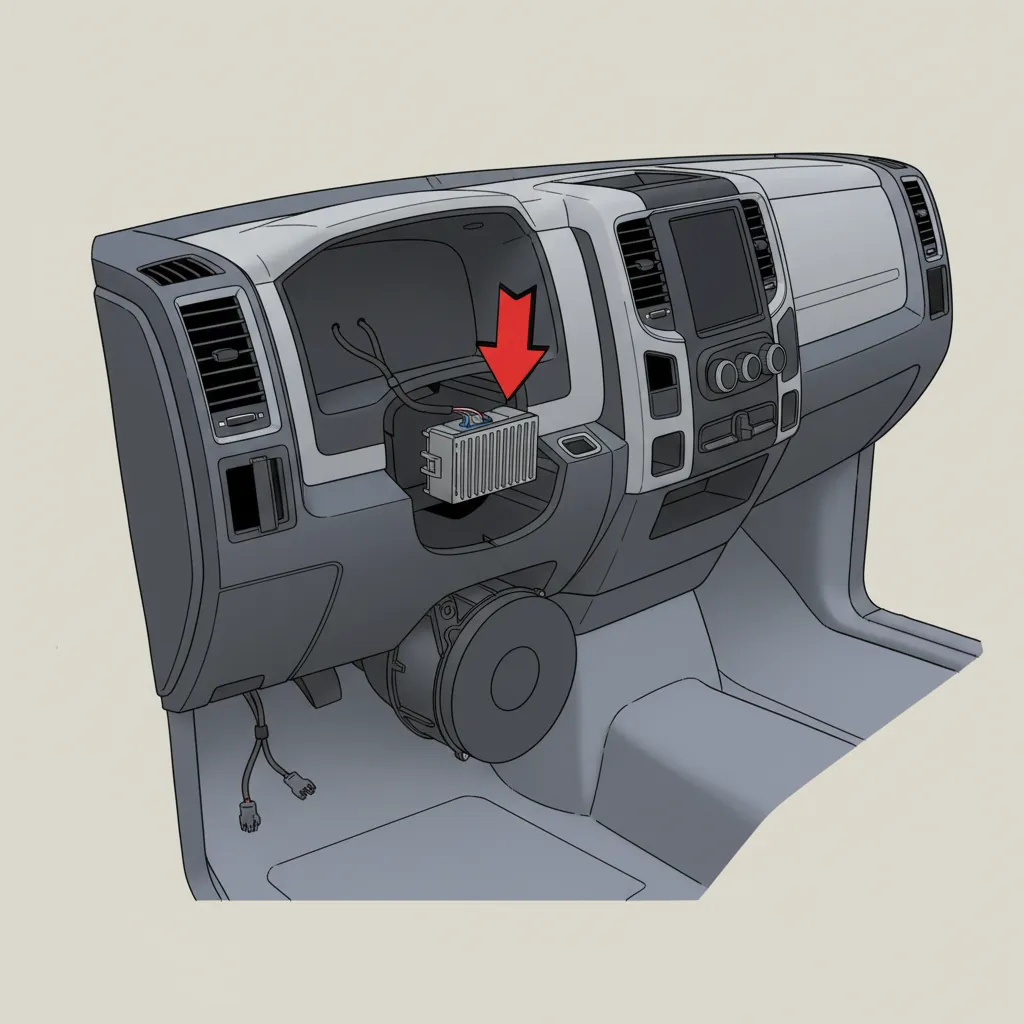
The blower motor resistor is a critical electrical component that regulates the voltage sent to the blower motor, effectively controlling the speed at which your cabin fan spins. In a 2014 Ram 1500, the resistor works by utilizing a series of coils or, in higher trim levels with automatic temperature control, a solid-state blower control module to create resistance. This resistance reduces the current flow to the motor; higher resistance results in lower fan speeds, while lower resistance allows the fan to spin faster. Think of it as a dimmer switch on a light fixture: it modulates the energy flow to achieve the desired output.
When the resistor fails, it typically defaults to the highest speed setting. This occurs because the highest speed often bypasses the resistance circuits entirely, providing a direct 12-volt path to the motor. Mechanical stress from heat is the primary cause of failure. Because the resistor generates heat while restricting current, it is positioned directly within the airflow of the HVAC ducting to stay cool. If airflow is restricted—often by a neglected cabin air filter—the resistor can reach critical temperatures, leading to internal solder failure or burnt connector pins. Research indicates that nearly 40% of cabin HVAC airflow issues are rooted in resistor or connector pin melting, a statistic backed by veteran ASE-certified technicians.
Depending on your specific 2014 Ram 1500 trim, the part may be referred to as a “resistor block” (for manual systems) or a “blower control module” (for dual-zone automatic systems). While their internal mechanisms differ, their physical location and general replacement procedure remain remarkably similar. Identifying whether you have a standard or automatic system is the first step in ensuring you purchase the correct official guide or part for your truck.

Exact 2014 Ram 1500 Blower Motor Resistor Location and Access Steps
Finding the resistor in a 2014 Ram 1500 does not require tearing apart the dashboard, but it does require some targeted disassembly in the passenger-side footwell. The component is accessible and tucked behind and beneath the lower glove box assembly, mounted vertically into the bottom of the black plastic HVAC housing near the firewall. Its proximity to the blower motor is intentional, as it relies on the motor’s air output for thermal management.
How to Access the Location
To gain a clear line of sight, you must first empty the lower glove box. On the right side of the glove box door, you will notice a “soft-open” damper cord. This cord must be gently pulled outward and unhooked from the door. Once the damper is disconnected, press the two plastic tabs on the upper inside corners of the glove box frame inward. This allows the door to drop past its normal stopping point, exposing the inner dashboard structure. You can then lift the door off its bottom hinges and set it aside.
With the glove box removed, look toward the left (toward the center console) and up. You will see a rectangular electrical connector with a multi-wire harness (usually 4 to 5 wires) plugged into the bottom of the HVAC plastic housing. This is the blower motor resistor. It is held in place by two 7/32″ or 8mm screws. The 2014 Ram 1500 also features a cabin air filter nearby; if you find this filter is heavily clogged with debris, it likely contributed to the resistor’s demise by causing it to overheat. Always inspect the filter during this process to prevent a repeat failure.
Before you finalize the replacement, stick your hand (with the power off!) into the blower motor opening to ensure the fan squirrel cage spins freely. A seized or dragging blower motor increases the amperage draw, which will burn out a brand-new resistor in days. If the motor feels stiff, it needs to be replaced alongside the resistor.

Identifying Symptoms of a Failing HVAC Blower Component
Diagnosing a faulty resistor is relatively straightforward for the average Ram owner. Because the resistor is a series of electrical paths, specific failure points within the unit lead to predictable behavior in the cabin. If you are experiencing any of the following, the resistor is almost certainly the culprit.
High Speed Only
The most common symptom where the fan works on setting 4 or 5 but is completely dead on settings 1, 2, and 3. This indicates the resistor coils are “open” or broken.


Burning Smell
A distinct ‘burning plastic’ smell emanating from the passenger vents often signals that the electrical connector or the resistor’s potting material is melting due to excessive heat.
In more severe cases, you may experience no airflow at all. This can happen if the thermal fuse on the resistor has blown, cutting off all power to the blower motor. According to repair cost data, HVAC electrical issues are among the top 5 most frequent minor repairs for the 2014 Ram 1500 model year. Drivers in extreme climates are particularly susceptible; for instance, a Ram owner in the Midwest may find their defrost is only available on the loudest setting during a snowstorm, which is a classic sign of a resistor that has lost its lower-voltage capabilities. If you are unsure, the Ram community frequently shares diagnostic tips for testing these units with a multimeter to verify continuity across the pins.
Step-by-Step Replacement Guide and Tools Needed
Replacing the blower motor resistor is a convenient DIY project that typically takes less than 30 minutes. Before beginning, ensure you have the following tools: a 7/32″ or 8mm socket driver, a small flathead screwdriver for the harness clip, a flashlight, and a packet of dielectric grease.
📋
Step-by-Step Replacement
Disconnect the negative battery terminal. Remove the lower glove box by unhooking the damper cord and pressing the side tabs inward to drop the door.
Locate the electrical connector at the base of the HVAC unit. Press the locking tab and pull the connector downward. Inspect the pins for signs of melting or corrosion.


Use your 7/32″ socket to remove the two screws securing the resistor to the housing. Pull the old resistor straight down and out of the duct.
Apply dielectric grease to the pins of the new resistor. Insert it into the housing, ensuring the gasket is seated. Reinstall screws, reconnect the harness, and test the system.
If you find that the plastic electrical connector (the “pigtail”) is melted or charred, do NOT simply plug in a new resistor. You must cut and splice in a new pigtail connector. Plugging a new resistor into a damaged harness creates high resistance, which will quickly melt the new part and could potentially cause a vehicle fire.
Professional Repair Options and Local Service Considerations
While the location is highly accessible for many DIY enthusiasts, there are instances where seeking a professional technician nearby is the better course of action. If you discover a melted wiring harness, a specialized shop serving the community will have the proper crimping tools and heat-shrink tubing to ensure a weather-tight electrical splice. Furthermore, if you replace the resistor and it fails again within a week, an underlying issue with the blower motor’s internal bushings or the HVAC control head itself may be present, requiring more advanced diagnostic equipment.
Local dealerships and independent shops typically charge between 0.5 to 1.0 hours of labor for this specific replacement. When you factor in the cost of a trusted local mechanic, you are paying for the peace of mind that the entire HVAC circuit—from the fuse box to the fan—has been inspected for amperage draw. National repair estimators suggest that a professional replacement, including a high-quality Mopar or equivalent unit, usually ranges from $120 to $150. If you are time-constrained or the mounting screws are stripped, this is a reasonable investment in your truck’s longevity.
By The Numbers
Average Replacement Cost
HVAC Failures Linked to Resistors
Estimated DIY Time
Choosing the Right Part
When selecting a replacement, quality matters. While aftermarket resistors are widely available and often cheaper, many experts recommend OEM Mopar units for the 2014 Ram 1500. These are designed with the specific thermal tolerances of the Ram’s HVAC housing in mind. A cheaper part may lack the proper thermal fuse or use lower-grade solder, leading to a shorter lifespan. Ensure the part you purchase matches your vehicle’s specific climate control type—manual vs. automatic—to ensure the connector pins align perfectly.
In summary, the 2014 Ram 1500 blower motor resistor is located behind the lower glove box on the passenger side. Failure is marked by limited fan speeds or a total lack of airflow, and replacement is a straightforward DIY task requiring basic hand tools and about 30 minutes of time. If you are uncomfortable performing this repair or if you discover melted wiring, contact a local certified mechanic nearby to ensure your HVAC system is restored to factory standards and operates safely for years to come.
Frequently Asked Questions
Can I drive my Ram 1500 with a bad blower motor resistor?
Yes, you can technically drive the vehicle, as the resistor only affects the cabin fan speeds and does not impact engine performance or safety. However, you may lose the ability to defrost your windshield effectively, which can be a safety hazard in cold or humid conditions. It is best to replace the component as soon as possible to maintain visibility and comfort.


Why did my blower motor resistor connector melt?
Melting occurs when the blower motor begins to draw excessive amperage, often due to age or internal friction. This extra current creates heat at the point of highest resistance—the connector pins. If you find a melted connector, you must replace both the resistor and the wire harness pigtail, and you should inspect the blower motor itself for signs of failure.
How much does a 2014 Ram 1500 blower motor resistor cost?
The part itself usually costs between $30 and $60 for an aftermarket version, while an OEM Mopar part may cost between $70 and $90. If you take it to a professional shop, expect to pay an additional $75 to $100 in labor. Many owners find that doing the repair themselves is one of the most cost-effective DIY fixes available.
Are the blower motor and the resistor in the same location?
They are very close to each other. Both are located behind the passenger-side glove box. The blower motor is the large circular plastic housing, while the resistor is a smaller rectangular module plugged into the ductwork right next to it. They work in tandem, but they are separate components that can be replaced individually.
What tools are absolutely necessary for this job?
You will primarily need an 8mm or 7/32-inch socket and ratchet to remove the mounting screws. A small flathead screwdriver is also helpful for depressing the plastic locking tab on the electrical connector. Because the area is cramped and dark, a high-quality LED flashlight or headlamp is highly recommended to clearly see the harness and screws.
![P062A Ram 1500: Diagnosing Fuel Pump Control Module Issues [2026]](https://truckguider.com/wp-content/uploads/2026/03/p062a-ram-1500-featured.webp)

![P0171 Dodge Ram 1500: Fix & Reset Guide [2026]](https://truckguider.com/wp-content/uploads/2026/03/p0171-dodge-ram-1500-featured.webp)
![2012 Ram 1500 5.7 Oil Capacity & Type: Specs & Fitment Guide [2026]](https://truckguider.com/wp-content/uploads/2026/03/2012-ram-1500-5-7-oil-capacity-featured.webp)