6.7 Cummins Head Bolt Torque Specs Chart By Year (2007–2026): HP, Torque & Key Specs

Quick Answer
The factory torque specification for 6.7 Cummins head bolts typically follows a multi-stage process involving an initial torque to 89 lb-ft, followed by a final angular rotation of 90 degrees. Variations exist based on production year and hardware type (factory bolts vs. aftermarket studs). Always consult the specific service manual associated with your engine serial number for the precise sequence.
Is your 6.7 Cummins head gasket leaking, or are you upgrading to ARP studs for increased boost? Using the wrong torque sequence or reusing factory Torque-to-Yield (TTY) bolts is the primary cause of repeat head gasket failure on the 6.7L platform. This guide provides the definitive 6.7 Cummins head bolt torque specs, the critical multi-stage tightening sequences, and the technical data required to seal your engine block correctly the first time.

Prime for Young Adults — 6 Months Free
Students and 18–24s get six months of Prime free, then half price.
Start 6 Months Free
6.7 Cummins Head Bolt Torque Specs Chart by Year (2007–2026)
Recommended Best Deal Products


This data covers the Cummins 6.7L Turbo Diesel found in RAM 2500/3500/4500/5500 trucks (2007–2026). Specs reflect factory service manual (FSM) requirements. Last reviewed: August 2026. Always verify your engine’s specific emission configuration via the data plate.
| Model Years | Fastener Type | Final Torque Spec | Notes |
|---|---|---|---|
| 2007–2026 | OEM TTY Bolt | Multiple Stages + Angle | Never reuse; replace every time. |
| Performance | ARP Studs | 125 lb-ft (Typical) | Follow manufacturer instructions. |

Why Torque Values Evolved Over Model Years
While the basic block architecture has remained consistent, emission hardware changes (DPF/SCR) introduced higher cylinder pressures. The factory utilizes Torque-to-Yield (TTY) bolts because they stretch slightly to provide a consistent clamping force regardless of minor manufacturing variations. When you upgrade to higher horsepower, the standard TTY bolts often reach their elastic limit, resulting in a blown head gasket.
How to Properly Tighten 6.7 Cummins Head Bolts Step-by-Step
Use a thread chaser (not a standard tap) to clean engine block holes. Any debris or residual oil at the bottom of the hole causes a “fluid lock,” which can crack the engine block when the bolt is torqued.
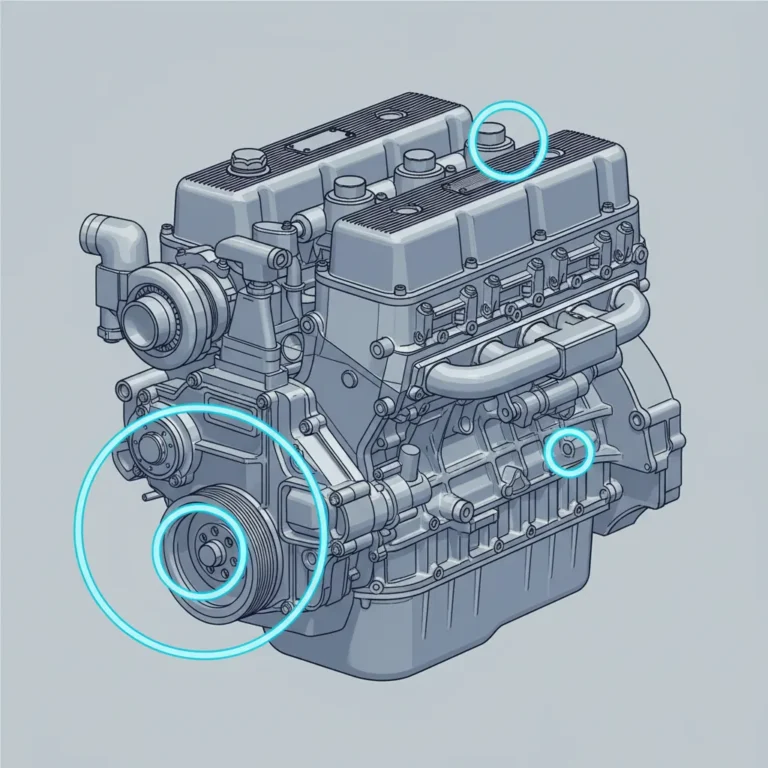
Follow the 26-bolt torque pattern starting from the center and spiraling outward. OEM specs usually involve a three-stage torque sequence followed by a final 90-degree angle turn.
Utilizing a Torque Angle Gauge for Final Steps
A torque wrench alone is insufficient for the final step. A torque angle gauge is mandatory to ensure the bolt has achieved the proper “stretch.” By tightening to an angle rather than just a foot-pound measurement, you compensate for friction variations, ensuring the head gasket is clamped with absolute uniformity across the entire fire deck.
Common 6.7 Cummins Head Bolt Torque Specification Failures
Recommended Best Deal Products

Once a TTY bolt has been torqued to its yield point, the metal has undergone permanent structural deformation. Reusing it means the bolt will stretch further at a lower force, leading to insufficient clamping and inevitable gasket failure.
- Ignoring the Degree-Turn: Skipping the final angle-tightening step leaves the head loose, allowing compression gases to compromise the gasket fire rings.
- Improper Lubrication: Using engine oil instead of the manufacturer-specified assembly lube (for studs) can result in inaccurate clamping force readings.
- Mixed Bolt Lengths: The 6.7 Cummins uses different length bolts in specific positions. Mixing these up can cause the bolt to bottom out in the block before the head is seated.
Aftermarket 6.7 Cummins Head Stud Upgrades and Torque Specs
The Necessity of Re-torquing After Heat Cycles
When installing performance studs, many manufacturers recommend a re-torque process. After the engine has reached full operating temperature and then cooled down, the studs should be checked to ensure the clamp force remains consistent. This process compensates for any “seating” of the head gasket material.
When using high-strength studs, always use the specific assembly lubricant provided in the kit. Never use standard motor oil; the difference in friction coefficients will lead to an incorrect preload on the stud.

Audible — Listen Free for 30 Days
One free credit a month and thousands of titles included.
Listen Free for 30 DaysIf you are installing studs with the engine in the vehicle, ensure you have adequate hood clearance, as the studs are often much longer than the factory bolts and cannot be angled into place if the radiator support is too high.
Summary Checklist
Always verify your specific service manual version against your VIN. OEM bolts are strictly TTY and must be replaced; never reuse them. Clean, dry bolt holes are the most important part of the process to prevent block damage from fluid locks. Check your engine code on the data plate and double-check your torque settings before beginning your repair.
6.7 Cummins Head Bolt Torque Specs: Frequently Asked Questions
Can I reuse the stock 6.7 Cummins head bolts?
No. The 6.7 Cummins uses Torque-To-Yield (TTY) bolts, which are designed to stretch during the final angular tightening step. Once these bolts have been tightened to their yield point, their metallurgical integrity is compromised. Reusing them can lead to insufficient clamping force, resulting in a blown head gasket shortly after reassembly. Always replace them with a new set of OEM bolts or upgrade to quality head studs.
What is the torque sequence for a 6.7 Cummins?
The torque sequence is critical to prevent head and block distortion. You must follow the manufacturer-specified ‘center-out’ pattern. Typically, you start with the center bolts and work your way outward in a circular or ‘cross’ pattern to ensure even distribution of pressure across the gasket surface. Refer to the diagram in your specific service manual, as failing to follow the sequence will lead to an uneven seal.
Do I need to re-torque head studs after a heat cycle?
This depends on the manufacturer of the studs. For most high-performance aftermarket studs like ARP, it is common practice to perform a re-torque after an initial heat cycle to account for gasket settling. Follow the specific instruction sheet provided by your stud manufacturer. Factory TTY bolts do not require re-torquing after a heat cycle, as they are a one-time-use, set-and-forget hardware solution.
Why is the final step measured in degrees instead of foot-pounds?
The final angular rotation (degrees) is used to reach the specific ‘yield’ point of the bolt. Because friction on the threads and under the bolt head can make foot-pound measurements inaccurate, the angular step ensures the bolt is stretched to the exact length intended by the engineers. This provides the most precise and consistent clamping force, which is necessary for high-compression diesel engines.
Should I use engine oil or assembly lube on the threads?
You should follow the specific lubricant recommendation provided by the bolt manufacturer. For factory bolts, a light coat of clean engine oil is typically required to ensure accurate torque readings. However, if using aftermarket head studs, you must use the specific assembly lubricant provided in the kit. Using the wrong lubricant can drastically change the friction coefficient, leading to over-tightening or under-tightening of the bolts.
Audible Premium Plus — Annual Membership
12 audiobook credits up front, plus the full Audible catalogue.
See Annual Plans