Gator EFX Hard Fold Tonneau Cover: Technical Analysis, Installation Protocols & Competitor Benchmarking (2026)

This research report provides an exhaustive technical evaluation of the Gator EFX Hard Fold Tonneau Cover, a dominant entry in the mid-tier automotive cargo management sector. By synthesizing manufacturer specifications, user field reports, and comparative market data, this analysis defines the product’s operational envelope. Key findings indicate that the Gator EFX leverages a flush-mount aluminum architecture to democratize premium aesthetic features previously restricted to the $1,000+ price bracket.
However, this cost-efficiency introduces specific mechanical trade-offs, notably a static load cap of 300 lbs and a fixed bulkhead panel that limits bed access to 66%. The report also identifies critical quality control variances regarding finish durability and seal integrity, offering prospective buyers and technicians a nuanced risk profile.


Market Positioning Matrix
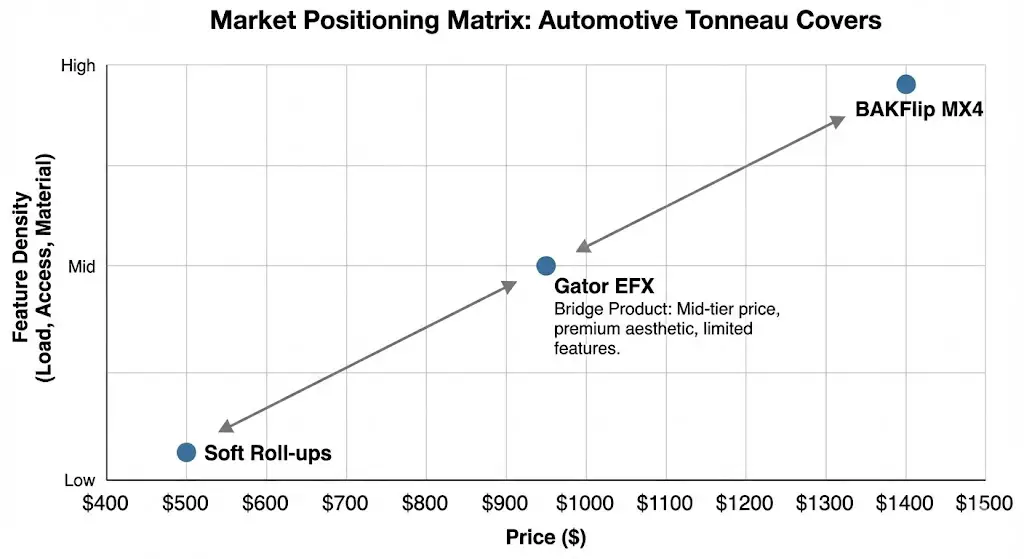
- Type: Scatter Plot Graph
- X-Axis: Price ($400 – $1500)
- Y-Axis: Feature Density (Load rating, Bed Access, Material)
- Data Points: Gator EFX (Low Price/Mid Feature), BAKFlip MX4 (High Price/High Feature), Soft Roll-ups (Low Price/Low Feature).
- Insight: Visualizes the EFX as the “Bridge” product between soft covers and premium hard folders.
The Evolution of the Hard-Folding Segment
The automotive aftermarket has witnessed a decisive shift from soft vinyl covers to hard-folding (tri-fold) systems. This transition is driven by the dual consumer demand for heightened security and aerodynamic efficiency. Hard folding covers, constructed from rigid panels, offer a physical barrier to entry that knife-wielding thieves cannot easily breach, unlike their soft counterparts.
The Gator EFX enters this landscape as a disruptive entity. Manufactured under the umbrella of RealTruck (a conglomerate owning major brands like BAK and Extang), Gator Covers utilizes shared supply chain logistics to produce a cover that mimics the low-profile architecture of the flagship BAKFlip series but utilizes more cost-effective materials and simplified hinge mechanisms. This strategic positioning allows the EFX to capture the “prosumer” demographic—truck owners who require the security of a hard cover for occasional tool transport or recreational gear but cannot justify the capital expenditure of a commercial-grade unit.
Target Demographic and Use Case Analysis
The engineering compromises inherent in the Gator EFX define its ideal user profile:
- The Suburban Utility User: Owners who use their truck primarily for commuting and weekend DIY projects. The 300 lb load rating is sufficient for temporary placement of groceries or light lumber but insufficient for heavy overland racks.
- The Leaseholder: With a price point significantly lower than the competition and a warranty period (2 years) that aligns with typical lease terms, the EFX acts as a disposable asset for short-term vehicle ownership.
- The Aesthetic Purist: The flush-mount design, where the cover sits inside the bed rails rather than on top, appeals to users prioritizing a sleek, factory-integrated appearance over the absolute water-tightness of top-mount covers.
Gator EFX Hard Fold
The ultimate balance of security, aesthetics, and affordability. Why this flush-mount aluminum cover is dominating the mid-tier truck market.
The “Goldilocks” Zone
Truck owners often face a dilemma: choose a cheap soft cover that offers zero security, or spend $1,500+ on a retractable canister that eats up bed space.
The Gator EFX disrupts this by offering heavy-duty aluminum panels that lock into place, making them virtually knife-proof, while maintaining a price point significantly lower than retractable options. It sits flush inside the bed rails, preserving the clean lines of your truck unlike the bulky top-mount folding covers.
- ✓ Aircraft-grade Aluminum Panels
- ✓ EPDM Rubber Seals (UV Resistant)
- ✓ Gloss Black Powder Coat Finish
Market Comparison Matrix
Why EFX wins on value and security
Weatherproofing & Durability
No tonneau cover is 100% waterproof (don’t let marketing fool you), but the EFX gets close through a specific engineering hierarchy.
Material Composition
By weight & structural integrity
Integrated Drain Tubes
Water that bypasses the seals is captured in the rails and funneled out through bed plugs. Critical for keeping cargo dry during highway driving.
Flush-Mount Rubber Seals
Unlike top-mount covers that let water pool against the seal, the flush mount encourages runoff. The EPDM rubber resists drying and cracking in summer heat.
Freeze Protection
Hinges are protected from ice buildup, a common failure point in cheaper folding covers during winter months.


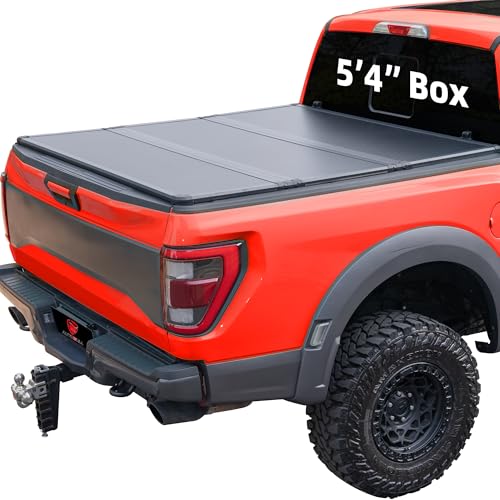
The Drag Coefficient Myth?
Does a tonneau cover actually save gas? Yes, but it depends. By creating a smooth surface over the bed, the Gator EFX prevents the “parachute effect” of air hitting the tailgate.
Studies suggest an improvement of roughly 1.8% to 5% in drag reduction depending on truck speed. Over the life of the cover, it essentially pays for itself.
💡 Quick Math
At $3.50/gallon, improving 15 MPG by just 0.5 MPG saves ~$100 every 10,000 miles.
Projected Savings Calculator
Assumes 15k miles/yrInstallation: No Drill, 30 Minutes
The “Clamp-On” system explained.
Align Rails
Position side rails flush against the bed cap. Ensure they are level.
Clamp Down
Use the 3 provided clamps per side. Tighten with a socket wrench (9/16″).
Secure Cover
Place folded cover at cab. Insert mounting bolts through the rail slots.
Route Drains
Connect drain tubes to rail spigots and run them out through bed plugs.
Our Verdict
The Gator EFX Hard Fold is the definition of “smart utility.” It discards the bulk of older solid covers and the fragility of soft covers. For truck owners who need to park on the street (security) but still use their bed for hauling on weekends, it is the top-tier recommendation for 2025.
© 2025/26 TruckGuider.com – Independent Automotive Research.
Comprehensive Technical Specifications and Material Science
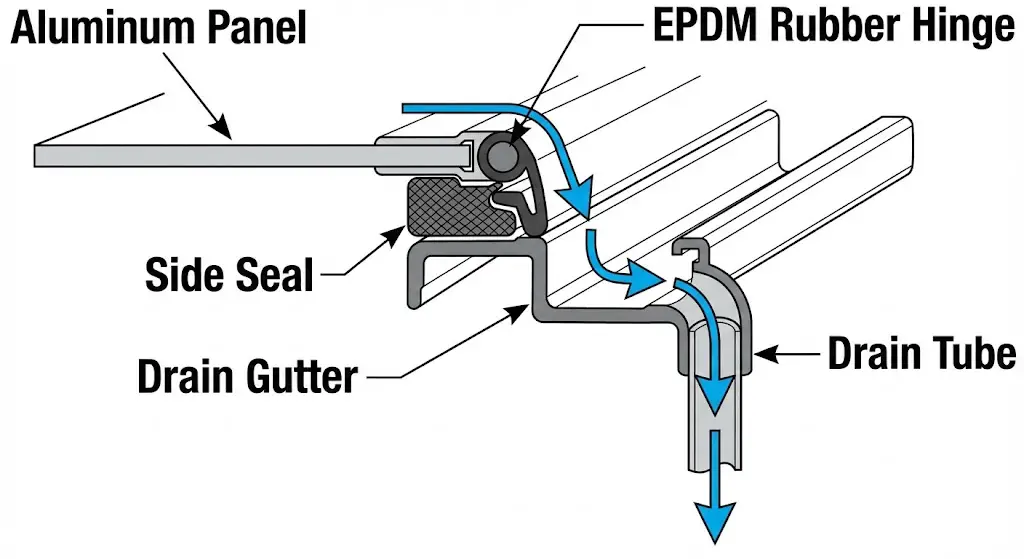
The structural performance of the Gator EFX is a function of its composite metallurgy and polymer engineering. This section deconstructs the cover into its constituent elements.
Panel Metallurgy and Structural Integrity
The Gator EFX utilizes panels constructed from heavy-duty, aircraft-grade aluminum.
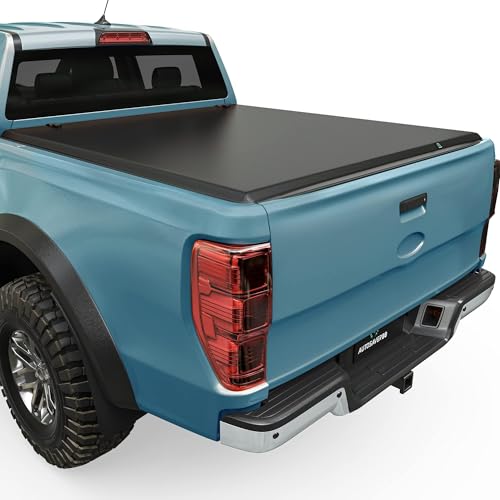


- Alloy Characteristics: While the specific series (likely 6000-series aluminum) is proprietary, the "aircraft-grade" designation implies an alloy treated for high tensile strength relative to its weight. This is critical for preventing sagging across the span of full-size truck beds (Ford F-150, Ram 1500, etc.), which can exceed 65 inches in width.
- Composite Sandwich Construction: To achieve rigidity without excessive weight, the aluminum skins are bonded to a core material, typically a high-density foam or honeycomb polymer. This sandwich structure increases the moment of inertia, allowing the panel to resist bending forces. The 300 lb load rating indicates a core density sufficient for snow loads but lower than the high-density cores used in the Extang Solid Fold 2.0 (rated for 600 lbs).
- Impact Resistance: Aluminum is naturally ductile, meaning it will dent rather than shatter upon impact. This is a preferable failure mode for tonneau covers exposed to hail or falling cargo, as the cover remains secure even if aesthetically marred.
Surface Engineering: Powder Coating Dynamics
The visual interface of the cover is a semi-gloss black powder coat.
- Application Process: Powder coating involves electrostatically charging polymer resin particles and spraying them onto the grounded aluminum panels. The assembly is then baked, causing the powder to melt and cure into a cross-linked skin.
- Durability and Failure Modes: Despite the theoretical robustness of powder coating, field reports indicate susceptibility to adhesion failure. Users have documented "tiny specks of black finish coming off," exposing the white primer or raw aluminum beneath. This "peeling" phenomenon suggests potential quality control issues in the substrate preparation phase—if the aluminum is not properly cleaned or etched (passivated) before coating, the bond is mechanical rather than chemical, leading to flaking under thermal expansion stress or UV exposure.
- Aesthetic Function: The semi-gloss finish is engineered to match the UV-stable plastics used in OEM bed rail caps and tailgate spoilers, creating a cohesive visual line from cab to tailgate.
Polymer Science: EPDM Sealing Systems
Water management is achieved through the use of EPDM (Ethylene Propylene Diene Monomer) rubber for all hinges and perimeter seals.
- Material Properties: EPDM is a synthetic elastomer renowned for its resistance to environmental aggressors.
- UV Stability: Unlike natural rubber, EPDM does not chalk or crack rapidly under intense sunlight.
- Thermal Range: It maintains flexibility in sub-freezing temperatures, which is critical for maintaining a seal during winter. A rigid seal would create gaps, allowing water intrusion.
- Hinge Architecture: The EFX employs a "living hinge" design made of rubber rather than a mechanical metal hinge. This eliminates the risk of metal corrosion seizing the hinge. However, rubber hinges are susceptible to chemical attack. The use of petroleum-based cleaners (like certain tire shines) can degrade the EPDM, causing it to swell or disintegrate.
- Seal Geometry: The side seals are designed to channel water into the integrated rail gutters. The effectiveness of this system is heavily dependent on the seal's "memory"—its ability to rebound to its original shape after being compressed. New covers often arrive with "wavy" seals that require a thermal cycle (sun exposure) to relax and seal effectively.
- Diagram: Cross-section view of the EFX rail and cover.
- Labels: Aluminum Panel, EPDM Rubber Hinge, Side Seal, Drain Gutter, Drain Tube.
- Annotation: Arrows showing water flow path: hitting the panel -> running to the side -> entering the rail channel -> exiting via drain tube.
Architectural Design and Functional Physics
The Flush-Mount Aerodynamic Profile
The defining characteristic of the Gator EFX is its flush-mount architecture.
- Aerodynamic Efficiency: By sitting level with the bed rails, the cover reduces the wake turbulence generated behind the cab. While manufacturers often claim fuel efficiency gains (mpg), independent wind tunnel studies on tonneaus generally suggest the improvement is marginal (approx. 1-2%). The primary benefit is noise reduction and the elimination of wind drag on the tailgate.
- Water Management Challenge: Flush-mount covers are inherently more prone to leaking than top-mount covers. Because the cover sits inside the rails, the gap between the cover and the bed is a natural trap for water. To combat this, the EFX mounting rails function as active gutters. Water that bypasses the perimeter seal is captured in the rail channel and directed to drain tubes.
Tri-Fold Geometry and Bed Access
The EFX utilizes a tri-fold design, dividing the bed length into three rigid panels.
- Mechanical Simplicity: Fewer panels mean fewer hinges and fewer potential leak points compared to quad-fold covers.
- Access Limitation: The design allows for only two-thirds (66%) bed access. The panel closest to the cab is fixed to the mounting rails during operation. It cannot be folded vertically against the cab window.
- Operational Consequence: To haul large items that require the full bed length (e.g., a dirt bike, refrigerator, or sofa), the user must completely remove the cover. While the EFX features quick-release knobs to facilitate this , it represents a significant usability friction point compared to the BAKFlip MX4, which uses prop rods to hold the cover vertical for 100% access without removal.
- Driving Configuration: The cover can be secured in the 2/3 open position using integrated nylon retaining straps with buckles. This allows users to drive at highway speeds with the rear of the bed open for tall cargo.
Load Capacity Physics
The 300 lb evenly distributed load rating is a static specification.
- Physics of Distribution: "Evenly distributed" is the key variable. Placing a 300 lb generator on a single square foot of the center panel will likely cause catastrophic deformation or core collapse. The rating assumes the weight is spread across the entire surface area (snow load).
- Structural Limits: This rating places the EFX in the "light-duty" class. It is not designed to support human weight (standing on the cover) or heavy top-loaded cargo. Exceeding this limit can cause the aluminum skins to delaminate from the core or the rails to bow outward, compromising the latch security.
Installation Engineering: The "No-Drill" Reality
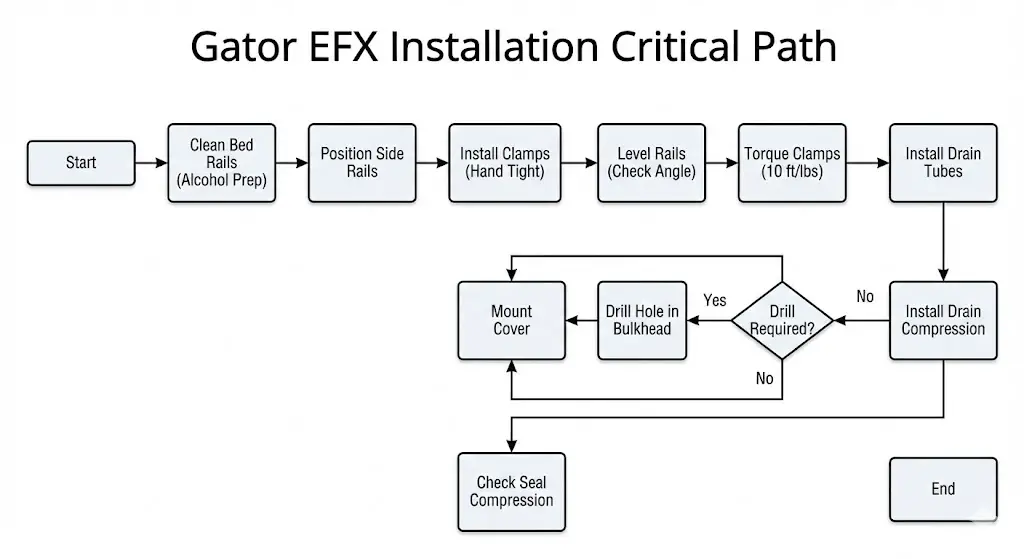
Manufacturer marketing emphasizes a "simple, no-drill installation". However, a forensic review of the installation manual and user experiences reveals critical nuances that contradict this simplification for certain vehicle configurations.
The Clamp-On Rail System
The foundation of the EFX is a pair of aluminum rails that clamp to the truck's bed lips.
- Clamping Mechanics: The system uses C-clamps (typically 3 per side) to compress the EFX rail against the truck bed rail.
- Torque Specifications: The manual specifies a torque of 120 inch-pounds (approx. 10 ft-lbs).
- The Overtightening Hazard: Users frequently use impact drivers, which exert far more than 10 ft-lbs. Overtightening causes the aluminum rail to cant (tilt) downward. This misalignment moves the latch striker plate out of position, causing the cover to fail to latch or to rattle excessively.
- The Undertightening Hazard: Vibration from driving can loosen clamps. The protocol requires re-torquing all clamps after one week of use.
The "Drill" for Drainage
The claim of "no-drill" applies strictly to the rail attachment. The drainage system often requires drilling.
- The Conflict: The rails collect water and funnel it to tubes. These tubes must exit the bed.
- Vehicle Variance:
- Ford F-150 / Ram 1500: Often have plastic factory plugs in the bulkhead that can be popped out or drilled through.
- Drop-In Liners: Trucks with plastic drop-in bed liners almost always require drilling holes through the liner to access the factory drainage ports.
- No Factory Ports: On older trucks or specific trims without lower bulkhead access, users must drill into the metal bed web to route the tubes, or else the water will drain directly onto the bed floor, negating the purpose of the cover.
Seal Conditioning and Environmental Acclimatization
A critical, often overlooked step in the installation engineering is seal relaxation.
- Compression Memory: EPDM seals are compressed in the packaging. Upon installation, they may appear wavy or fail to touch the bed caps.
- The Solar Cycle: The technical manual dictates a period of 3-5 days in warm sunlight to allow the rubber to return to its molded shape. Installing a cover in freezing conditions without a heat source (heat gun or garage) will likely result in immediate leaks.
Comparative Market Analysis: The Battle for the Bed
To understand the Gator EFX's value proposition, it must be benchmarked against its primary competitors: the BAKFlip MX4 (the category leader) and the Extang Solid Fold 2.0 (the durability leader).
Gator EFX vs. BAKFlip MX4
The BAKFlip MX4 is the benchmark for flush-mount covers. The Gator EFX is effectively a "value-engineered" alternative.
| Feature Domain | Gator EFX | BAKFlip MX4 | Engineering Implication |
| Price Point | Mid-Range (~$650) | Premium (~$1,100+) | EFX is ~40% cheaper, targeting budget-conscious builds. |
| Bed Access | 2/3 Access | 100% Access | MX4 folds vertically against the cab; EFX must be removed for full use. |
| Load Capacity | 300 lbs | 400 lbs | MX4 has a denser core/stronger alloy composition. |
| Tailgate Seal | Standard | Dual-Action | MX4 allows tailgate closure with cover down; EFX often requires lifting the cover first to avoid seal damage. |
| Warranty | 2 Years | 5 Years | MX4 assumes a longer service life. |
Gator EFX vs. Extang Solid Fold 2.0
The Extang Solid Fold 2.0 represents a fundamentally different design philosophy: Top-Mount.
| Feature Domain | Gator EFX | Extang Solid Fold 2.0 | Engineering Implication |
| Mounting | Flush (Inside Rails) | Top (On Rails) | Extang sits on top of the bed, offering superior water shedding. |
| Material | Aluminum | TPO (Automotive Plastic) | Extang panels are dent-resistant and cooler to touch. |
| Load Capacity | 300 lbs | 600 lbs | Extang is structurally superior for bearing heavy loads. |
| Waterproofing | Dependent on Drains | Inherent | Extang covers the rail gaps entirely; EFX manages water ingress. |
Gator EFX vs. Soft Covers (e.g., Gator SFX)
- Security: EFX (Aluminum) > SFX (Vinyl). A knife cuts vinyl; a crowbar is needed for aluminum.
- Durability: Aluminum outlasts vinyl, which shrinks and cracks over 5-7 years.
- Price: EFX is double the cost of a soft tri-fold.
Durability and Failure Modes: A Forensic Analysis
Analyzing user feedback from forums (Reddit, F150Forum) and warranty claims reveals specific failure patterns.

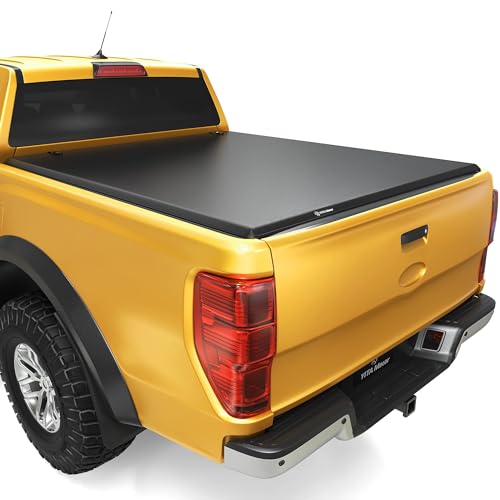


Water Intrusion Vectors
Waterproofing is the Achilles' heel of all flush-mount covers.
- The Bulkhead Gap: The most common leak point is the front of the bed. Truck bulkheads are often lower than the side rails. The EFX relies on a foam adhesive strip to bridge this gap. If the surface isn't cleaned with alcohol, the adhesive fails, and water is driven in by wind pressure at highway speeds.
- Tailgate Sealing: The rear seal must compress against the tailgate. Variations in tailgate alignment (especially on Ram and Tundra models) can create gaps.
- Drain Tube Blockage: The gutter system is passive. If users park under pine trees, needles can clog the 5/8" drain tubes. Once clogged, the rail fills with water and overflows into the bed.
Coating Delamination
User reports of "finish peeling" highlight a critical defect.
- Mechanism: Aluminum oxidation. If the powder coat is compromised (rock chip or manufacturing defect), moisture enters the interface. Aluminum oxidizes (corrodes) into a white powder, pushing the black coating off.
- Scope: This appears to be batch-specific but indicates that the EFX finish may not be as robust as the "EnduraCoat" used on Extang products.
Mechanical Attrition
- Track Separation: Isolated reports of the mounting tracks ripping out of the panels suggest that the screws securing the latch mechanism to the aluminum skin can pull out under extreme stress (e.g., driving with the cover unlatched in high winds).
- Latch Sticking: The pull-cable mechanism can bind if the guide rail is bent or if debris enters the housing. Troubleshooting involves disassembling the center cable cover to free the line.
User Experience and Lifestyle Integration
Security Assessment: The "Coat Hanger" Vulnerability
The Gator EFX offers substantial theft deterrence. With the tailgate locked, the release cable is inaccessible.
- The Vulnerability: Like all pull-cable covers, a thief with a wire coat hanger can potentially fish the wire between the tailgate seal and the cover to hook the release cable.
- Counter-Measure: The EFX slam latches are located midway down the panel, making them difficult to reach from the tailgate gap. The security is sufficient to stop crimes of opportunity but not targeted attacks.
Hauling and Cargo Management
- The "Cargo Retriever" Bonus: The EFX often ships with a "free cargo retriever" tool. This is a tacit admission of the cover's limitation—because it does not fold vertically against the cab, reaching items at the front of the bed is difficult without crawling inside. The tool mitigates this ergonomic flaw.
- Stake Pocket Access: The EFX rails mount inside the bed, theoretically leaving the stake pockets (holes in the truck rail) open for tie-downs or bed rails. However, on certain models (e.g., Chevy Silverado), the rail overlap may partially obscure these pockets, requiring offset tie-down anchors.
Car Wash Compatibility
- The Debate: Can you take a hard fold cover through a car wash?
- Consensus: Yes, but with caveats.
- Touchless: Safe. High-pressure water may force a few drops past the seals.
- Soft-Touch (Brushes): Riskier. Spinning brushes can abrade the powder coat over time and catch on the rubber seals, potentially tearing them.
- Wax: Avoid wax cycles, as they leave a difficult-to-remove residue on the textured black finish.
Warranty and Support Ecosystem
Confusion exists regarding the EFX warranty coverage due to conflicting retailer data.
The "2-Year" Standard
The official documentation from Gator Covers and RealTruck establishes a 2-Year Limited Warranty.
- Coverage: Defects in materials and workmanship.
- Exclusions: Normal wear and tear, fading (UV damage), damage from misuse (overloading), and water leaks (considered installation variance).
- Comparison: This is significantly shorter than the BAKFlip MX4's 5-year warranty and the Extang Solid Fold's 3-year warranty. It reflects the budget-oriented positioning of the product.
The "Gator Guarantee"
Gator offers a 30-day "Love It or Swap It" guarantee. This is a critical value-add. It allows users to install the cover, test it for leaks, and exchange it for a different model (e.g., upgrading to an FX3 or MX4) if it doesn't meet expectations. This mitigates the risk of buying a "budget" cover.
Installation Protocols and Troubleshooting Guide
Required Tooling
- 1/2" Socket Wrench (for clamps).
- Isopropyl Alcohol & Rags (for cleaning rails).
- Scissors/Utility Knife (for trimming seals).
- Drill & 5/8" Bit (conditional for drain tubes).
Step-by-Step Installation Matrix
| Step | Action | Critical Engineering Note |
| 1. Rail Prep | Clean truck bed rails with alcohol. | Crucial: Adhesives will not bond to wax or dirt. |
| 2. Seal Install | Apply foam seal to bulkhead. | Layer may need doubling on trucks with bed liners. |
| 3. Rail Mount | Clamp side rails to bed lips. | Align rail flush and level. Do not tighten yet. |
| 4. Leveling | Check rail angle. | If rail tilts down, the cover won't latch. Lift rail while clamping. |
| 5. Torque | Tighten clamps to 10 ft-lbs. | WARNING: Do not use impact driver. Hand tight only. |
| 6. Drainage | Route tubes through bulkhead. | Ensure continuous downward slope to prevent standing water. |
| 7. Cover Mount | Place cover, unfold, check alignment. | Ensure cover is square to the bed (equal gaps L/R). |
Troubleshooting Matrix
- Problem: Cover is hard to latch.
- Solution: Rails are tilted down. Loosen clamps, have a helper pull the rail up, re-torque.
- Problem: Water pooling on cover.
- Solution: Normal. Panels may deflect slightly; water will evaporate or run off when driving.
- Problem: Leaks at cab.
- Solution: The bulkhead seal is too thin. Add a secondary weather strip or silicone bead.
Conclusion and Recommendations
The Gator EFX Hard Fold Tonneau Cover is a triumph of value engineering. It successfully replicates the form factor and security of premium hard covers at a price point accessible to the mainstream truck owner. While it lacks the structural density, 100% bed access, and long-term warranty of the BAKFlip MX4, it delivers 90% of the functional day-to-day performance.
Final Verdict:
- Buy the Gator EFX if: You want the sleek look of a flush-mount cover, need better security than a soft cover, and rarely haul cargo taller than the bed rails. It is the best value-for-money hard cover on the market.
- Upgrade to BAKFlip MX4 if: You plan to keep the truck for 5+ years, need to haul large appliances/bikes frequently (100% access), or live in a region with extreme weather (better seals).
- Switch to Extang Solid Fold 2.0 if: You are a contractor using the truck for work. The durability and higher load rating are worth the aesthetic trade-off.